Why Choosing the Right Air Compressor for Construction Matters
Construction sites demand reliable equipment. When pneumatic tools stop working mid-project, everything grinds to a halt. Crews stand around waiting. Deadlines slip. Money evaporates. The air compressor sitting at the center of operations either enables productivity or becomes the bottleneck everyone curses.
Picking an air compressor for construction involves more than grabbing whatever’s available at the rental yard. Different projects require different capabilities. A framing crew’s needs differ substantially from a crew doing finish work. Road construction presents challenges that residential projects never encounter.
Getting this decision right means understanding the actual demands of specific applications—then matching equipment accordingly. Too small and the compressor runs constantly, wearing out prematurely while struggling to keep up. Too large and money gets wasted on capacity that never gets used.

Understanding Air Compressor Types for Construction Sites
Compresores alternativos (de pistón)
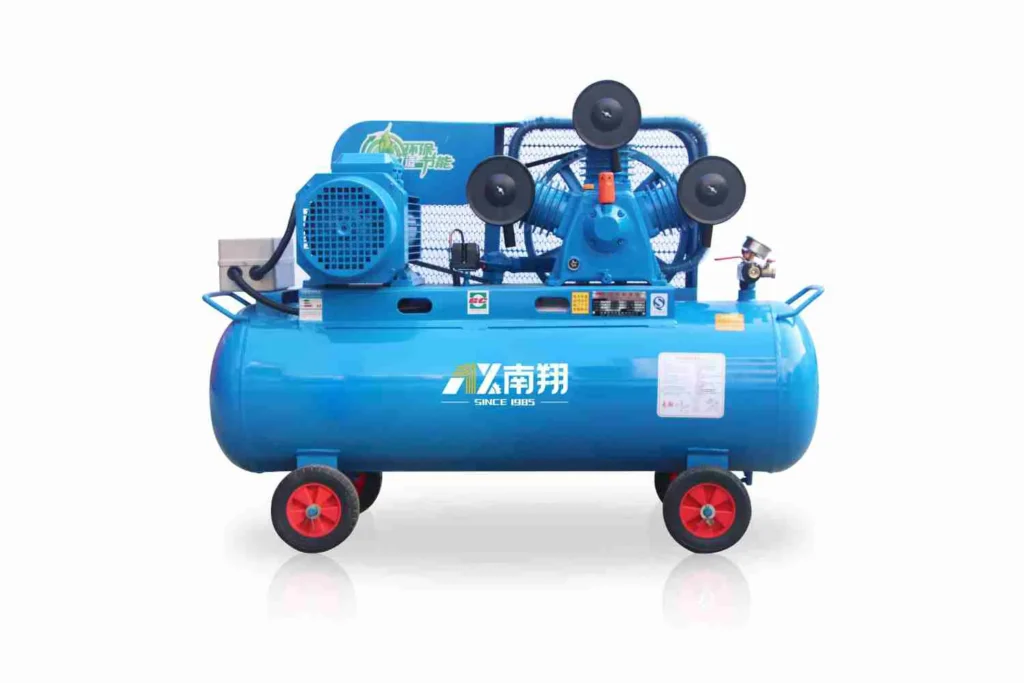
The workhorses of construction sites, reciprocating compressors use pistons to compress air. They’re relatively affordable and handle intermittent use patterns well. Most smaller portable units fall into this category.
These compressors come in single-stage and two-stage configurations. Single-stage models compress air once, reaching around 120 PSI maximum typically. Two-stage units compress twice, achieving higher pressures for demanding applications. The tradeoff involves increased complexity and cost.
Compresores de tornillo rotativo
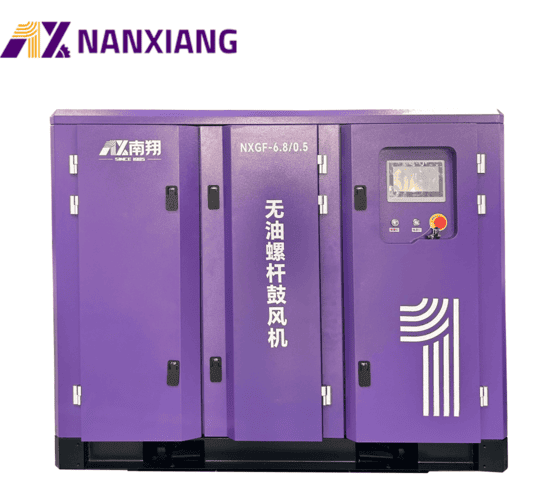
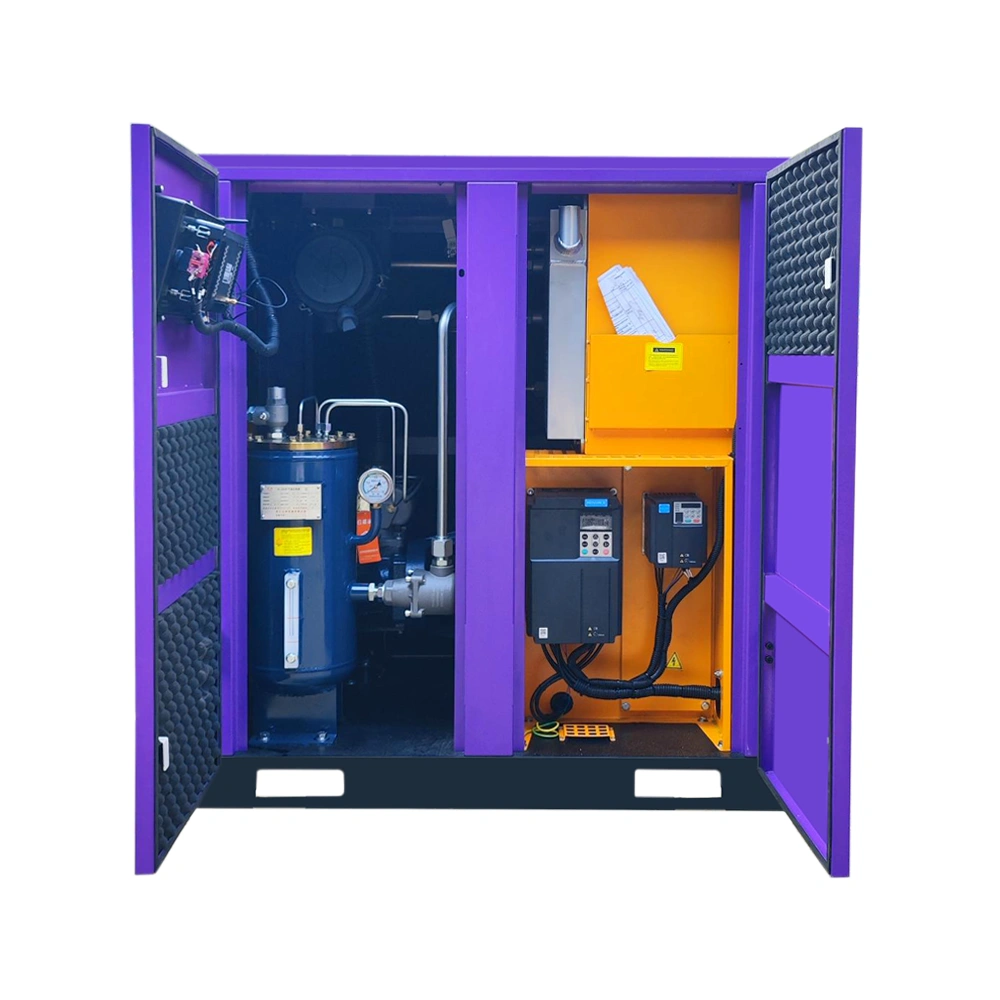
For continuous heavy-duty operation, rotary screw compressors excel. They use rotating helical screws rather than pistons, producing steady airflow without the pulsation characteristic of reciprocating designs.
Larger construction operations often prefer rotary screw units despite higher upfront costs. They’re quieter, more efficient during continuous operation, and generally last longer under demanding conditions. Road crews, commercial builders, and industrial contractors frequently choose this type.
Portable vs. Stationary Considerations
Construction work typically demands portability. Even stationary-style compressors often need trailer mounting for jobsite transport. True portability involves:
- Towable designs with proper running gear
- Reasonable weight for the available towing vehicle
- Compact footprints fitting into crowded jobsites
- Quick setup and breakdown capabilities
The most powerful air compressor means nothing if getting it to the work location proves impractical.
Key Specifications When Selecting Air Compressor for Construction
CFM Requirements
Cubic feet per minute—CFM—measures actual air delivery capacity. This specification matters more than horsepower for practical purposes. Tools require specific CFM levels to function properly.
Calculating needs involves adding CFM requirements for all tools potentially operating simultaneously, then adding 25-30% buffer capacity. Running at maximum capacity constantly shortens equipment life considerably.
Common construction tool requirements:
| Tool | Typical CFM Required | Operating PSI |
|---|---|---|
| Framing nailer | 2-3 CFM | 70-120 PSI |
| Impact wrench (1/2") | 4-5 CFM | 90-100 PSI |
| Jackhammer | 25-40 CFM | 90 PSI |
| Sandblaster | 20-50 CFM | 80-100 PSI |
| Paint sprayer | 6-12 CFM | 30-50 PSI |
| Brad nailer | 0.5-1 CFM | 60-100 PSI |
PSI Ratings
Pounds per square inch indicates pressure capability. Most construction pneumatic tools operate between 70-120 PSI. Higher pressure capacity provides flexibility, though exceeding tool ratings causes damage and creates safety hazards.
Regulators allow stepping down pressure from higher-capacity compressors to appropriate levels for specific tools. Having extra pressure capacity rarely hurts—insufficient pressure absolutely does.
Tank Size Considerations
Larger tanks store more compressed air, reducing how frequently the compressor cycles on. This matters for two reasons. First, constant cycling accelerates wear. Second, some applications demand sustained airflow that smaller tanks can’t support between cycles.
For an air compressor for construction use, tank sizing should match typical usage patterns:
1. Intermittent tool use (nailers, staplers): 6-20 gallon tanks often suffice
2. Moderate continuous use: 20-60 gallon capacity
3. Heavy continuous demands: 60+ gallons or rotary screw designs
Power Source Options for Construction Compressors
Electric Models
Electric air compressors cost less to operate and require minimal maintenance. They run quieter than fuel-powered alternatives. Indoor construction and sites with reliable electrical access suit electric units well.
The obvious limitation involves power availability. Remote sites, early construction phases before electrical service installation, and mobile operations often lack adequate electrical infrastructure.
Gas and Diesel Options
Fuel-powered compressors go anywhere. This independence makes them standard for many construction applications despite higher operating costs and maintenance requirements.
Diesel models generally prove more economical for sustained heavy use. Gasoline units cost less initially but consume more fuel. The choice often comes down to expected usage hours and fuel availability logistics at specific jobsites.
Durability Features Worth Prioritizing
Construction environments punish equipment relentlessly. Dust, moisture, vibration, temperature extremes, occasional impacts—compressors face constant challenges. Worthwhile durability features include:
- Roll cage or protective frame construction
- Sealed electrical components
- Heavy-duty wheels and handles
- Corrosion-resistant tanks and fittings
- Easily accessible air filters designed for dusty conditions
Cheaper compressors lacking these features may work fine initially. Give them a few months on active construction sites and problems emerge. The premium for construction-grade equipment usually pays for itself through reduced downtime and longer service life.
Matching Compressor Size to Project Scale
Small Residential Projects
Finish carpentry, trim installation, small renovation work—these applications rarely need massive air capacity. Portable electric compressors in the 4-6 CFM range handle most tasks adequately. Compact size and lower noise levels prove advantageous in occupied spaces.
Large Commercial Construction
Bigger projects demand bigger solutions. Multiple crews operating simultaneously, heavy-duty tools, continuous operation requirements—these factors push toward larger rotary screw units or multiple reciprocating compressors working together. Integrated air dryers become standard equipment at this level, protecting substantial tool investments and ensuring consistent quality.
Having redundant capacity matters on large sites. Equipment failures happen. Projects can’t afford complete pneumatic tool shutdowns while waiting for repairs.
Preguntas frecuentes
What size air compressor for construction framing work?
Framing crews typically need 4-6 CFM minimum for single nailer operation. Running multiple nailers simultaneously requires proportionally more capacity. A portable compressor delivering 8-12 CFM handles most residential framing situations with adequate reserve.
Can one compressor power all construction tools?
Theoretically yes, if sized appropriately. Practically, some tools like jackhammers or sandblasters require dedicated high-capacity units. Attempting to run everything from undersized equipment causes tool malfunction, compressor damage, and project delays.
How often should construction compressors be serviced?
Daily checks should cover oil levels, air filters, and obvious damage. Formal service intervals vary by manufacturer and usage intensity—typically every 250-500 operating hours for oil changes and filter replacements. Harsh construction conditions often justify more frequent maintenance than standard recommendations suggest.