
A винтовой воздушный компрессор это широко используемая промышленная система сжатия воздуха, которая преобразует механическую энергию в сжатый воздух высокого давления с помощью пары сцепленных спиральных роторов. В отличие от поршневых компрессоров, которые работают циклично, винтовые компрессоры используют два сцепленных спиральных ротора для захвата и сжатия воздуха по мере его прохождения через систему, обеспечивая постоянный поток чистого воздуха под давлением, что делает их идеальными для сложных условий эксплуатации, требующих круглосуточной работы.
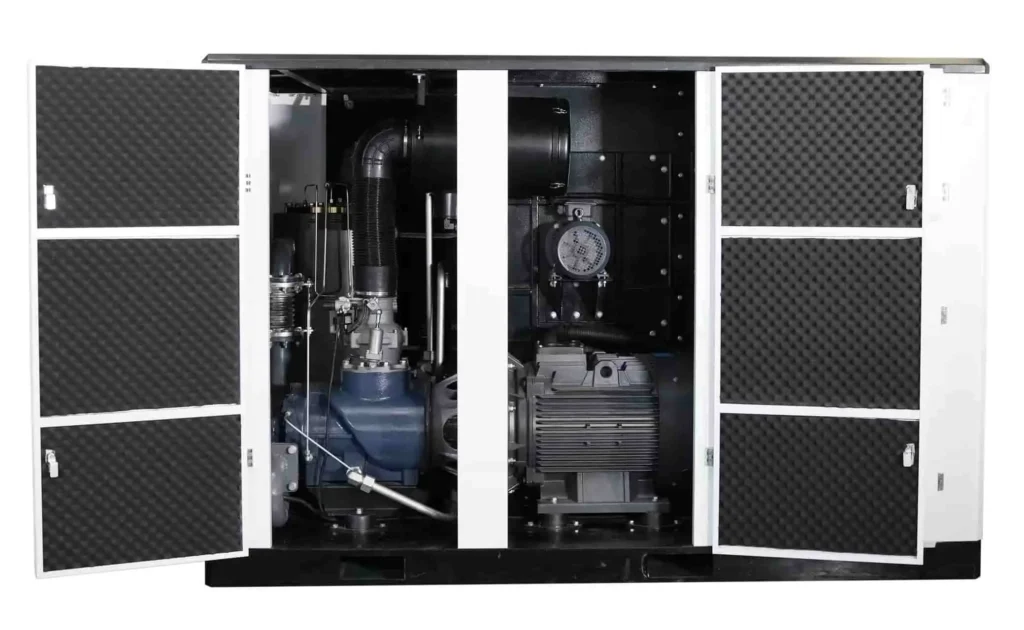
Как это работает: Три стадии сжатия
- Стадия всасывания воздуха Воздух поступает через впускное отверстие, когда винты начинают вращаться, втягивая воздух в спиральную камеру между двумя роторами.
- Стадия сжатия По мере вращения роторов спиральные лопасти постепенно уменьшают объем захваченного воздуха, сжимая его и выталкивая к выходу.
- Стадия выхлопа Сжатый воздух выходит под требуемым высоким давлением, готовый к использованию в подключенном пневматическом оборудовании или хранится в ресивере.
Типы винтовых воздушных компрессоров
В таблице ниже приведены основные классификации, которые помогут вам быстро определить тип, подходящий для ваших нужд:
| Классификация | Тип | Ключевая особенность | Лучшее для |
|---|---|---|---|
| По контролю скорости | Фиксированная скорость (прямой привод) | Постоянная выходная мощность и скорость | Стабильная, непрерывная потребность в воздухе |
| Частотно-регулируемый привод (VFD/VSD) | Регулируемая скорость вращения двигателя в зависимости от потребности | Колебания спроса; приоритет энергосбережения | |
| По смазке | С масляной смазкой (с масляным впрыском) | Масло используется для уплотнения, охлаждения, смазки | Общепромышленное использование; низкая стоимость |
| Без масла | Отсутствие контакта масла со сжатым воздухом | Пищевая промышленность, фармацевтика, электроника - чистота воздуха критически важна | |
| По стадиям сжатия | Одноступенчатый | Один цикл сжатия | Стандартные применения под давлением (до ~10 бар) |
| Двухступенчатый | Два последовательных цикла сжатия | Более высокое давление и большая эффективность | |
| По давлению на выходе | Низкое давление | Выходное давление обычно ниже 4 бар | Легкая промышленность, аэрация, транспортировка |
| Высокое давление | Выходное давление обычно превышает 10 бар | Тяжелое производство, лазерная резка, выдувное формование ПЭТ |
Отраслевые применения
Винтовые воздушные компрессоры являются предпочтительным выбором в самых разных отраслях промышленности:
- Воздушный компрессор для производства и сборки - Питание пневматических инструментов, роботизированных манипуляторов и конвейерных систем, требующих непрерывного потока воздуха
- Воздушный компрессор для автомобильной промышленности - Окраска краскопультом, накачивание шин и работа с гайковертом
- Воздушный компрессор для пищевых продуктов и напитков - Упаковочные линии и оборудование для розлива (требуются безмасляные модели)
- Воздушный компрессор для медицины - Чистые помещения, где требуется безмасляный воздух, сертифицированный по стандарту ISO 8573
- Воздушный компрессор для строительства - Буровое, пескоструйное и тяжелое строительное оборудование
- Воздушный компрессор для химической промышленности - Технологические процессы, требующие стабильного высокого давления на выходе
Руководство покупателя: Ключевые критерии покупки
1. Определите потребность в воздухе
Точное определение потребности в воздухе - самый важный шаг. Считайте, что этот процесс состоит из трех частей: CFM (расход), рабочее давление (PSI/бар) и качество воздуха. Каждый фактор играет важную роль в подборе компрессора в соответствии с потребностями вашего предприятия.
- Проверьте спецификации всего подключенного пневматического оборудования
- Сложите общее потребление воздуха (CFM/м³/мин) для всех инструментов.
- Добавьте буфер давления ~1,5 бар сверх минимальных требований, чтобы учесть перепад давления
2. Выберите тип, подходящий для вашей модели использования
Винтовой компрессор является правильным выбором только в том случае, если его использование превышает 60% в день. При меньшей нагрузке поршневой (поршневой) компрессор может быть более экономичным. Внутри винтовых компрессоров:
- Выберите Фиксированная скорость для постоянного, стабильного спроса
- Выберите VFD/VSD если спрос колеблется - модели VSD обычно стоят на 20-40% дороже аналогов с фиксированной скоростью, но обеспечивают более быструю окупаемость в динамичных условиях
3. Безмасляный и масляный
Безмасляные компрессоры используются там, где требуется исключительное качество сжатого воздуха без каких-либо следов масла. Однако безмасляные компрессоры имеют значительно более высокую первоначальную стоимость и обычно работают при более высоких температурах из-за отсутствия смазки для отвода тепла.
4. Ориентируйтесь на общую стоимость владения (TCO), а не только на цену
Потребление энергии обычно составляет 70-80% от общей стоимости срока службы воздушного компрессора. Недорогой, но неэффективный компрессор может обойтись гораздо дороже в долгосрочной перспективе. Фактор:
- Покупная цена
- Затраты на электроэнергию (кВт/час за ожидаемый срок службы)
- Периодичность технического обслуживания и наличие запасных частей
- Гарантийное покрытие и развитость сервисной сети
5. Оцените производителя
При выборе производителя учитывайте стоимость, сопоставленную с долгосрочной экономией энергии, такие характеристики эффективности, как частотно-регулируемые приводы, послепродажная поддержка и соответствующие сертификаты, такие как ISO.
⚠️ Распространенные ошибки при покупке, которых следует избегать
- Увеличение размера - Приобретение более мощной машины, чем требуется, приводит к потере энергии и увеличению стоимости покупки
- Игнорирование требований к качеству воздуха - Использование устройства с масляной смазкой в условиях, требующих безмасляного воздуха, может привести к загрязнению продуктов и повреждению оборудования
- Красные флажки, на которые следует обратить внимание - Остерегайтесь необычно низких цен, отсутствия сертификатов качества, отсутствия сервисной сети или неясных условий гарантии.
Пропуск аудита сайта - Всегда проводите аудит потребности в воздухе перед покупкой, чтобы избежать занижения или завышения