
Сжатый воздух является одним из наиболее широко используемых источников энергии в производстве, автосервисе, металлообработке, упаковочной промышленности, деревообработке, пищевой промышленности и многих других отраслях промышленности. Однако не каждый Воздушный компрессор предназначен для работы при тех же требованиях к давлению, коэффициенту загрузки или качеству воздуха. Если на предприятии требуется более высокое давление, более высокая эффективность и более надежная непрерывная работа, часто рассматривается вариант использования двухступенчатого воздушного компрессора.
A двухступенчатый воздушный компрессор — это воздушный компрессор, который сжимает воздух не за один, а за два отдельных этапа. На первом этапе воздух сжимается до промежуточного давления, охлаждается, а затем на втором этапе снова сжимается до более высокого конечного давления. Такая конструкция повышает эффективность, снижает тепловую нагрузку и делает компрессор пригодным для использования в сложных промышленных условиях.
Чтобы понять, подходит ли двухступенчатый воздушный компрессор для ваших производственных нужд, важно разобраться в принципе его работы, в том, чем он отличается от одноступенчатой модели, а также в том, какие технические характеристики имеют наибольшее значение при его выборе.
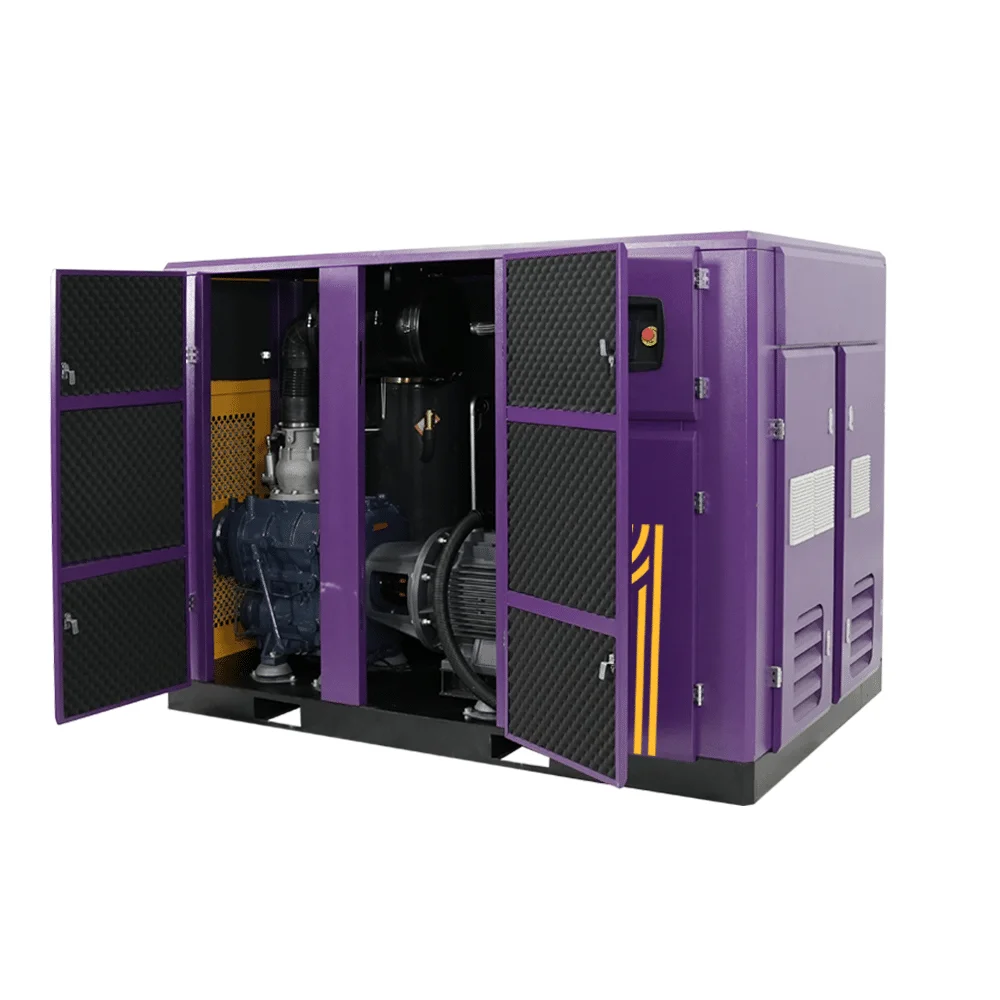
Что такое двухступенчатый воздушный компрессор?
Двухступенчатый воздушный компрессор — это система сжатого воздуха, в которой используются два цикла сжатия для более эффективного повышения давления воздуха по сравнению с одноступенчатым компрессором. Он обычно применяется в случаях, когда требуется более высокое давление, стабильная производительность и длительный срок службы.
В типичном двухступенчатом поршневом воздушном компрессоре атмосферный воздух поступает в первый цилиндр, где сжимается до промежуточного давления. Затем горячий сжатый воздух проходит через промежуточный охладитель, который понижает его температуру перед поступлением во второй цилиндр. На втором ступени воздух вновь сжимается до требуемого конечного давления, а затем подается в приемный резервуар или последующее оборудование.
Этот двухступенчатый процесс сжатия особенно полезен, поскольку при сжатии воздуха выделяется тепло. Если воздух сжимается до высокого давления за один этап, его температура значительно повышается, что может снизить КПД и увеличить механический износ. Охлаждая воздух между ступенями, двухступенчатый компрессор снижает нагрузку на вторую ступень и повышает общую производительность.
Основное определение
Двухступенчатый воздушный компрессор можно определить следующим образом:
Компрессор, повышающий давление воздуха в два последовательных этапа сжатия с охлаждением между этапами, что позволяет достичь более высокого давления на выходе и повысить тепловую эффективность.
Двухступенчатые компрессоры выпускаются в различных конфигурациях, в том числе:
- Поршневые компрессоры
- Ротационные винтовые компрессоры с двухступенчатыми компрессорными блоками
- Воздушный компрессор с масляной смазкой
- Безмасляный воздушный компрессор
- Стационарные промышленные установки
- Переносные установки высокого давления
Хотя конструкция механизма может различаться, основной принцип остается неизменным: воздух сжимается, охлаждается и снова сжимается.
Типичный диапазон давления
Двухступенчатые воздушные компрессоры часто выбирают для задач, требующих уровня давления, превышающего тот, который могут эффективно обеспечить многие одноступенчатые компрессоры.
| Тип компрессора | Типичный диапазон давления | Типичный сценарий использования |
| Одноступенчатый воздушный компрессор | 90–125 PSI | Инструменты для легких работ, небольшие мастерские |
| Двухступенчатый воздушный компрессор | 125–175 PSI или выше | Промышленный инструмент, производство, ремонтные мастерские |
| Специализированный компрессор высокого давления | 200 PSI+ | Специализированные промышленные процессы |
Фактический диапазон давления зависит от конструкции компрессора, мощности двигателя, системы охлаждения и требований конкретного применения.
Как работает двухступенчатый воздушный компрессор?
Двухступенчатый воздушный компрессор работает следующим образом: он всасывает атмосферный воздух, сжимает его в цилиндре первой ступени или воздушном блоке, охлаждает с помощью промежуточного охладителя, а затем повторно сжимает в цилиндре второй ступени или воздушном блоке, после чего направляет его в резервуар или систему распределения воздуха.
Этот процесс призван повысить эффективность и контролируемость процесса сжатия. Вместо того чтобы заставлять агрегат достигать конечного давления за один этап, компрессор разделяет процесс повышения давления на два этапа. Это позволяет снизить температуру нагнетания и повысить срок службы.
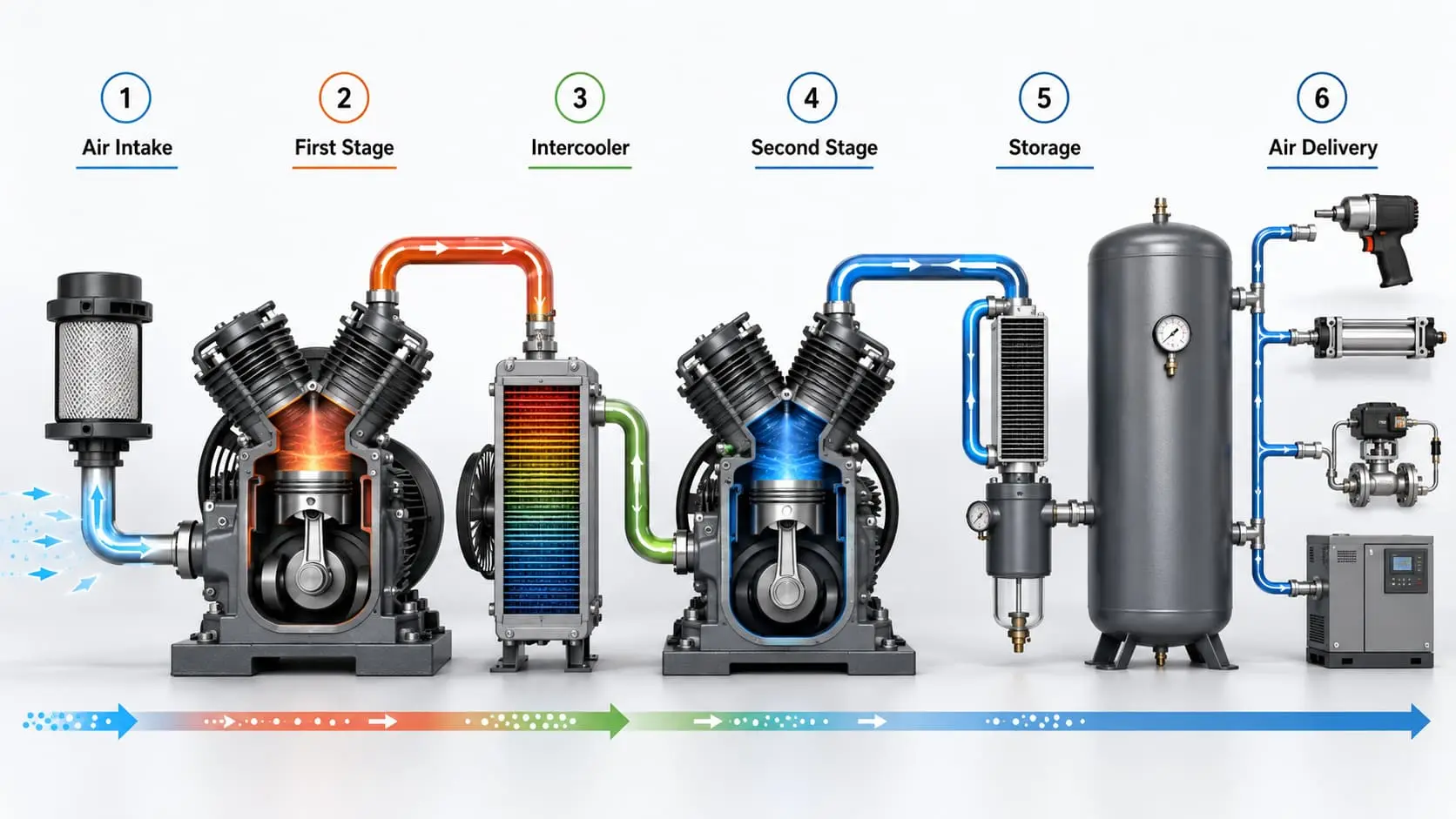
Пошаговый процесс сжатия
Рабочий цикл обычно состоит из следующих этапов:
- Воздухозаборник
Воздух из окружающей среды поступает в компрессор через впускной фильтр. Фильтр способствует удалению пыли, частиц и загрязнений до начала сжатия. - Сжатие на первом этапе
Цилиндр первой ступени или элемент сжатия сжимает воздух до промежуточного давления. На этом этапе воздух нагревается в результате процесса сжатия. - Межблочное охлаждение
Горячий сжатый воздух проходит через промежуточный охладитель. Этот этап охлаждения снижает температуру воздуха перед его поступлением во вторую ступень. - Сжатие второго этапа
Охлажденный воздух среднего давления вновь сжимается до конечного давления нагнетания. - Доохлаждение и хранение
Перед поступлением в накопительный резервуар или трубопроводную систему сжатый воздух может проходить через доохладитель и сепаратор влаги. - Доставка воздушным транспортом
Накопленный сжатый воздух подается на пневматические инструменты, производственное оборудование, клапаны, цилиндры или другие конечные устройства.
Почему промежуточное охлаждение имеет значение
Межступенчатое охлаждение является одной из важнейших особенностей двухступенчатой системы. Когда воздух охлаждается между ступенями, его плотность увеличивается, и второй ступени сжатия требуется меньше энергии для доведения его до конечного давления.
К преимуществам системы промежуточного охлаждения относятся:
- Более низкая температура на выходе
- Снижение тепловой нагрузки на детали
- Повышенная эффективность сжатия
- Снижение влажности в последующих системах
- Улучшенные смазочные характеристики в агрегатах с масляной смазкой
- Увеличение срока службы клапанов, колец, уплотнений и подшипников
По данным Министерства энергетики США, системы сжатого воздуха могут составлять значительную долю промышленного потребления электроэнергии, в связи с чем повышение их эффективности играет важную роль в контроле эксплуатационных расходов. Более подробную информацию можно получить на сайте Ресурс Министерства энергетики США по системам сжатого воздуха.
Двухступенчатый и одноступенчатый воздушный компрессор: в чём разница?
Основное отличие заключается в том, что одноступенчатый воздушный компрессор сжимает воздух один раз, а двухступенчатый — дважды с охлаждением между ступенями. Это позволяет двухступенчатому агрегату более эффективно достигать более высокого давления и справляться с более тяжелыми условиями эксплуатации.
Для небольшой или средней потребности в сжатом воздухе зачастую достаточно одноступенчатого компрессора. Он широко используется в небольших мастерских, гаражах и в условиях, где инструменты работают с перерывами. Двухступенчатый компрессор, напротив, лучше подходит для промышленных условий, где требуются более высокое давление, более длительное время работы и стабильная подача сжатого воздуха.
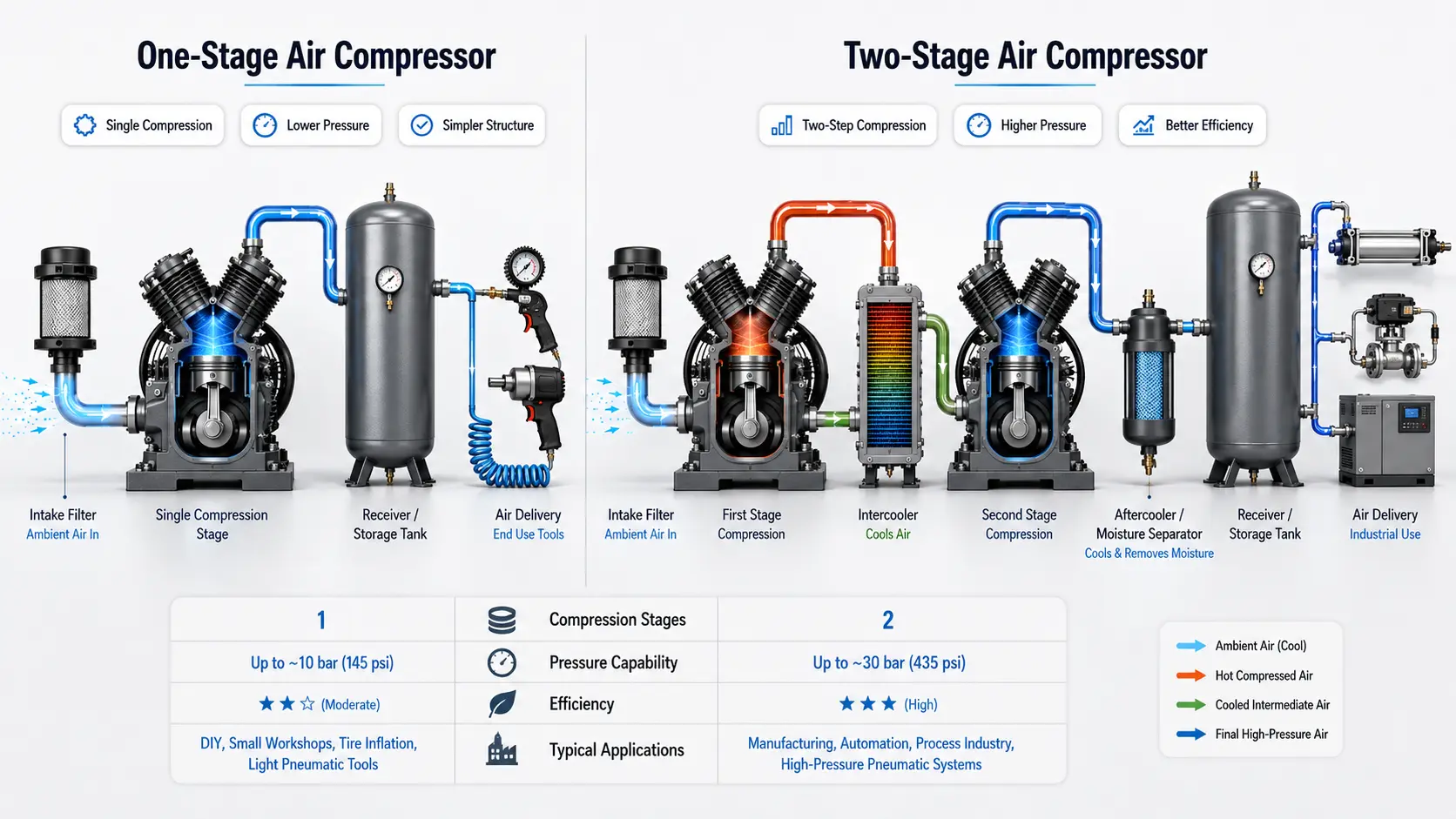
Сравнительная таблица
| Характеристика | Одноступенчатый воздушный компрессор | Двухступенчатый воздушный компрессор |
| Процесс сжатия | Один этап сжатия | Два этапа сжатия |
| Охлаждение между ступенями | Нет | Да |
| Типичное давление | До примерно 125 PSI | Часто 125–175 PSI или выше |
| Эффективность при высоком давлении | Нижний | Выше |
| Тепловыделение | Более высокое значение при конечном давлении | Более контролируемый |
| Пригодность по рабочему циклу | Легкая и средняя нагрузка | Средняя и высокая нагрузка |
| Первоначальная стоимость | Нижний | Выше |
| Сложность обслуживания | Проще | Дополнительные компоненты |
| Обычные пользователи | Небольшие магазины, использование в хобби | Промышленные и коммерческие объекты |
Когда может хватить одноступенчатого компрессора
Одноступенчатый воздушный компрессор может подойти, если ваша деятельность:
- Иногда использует пневматические инструменты
- Требуется давление ниже 125 PSI
- Характеризуется низкой или умеренной потребностью в CFM
- Бегает короткими интервалами
- Имеет ограниченное пространство для установки
- Отдаёт приоритет более низким первоначальным затратам
Когда двухступенчатый компрессор является лучшим выбором
Двухступенчатый компрессор, как правило, является более подходящим вариантом, если на вашем предприятии:
- Требуется давление выше 125 PSI
- Обеспечивает одновременную работу нескольких пневматических инструментов
- Работает в непрерывном режиме или в течение длительных смен
- Для производственного оборудования требуется стабильное давление
- Хочет повысить эффективность при более высоком давлении
- Использует сжатый воздух в качестве основного источника энергии
В сфере B2B решение не должно основываться исключительно на цене покупки. Необходимо также учитывать энергопотребление, затраты на техническое обслуживание, риск простоев и рост потребности в воздухе.
Каковы основные компоненты двухступенчатого воздушного компрессора?
К основным компонентам двухступенчатого воздушного компрессора относятся впускной фильтр, камера сжатия первой ступени, промежуточный охладитель, камера сжатия второй ступени, клапаны, электродвигатель или двигатель, система смазки, система охлаждения, накопительный резервуар и система управления.
Каждый компонент играет важную роль в поддержании давления, регулировании температуры, повышении эффективности и защите агрегата от преждевременного износа. Понимание особенностей этих деталей помогает покупателям оценить качество продукции и требования к техническому обслуживанию.
Основные компоненты и их функции
| Компонент | Функция |
| Впускной фильтр | Удаляет взвешенные в воздухе частицы перед сжатием |
| Цилиндр или компрессорный блок первой ступени | Выполняет начальное сжатие |
| Промежуточный охладитель | Охлаждает воздух между ступенями сжатия |
| Цилиндр или компрессорный блок второй ступени | Сжимает воздух до конечного давления |
| Обратные клапаны | Предотвращение обратного потока воздуха |
| Реле давления или регулятор давления | Запускает, останавливает или регулирует работу компрессора |
| Приемный резервуар | Накапливает сжатый воздух и стабилизирует давление |
| Предохранительный клапан | Снимает давление, если система выходит за пределы безопасного диапазона |
| Сливной клапан | Удаляет конденсат из резервуара или сепаратора |
| Двигатель или мотор | Обеспечивает механическую мощность |
| Система смазки | Снижает трение и износ деталей |
| Охладитель выхлопных газов | Cools охлаждает выходящий воздух перед последующей очисткой |
Важные технические параметры
При сравнении двухступенчатых воздушных компрессоров обратите внимание на следующие технические характеристики:
Номинальное давление
Давление обычно измеряется в PSI, барах или МПа. Компрессор должен обеспечивать минимальное давление, требуемое для вашего оборудования, с учетом падения давления в трубопроводах, фильтрах, осушителях и регуляторах.
Пропускная способность воздуховода
Производительность по воздуху обычно измеряется в кубических футах в минуту (CFM) или в кубических метрах в минуту (м³/мин). Этот показатель отражает, какой объем сжатого воздуха агрегат способен подавать при заданном давлении.
К важным терминам относятся:
- Рабочий объём (куб. футы в минуту): Теоретическая интенсивность воздушного потока в зависимости от размера насоса
- Расход воздуха, куб. футов в минуту: Фактическая полезная производительность по воздуху
- SCFM: Стандартные кубические футы в минуту при определённых стандартных условиях
Мощность двигателя
Мощность двигателя часто указывается в лошадиных силах или киловаттах. Однако более высокий показатель мощности в лошадиных силах не всегда означает лучшую производительность. Более полезным критерием для сравнения является производительность по подаче воздуха при рабочем давлении.
Цикл работы
Под рабочим циклом понимается время, в течение которого компрессор может работать в течение определенного периода. Промышленные двухступенчатые воздушные компрессоры часто рассчитаны на более высокие рабочие циклы, чем агрегаты для легких условий эксплуатации.
Размер резервуара
Распределительный резервуар служит для хранения сжатого воздуха и помогает сократить частоту циклов включения-выключения. Резервуары большего объёма способны обеспечить кратковременные пики высокой нагрузки, однако они не заменяют необходимость в компрессоре достаточной производительности.

В чём заключаются преимущества и ограничения двухступенчатого воздушного компрессора?
Двухступенчатый воздушный компрессор обеспечивает более высокое давление, более высокую эффективность при повышенном давлении, более низкую рабочую температуру и повышенную долговечность, однако, как правило, он отличается более высокой первоначальной стоимостью и более сложными требованиями к техническому обслуживанию по сравнению с одноступенчатой моделью.
Для многих промышленных потребителей преимущества в производительности оправдывают вложения. Однако оптимальный выбор зависит от фактической потребности в воздухе, количества часов работы, затрат на электроэнергию и ресурсов, выделяемых на техническое обслуживание.
Основные преимущества
Более высокое выходное давление
Двухступенчатое сжатие позволяет системе более эффективно достигать более высоких значений давления. Это важно для таких областей применения, как:
- Пневматические инструменты повышенной прочности
- Промышленные прессы
- Оборудование для пескоструйной обработки
- Работы по обслуживанию шин
- Производственное оборудование
- Системы управления технологическими процессами
Повышение энергоэффективности при высоком давлении
Двухступенчатое сжатие воздуха позволяет снизить энергозатраты, необходимые для достижения более высокого давления на выходе. Со временем это может привести к сокращению расходов на электроэнергию, особенно на предприятиях, где сжатый воздух используется ежедневно.
Снижение тепловой нагрузки
Поскольку воздух охлаждается между ступенями, компрессор работает с меньшей тепловой нагрузкой. Более низкая температура способствует защите:
- Поршни
- Кольца
- Клапаны
- Подшипники
- Смазочное масло
- Уплотнения и прокладки
Увеличение срока службы оборудования
Более плавный и сбалансированный процесс сжатия может способствовать увеличению срока службы при надлежащем техническом обслуживании компрессора.
Более стабильная подача воздуха
Двухступенчатые компрессоры часто разрабатываются для работы в условиях интенсивной эксплуатации и способны обеспечивать более стабильное выходное давление в производственных условиях.
Возможные ограничения
Несмотря на свои преимущества, двухступенчатые компрессоры не всегда необходимы.
К числу распространенных ограничений относятся:
- Более высокая стоимость приобретения
- Дополнительные узлы, подлежащие проверке и техническому обслуживанию
- В некоторых конфигурациях занимает больше места
- Более высокие требования к установке
- Возможная необходимость улучшения вентиляции
- Более глубокие знания в области обслуживания
Если для вашей задачи требуется лишь периодическая подача воздуха под низким давлением, двухступенчатая установка может оказаться избыточной и неоправданно дорогой.
Где обычно используются двухступенчатые воздушные компрессоры?
Распространенные области применения в промышленности
| Промышленность | Типичные области применения |
| Автомобильный сервис | Накачка шин, подъемники, ударные инструменты, системы распыления |
| Металлообработка | Шлифование, резка, пневматические зажимы, пескоструйная обработка |
| Производство | Инструменты для сборки, приводы, упаковочные линии |
| Деревообработка | Гвоздезабивные пистолеты, шлифовальные машины, системы ЧПУ, системы управления пылеудалением |
| Продукты питания и напитки | Упаковочное оборудование, пневматическая транспортировка, системы управления |
| Пластмассы | Опоры для литья, обрезка, автоматизация |
| Текстильное производство | Ткацкие станки, пневматические форсунки, регулирующие клапаны |
| Сопровождение строительства | Инструменты высокого давления и строительное оборудование |
Как выбрать подходящий двухступенчатый воздушный компрессор?
Чтобы выбрать подходящий двухступенчатый воздушный компрессор, рассчитайте необходимую производительность по воздуху, уточните рабочее давление, оцените коэффициент загрузки, учтите требования к качеству воздуха, проанализируйте условия установки и сравните затраты на весь срок эксплуатации, а не только стоимость приобретения.
Шаг 1: Расчет потребности в воздухе
Для начала составьте список всего оборудования, потребляющего воздух, с указанием требуемой производительности в кубических футах в минуту (CFM).
Пример расчёта:
| Оборудование | Требуемый расход воздуха (CFM) | Количество | Общий расход воздуха (CFM) |
| Ударный гайковерт | 6 | 2 | 12 |
| Распылитель | 10 | 1 | 10 |
| Пневматическая шлифовальная машина | 8 | 2 | 16 |
| Сопло для обдува воздухом | 5 | 1 | 5 |
| Расчетная общая сумма | 43 кубических футов в минуту |
После расчета общего спроса добавьте запас прочности на случай утечек, будущего расширения и одновременного использования. На многих объектах добавляют от 20% до 30% в зависимости от области применения.
Шаг 2: Проверьте необходимое давление
Определите, для какого из ваших инструментов или станков требуется самое высокое давление. Затем учтите потери давления, вызванные:
- Длина трубопровода
- Фильтры
- Сушилки
- Регулирующие органы
- Шланги
- Быстроразъемные соединения
- Перепады высот
- Фитинги меньшего размера
Если вашему инструменту требуется давление 120 PSI в точке использования, компрессору, возможно, потребуется подавать воздух под более высоким давлением, чтобы компенсировать потери в системе.
Шаг 3: Оценка рабочего цикла
Для непрерывного производства следует выбирать компрессор, рассчитанный на длительную эксплуатацию. Высокий рабочий цикл снижает риск перегрева и чрезмерного износа.
Шаг 4: Учтите качество воздуха
Некоторые области применения требуют более чистого и сухого воздуха, чем другие. Например:
- При покраске необходимо контролировать уровень влажности и маслянистости
- Для упаковки пищевых продуктов может потребоваться безмасляный или тщательно отфильтрованный воздух
- Пневматические инструменты, как правило, могут работать даже при низком качестве сжатого воздуха
- Для технического воздуха требуется стабильный, чистый и сухой воздух
В зависимости от области применения вам могут понадобиться:
- Рефрижераторный осушитель воздуха
- Сушилка с осушителем
- Коалесцирующий фильтр
- Сажевый фильтр
- Фильтр с активированным углем
- Автоматический слив конденсата
Шаг 5: Проверка условий установки
Перед покупкой оцените:
- Площадь помещений
- Вентиляция
- Температура окружающей среды
- Электроснабжение
- Уровень шума
- Система отвода конденсата
- Доступ к услугам
- Требования к фундаменту
Неправильный монтаж может снизить эффективность компрессора и сократить срок службы оборудования.

Как следует безопасно обслуживать двухступенчатый воздушный компрессор?
Техническое обслуживание двухступенчатого воздушного компрессора должно включать регулярные осмотры, надлежащую смазку, замену фильтров, слив конденсата, проверку ремней или муфт, осмотр клапанов, очистку системы охлаждения и проверку работы устройств безопасности.
Техническое обслуживание имеет решающее значение, поскольку системы сжатого воздуха работают под давлением и выделяют тепло. Ненадлежащее техническое обслуживание может привести к снижению эффективности, повреждению оборудования, небезопасной эксплуатации и внеплановым простоям.
Контрольный список по плановому техническому обслуживанию
| Задача по обслуживанию | Рекомендуемая периодичность | Цель |
| Проверьте уровень масла | Ежедневно или перед использованием | Предотвращение сбоев в системе смазки |
| Сливной сборный бак | Ежедневно или по мере необходимости | Удаление конденсата и снижение коррозии |
| Проверить впускной фильтр | Еженедельник | Обеспечьте нормальную циркуляцию воздуха и эффективность работы |
| Проверьте ремни или муфту | Ежемесячно | Обеспечьте надлежащую передачу мощности |
| Очистите промежуточный охладитель и доохладитель | Ежемесячно или ежеквартально | Повысить теплопередачу |
| Проверить шланги и фитинги | Ежемесячно | Снижение утечек и потерь давления |
| Проверка предохранительного клапана | Периодически | Подтвердить работу защиты от избыточного давления |
| Заменить масло | В соответствии с рекомендациями производителя | Защита внутренних компонентов |
| Заменить воздушный фильтр | В соответствии с требованиями | Предотвращение загрязнения |
| Проверить клапаны и кольца | Плановый интервал технического обслуживания | Поддержание эффективности сжатия |
Передовые методы обеспечения безопасности
Сжатый воздух может представлять опасность при ненадлежащем обращении. Операторы должны соблюдать правила техники безопасности на рабочем месте и действующие нормативные требования. Общие рекомендации по технике безопасности см. в материалах, опубликованных Управление по охране труда и промышленной безопасности.
К важным мерам безопасности относятся:
- Ни в коем случае не обходите предохранительные клапаны
- Не превышайте номинальное давление
- Перед проведением технического обслуживания отключите питание
- Перед выполнением технического обслуживания сбросьте давление в системе
- Установите защитные ограждения вокруг ремней и вращающихся деталей
- Используйте шланги и фитинги, соответствующие требуемым техническим характеристикам
- Обеспечьте надлежащую вентиляцию
- При необходимости используйте средства защиты глаз и органов слуха
- Не используйте сжатый воздух для очистки кожи или одежды
Управление утечками
Утечки воздуха являются одной из наиболее распространённых причин потерь энергии в системах сжатого воздуха. Даже небольшие утечки могут привести к увеличению времени работы компрессора и эксплуатационных расходов.
К числу типичных мест утечки относятся:
- Соединительные муфты
- Резьбовые фитинги
- Шланги
- Регулирующие органы
- Сливные клапаны
- Соединения труб
- Изношенные уплотнения
- Быстроразъемные соединения
Программа выявления утечек может помочь сократить потери энергии и повысить надёжность системы.
Вопросы и ответы
Может ли двухступенчатый воздушный компрессор быть безмасляным?
Да. Двухступенчатые компрессоры могут быть как с масляной смазкой, так и безмасляными, в зависимости от конструкции. Безмасляные модели часто используются в случаях, когда чистота воздуха имеет решающее значение, например, в пищевой, фармацевтической и электронной промышленности, а также в некоторых лабораторных условиях. Однако к безмасляным системам могут предъявляться иные требования к техническому обслуживанию, а также необходимо учитывать связанные с ними затраты.
Увеличивает ли более вместительный приемный резервуар производительность компрессора в кубических футах в минуту (CFM)?
Нет. Увеличение объёма накопительного резервуара не приводит к увеличению фактической производительности компрессора в кубических футах в минуту (CFM). Он лишь позволяет хранить больше сжатого воздуха и может помочь справиться с кратковременными пиковыми нагрузками. Если вашему оборудованию требуется больше воздуха, чем может произвести компрессор, давление в конечном итоге упадет независимо от объёма резервуара.
Почему в двухступенчатой системе воздушного компрессора образуется влага?
Влага образуется из-за того, что воздух содержит водяной пар, а при сжатии температура воздуха повышается. По мере охлаждения сжатого воздуха водяной пар конденсируется в жидкость. Именно поэтому для защиты инструментов, трубопроводов, клапанов и производственного оборудования часто используются сливные клапаны, доохладители, сепараторы влаги и осушители воздуха.