La fabricación de productos electrónicos exige precisión, y eso se extiende a todos los equipos de la cadena de producción. En compresor de aire para electrónica no es un compresor cualquiera. Los requisitos son más estrictos, las tolerancias más ajustadas. Equivocarse en esta elección puede provocar contaminación, defectos en el producto o costosos tiempos de inactividad.
¿Cómo elegir la más adecuada? No es tan sencillo como elegir la opción más barata o el depósito más grande. Hay factores específicos que importan más en las aplicaciones electrónicas que, por ejemplo, en la automoción o la construcción.
Por qué la fabricación de productos electrónicos requiere una atención especial
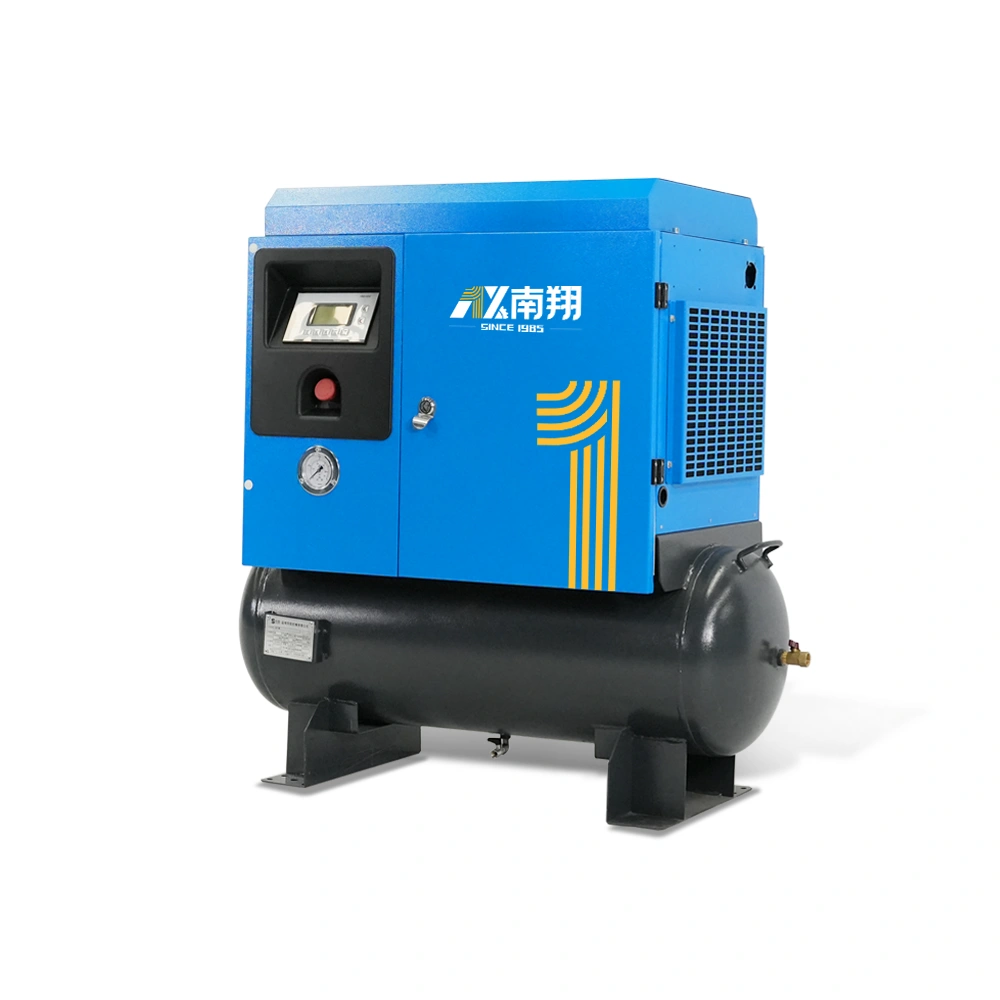
Los componentes electrónicos son delicados. El polvo, el aceite o la humedad pueden estropear una placa de circuitos o dañar piezas delicadas durante el montaje. Un compresor de aire estándar puede funcionar bien para alimentar herramientas neumáticas en un garaje, pero suele ser inadecuado para entornos de salas blancas o estaciones de soldadura de precisión.
Un compresor de aire para electrónica tiene que rendir:
- Aire limpio y seco (a menudo sin aceite)
- Presión de salida constante
- Bajos niveles de ruido (especialmente en entornos de laboratorio)
- Rendimiento fiable en turnos largos
Aquí hay mucho en juego. Una pizca de neblina de aceite puede causar problemas de adherencia en las placas de circuito impreso. La humedad puede corroer los componentes incluso antes de que salgan de fábrica.
Factores clave a la hora de elegir un compresor de aire para electrónica
Sin aceite frente a lubricado con aceite
Ésta es probablemente la decisión más crítica. Los compresores lubricados con aceite son comunes y asequibles, pero conllevan un riesgo: el aceite puede entrar en la corriente de aire. Para los trabajos electrónicos, los compresores sin aceite suelen ser la opción más segura. Eliminan los problemas de contaminación en origen.
Sin embargo, los modelos sin aceite suelen ser más ruidosos y tener una vida útil más corta. Es un compromiso que merece la pena considerar en función de tu entorno específico.
Normas de calidad del aire
Las distintas aplicaciones requieren diferentes niveles de calidad del aire. ISO 8573-1 es la norma internacional sobre pureza del aire comprimido:
1. Contenido en partículas
2. 2. Contenido de agua
3. Contenido de aceite
Para la mayor parte de la fabricación de productos electrónicos, se recomienda una calidad de aire de Clase 1 o Clase 2. Compare las especificaciones del compresor con estas normas antes de comprarlo.
Requisitos de CFM y PSI
Los CFM (pies cúbicos por minuto) y los PSI (libras por pulgada cuadrada) determinan si el compresor puede soportar su carga de trabajo. Las aplicaciones electrónicas no suelen necesitar una presión extremadamente alta, pero sí un caudal de aire constante.
Una orientación aproximada:
| Aplicación | CFM típicos | PSI típica |
|---|---|---|
| Limpieza de PCB | 2-5 CFM | 30-50 PSI |
| Máquinas "pick and place | 5-10 CFM | 60-90 PSI |
| Estaciones de soldadura | 1-3 CFM | 20-40 PSI |
| Asamblea General | 5-15 CFM | 70-100 PSI |
Un tamaño insuficiente provoca caídas de presión y un rendimiento irregular. El sobredimensionamiento desperdicia energía y dinero.
Nivel de ruido
Las instalaciones electrónicas, especialmente los laboratorios de I+D o los entornos de pruebas, suelen necesitar equipos más silenciosos. El ruido del compresor se mide en decibelios (dB). Si el ruido le preocupa, busque modelos con una clasificación inferior a 60 dB. Algunas unidades ultrasilenciosas funcionan en torno a los 40-50 dB, que es aproximadamente el nivel de conversación.
Tamaño del depósito y ciclo de trabajo
Los depósitos más grandes almacenan más aire, lo que reduce la frecuencia con la que se pone en marcha el motor. Para operaciones continuas, un depósito más grande (más de 20 galones) ayuda a mantener una presión constante. Los depósitos más pequeños funcionan bien para un uso intermitente.
El ciclo de trabajo también importa. Algunos compresores tienen un ciclo de trabajo de 50%, lo que significa que necesitan periodos de descanso. Para líneas de producción que funcionan todo el día, busque modelos con ciclo de trabajo 100%.
Características adicionales que merece la pena tener en cuenta
Secadores o filtros de aire incorporados
- Diseño de bajo mantenimiento
- Controles de presión digitales
- Tamaño compacto para espacios reducidos
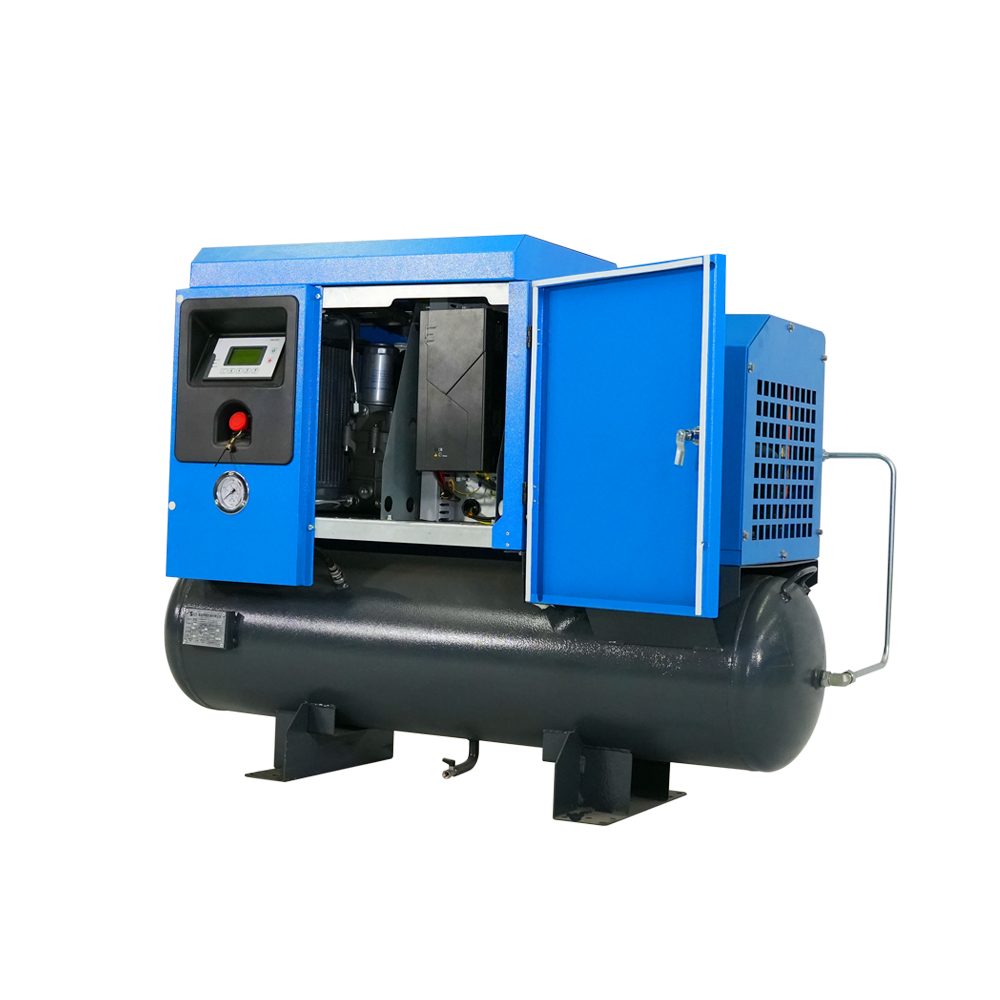
Estos extras añaden costes, pero pueden ahorrar dolores de cabeza en el futuro. Un compresor de aire para electrónica que incluya filtración integrada, por ejemplo, reduce la necesidad de accesorios externos.
Reflexiones finales
La elección de un compresor de aire para electrónica se reduce a conocer sus necesidades específicas: calidad del aire, presión, ruido y fiabilidad. Es tentador recortar gastos, pero la contaminación o los fallos del equipo cuestan más a largo plazo. Dedique tiempo a adaptar las especificaciones del compresor a los requisitos reales de su aplicación.
Preguntas frecuentes
¿Puedo utilizar un compresor de aire normal para fabricar componentes electrónicos?
Generalmente no recomendado. Los compresores estándar pueden introducir aceite o humedad que dañen los componentes sensibles.
¿Con qué frecuencia debo realizar el mantenimiento de un compresor de aire para electrónica?
Siga las directrices del fabricante, pero normalmente cada 500-1000 horas de funcionamiento para filtros e inspecciones.
¿Es siempre necesario un compresor sin aceite para la electrónica?
No siempre, pero es la opción más segura. Si se utilizan modelos lubricados por aceite, es esencial disponer de sistemas de filtración de alta calidad.