
En muchos trabajos industriales, el aire comprimido no es sólo una utilidad auxiliar. Es lo que mantiene las herramientas en funcionamiento, las superficies preparadas, los equipos mantenidos y el trabajo en marcha. Para las obras de construcción, los proyectos de carreteras, las zonas mineras, los astilleros y los equipos de mantenimiento de exteriores, el reto suele ser sencillo: el suministro de aire tiene que estar donde está el trabajo.
Ahí es donde un compresor de aire industrial portátil se convierte en algo valioso. En lugar de depender de un sistema de aire fijo dentro de un taller o fábrica, los compresores portátiles llevan el aire comprimido directamente a los lugares de trabajo cambiantes. Se suelen utilizar con herramientas neumáticas, equipos de perforación, sistemas de chorro de arena y herramientas de reparación que necesitan un caudal de aire estable en condiciones exigentes.
Por qué es importante el aire comprimido portátil en el trabajo industrial
El trabajo industrial rara vez se realiza en un lugar limpio y fijo. Un equipo de reparación de carreteras puede desplazarse varias veces en un mismo día. Un equipo de construcción puede trabajar en diferentes zonas de una gran obra. Un proyecto de minería o perforación puede funcionar lejos de una red eléctrica estable. En estas situaciones, un sistema de aire comprimido fijo no siempre resulta práctico.
Los compresores de aire portátiles resuelven este problema ofreciendo aire comprimido de forma móvil y listo para el lugar de trabajo. Muchos modelos funcionan con diésel o motor, lo que los hace útiles en zonas remotas donde el suministro eléctrico es limitado o inexistente.
La verdadera ventaja no es sólo que la máquina pueda desplazarse. Es que el trabajo ya no tiene que esperar a que se disponga el suministro de aire. El compresor puede seguir el proyecto.
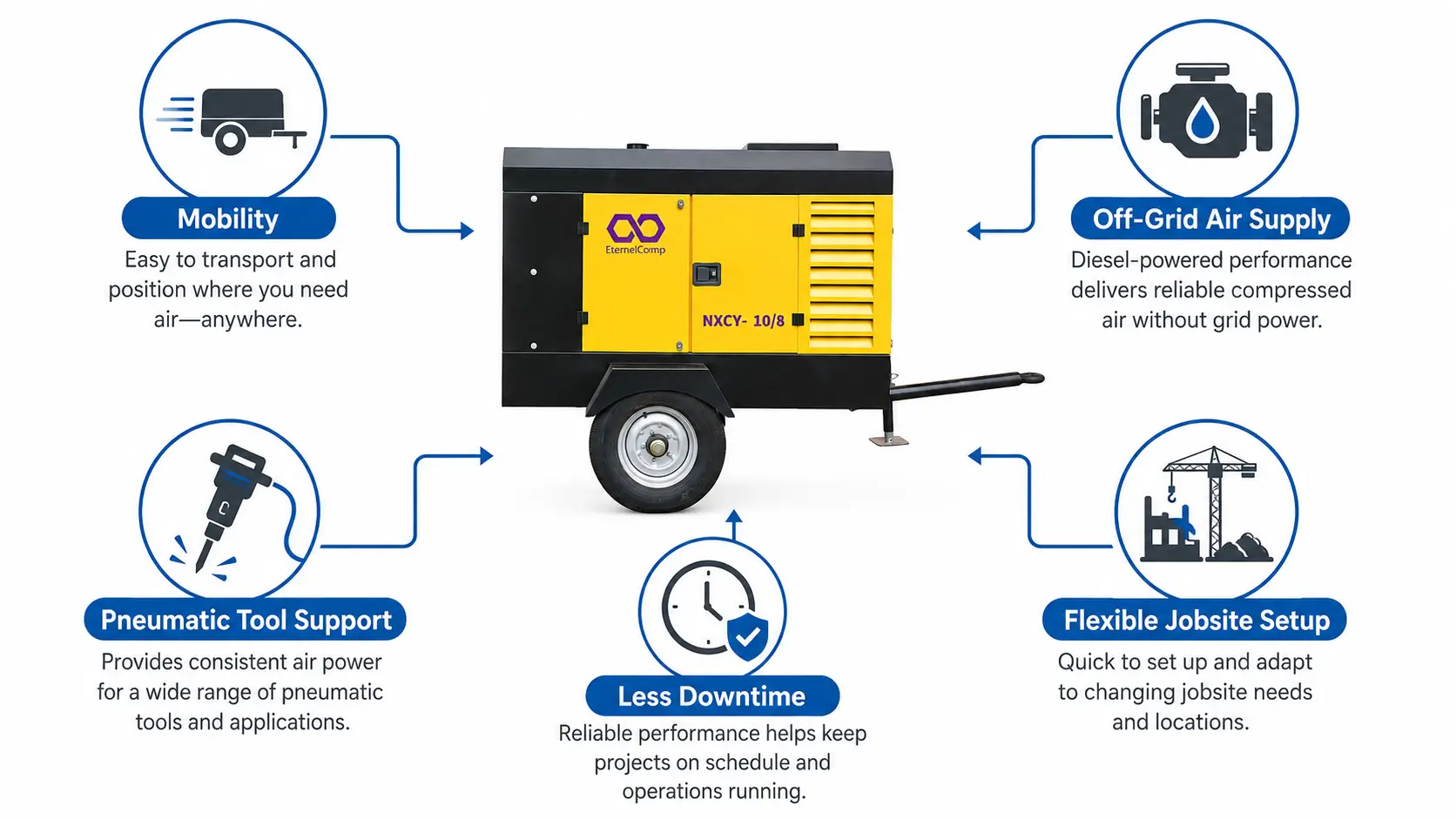
1. Mayor movilidad para cambiar de lugar de trabajo
La ventaja más obvia de un compresor de aire industrial portátil es la movilidad. Estas unidades suelen ir montadas sobre remolques, patines o bastidores compactos, lo que permite transportarlas de una zona de trabajo a otra.
Esto es especialmente útil para:
- Construcción y reparación de carreteras
- Proyectos de puentes e infraestructuras
- Mantenimiento de equipos exteriores
- Explotación de minas y canteras
- Instalación de tuberías y servicios públicos
- Proyectos industriales temporales
En un lugar de trabajo ajetreado, esta flexibilidad es importante. Los trabajadores no tienen que depender de largas mangueras de aire que salen de una ubicación fija del compresor. El compresor puede colocarse más cerca de la zona de trabajo real, lo que ayuda a reducir el tiempo de preparación y facilita la gestión de la obra.
Para los contratistas y las empresas de alquiler de equipos, la movilidad también mejora el uso de los activos. Un mismo compresor puede utilizarse en diferentes proyectos en lugar de permanecer atado a una única ubicación fija.
2. Suministro de aire fiable cuando la red eléctrica es limitada
Muchos proyectos industriales tienen lugar en zonas donde la electricidad no es fiable o no está disponible. Esto es habitual en obras de carreteras, minería, perforación y obras de construcción en fase inicial. En estos casos, los compresores eléctricos pueden no ser la opción más práctica.
Los compresores de aire portátiles diésel suelen ser los preferidos porque pueden funcionar independientemente de la red eléctrica. Están diseñados para su uso en exteriores y pueden suministrar aire comprimido de forma continua para herramientas y equipos exigentes.
Esta es una de las principales razones por las que los compresores portátiles se utilizan ampliamente en infraestructuras y trabajos de servicio sobre el terreno. Permiten a los equipos utilizar herramientas neumáticas incluso cuando el lugar no dispone de una fuente de alimentación permanente.
Para proyectos remotos o temporales, esa independencia puede suponer una diferencia notable. En lugar de retrasar el trabajo hasta que llegue la electricidad, los equipos pueden llevar su propio suministro de aire comprimido a la obra.
3. Fuerte apoyo a las herramientas neumáticas
Un compresor portátil sólo es útil si puede soportar adecuadamente las herramientas conectadas a él. En entornos industriales, esto suele significar algo más que “tener presión de aire”.”
Las herramientas neumáticas requieren tanto presión como caudal de aire. Los PSI miden la presión, mientras que los CFM miden el volumen de aire suministrado. Atlas Copco señala que el dimensionamiento del compresor debe tener en cuenta tanto el caudal de aire requerido como la presión necesaria para el proceso o la herramienta.
Entre las herramientas habituales que funcionan con compresores industriales portátiles se incluyen:
- Martillos neumáticos y martillos rompedores
- Taladros de roca
- Llaves de impacto
- Boquillas de chorro de arena
- Amoladoras neumáticas
- Herramientas de limpieza del aire
- Equipo de pulverización
- Herramientas de mantenimiento y reparación
Un error común es elegir un compresor basándose únicamente en la PSI máxima. En el uso real, una herramienta puede funcionar mal si el compresor no puede suministrar suficientes CFM a la presión requerida. Por eso, los compradores industriales deben tener en cuenta la demanda real de aire de cada herramienta, no solo la presión nominal.
| Aplicación | Por qué ayuda el aire portátil | Factor clave del compresor |
|---|---|---|
| Construcción | Herramientas Powers en zonas de trabajo cambiantes | Movilidad y flujo de aire estable |
| Obras en las carreteras | Soporta disyuntores, herramientas de reparación y trabajos al aire libre | Potencia diésel y diseño robusto |
| Chorro de arena | Necesita aire continuo para la preparación de la superficie | Alto rendimiento CFM |
| Minería y perforación | A menudo tiene lugar en zonas remotas | Durabilidad y control de la presión |
| Mantenimiento de equipos | Útil para limpiar, apretar y reparar | Rápida configuración y compatibilidad de herramientas |
4. Mayor productividad y menos tiempo de inactividad
En muchos proyectos industriales, el tiempo de inactividad no siempre se debe a un fallo grave del equipo. A veces viene de pequeños retrasos que se repiten: esperar a que se recupere la presión, mover mangueras, recolocar herramientas o parar porque el compresor no da abasto.
Un compresor de aire industrial portátil del tamaño adecuado ayuda a reducir estas interrupciones. Cuando el caudal de aire es estable, las herramientas neumáticas pueden trabajar de forma más constante. Los trabajadores pasan menos tiempo esperando y más tiempo completando la tarea.
Esta ventaja se hace más evidente con las herramientas de alta demanda de aire. El chorreado de arena, el taladrado y los trabajos pesados de rotura necesitan un caudal de aire continuo. Si el compresor es demasiado pequeño, el rendimiento de la herramienta disminuye rápidamente. La herramienta puede seguir funcionando, pero de forma lenta, débil o irregular.
Desde un punto de vista práctico, aquí es donde los compresores portátiles se convierten en equipos de productividad, no sólo en maquinaria auxiliar. Influyen directamente en la fluidez del trabajo.
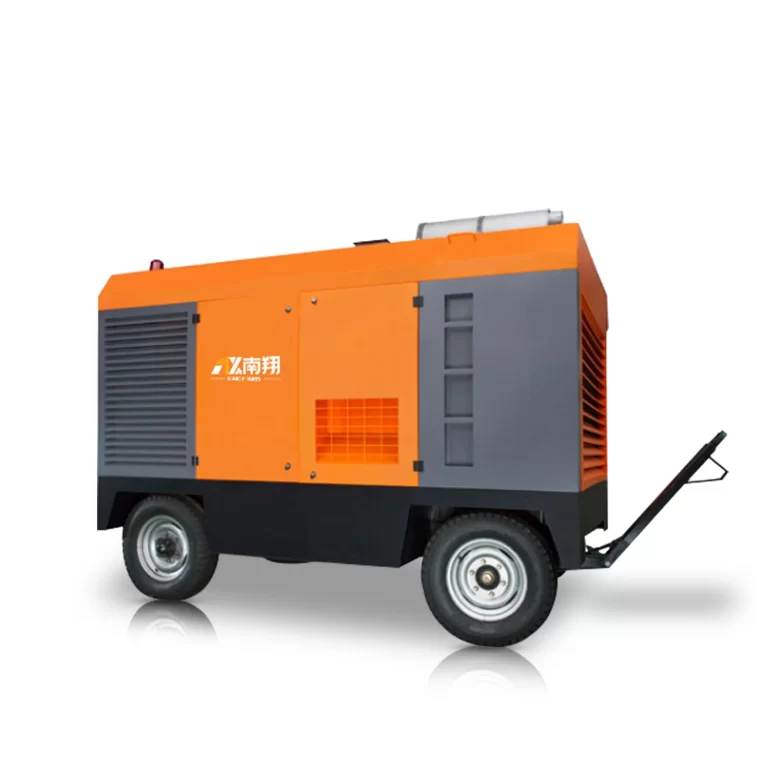
5. Instalación más sencilla y planificación flexible de los equipos
En comparación con los sistemas fijos de aire comprimido, los compresores portátiles son más fáciles de instalar en emplazamientos temporales o cambiantes. No suele ser necesario construir un sistema de tuberías permanente ni esperar a que se instale un servicio fijo.
Esto los hace útiles para:
- Proyectos de construcción a corto plazo
- Trabajos temporales de reparación
- Mantenimiento industrial exterior
- Proyectos de infraestructuras remotas
- Explotación de flotas de alquiler
Para las empresas que comparan proveedores, también puede ser útil revisar diferentes fabricantes de compresores de aire industriales portátiles antes de tomar una decisión de compra. La experiencia del fabricante, la asistencia en piezas de repuesto, el acceso al servicio técnico y la gama de modelos pueden influir en el valor de la propiedad a largo plazo.
Un precio de compra bajo puede parecer atractivo al principio, pero si el compresor es difícil de mantener o está mal adaptado a la aplicación, el coste real puede ser mucho mayor con el tiempo.
Conclusión
Un compresor de aire industrial portátil proporciona a los equipos industriales algo más que aire comprimido móvil. Aporta flexibilidad, independencia y un soporte estable para las herramientas en lugares de trabajo donde los sistemas fijos no son prácticos.
Para la construcción, el trabajo en carreteras, la minería, la perforación, el chorreado de arena y el mantenimiento sobre el terreno, las principales ventajas son claras: mayor facilidad de movimiento, suministro de aire fiable, mejor rendimiento de las herramientas, menos tiempo de inactividad y planificación más flexible de los proyectos.
Aun así, la elección correcta depende de la aplicación. Los CFM, los PSI, la fuente de alimentación, la durabilidad y el servicio de asistencia deben tenerse en cuenta antes de la compra. Si se selecciona correctamente, un compresor portátil puede convertirse en uno de los equipos más útiles en una obra industrial.
Preguntas frecuentes
1. ¿Es mejor un compresor de aire industrial portátil que uno fijo?
No siempre. Un compresor estacionario suele ser mejor para una línea de producción fija o un taller donde se necesita aire comprimido en el mismo lugar todos los días. Un compresor industrial portátil es mejor para trabajos al aire libre, proyectos temporales, trabajos en carretera y lugares donde la zona de trabajo cambia a menudo.
2. ¿Qué tamaño de compresor de aire portátil se necesita para las herramientas industriales?
El tamaño adecuado depende de los requisitos de CFM y PSI de la herramienta. Las herramientas de mantenimiento ligero pueden necesitar un caudal de aire menor, mientras que las de chorro de arena, perforación y rompedoras suelen requerir un CFM mucho mayor. Los compradores deben comprobar la demanda de aire de cada herramienta y prever una capacidad extra para la pérdida de presión y el funcionamiento continuo.
3. ¿Puede un compresor portátil hacer funcionar varias herramientas al mismo tiempo?
Sí, pero sólo si el compresor tiene suficiente capacidad total de caudal de aire. Primero debe calcularse la demanda combinada de CFM de todas las herramientas conectadas. Si el compresor es demasiado pequeño, la presión puede caer, las herramientas pueden ralentizarse y la eficiencia del trabajo puede verse afectada.