
Dimensionamiento de compresores de aire de tornillo rotativo lubricados con aceite: la guía completa paso a paso
Dimensionar correctamente un compresor de aire de tornillo rotativo lubricado con aceite marca la diferencia entre un sistema de aire comprimido que funciona de manera eficiente durante décadas y uno que supone una pérdida de dinero debido al consumo excesivo de energía, los fallos prematuros de los componentes y los paros en la producción. Las instalaciones de los sectores de la fabricación, la transformación alimentaria, la automoción y la industria farmacéutica dependen del aire comprimido como servicio básico; sin embargo, los datos del Departamento de Energía de EE. UU. indican que los sistemas de aire comprimido mal dimensionados desperdician entre el 20 % y el 30% de la energía que consumen, lo que supone miles de millones de dólares en costes evitables cada año en todo el sector industrial.
Un compresor de aire de tornillo rotativo lubricado con aceite es el pilar de los sistemas modernos de aire comprimido, muy apreciado por su capacidad para un ciclo de trabajo 100%, su salida de presión fiable y su amplio rango de potencias, que va desde los 5 HP hasta más de 500 HP. Sin embargo, la misma flexibilidad que hace que esta tecnología sea dominante también genera complejidad a la hora de dimensionar el sistema: elegir una unidad demasiado pequeña priva de aire a los equipos de producción, mientras que sobredimensionarla supone un desperdicio de capital y energía, ya que los compresores funcionan con menor eficiencia a carga parcial. Para realizar correctamente el cálculo del dimensionamiento se requiere una metodología sistemática que tenga en cuenta la demanda total de la planta, los requisitos de presión, el ciclo de trabajo, la altitud, las condiciones ambientales y el crecimiento futuro.
Para dimensionar un compresor de aire de tornillo rotativo lubricado con aceite es necesario calcular la demanda total de CFM de la instalación sumando el consumo de todos los equipos neumáticos finales, aplicando los factores de uso simultáneo; determinar la presión máxima requerida del sistema, incluidas las pérdidas de distribución; seleccionar un compresor con un caudal de aire libre (FAD) que satisfaga o supere la demanda calculada a la presión requerida en las condiciones ambientales del emplazamiento, y aplicar un margen de seguridad de 10-20% para tener en cuenta las fugas, la futura expansión y las cargas máximas intermitentes. La fórmula de dimensionamiento es: Caudal libre de aire (FAD) requerido del compresor = (CFM total del sistema × Factor de simultaneidad × Corrección por altitud) + Margen por fugas + Margen de crecimiento.
Tanto si está seleccionando un nuevo compresor de aire de tornillo rotativo lubricado con aceite para una instalación de nueva construcción, como si está renovando una unidad antigua o ampliando un sistema de aire comprimido ya existente, conocer la metodología de dimensionamiento le evitará el error más costoso a la hora de elegir un compresor: comprar basándose únicamente en la potencia nominal. Esta guía explica paso a paso todos los cálculos, aborda las variables operativas que influyen en el rendimiento real y proporciona las herramientas necesarias para llegar a una especificación que equilibre el coste de inversión con la eficiencia energética a lo largo de toda la vida útil.
Comprensión de la tecnología de los compresores de aire rotativos de tornillo lubricados con aceite
Un compresor de aire de tornillo rotativo lubricado con aceite utiliza dos rotores helicoidales que engranan entre sí dentro de una carcasa, con aceite inyectado directamente en la cámara de compresión para su refrigeración, estanqueidad y lubricación. El aceite forma un sello hidráulico entre los rotores y absorbe el calor de la compresión, lo que permite un funcionamiento continuo las 24 horas del día, los 7 días de la semana, a temperaturas de descarga que suelen oscilar entre los 80 °C y los 100 °C, sin el estrés térmico que limita a otros tipos de compresores.
El principio de funcionamiento de un compresor de aire de tornillo rotativo lubricado con aceite es aparentemente sencillo, pero mecánicamente elegante. El aire atmosférico entra a través de un filtro de admisión y queda atrapado entre los lóbulos de los rotores macho y hembra. A medida que los rotores giran, el volumen de aire atrapado disminuye progresivamente, comprimiendo así el aire. Al mismo tiempo, el aceite inunda la cámara de compresión, lo que enfría el aire, sella los huecos microscópicos entre los rotores y lubrica las superficies de contacto. La mezcla de aire y aceite resultante se descarga en un sistema de separación donde la fuerza centrífuga y los medios de coalescencia reducen el arrastre de aceite a 2-3 ppm.
Este diseño con baño de aceite es lo que confiere al compresor de aire de tornillo rotativo lubricado con aceite sus ventajas más destacadas: la capacidad de funcionar de forma continua sin ciclos de enfriamiento, un tamaño compacto en relación con su rendimiento y un ciclo de trabajo nominal de 100%. A diferencia de los compresores de pistón alternativo, que requieren descansos periódicos para disipar el calor, un compresor de tornillo rotativo lubricado con aceite y dimensionado adecuadamente puede funcionar las 24 horas del día durante años, con solo interrupciones por mantenimiento programado.
Para los centros que estén evaluando esta tecnología, el compresor de aire lubricado con aceite ofrece una visión general completa de los rangos de capacidad, las configuraciones de velocidad variable y los equipos auxiliares necesarios para una instalación completa de aire comprimido. Comprender las curvas de rendimiento específicas y las características de diseño de los modelos disponibles es fundamental antes de iniciar el proceso de dimensionamiento.
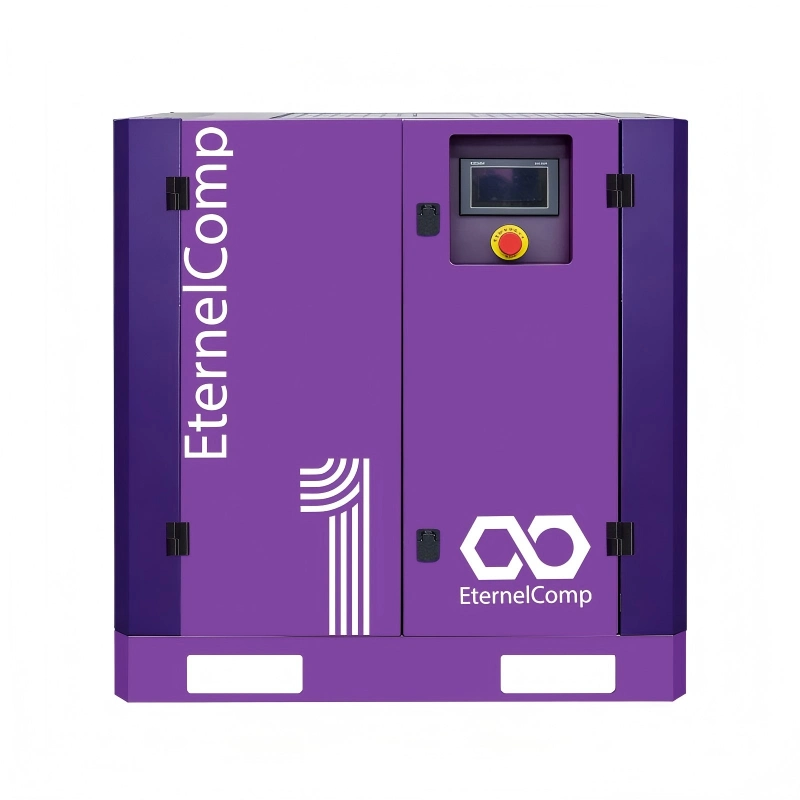
Parámetros clave para el dimensionamiento de un compresor de aire de tornillo rotativo lubricado con aceite
Los cuatro parámetros principales que determinan el dimensionamiento de los compresores de aire de tornillo rotativo lubricados con aceite son: la demanda total de caudal del sistema en CFM o m³/min, la presión de funcionamiento requerida en PSI o bar, el factor de simultaneidad —que representa el porcentaje de equipos que funcionan al mismo tiempo— y los factores de reducción de potencia específicos del emplazamiento, entre los que se incluyen la temperatura ambiente, la altitud y la calidad del aire de entrada. Cada parámetro tiene el mismo peso: un error en cualquiera de ellos invalida el cálculo del dimensionamiento.
Demanda total de caudal del sistema
La demanda de caudal es la base para el dimensionamiento de los compresores de aire de tornillo rotativo lubricados con aceite, y también es el parámetro que con mayor frecuencia se calcula de forma incorrecta. Todos los dispositivos neumáticos de la instalación consumen aire a un caudal nominal, pero estos valores nominales rara vez son sumables, ya que los equipos casi nunca funcionan simultáneamente a plena demanda.
El procedimiento correcto consiste en elaborar un inventario exhaustivo de los equipos que incluya cada herramienta, válvula, actuador, cilindro, boquilla de purga y consumidor de aire de proceso. Para cada elemento, anota el consumo de aire nominal indicado por el fabricante —que suele expresarse en CFM a una presión determinada—. A continuación, clasifica los equipos en tres grupos:
- Demanda continua: Equipos que funcionan de forma continua durante la producción (aire de proceso, cojinetes neumáticos, secadores de purga constante)
- Demanda intermitente: equipos que se encienden y apagan periódicamente (llaves de impacto, válvulas de pulso, abrazaderas neumáticas)
- Demanda ocasional: Equipos que se utilizan de forma esporádica (sopladores, inflado de neumáticos, herramientas de mantenimiento)
A cada categoría se le asigna un factor de simultaneidad diferente en el cálculo final, lo que refleja el hecho de que no todo se ejecuta al mismo tiempo.
Requisitos de presión de funcionamiento
El segundo parámetro fundamental para dimensionar un compresor de aire de tornillo rotativo lubricado con aceite es la presión máxima del sistema, y es aquí donde una idea errónea muy extendida da lugar a errores costosos. Muchos prescriptores se fijan en la herramienta con mayor presión nominal de la planta —por ejemplo, una llave dinamométrica que requiere 90 PSI— y dimensionan el compresor para 100 PSI. Esto pasa por alto la caída de presión que se produce en las tuberías de distribución, los filtros, los secadores y los accesorios entre la descarga del compresor y el punto de uso.
Un sistema de distribución de aire comprimido correctamente diseñado suele perder entre 5 y 15 PSI entre la salida del compresor y el punto de uso final más alejado o más exigente. El compresor de tornillo rotativo lubricado con aceite debe dimensionarse para suministrar la presión de uso final requerida más la caída de presión total del sistema. Si la herramienta más exigente necesita 90 PSI y la caída de presión del sistema es de 10 PSI, el compresor debe mantener al menos 100 PSI; y este es el mínimo, no el objetivo, que debería incluir un margen adicional.
| Componente de presión | Rango típico | Notas |
|---|---|---|
| Requisitos para los equipos de uso final | 60-120 PSI | Varía según el tipo de herramienta o proceso |
| Caída de presión en el secador | 1-5 PSI | Secadores por refrigeración: 1-3 PSI; desecantes: 2-5 PSI |
| Caída de presión en el sistema de filtración | 1-4 PSI | Depende del tipo y del estado del elemento filtrante |
| Pérdidas en las tuberías de distribución | 3-10 PSI | Función del diámetro, la longitud y el trazado de las tuberías |
| Margen de seguridad | 5-10 PSI | Cuentas para el amortizamiento y equipos adicionales futuros |
Condiciones ambientales y reducción de la potencia nominal
Un compresor de aire de tornillo rotativo lubricado con aceite se califica en condiciones de entrada estándar —normalmente 20 °C (68 °F), 14,7 PSIA (1 bar absoluto) y una humedad relativa del 0%—. Cuando las condiciones reales in situ se desvían de estos valores estándar, el compresor suministra menos aire del indicado en la placa de características. Hay dos factores que influyen de manera determinante en la reducción de la potencia nominal en la práctica:
Altitud: La densidad del aire disminuye con la altitud. A 1.500 metros (4.920 pies), la densidad del aire es aproximadamente el 85% de la del nivel del mar, y el caudal másico de salida del compresor disminuye proporcionalmente. Un compresor de tornillo rotativo lubricado con aceite, con una capacidad nominal de 200 CFM al nivel del mar, suministra aproximadamente 170 CFM a 1.500 metros.
Temperatura de entrada: El aire más caliente es menos denso. Un aumento de 10 °C en la temperatura de entrada reduce el caudal másico en aproximadamente un 3%. En una sala de compresores donde las temperaturas ambientales pueden alcanzar los 40 °C (104 °F) en verano, la reducción con respecto a las condiciones nominales estándar puede ser de entre un 6 y un 8%.
Ciclo de trabajo y perfil de carga
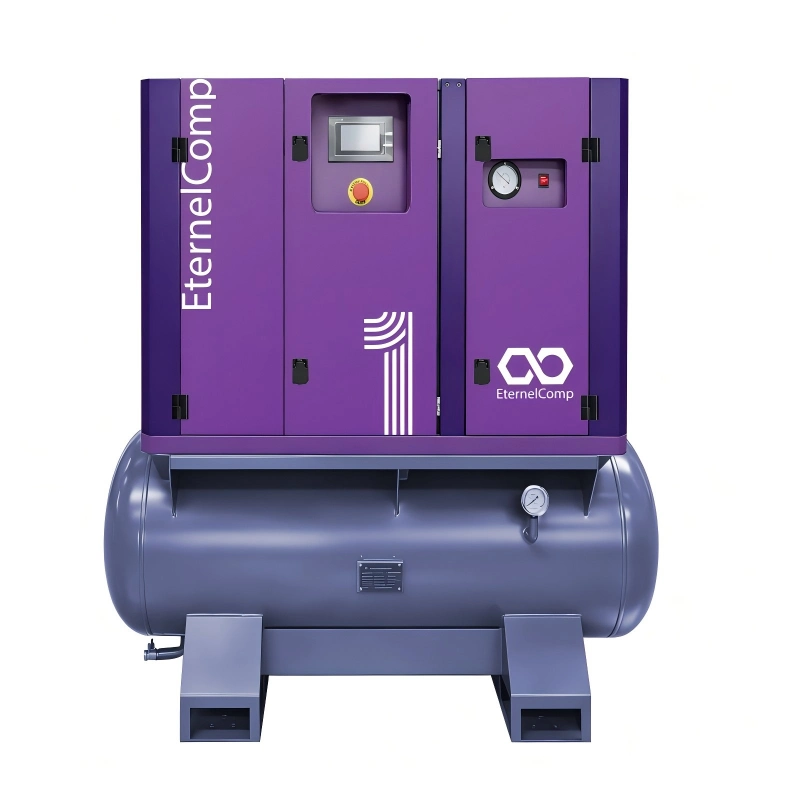
Aunque un compresor de aire de tornillo rotativo lubricado con aceite es intrínsecamente capaz de soportar un ciclo de trabajo de 100%, el perfil de carga —es decir, cómo varía la demanda a lo largo del tiempo— determina si es más adecuado un equipo de velocidad fija o uno con variador de velocidad (VSD). Una instalación con un perfil de demanda relativamente estable que funcione cerca de la capacidad nominal del compresor se beneficia de la simplicidad y del menor coste de inversión de una máquina de velocidad fija. Una instalación con grandes oscilaciones en la demanda —algo habitual en operaciones de varios turnos con horarios de producción variables— consigue una eficiencia energética significativamente mayor con una unidad VSD que modula la potencia de salida para adaptarse a la demanda.
El perfil de carga también influye a la hora de determinar si la configuración óptima es un único compresor o varias unidades en paralelo. Un análisis detallado de la variación de la demanda a lo largo de una semana de producción representativa, obtenida mediante el registro de datos o mediciones de auditoría del sistema, proporciona la base empírica para tomar esta decisión, en lugar de basarse en suposiciones o reglas empíricas.
Metodología paso a paso para el dimensionamiento de tu compresor de aire de tornillo rotativo lubricado con aceite
El dimensionamiento de un compresor de aire de tornillo rotativo lubricado con aceite requiere un proceso estructurado de cinco pasos: realizar un inventario de todos los equipos neumáticos con su consumo nominal de aire; aplicar factores de simultaneidad según la categoría de los equipos; determinar la presión requerida del sistema, incluyendo todas las pérdidas de distribución; aplicar factores de reducción específicos del emplazamiento en función de la altitud y la temperatura; y añadir márgenes de seguridad para fugas y crecimiento futuro. Omitir cualquier paso da lugar a una especificación que, o bien es insuficiente —lo que limita la producción—, o bien es excesiva —lo que supone un desperdicio de energía y capital—.
Elaborar el inventario completo de equipos
Empiece por documentar todos los consumidores de aire comprimido de la instalación. Este ejercicio suele revelar una demanda “oculta”: secadores de purga continua, válvulas solenoides que pierden aire, acoplamientos rápidos con fugas y estaciones de purga que los operarios han ido añadiendo con el tiempo. Una inspección con bloc de notas, complementada con la detección ultrasónica de fugas, es la única forma fiable de obtener una imagen real de la demanda.
Para cada equipo, anota:
| Dato | Ejemplo | Fuente |
|---|---|---|
| Descripción del equipo | Llave dinamométrica de la cadena de montaje, estación 3 | Disposición de la planta / Entrevista con el operario |
| Consumo nominal de aire | 15 CFM a 90 PSI | Placa de características del fabricante o manual |
| Presión de funcionamiento | 90 PSI | Placa de características; comprueba la lectura del manómetro |
| Categoría de servicio | Intermitente | Continuo / Intermitente / Ocasional |
| Porcentaje estimado de puntualidad | 40% | Entrevista al operario o cronometraje del ciclo |
Aplicar factores de simultaneidad
La suma de todos los caudales nominales casi siempre supera la demanda simultánea real. La aplicación de factores de simultaneidad realistas evita el sobredimensionamiento:
| Categoría de servicio | Factor de simultaneidad recomendado | Justificación |
|---|---|---|
| Demanda constante | 1.0 (100%) | La maquinaria funciona de forma continua durante la producción |
| Demanda intermitente | 0.5-0.7 (50-70%) | Funcionamiento cíclico típico a lo largo de un turno |
| Demanda esporádica | 0.1-0.2 (10-20%) | Se utiliza muy poco; su contribución a la demanda máxima es mínima |
Calcula el caudal ajustado para cada categoría multiplicando la suma de los caudales nominales por el factor de simultaneidad; a continuación, suma los caudales ajustados para obtener la demanda simultánea total.
Determinar la presión necesaria del sistema
Partiendo del requisito de presión de uso final más elevado, suma cada factor que contribuye a la pérdida de presión hasta obtener la presión mínima de descarga del compresor:
- Requisito máximo para los equipos de uso final: 90 PSI
- Caída de presión del secador (refrigerado): +2 PSI
- Caída de presión en el sistema de filtración (coalescente + partículas): +3 PSI
- Pérdida en las tuberías de distribución (medida o calculada): +8 PSI
- Ancho de banda de control (compresores de velocidad fija): +10 PSI
- Margen de seguridad: +5 PSI
Presión total de descarga del compresor requerida: 118 PSI — redondear a 120 PSI
En el caso de un compresor de aire de tornillo rotativo lubricado con aceite y con variador de velocidad, el ancho de banda de control puede reducirse a aproximadamente 2-3 PSI, lo que reduce la presión de descarga necesaria a unos 110-112 PSI. Esta reducción de presión por sí sola supone un ahorro energético de aproximadamente 1% por PSI; una reducción de 10 PSI representa un consumo energético casi 10% menor.
Aplicar los factores de reducción de potencia del emplazamiento
Una vez calculada la demanda simultánea y determinada la presión, aplique los factores de reducción por condiciones ambientales:
Corrección por altitud: Si la instalación se encuentra a 1.000 metros (3.280 pies), aplique un factor de reducción de aproximadamente 0,90. El caudal de aire libre requerido a nivel del mar queda calculado de la siguiente manera: demanda simultánea ajustada ÷ 0,90.
Corrección de la temperatura de entrada: Si la temperatura ambiente media de la sala de compresores es de 32 °C (90 °F) en verano, frente a la condición nominal estándar de 20 °C (68 °F), aplique una reducción de potencia adicional de aproximadamente 4%.
Ejemplo de reducción de potencia combinada: demanda simultánea de 350 CFM en una instalación situada a 1.000 metros de altitud y con una temperatura ambiente de 32 °C:
- Corrección de altitud: 350 ÷ 0,90 = 389 CFM
- Corrección de temperatura: 389 ÷ 0,96 = 405 CFM de caudal nominal FAD requerido
Añadir márgenes de seguridad y finalizar
El último paso para dimensionar un compresor de aire de tornillo rotativo lubricado con aceite consiste en añadir márgenes para:
Fugas: Incluso los sistemas bien mantenidos pierden entre 5 y 10% de aire comprimido debido a fugas. El Departamento de Energía de EE. UU. (DOE) señala que es habitual que se produzcan fugas de hasta 30% en plantas con un mantenimiento deficiente. A efectos de dimensionamiento, se debe partir de la base de 10%, salvo que los datos de la auditoría indiquen una cifra diferente.
Ampliación futura: La mayoría de las instalaciones crecen. Un margen de 10-15% evita la necesidad de sustituir prematuramente el compresor o de llevar a cabo una costosa ampliación en sistema dúplex.
Cálculo final del dimensionamiento: 405 CFM (demanda reducida) × 1,10 (fugas) × 1,10 (crecimiento) = 490 CFM FAD a la presión de descarga requerida de 120 PSI.
El compresor de aire de tornillo rotativo lubricado con aceite seleccionado debe proporcionar un caudal de aire diario (FAD) de al menos 490 CFM a 120 PSI en condiciones nominales estándar. En la práctica, el modelo estándar más cercano podría tener una capacidad nominal de 500 CFM, lo que proporcionaría un pequeño margen adicional.
Errores habituales a la hora de elegir el tamaño adecuado de un compresor de aire de tornillo rotativo lubricado con aceite
Los tres errores de dimensionamiento más frecuentes y costosos a la hora de especificar un compresor de aire de tornillo rotativo lubricado con aceite son: el dimensionamiento en función de la potencia del motor en lugar del caudal de aire libre, ignorar la relación entre presión y caudal inherente a las curvas de rendimiento del compresor, y no tener en cuenta el mayor consumo energético de los compresores de velocidad fija que funcionan a carga parcial. Cada uno de estos errores tiene un impacto directo y cuantificable en el coste operativo a lo largo de la vida útil.
Comprar según la potencia en caballos de vapor
La potencia nominal en caballos de vapor es uno de los indicadores menos fiables del rendimiento de un compresor. Dos modelos distintos de compresores de aire de tornillo rotativo lubricados con aceite, de 50 HP y de diferentes fabricantes, pueden suministrar caudales en CFM significativamente diferentes a la misma presión debido a diferencias en la eficiencia del bloque compresor, la eficiencia del motor y el diseño de la carcasa. El parámetro de especificación correcto es el caudal de aire libre (FAD) en CFM o m³/min a la presión de descarga requerida, medido según las normas ISO 1217 o CAGI/PNEUROP.
El riesgo adicional de basar la compra en los caballos de potencia es que incentiva a los fabricantes a optimizar el rendimiento para alcanzar una cifra concreta de caballos de potencia, en lugar de hacerlo para la eficiencia global del sistema. Un compresor que suministra los CFM necesarios con 48 HP es más eficiente desde el punto de vista energético y su funcionamiento resulta más económico que uno que requiera 52 HP para el mismo rendimiento; sin embargo, si la especificación se formula en torno a “50 HP”, es posible que la máquina más eficiente quede excluida de la selección.
Ignorar la curva de presión-caudal
Todos los compresores de aire de tornillo rotativo lubricados con aceite tienen una curva de rendimiento específica que muestra el caudal en función de la presión. Una unidad con una potencia nominal de 200 CFM a 100 PSI ofrece un caudal considerablemente menor a 125 PSI —normalmente entre un 10 y un 15 % menos— debido a que la relación de compresión interna cambia y la eficiencia volumétrica disminuye. Los prescriptores que toman el valor nominal de 100 PSI y dan por sentado que se mantiene a la presión requerida por el sistema de 125 PSI acaban eligiendo un compresor de capacidad insuficiente.
Consulte siempre la curva de rendimiento publicada por el fabricante —y no un único punto de datos— y compruebe que el caudal de aire libre (FAD) a la presión de descarga real requerida alcance o supere la demanda calculada. Esto es especialmente importante en el caso de los modelos de compresores de tornillo rotativo lubricados con aceite y con accionamientos de velocidad fija, en los que el caudal desciende más bruscamente a presiones elevadas que en las unidades con variador de velocidad (VSD).
Descuidar la eficiencia a carga parcial
Un compresor de aire de tornillo rotativo lubricado con aceite y de velocidad fija funciona con mayor eficiencia a plena carga o cerca de ella. Cuando la demanda disminuye —como ocurre durante el segundo turno, los fines de semana o en los periodos de menor actividad estacional—, el compresor alterna entre los estados de carga y descarga. Durante la descarga, el motor sigue funcionando, pero el compresor no produce aire, consumiendo entre 25 y 35% de la potencia a plena carga sin generar ningún caudal. Este consumo de energía en ralentí es un puro desperdicio.
| Condición de carga | Consumo energético a velocidad fija | Consumo energético del VSD |
|---|---|---|
| Carga 100% | 100% | 100% |
| Carga 75% | 75% (en régimen estacionario) o pérdidas por ciclo | ~75% |
| Carga 50% | ~62-68% (con ciclo) | ~50% |
| Carga 25% | ~55-60% (con ciclo) | ~28% |
En instalaciones con una variación significativa de la demanda, un compresor de aire de tornillo rotativo lubricado con aceite y con variador de velocidad (VSD) suele ofrecer un ahorro energético de entre 25 y 351 TP3T en comparación con los modelos de velocidad fija, lo que permite amortizar el sobrecoste del VSD en un plazo de entre 12 y 24 meses.
Equipos auxiliares para la instalación de un compresor de aire de tornillo rotativo lubricado con aceite
Un compresor de aire de tornillo rotativo lubricado con aceite requiere un sistema de tratamiento de aire correctamente dimensionado y configurado —que incluya secadores, sistemas de filtración, gestión de condensados y depósitos de aire— para suministrar aire comprimido limpio y seco en el punto de uso. Un equipo de tratamiento de dimensiones insuficientes provoca cuellos de botella en la presión que anulan las ventajas de un dimensionamiento correcto del compresor, mientras que los receptores de dimensiones insuficientes provocan un funcionamiento intermitente excesivo del compresor y un desgaste acelerado de los componentes..
Dimensionamiento de sistemas de tratamiento de aire
El equipos de tratamiento de aire comprimido Los componentes instalados aguas abajo de un compresor de aire de tornillo rotativo lubricado con aceite deben dimensionarse para el mismo caudal que el compresor a la presión de funcionamiento del sistema. Un componente de tratamiento diseñado para un caudal inferior al del compresor crea un punto de estrangulamiento de la presión que aumenta el consumo de energía y reduce el aire disponible en la planta de producción.
Componentes clave del tratamiento y consideraciones relativas a su dimensionamiento:
- Secador refrigerado: Adapta el caudal nominal del secador a la presión del sistema al caudal de aire seco (FAD) del compresor. Un ligero sobredimensionamiento (10-15%) aumenta la capacidad del secador para mantener el punto de rocío a medida que varían las condiciones ambientales.
- Filtros coalescentes: Dimensionar según el caudal de aire del compresor (FAD) cuando el elemento filtrante está limpio. A medida que los filtros se van saturando de contaminantes, la caída de presión aumenta; por lo tanto, elegir una carcasa de un tamaño superior al habitual prolonga la vida útil del elemento y reduce el coste energético derivado de la caída de presión.
- Filtros de carbón activo: son sensibles a la velocidad; las carcasas de mayor tamaño mejoran la eficacia en la eliminación de los vapores de aceite al aumentar el tiempo de permanencia.
- Depósito de aire: La pauta general es de 3 a 5 galones por CFM de caudal del compresor para los compresores con carga/descarga, y de 1 a 2 galones por CFM para los compresores con variador de velocidad (VSD). El depósito amortigua las pulsaciones de presión, almacena aire para los picos de demanda y permite que el compresor realice menos ciclos de carga/descarga.
Gestión del condensado
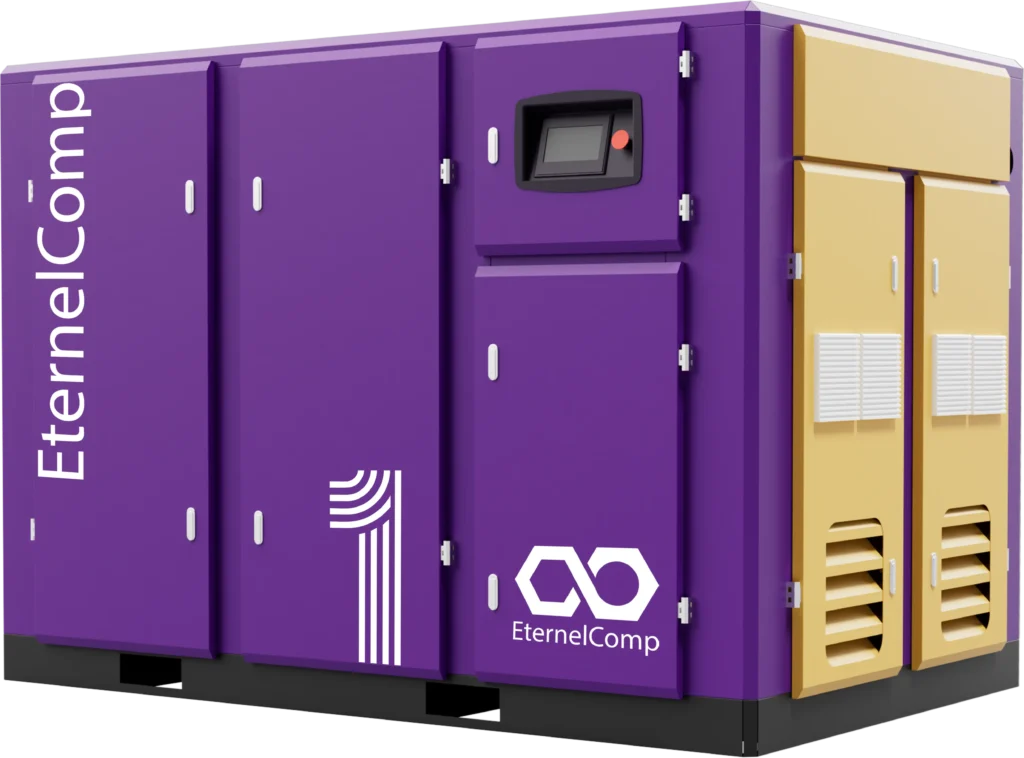
Un compresor de aire de tornillo rotativo lubricado con aceite genera una cantidad considerable de condensado —aproximadamente 20 galones por cada 1.000 CFM al día en condiciones de humedad— y este condensado contiene trazas de aceite que deben tratarse antes de su descarga. Los separadores de aceite y agua, dimensionados para la tasa máxima de producción de condensado del compresor, son un requisito de cumplimiento medioambiental, no un accesorio opcional.
Tuberías y distribución
El dimensionamiento del compresor carece de sentido si el sistema de distribución no puede suministrar el aire. Una tubería de tamaño insuficiente provoca caídas de presión inducidas por la velocidad y arrastra condensado. La regla general es limitar la velocidad del aire comprimido a entre 20 y 30 pies por segundo en los colectores principales y dimensionar el diámetro de la tubería en consecuencia. Un sistema de 500 CFM requiere un colector principal de acero de 3 pulgadas, de clase 40, como mínimo; uno de 4 pulgadas ofrece una menor caída de presión y mayor capacidad de adaptación a futuras necesidades.
Funcionamiento de un compresor de aire de tornillo rotativo lubricado con aceite del tamaño adecuado
Dimensionar correctamente un compresor de aire de tornillo rotativo lubricado con aceite no es una tarea que se realice una sola vez: la demanda evoluciona, se añaden equipos y aumentan las fugas. Las auditorías anuales del sistema de aire comprimido, en las que se miden el caudal real, la presión y el consumo eléctrico y se comparan con los supuestos de dimensionamiento originales, proporcionan los datos necesarios para determinar si el compresor sigue estando correctamente dimensionado o si requiere un ajuste mediante la configuración del control de capacidad, almacenamiento adicional o unidades complementarias.
Seguimiento del rendimiento continuo
Los controladores modernos de los compresores de aire de tornillo rotativo lubricados con aceite proporcionan datos continuos sobre los parámetros clave de rendimiento: presión de descarga, corriente del motor, horas de funcionamiento, ciclos de carga y descarga, y temperatura de funcionamiento. El análisis de la evolución de estos datos a lo largo de varios meses revela cambios graduales que indican la aparición de problemas:
- El aumento de la frecuencia de los ciclos de carga y descarga puede indicar un aumento de las fugas o una pérdida de capacidad del receptor.
- Un aumento de la potencia específica (kW por cada 100 CFM) indica una disminución de la eficiencia del bloque compresor o del motor.
- Una caída gradual de la presión con una demanda constante indica que el filtro está obstruido o que hay restricciones en las tuberías
Cuando es necesario cambiar de talla
Hay varios indicios operativos que apuntan a que un compresor de aire de tornillo rotativo lubricado con aceite podría haber dejado de tener el tamaño adecuado para la instalación:
- El compresor funciona de forma continua a plena carga y la presión del sistema desciende por debajo del valor de consigna durante los periodos de máxima demanda, lo que constituye un claro indicio de que la capacidad es insuficiente.
- El compresor se pone en marcha con una frecuencia superior a 6-8 arranques por hora, lo que indica que la unidad es de mayor potencia de la necesaria para la demanda real, lo que provoca un número excesivo de arranques del motor y un mayor desgaste.
- El consumo específico de energía, medido en kW/100 CFM, ha aumentado en más de 10% con respecto al valor de referencia; posible deterioro del compresor o del motor.
- Se ha ampliado la producción o se han incorporado nuevos equipos neumáticos sin revisar el cálculo de dimensionamiento original.
Las instalaciones de diversos sectores suelen enfrentarse a retos similares en cuanto al dimensionamiento. Al analizar Aplicación industrial Los casos prácticos ofrecen una visión práctica de cómo se ha abordado el dimensionamiento de los compresores de aire de tornillo rotativo lubricados con aceite en los sectores de la alimentación y las bebidas, la electrónica, el sector farmacéutico y la industria manufacturera en general.
Argumentos económicos a favor de la optimización de la plantilla
El coste de funcionamiento de un compresor de aire de tornillo rotativo lubricado con aceite cuyo tamaño no se ha calculado correctamente se acumula con el paso de los años. Un compresor de 100 HP con un desperdicio energético de 25% debido a un dimensionamiento inadecuado —ya sea por un sobredimensionamiento con ciclos excesivos o por un subdimensionamiento con déficit de presión— desperdicia aproximadamente $15 000 al año a un coste de $0,10/kWh. A lo largo de una vida útil típica de 10 años, eso supone $150 000 en costes energéticos evitables derivados de un único error de dimensionamiento. Cuando hay varios compresores implicados, el impacto financiero se multiplica en consecuencia.
Invertir en una auditoría profesional del sistema de aire comprimido que incluya el registro de datos de caudal, presión y potencia durante una semana de producción representativa suele costar entre $3.000 y $8.000, lo que supone una fracción del desperdicio anual que genera un sistema mal dimensionado. Estos datos de la auditoría transforman el proceso de dimensionamiento, pasando de la estimación a la medición, y proporcionan la base empírica para una especificación que adapta con precisión el compresor de tornillo rotativo lubricado con aceite a la demanda real.
Preguntas frecuentes
¿Cuál es la diferencia entre el caudal de aire libre y el desplazamiento a la hora de dimensionar un compresor de aire de tornillo rotativo lubricado con aceite?
El caudal de aire libre (FAD) es el volumen real de aire comprimido suministrado en la brida de descarga, referenciado a las condiciones de admisión, y medido de acuerdo con las normas de ensayo ISO 1217 o CAGI/PNEUROP. El desplazamiento es el volumen barrido teórico del bloque compresor, calculado a partir de la geometría y la velocidad del rotor; siempre es superior al FAD, ya que no tiene en cuenta las fugas internas, el volumen de holgura ni las pérdidas por eficiencia volumétrica. Utilice siempre el FAD, y no el desplazamiento, para dimensionar un compresor de tornillo rotativo lubricado con aceite. Una unidad con un desplazamiento de 300 CFM puede suministrar únicamente entre 255 y 270 CFM de FAD a la presión de funcionamiento.
¿Cómo se tiene en cuenta la fuga de aire comprimido a la hora de dimensionar un nuevo compresor?
En el caso de una nueva instalación, incluya un margen de fugas de 5-10% en el cálculo de dimensionamiento. En el caso de una instalación ya existente, realice un estudio de detección de fugas por ultrasonidos antes de concretar las especificaciones del nuevo compresor: reparar primero las fugas conocidas reduce el tamaño necesario del compresor y evita que las fugas se incorporen a la línea de base del nuevo sistema. El Instituto del Aire Comprimido y el Gas estima que una sola fuga de 1/8 de pulgada a 100 PSI supone un desperdicio de aproximadamente 25 CFM, lo que supone un coste anual de más de $3.500 a $0,10/kWh.
¿Debo basarme en la demanda máxima o en la demanda media a la hora de elegir un compresor de aire de tornillo rotativo lubricado con aceite?
El compresor debe dimensionarse en función de la demanda máxima sostenida —el caudal más alto que el sistema debe mantener de forma continua— y no en función de picos transitorios que duran solo unos segundos. Los picos de demanda de corta duración se gestionan de forma más rentable aumentando el volumen del depósito de aire en lugar de aumentar el tamaño del compresor. Un depósito más grande almacena energía en forma de aire comprimido durante los periodos de baja demanda y la libera durante los picos, actuando como un amortiguador que evita que el compresor se ponga en marcha y se pare excesivamente o que resulte sobredimensionado para la carga en régimen estable.