Generator PSA dan nitrogen kriogenik untuk keperluan industri: bandingkan tingkat kemurnian, biaya, dan cara memilih sistem yang tepat untuk aplikasi Anda.
Sebuah pabrik yang menghabiskan $80.000 per tahun untuk pengiriman tabung nitrogen sebenarnya membiayai dua hal: margin laba produsen nitrogen dan tagihan bahan bakar perusahaan angkutan truk. Hanya sebagian kecil dari uang tersebut yang digunakan untuk membeli molekul nitrogen itu sendiri. Sisanya digunakan untuk biaya sewa tabung, logistik pengiriman, sewa tangki curah, pemeliharaan alat penguap, kepatuhan terhadap standar keselamatan, dan biaya administrasi. Sebuah pembuatan nitrogen di lokasi Sistem ini menghilangkan ketergantungan tersebut dengan memproduksi nitrogen dari udara sekitar langsung di lokasi penggunaan, sehingga menurunkan biaya nitrogen per unit sebesar 50% hingga 80% dan melindungi pabrik dari gangguan rantai pasokan. Pertanyaannya bukanlah apakah produksi di lokasi lebih murah — memang demikian, dalam hampir semua kasus di mana konsumsi nitrogen tahunan melebihi 5.000 meter kubik — melainkan jenis generator nitrogen mana yang sesuai dengan persyaratan kemurnian, laju aliran, dan profil operasi pabrik.
Generator nitrogen industri diklasifikasikan ke dalam dua teknologi dasar: Pressure Swing Adsorption (PSA), yang menggunakan saringan molekuler karbon untuk memisahkan nitrogen dari udara terkompresi dengan tingkat kemurnian 95% hingga 99,999%; dan distilasi kriogenik, yang mencairkan dan mendistilasi udara secara fraksional untuk menghasilkan nitrogen dengan kemurnian melebihi 99,999% pada laju aliran mulai dari ratusan hingga ribuan Nm³/h. A Generator nitrogen PSA mendominasi rentang 5 hingga 5.000 Nm³/jam untuk aplikasi dengan tingkat kemurnian menengah hingga tinggi, yang mencakup sebagian besar penggunaan nitrogen di sektor industri—mulai dari pengemasan makanan hingga perakitan elektronik. Sistem kriogenik digunakan untuk aplikasi bervolume besar dan berkemurnian sangat tinggi, di mana tidak ada sistem lain yang dapat memenuhi spesifikasinya. Pilihan di antara keduanya ditentukan oleh tiga parameter: tingkat kemurnian yang dibutuhkan, laju aliran, dan biaya siklus hidup.
Dalam teknologi PSA, telah muncul pertimbangan keempat: konfigurasi fisik. Generator nitrogen PSA modular — yang dibangun dari beberapa pasang bejana CMS independen yang dihubungkan secara paralel — menghadirkan dimensi skalabilitas, redundansi, dan fleksibilitas pemasangan yang tidak dapat ditandingi oleh unit PSA monolitik tradisional. Bagi pabrik yang mengantisipasi pertumbuhan atau membutuhkan pasokan nitrogen tanpa gangguan selama pemeliharaan, pendekatan modular mengubah generator dari mesin satu titik menjadi sistem yang dapat diperluas dan tahan terhadap kegagalan.
Mengapa Sektor Industri Mulai Beralih dari Pengiriman Tabung Nitrogen
Produksi di lokasi menggantikan rantai pasokan dengan biaya variabel dengan aset modal berbiaya tetap yang memproduksi nitrogen dengan harga $0,02–$0,05 per meter kubik, dibandingkan dengan $0,15–$0,40 untuk nitrogen cair yang dikirimkan. Untuk pabrik yang mengonsumsi 200.000 m³/tahun, masa pengembalian modal biasanya 12–24 bulan, setelah itu generator beroperasi selama 10–15 tahun dengan biaya tambahan yang hampir nol selain biaya listrik dan penggantian CMS secara berkala.
Biaya tersembunyi dari pasokan nitrogen meliputi tenaga kerja untuk penanganan tabung selama 2–5 jam per minggu ($25–$40 per jam), ruang seluas 20–50 m² untuk penyimpanan tabung, risiko keselamatan akibat penyimpanan bertekanan tinggi, serta waktu henti produksi yang tidak dapat diukur akibat keterlambatan pengiriman — penghentian jalur pengemasan selama 4 jam mengakibatkan kerugian sebesar $8.000–$20.000 akibat berkurangnya hasil produksi.
Rantai Pasokan vs Aset Tetap
| Kategori Biaya | Nitrogen yang Diserahkan (Tahunan) | Generator di Lokasi (Tahunan, Setelah Masa Pengembalian Modal) |
|---|---|---|
| Biaya nitrogen per m³ | $0,15–$0,40 | $0.02–$0.05 (hanya listrik) |
| Penyewaan tabung/tangki curah | $3.000–$12.000 | $0 |
| Biaya pengiriman dan biaya tambahan bahan bakar | $2.000–$8.000 | $0 |
| Tenaga kerja untuk penanganan silinder | $5.000–$15.000 | $0 |
| Luas lantai (biaya kesempatan) | $1.000–$3.000 | $0 |
| Risiko terhentinya produksi | Tidak terukur, tinggi | Hampir nol |
| Pemeliharaan (penggantian CMS, filter) | $0 | $2.000–$8.000 |
Untuk konsumsi sebesar 200.000 m³/tahun, peralihan dari nitrogen cair yang dikirim dengan harga $0,25/m³ ke produksi di lokasi dapat menghemat sekitar $42.000/tahun dalam biaya nitrogen langsung, ditambah penghematan biaya penanganan, sewa, dan pengiriman — penghematan tahunan total sebesar $55.000–$75.000 dibandingkan dengan biaya modal generator sebesar $60.000–$120.000 untuk pemasangan.
Cara Kerja Generator Nitrogen PSA (Pressure Swing Adsorption)
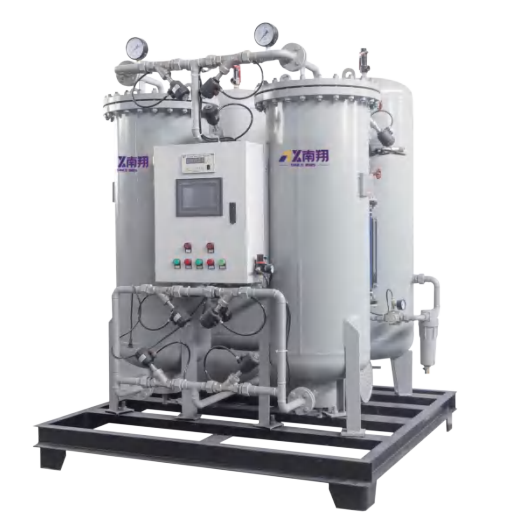
Generator PSA mengalirkan udara terkompresi (6–10 bar) melalui saringan molekuler karbon (CMS) — karbon berpori dengan ukuran pori yang dirancang berada di antara ukuran molekul oksigen (3,46 Å) dan molekul nitrogen (3,64 Å). Di bawah tekanan, oksigen berdifusi ke dalam pori-pori CMS dan teradsorpsi; nitrogen mengalir melewatinya sebagai gas hasil. Ketika CMS mendekati titik jenuh, bejana tersebut dilepaskan tekanannya untuk melepaskan oksigen yang teradsorpsi, sementara bejana kedua mengambil alih untuk memastikan produksi yang berkelanjutan.
Pemisahan ini bersifat kinetik, bukan berdasarkan kesetimbangan. Oksigen berdifusi 10–30 kali lebih cepat daripada nitrogen. Pada waktu siklus tipikal 60–120 detik, oksigen menembus mikropori sementara nitrogen melewati ruang interstisial. Waktu siklus merupakan parameter yang dikendalikan dengan paling cermat — memperpanjang siklus akan memungkinkan nitrogen berdifusi masuk, sehingga menurunkan efisiensi.
| Parameter Operasional PSA | Rentang Tipikal | Dampak terhadap Kinerja |
|---|---|---|
| Tekanan adsorpsi | 6–10 bar(g) | Tekanan yang lebih tinggi meningkatkan kapasitas CMS dan memperbaiki tingkat pemulihan |
| Waktu siklus | 60–120 detik | Siklus yang lebih pendek lebih mengutamakan kemurnian, sedangkan siklus yang lebih panjang lebih mengutamakan pemulihan |
| Rasio udara terhadap nitrogen | 2,5:1 hingga 4,0:1 | Semakin tinggi rasionya = semakin banyak udara terkompresi per satuan nitrogen |
| Rasio tinggi terhadap diameter tempat tidur CMS | 3:1 hingga 5:1 | Mempengaruhi distribusi aliran dan pemanfaatan lapisan CMS |
| Masa pakai CMS | 8–15 tahun | Penurunan kapasitas secara bertahap; masuknya oksigen akibat terbentuknya partikel halus |
| Suhu udara masuk | 5–40 derajat Celcius | Suhu yang lebih tinggi menurunkan kapasitas adsorpsi CMS |
| Kualitas udara masuk | Bebas minyak, sesuai standar ISO 8573-1 Kelas 1.2.1 (minimal) | Kontaminasi minyak merusak CMS secara permanen |
Kemurnian dan Kapasitas Laju Aliran
Generator PSA mencakup rentang kemurnian terluas di antara berbagai teknologi yang tersedia. Dengan menyesuaikan waktu siklus, rasio udara terhadap nitrogen, dan volume lapisan CMS, generator PSA dapat menghasilkan nitrogen dengan tingkat kemurnian apa pun mulai dari 95% hingga 99,999% (oksigen sisa 10 ppm). Kemurnian yang lebih tinggi memerlukan waktu siklus yang lebih lama dan rasio udara terhadap nitrogen yang lebih tinggi — produksi nitrogen 99,999% mengonsumsi sekitar 30% hingga 50% lebih banyak udara terkompresi per satuan nitrogen dibandingkan dengan menghasilkan nitrogen 99%, karena lebih banyak oksigen yang harus dihilangkan dan sebagian kecil nitrogen teradsorpsi bersama oksigen selama siklus yang diperpanjang.
Generator nitrogen PSA merupakan pilihan yang paling umum untuk aplikasi yang membutuhkan tingkat kemurnian 99% hingga 99,999% dalam rentang aliran 5 hingga 5.000 Nm³/jam: pengemasan makanan untuk menggantikan oksigen dan memperpanjang masa simpan, penutupan ruang kosong pada produk farmasi untuk mencegah oksidasi bahan aktif, penyolderan elektronik untuk menciptakan atmosfer inert, serta pemrosesan kimia untuk membersihkan reaktor dan tangki penyimpanan.
Generator Nitrogen PSA Modular: Skalabilitas yang Diintegrasikan dalam Desain
A generator nitrogen modular membagi kapasitas pembangkitan ke beberapa pasang bejana CMS yang independen, masing-masing dilengkapi dengan katup pengatur, PLC, dan jalur aliran tersendiri, yang dipasang pada skid bersama atau tersebar di berbagai modul yang saling terhubung. Berbeda dengan unit PSA monolitik di mana satu pasang tangki CMS berukuran besar menangani seluruh laju aliran, sistem modular memperlakukan setiap modul sebagai generator nitrogen mandiri yang dapat beroperasi secara independen atau paralel dengan modul lainnya. Arsitektur ini memberikan tiga keunggulan yang tidak dapat ditandingi oleh sistem PSA dengan satu pasang tangki: skalabilitas tanpa investasi berlebihan, redundansi tanpa mesin cadangan khusus, dan pengeluaran modal bertahap yang selaras dengan pertumbuhan produksi.
Kapasitas yang dapat disesuaikan mulai dari 5 hingga 500+ Nm³/jam.
Sistem modular dapat dimulai dengan hanya satu modul yang menghasilkan 5–20 Nm³/jam dan dapat ditingkatkan hingga 500 Nm³/jam atau lebih dengan menambahkan modul-modul yang identik. Ketika kebutuhan nitrogen meningkat — misalnya karena dipasangnya jalur pengemasan baru atau penambahan shift kedua — pabrik cukup menambahkan satu atau lebih modul, alih-alih mengganti seluruh generator. Biaya modal tambahan ini sejalan dengan peningkatan kebutuhan, sehingga menghindari jebakan umum berupa pembelian unit monolitik yang berkapasitas berlebihan, yang beroperasi pada kapasitas 40% selama tiga tahun pertama sambil menunggu produksi meningkat.
Setiap modul mengambil udara terkompresi dari saluran utama bersama dan mengalirkan nitrogen ke saluran produk utama bersama. Pengendali utama mengatur urutan operasi modul-modul tersebut, mengaktifkan dan menonaktifkannya sesuai perubahan permintaan. Pada permintaan sistem total sebesar 30%, satu modul beroperasi dengan efisiensi tinggi sementara modul lainnya dalam keadaan idle. Pada permintaan 80%, tiga dari empat modul beroperasi mendekati titik beban optimalnya. Rasio turndown tingkat sistem berkisar dari 10% hingga 100% sambil menjaga setiap modul yang aktif tetap berada dalam rentang operasi yang efisien — biasanya 60% hingga 95% dari kapasitas terukur.
Redundansi Terintegrasi untuk Pengoperasian yang Berkelanjutan.
Pada generator PSA monolitik, kegagalan katup, kejadian kontaminasi CMS, atau gangguan pengontrol akan menghentikan seluruh produksi nitrogen. Pabrik tersebut akan beralih ke generator cadangan atau menghentikan proses yang bergantung pada nitrogen. Pada sistem modular, kegagalan satu modul hanya menghilangkan kapasitas modul tersebut dari total kapasitas. Modul-modul yang tersisa terus memproduksi nitrogen — dengan laju aliran total yang berkurang, namun tanpa terjadi penghentian total. Sistem empat modul yang kehilangan satu modul masih menghasilkan kapasitas terukur sebesar 75%, yang seringkali cukup untuk mempertahankan proses-proses kritis sementara modul yang rusak diisolasi dan diperbaiki. Pemeliharaan dapat dilakukan pada satu modul sementara modul lainnya tetap beroperasi, sehingga menghilangkan waktu henti terjadwal yang diperlukan oleh sistem monolitik untuk penggantian CMS atau servis besar.
Investasi Modal Bertahap.
Sistem modular menyelaraskan belanja modal dengan pertumbuhan produksi. Tahun pertama: dua modul untuk memenuhi permintaan saat ini. Tahun ketiga: modul ketiga saat shift kedua dimulai. Tahun kelima: modul keempat saat lini produksi baru mulai beroperasi. Setiap keputusan investasi didasarkan pada data permintaan aktual, bukan perkiraan lima tahun. Total biaya selama lima tahun tersebut kira-kira sama dengan sistem monolitik yang dirancang untuk memenuhi permintaan pada tahun kelima, namun waktu arus kasnya lebih menguntungkan dan risiko perancangan yang berlebihan dapat dihilangkan.
Perbandingan PSA Modular dan Monolitik.
Pendekatan modular memang menukar sebagian ruang lantai dan kompleksitas pengendalian per modul demi keunggulannya. Sistem modular biasanya membutuhkan ruang lantai 15% hingga 30% lebih banyak daripada unit monolitik yang setara, karena adanya pipa penghubung, rangka modul individual, dan jarak akses antar modul. Setiap modul memerlukan rangkaian katup pengalihnya sendiri dan PLC lokal yang berkomunikasi dengan pengontrol utama, sehingga meningkatkan jumlah total katup dan biaya sistem kontrol sebesar 10% hingga 20%. Untuk pabrik dengan kebutuhan nitrogen yang stabil dan terkarakterisasi dengan baik serta tanpa proyeksi pertumbuhan, sistem PSA monolitik tetap menjadi konfigurasi yang paling hemat biaya. Untuk pabrik dengan kebutuhan yang bervariasi, rencana pertumbuhan, atau toleransi nol terhadap gangguan pasokan nitrogen, arsitektur PSA modular merupakan pilihan yang lebih unggul.
Pembuatan Nitrogen Kriogenik: Pilihan dengan Kemurnian Tinggi
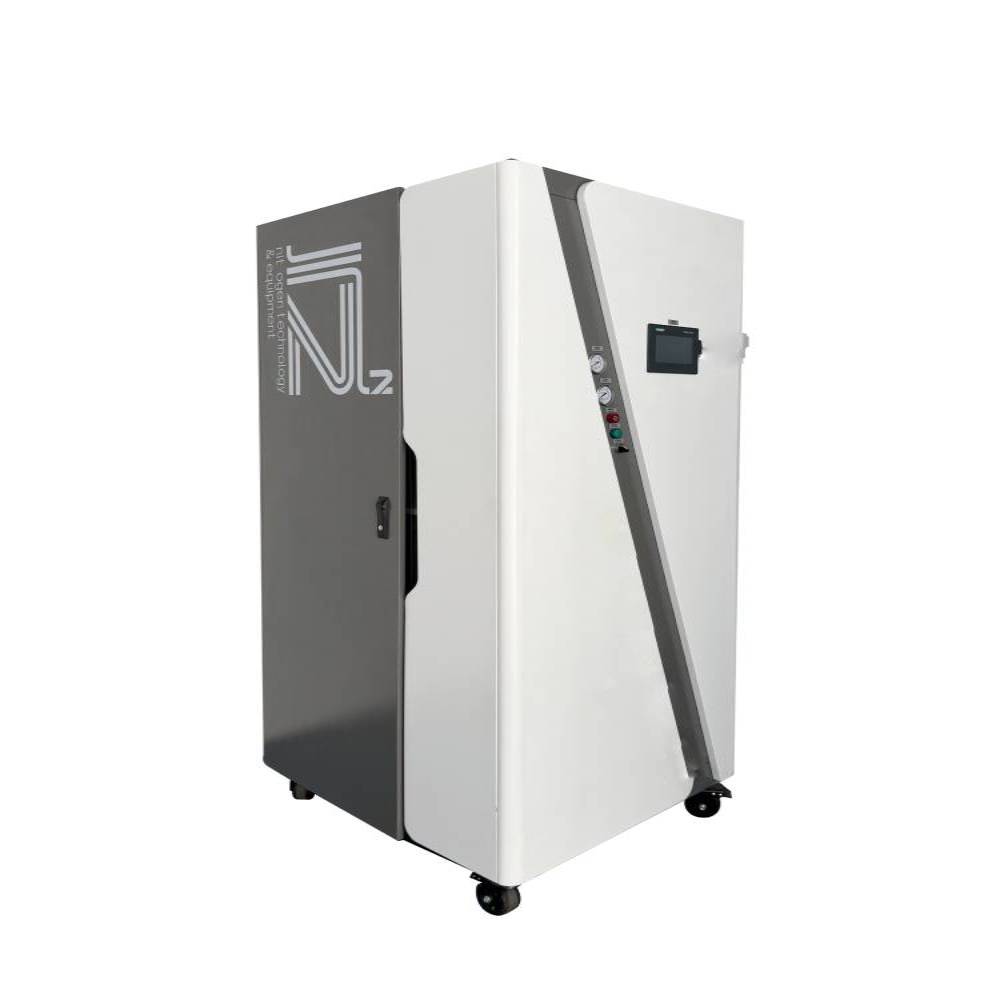
Proses produksi nitrogen kriogenik mendinginkan udara hingga sekitar –196°C (77 K), yaitu suhu di mana nitrogen berubah menjadi cair, kemudian memisahkannya dari oksigen, argon, dan gas-gas atmosfer lainnya melalui distilasi fraksional dalam kolom vertikal. Nitrogen — yang memiliki titik didih terendah — naik dalam bentuk uap, sedangkan oksigen dan argon turun dalam bentuk cair, sehingga menghasilkan kemurnian melebihi 99,999% dengan sisa oksigen di bawah 1 ppm.
Pabrik kriogenik terdiri dari empat subsistem utama: kompresi udara dan pra-pengolahan (adsorber saringan molekuler menghilangkan air, CO₂, dan hidrokarbon yang akan membeku pada suhu distilasi), pertukaran panas dan pencairan (penukar panas pelat-sirip aluminium yang dilas mendinginkan udara hingga sekitar –170°C), kolom distilasi tempat pemisahan terjadi, serta kompresi atau pencairan produk untuk pengiriman. Kompleksitas sistem dan biaya modalnya membatasi penggunaannya pada instalasi berskala besar — fabrikasi semikonduktor, sintesis amonia, pengolahan LNG, dan pasokan gas industri.
PSA vs Kriogenik: Perbandingan Langsung
Untuk aplikasi industri dalam kisaran 10 hingga 1.000 Nm³/h dengan persyaratan kemurnian 99% hingga 99,999%, generator nitrogen PSA menawarkan keseimbangan terbaik antara biaya modal, biaya operasional, dan kemudahan pemeliharaan. Sistem PSA modular memperluas keunggulan ini dengan menambahkan skalabilitas dan redundansi. Pabrik kriogenik merupakan satu-satunya opsi yang layak untuk kapasitas di atas 5.000 Nm³/h dan tingkat kemurnian 99,999%+, atau ketika nitrogen cair diperlukan.
Kapan PSA Menjadi Pilihan Terbaik
PSA merupakan pilihan yang tepat untuk aplikasi yang membutuhkan nitrogen dengan kemurnian 99% hingga 99,999% pada laju aliran 5 hingga 5.000 Nm³/jam. Hal ini mencakup sebagian besar aplikasi nitrogen di sektor industri:
- Kemasan makanan dan minuman (kemasan dengan atmosfer termodifikasi memerlukan 99%–99,5% N₂)
- Manufaktur farmasi (proses blanketing, pemulihan pelarut, penanganan bahan aktif farmasi)
- Perakitan elektronik (penyolderan gelombang, reflow, penyolderan selektif)
- Kimia dan petrokimia (penutupan tangki, pembersihan, penyemprotan, dan pengisian gas inert)
- Pemotongan laser (gas bantu untuk baja tahan karat dan aluminium)
- Perlakuan panas (annealing, sintering, brazing dalam atmosfer terkendali)
Generator nitrogen modular yang menggunakan teknologi PSA dapat ditingkatkan skalanya, mulai dari sepasang tangki CMS yang menghasilkan 5 Nm³/jam hingga sistem multi-modul yang menghasilkan 500 Nm³/jam, dengan menambahkan modul-modul secara paralel, sehingga sangat cocok untuk pabrik yang memperkirakan adanya peningkatan konsumsi nitrogen.
Modular vs Portabel vs Vertikal: Memilih Konfigurasi Generator Nitrogen
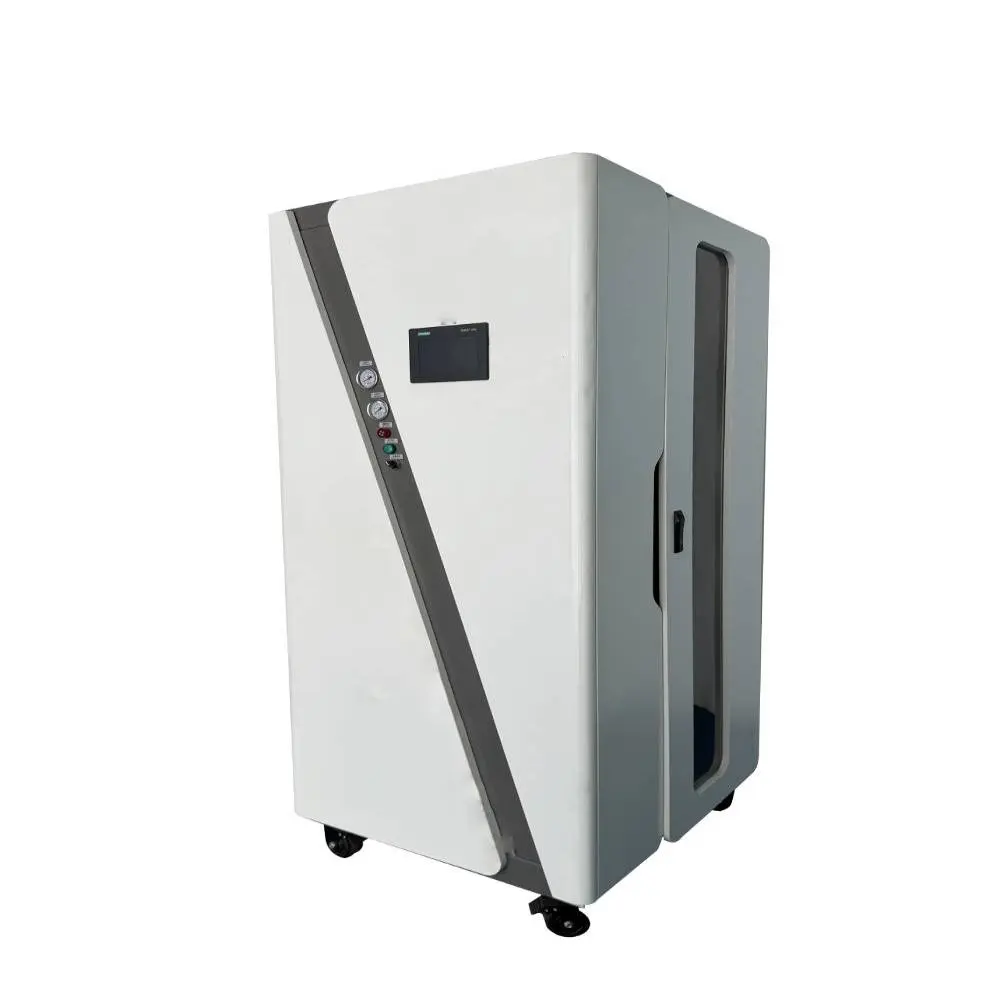
Konfigurasi fisik generator nitrogen — baik yang dipasang pada skid modular, dalam kontainer portabel, maupun vertikal yang hemat ruang — ditentukan oleh tiga faktor yang bergantung pada kondisi lokasi: luas lantai yang tersedia dan ketinggian langit-langit, apakah generator tersebut harus dapat dipindahkan, serta apakah direncanakan adanya perluasan kapasitas di masa mendatang. Konfigurasi modular merupakan pilihan standar untuk instalasi permanen dengan ruang lantai yang memadai, menawarkan pemasangan yang paling sederhana dan jalur perluasan yang paling mudah. Konfigurasi dalam kontainer portabel cocok untuk lokasi sementara, lokasi terpencil, dan operasi yang berpindah-pindah antar lokasi kerja. Konfigurasi vertikal merupakan solusi untuk pabrik yang memiliki ruang lantai terbatas namun ketinggian langit-langit memadai, dengan menempatkan bejana CMS dan peralatan pengolahan udara ke dalam ruang yang ringkas.
A generator nitrogen modular Teknologi berbasis PSA ini dapat diskalakan mulai dari sepasang unit CMS yang menghasilkan 5 Nm³/jam hingga sistem multi-modul yang menghasilkan 500 Nm³/jam dengan menambahkan modul-modul secara paralel, sehingga sangat cocok untuk pabrik yang memperkirakan adanya peningkatan konsumsi nitrogen.
Perbandingan Konfigurasi
| Konfigurasi | Jejak | Tinggi Langit-langit yang Diperlukan | Pemasangan | Skalabilitas | Terbaik untuk |
|---|---|---|---|---|---|
| Modular yang dipasang pada skid | Sedang (3–8 m² per modul) | 2,2–2,5 m | Penempatan forklift, sambungan utilitas | Tambahkan modul paralel | Instalasi pabrik permanen |
| Kontainer portabel | Besar (10–30 m²) | N/A (di luar ruangan) | Pasang, ratakan, sambungkan jaringan utilitas | Ganti wadah dengan yang lebih besar | Lokasi sementara, proyek di daerah terpencil |
| Vertikal | Kecil (1,5–3 m² per unit) | 2,8–3,5 m | Pemasangan jangkar lantai, sambungan utilitas | Tambahkan unit vertikal paralel | Tanaman yang tumbuh di ruang terbatas |
Pertimbangan antara konfigurasi ini sebagian besar berkaitan dengan ruang versus kemudahan pemeliharaan. Unit modular yang dipasang pada skid memiliki komponen yang tersebar secara horizontal, sehingga setiap katup, filter, dan instrumen dapat diakses dari permukaan lantai tanpa perlu tangga. Unit vertikal mengorbankan kemudahan akses demi menghemat ruang — bejana CMS ditumpuk atau diorientasikan secara vertikal, sedangkan katup dan instrumen disusun pada rangka vertikal. Konfigurasi vertikal mencapai kapasitas nitrogen yang sama dengan unit modular dalam luas lantai sekitar 40% hingga 60%, dengan konsekuensi memerlukan tangga atau platform untuk beberapa tugas pemeliharaan.
Pasokan Udara Terkompresi
Setiap generator nitrogen, apa pun konfigurasinya, memerlukan pasokan udara terkompresi yang bersih, kering, dan bebas minyak yang andal pada tekanan dan laju aliran yang tepat. Sistem pembangkitan nitrogen di lokasi tidak dapat dipisahkan dari sumber udara terkompresinya — generator nitrogen pada dasarnya merupakan perangkat pemurnian hilir yang bergantung pada kualitas bahan bakunya. Kompresor harus menghasilkan rasio udara terhadap nitrogen yang dibutuhkan oleh teknologi generator pada tekanan inlet adsorpsi, dan harus memenuhi spesifikasi kualitas udara: bebas minyak, dengan partikel dan uap air dikendalikan sesuai standar ISO 8573-1 Kelas 1.2.1 minimal.
Oleh karena itu, pemilihan generator nitrogen yang tepat mencakup pemilihan atau verifikasi pasokan udara terkompresi. A kompresor udara sekrup putar Paket udara terkompresi standar untuk generator nitrogen PSA dengan kapasitas 15 hingga 500 kW terdiri dari pengering udara berpendingin atau pengering udara desikant, serta sistem filtrasi koalesen.
Cara Memilih Generator Nitrogen yang Tepat untuk Industri Anda
Pemilihan generator nitrogen yang tepat ditentukan oleh empat parameter berdasarkan urutan prioritas: kemurnian, laju aliran (puncak dan rata-rata), jadwal pengoperasian (intermiten atau kontinu), dan fasilitas pendukung di lokasi (kapasitas udara terkompresi, pasokan listrik, air pendingin, serta luas lantai).
Panduan Pemilihan Berdasarkan Sektor Industri
| Industri | Kadar Kemurnian Tipikal | Alur Kerja Umum | Teknologi yang Direkomendasikan | Pertimbangan Utama |
|---|---|---|---|---|
| Kemasan makanan (MAP) | 99%–99.5% | 10–200 Nm³/jam | PSA | Bahan-bahan yang aman untuk makanan, sesuai dengan standar HACCP |
| Penyimpanan makanan dan minyak goreng | 99%–99.9% | 50–500 Nm³/jam | PSA | Penutupan terus-menerus selama proses pengisian tangki |
| Farmasi | 99.5%–99.999% | 20–300 Nm³/jam | PSA | Validasi GMP, dokumentasi kualifikasi |
| Pemasangan komponen elektronik dengan solder | 99.99%–99.999% | 30–200 Nm³/jam | PSA | Kandungan oksigen di bawah 10 ppm, kemurnian yang konsisten |
| Pembuatan semikonduktor | 99.999%+ | 500–5.000+ Nm³/jam | Kriogenik | Kemurnian sangat tinggi, pasokan dalam jumlah besar |
| Pemotongan laser (baja tahan karat, aluminium) | 99.9%–99.999% | 20–100 Nm³/jam | PSA | Kemurnian memengaruhi kualitas tepi potongan |
| Pemrosesan kimia | 99%–99.9% | 50–1.000 Nm³/jam | PSA | Klasifikasi area berbahaya |
| Perlakuan panas | 99%–99.999% | 20–500 Nm³/jam | PSA | Titik embun sama pentingnya dengan kemurnian |
Bagi para insinyur pabrik yang ingin memahami bagaimana generator nitrogen bekerja Jika dilihat lebih mendalam sebelum menentukan pilihan, prinsip pemisahan yang mendasarinya — adsorpsi kinetik untuk PSA, distilasi fraksional untuk metode kriogenik — sama terlepas dari sektor industrinya, namun penerapan konkretnya lah yang menentukan karakteristik operasional mana yang paling penting.
Biaya Sebenarnya dari Pembuatan Nitrogen di Tempat Dibandingkan dengan Pengiriman dalam Tabung
Total biaya nitrogen, yang dihitung selama masa pakai peralatan pembangkit selama 10 tahun, merupakan jumlah dari biaya modal generator, biaya energi udara terkompresi, biaya pemeliharaan termasuk penggantian CMS, serta biaya tenaga kerja untuk pengoperasian dan pemeliharaan. Untuk pabrik berukuran menengah yang mengonsumsi 200.000 Nm³ nitrogen 99,5% per tahun, total biaya selama 10 tahun untuk generator nitrogen PSA berkisar antara $150.000 hingga $250.000, dibandingkan dengan $500.000 hingga $900.000 untuk nitrogen cair yang dikirimkan — penghematan sebesar $350.000 hingga $650.000 selama satu dekade. Penghematan ini akan lebih besar untuk nitrogen dengan kemurnian lebih tinggi, volume lebih besar, atau harga pengiriman yang lebih tinggi, dan lebih kecil untuk pabrik dengan konsumsi sangat rendah di mana biaya modal generator tidak dapat diamortisasi atas volume meter kubik yang cukup.
Model Biaya 10 Tahun: PSA vs Nitrogen Cair yang Dikirim
Tabel berikut ini membandingkan biaya selama 10 tahun untuk generator nitrogen PSA berkapasitas 50 Nm³/h (yang menghasilkan 99,51 TP3T N₂) dengan nitrogen cair yang dikirimkan, untuk pabrik yang beroperasi selama 4.000 jam per tahun:
| Komponen Biaya | Generator PSA (10 Tahun) | N₂ Cair yang Telah Dikirim (10 Tahun) |
|---|---|---|
| Pembelian dan pemasangan peralatan | $80,000 | $0 |
| Listrik dari udara terkompresi (dengan tarif $0,10/kWh) | $120,000 | $0 |
| Penggantian CMS (pada tahun ke-8) | $15,000 | $0 |
| Pemeliharaan rutin (filter, katup, sensor) | $25,000 | $0 |
| Tenaga Kerja (pemeriksaan harian, 15 menit per hari) | $30,000 | $8.000 (penanganan silinder) |
| Penyewaan tabung/tangki curah | $0 | $60,000 |
| Pembelian nitrogen (200.000 Nm³/tahun) | $0 | $500.000 (dengan harga $0,25/m³) |
| Total biaya selama 10 tahun | $270,000 | $568,000 |
| Tabungan 10 tahun bersama PSA | – | $298,000 |
Model ini mengasumsikan harga listrik dan harga nitrogen tetap stabil. Dalam praktiknya, harga listrik berfluktuasi sebesar 5% hingga 10% per tahun dan harga nitrogen meningkat sebesar 3% hingga 5% setiap tahun — artinya, penghematan dari pembangkit di lokasi kemungkinan lebih besar daripada yang ditunjukkan dalam tabel, karena biaya operasional utama pembangkit (listrik) naik dengan laju yang lebih lambat daripada kenaikan harga nitrogen yang dikirimkan. Selain itu, model ini tidak memperhitungkan waktu henti produksi yang dapat dihindari dengan mengelola produksi nitrogen secara mandiri di pabrik, alih-alih bergantung pada rantai pasokan eksternal — sebuah faktor yang tidak terukur namun seringkali menentukan bagi pabrik-pabrik di mana gangguan pasokan nitrogen berarti penghentian jalur produksi.
Bagi tanaman yang memutuskan untuk melanjutkan dengan generator nitrogen industri, analisis ekonomi di atas hanyalah titik awal. Jangka waktu pengembalian modal yang sebenarnya bergantung pada tarif utilitas, biaya tenaga kerja, pola konsumsi nitrogen, dan persyaratan kemurnian di pabrik tersebut, dan sebaiknya dihitung menggunakan data aktual pabrik, bukan rata-rata industri. Audit udara terkompresi dan nitrogen — yang mengukur laju aliran, tekanan, dan kemurnian aktual selama satu minggu produksi yang representatif — merupakan dasar yang paling andal untuk perhitungan ekonomi.
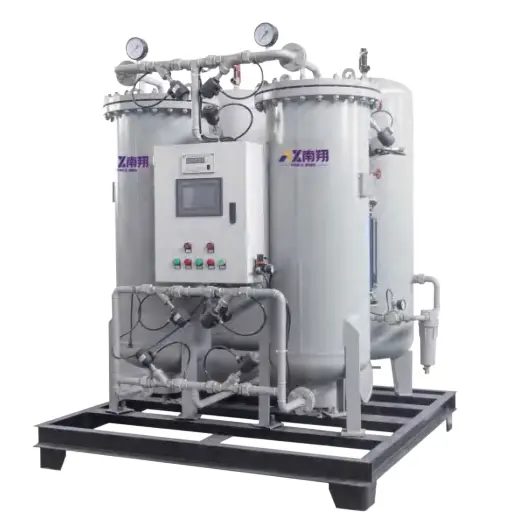
Kedua teknologi produksi nitrogen — PSA dan kriogenik — mencakup rentang kemurnian dari 95% hingga 99,999%+ serta rentang laju aliran dari kurang dari 1 Nm³/jam hingga lebih dari 100.000 Nm³/jam. Masing-masing menempati segmen tertentu yang sebagian besar tidak tumpang tindih pada peta kemurnian-laju aliran. PSA adalah teknologi yang dominan untuk kemurnian 99% hingga 99,999% pada 5 hingga 5.000 Nm³/h, yang mencakup sebagian besar aplikasi nitrogen industri mulai dari pengemasan makanan hingga perakitan elektronik. Teknologi kriogenik melayani segmen volume tinggi dan kemurnian sangat tinggi di mana tidak ada teknologi lain yang dapat memenuhi spesifikasinya. Memilih di antara keduanya bukanlah pencarian teknologi terbaik dalam arti absolut — melainkan pencarian teknologi yang kemurnian, laju aliran, dan biaya siklus hidupnya sesuai dengan titik operasi aktual pabrik. Ketika titik tersebut ditemukan, pabrik memperoleh pasokan nitrogen yang lebih murah, lebih andal, dan lebih mudah dikendalikan daripada sumber eksternal mana pun.
Pertanyaan yang Sering Diajukan
Apa perbedaan antara kemurnian nitrogen yang dinyatakan dalam persentase dan yang dinyatakan dalam bentuk sisa oksigen dalam ppm?
Kemurnian nitrogen umumnya dinyatakan dalam persentase — yaitu fraksi gas keluaran yang berupa nitrogen. Oksigen sisa merupakan komplementernya. Kemurnian nitrogen sebesar 99,9% setara dengan oksigen sisa sebesar 0,1%, yang sama dengan 1.000 bagian per juta (ppm). Kemurnian sebesar 99,999% — sering disebut “lima sembilan” — setara dengan 10 ppm oksigen sisa. Kedua rumus ini dapat digunakan secara bergantian: kemurnian (%) = 100 – (ppm O₂ / 10.000). Aplikasi seperti pembuatan semikonduktor biasanya mensyaratkan kadar oksigen di bawah 10 ppm, sedangkan pengemasan makanan biasanya menerima kadar oksigen sisa sebesar 0,5% hingga 1%, yang setara dengan kemurnian nitrogen sebesar 99% hingga 99,5%.
Apakah generator nitrogen PSA dapat beroperasi secara tidak terus-menerus, atau apakah harus beroperasi secara terus-menerus?
Generator nitrogen PSA dapat beroperasi secara intermiten tanpa merusak saringan molekuler karbon (CMS), asalkan lapisan CMS dijaga tetap berada di bawah tekanan positif selama penghentian operasi untuk mencegah masuknya kelembapan dari udara sekitar. Mode siaga mempertahankan tekanan positif rendah di dalam bejana, dan generator dapat dinyalakan kembali serta mencapai tingkat kemurnian penuh dalam waktu 15 hingga 30 menit setelah dinyalakan kembali. Siklus start-stop yang sering memang meningkatkan keausan pada katup pengalih, sehingga siklus operasi dengan lebih dari 5 hingga 8 kali start per hari harus dievaluasi bersama pabrikan generator untuk memastikan masa pakai katup masih memadai untuk interval pemeliharaan yang direncanakan.
Apakah generator nitrogen memerlukan udara terkompresi bebas minyak, dan apa yang terjadi jika minyak masuk ke dalam CMS atau membran?
Ya. Kontaminasi minyak merupakan penyebab paling umum terjadinya kegagalan CMS dan membran sebelum waktunya. Dalam generator PSA, uap minyak mengembun pada permukaan saringan molekuler karbon, sehingga menyumbat pori-pori mikro dan secara permanen mengurangi kapasitas adsorpsi CMS. Kerusakan ini tidak dapat diperbaiki — CMS harus diganti. Pada generator membran, minyak melapisi permukaan serat, sehingga mengurangi laju permeasi oksigen dan menyebabkan penurunan kemurnian nitrogen. Modul membran harus diganti. Untuk kedua teknologi tersebut, filter koalesensi dan filter karbon aktif yang dipasang di hilir kompresor dan di hulu generator merupakan perlindungan minimal yang diperlukan. Kompresor bebas minyak menghilangkan risiko sejak sumbernya dan merupakan konfigurasi yang direkomendasikan untuk produksi nitrogen.