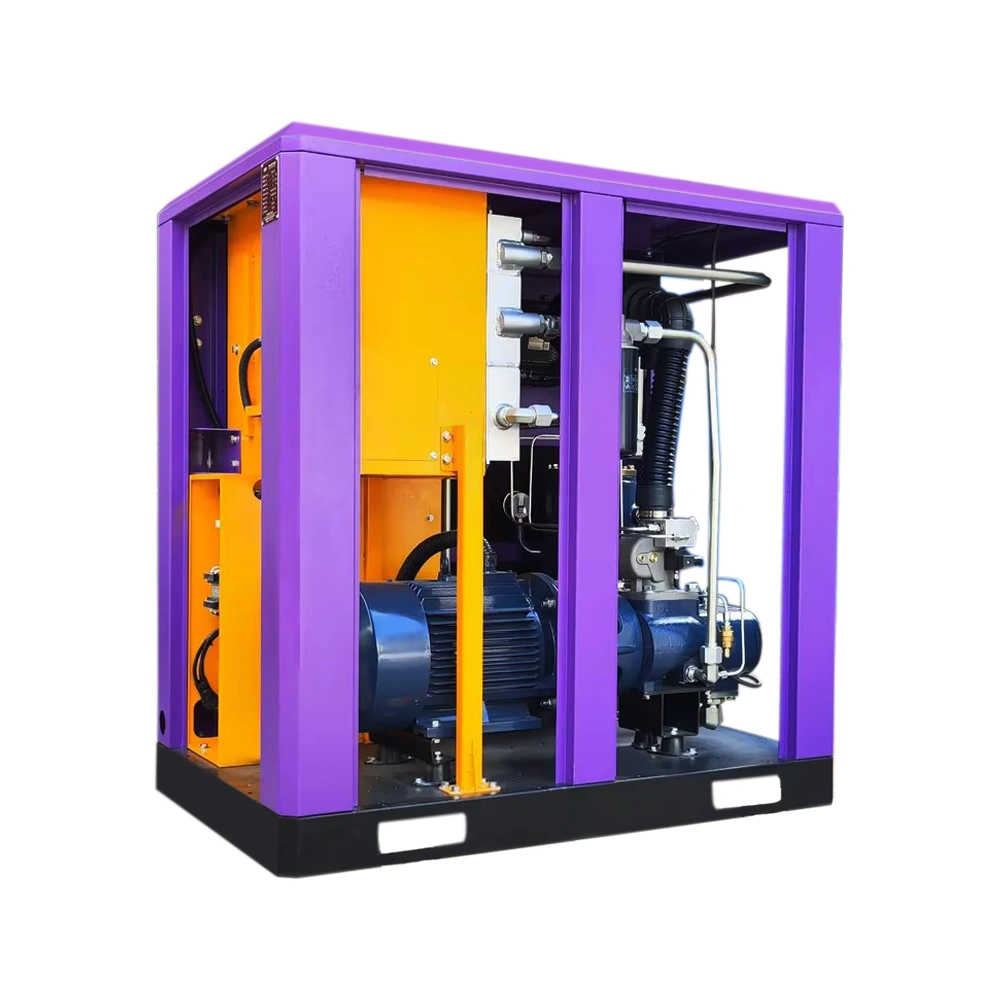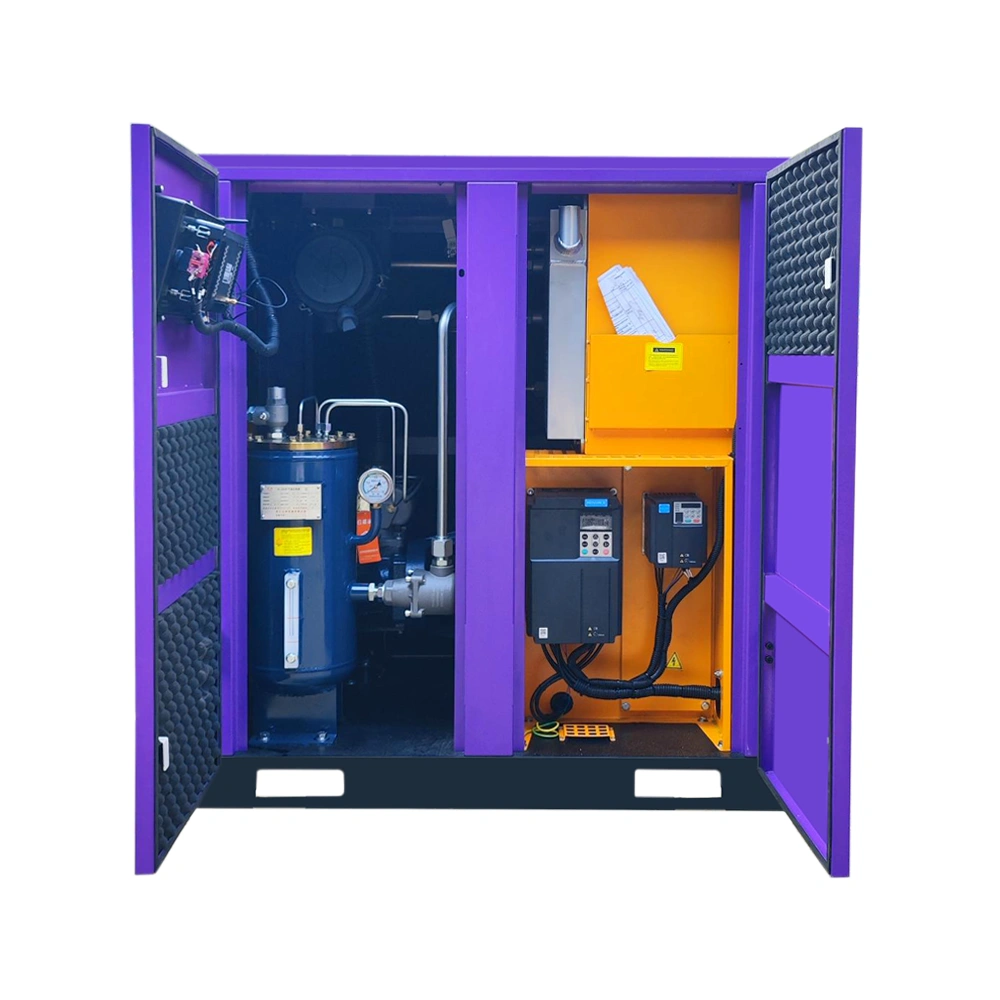
When it comes to industrial compressed air systems, the oil-lubricated rotary screw air compressor is probably one of the most widely deployed types out there — and for good reason. It’s reliable, relatively efficient for continuous-duty applications, and honestly, it’s been the backbone of manufacturing floors and processing plants for decades. But what exactly is it, and how does it work? Let’s break it down.
Oil-Lubricated, Rotary, Screw — What Do These Words Actually Mean?
Before diving into the mechanics, it’s worth pausing on the name itself. Oil-lubricated rotary screw air compressor” is a mouthful — but each word is actually carrying real meaning.
Berpelumas Minyak
Berpelumas Minyak describes a method used to lubricate. Oil is continuously injected into the compression chamber to lubricate moving parts, seal internal clearances and absorb heat. The oil-lubricated compressor is different from an “oil-free” compressor in that the rotors will operate dry (or with water) and require mechanical tolerances to compensate for this.
Putar
Putar describes the motion type. Unlike reciprocating (piston) compressors that move back and forth in a linear stroke, this machine compresses air through continuous rotational movement — no dead spots, no reversal of direction. That’s a big part of why it handles continuous duty so well.
Sekrup
Sekrup refers to the rotor geometry. The two interlocking helical rotors look, more or less, like a pair of screws meshing together. As they rotate, the thread profiles trap and progressively squeeze air along the rotor length until it exits at the discharge port.
Put it all together, and the name is essentially a functional description of the machine — which, once you know what to look for, makes it much easier to understand why it behaves the way it does.
How Does an Oil-Lubricated Rotary Screw Air Compressor Work?
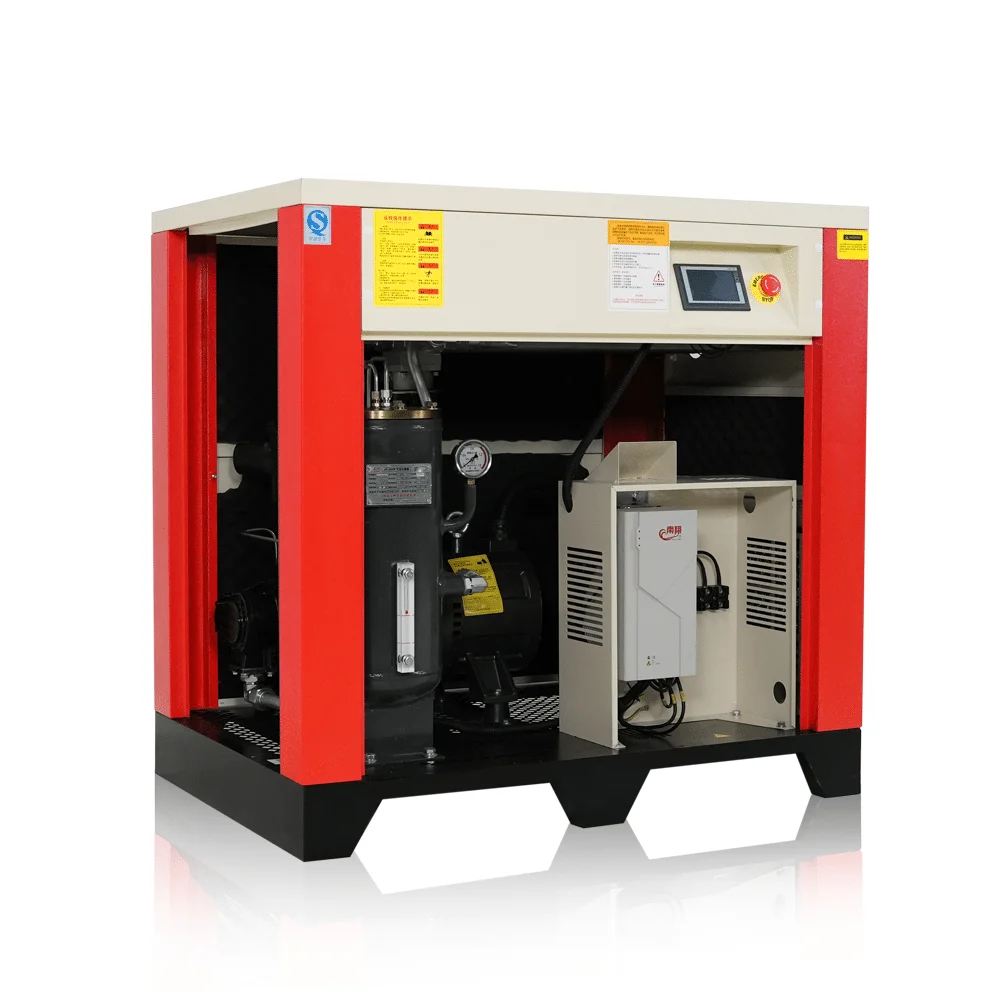
At the core of every oil-lubricated rotary screw air compressor are two interlocking helical rotors — a male rotor and a female rotor — spinning in opposite directions inside a precisely machined housing. As air enters through the inlet valve, it gets trapped between the rotor lobes. The volume decreases as the rotors turn, which compresses the air. Simple in principle, surprisingly elegant in execution.
The oil plays several critical roles here:
- Lubrication — reduces wear between the rotors and the housing
- Sealing — oil fills the tiny clearances between rotors, improving compression efficiency
- Cooling — absorbs heat generated during compression, preventing overheating
- Sound dampening — helps reduce operational noise compared to dry-running alternatives
After compression, the oil-air mixture passes through an oil separator where the two are split. The compressed air goes downstream, and the oil is cooled and recirculated. This closed-loop design is what makes these machines durable over extended run hours.
Key Components of an Oil-Lubricated Rotary Screw Air Compressor
Understanding what’s inside can be surprisingly useful — especially when troubleshooting or evaluating a purchase.
1. Airend (Screw Element)
This is the heart of the machine. The airend houses the male and female rotors and is where actual compression takes place. The quality of the airend largely determines the compressor’s lifespan and efficiency.
2. Oil Separator Tank
After compression, the oil-laden air enters this tank. A coalescing separator element removes most of the oil — typically down to 2–5 ppm (parts per million) residual oil content, though premium units can go lower.
3. Oil Cooler and Air Aftercooler
Heat management is crucial. The oil cooler brings the recirculating oil back to operating temperature range, while the aftercooler reduces the compressed air temperature before delivery.
4. Inlet Valve and Control System
Modern units come with variable or modulating inlet valves paired with electronic controllers. These regulate capacity, manage load/unload cycles, and provide system diagnostics.
5. Drive System
Most oil-lubricated rotary screw air compressors use either:
- Direct drive (motor shaft coupled directly to airend)
- Belt drive (more flexibility for speed adjustment, easier to maintain)
- Gear drive (common in larger, high-speed industrial units)
Oil-Lubricated vs. Oil-Free Rotary Screw Compressors
A question that comes up often — and honestly it’s worth addressing directly.
| Fitur | Oil-lubricated | Oil-free |
|---|---|---|
| Air purity | Class 1–4 (ISO 8573-1) | Class 0 (truly oil-free) |
| Initial cost | Lebih rendah | Significantly higher |
| Kompleksitas pemeliharaan | Sedang | Lebih tinggi |
| Tingkat kebisingan | Sedang | Typically higher |
| Typical applications | General industrial, automotive, food & beverage | Pharma, electronics, medical |
| Lifespan | Long (with proper oil maintenance) | Long, but sensitive to contamination |
| Energy efficiency | Bagus. | Slightly lower in many cases |
The oil-lubricated rotary screw air compressor wins on cost and durability in most general industrial settings. The oil-free version is necessary when even trace oil contamination is unacceptable — pharmaceutical manufacturing, semiconductor fabrication, that sort of thing.
Aplikasi Umum
Oil-lubricated rotary screw air compressors are workhorses across a huge range of industries:
- Automotive assembly and body shops
- Woodworking and furniture manufacturing
- Food and beverage processing (where downstream filtration handles the oil)
- Metal fabrication and welding shops
- Plastics molding
- General MRO (maintenance, repair, and operations) in large facilities
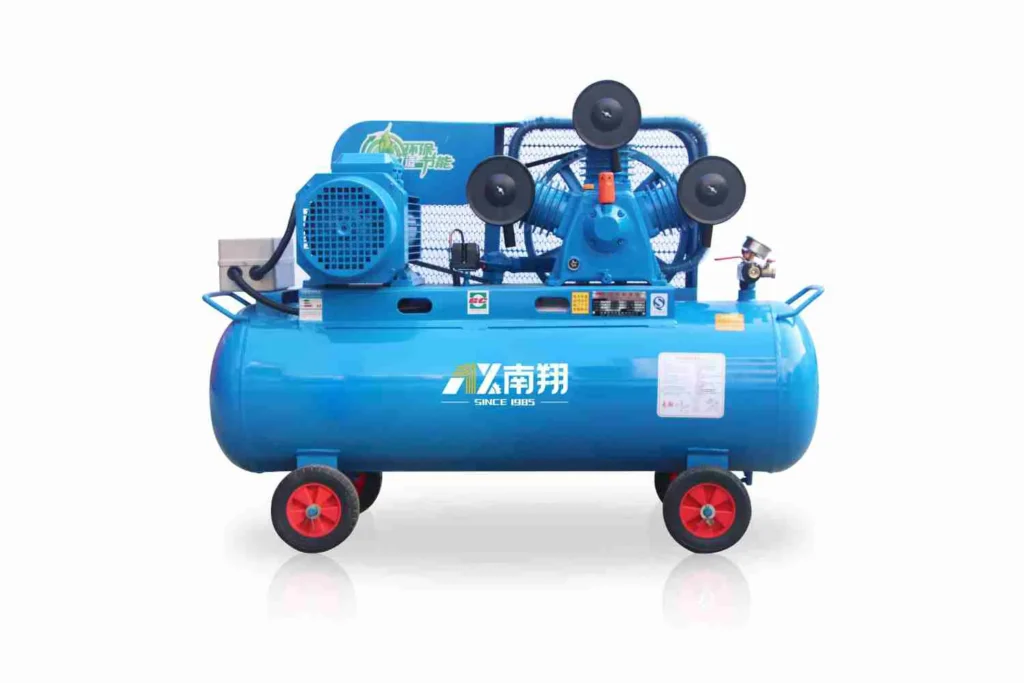
They’re particularly well-suited to applications requiring continuous or near-continuous operation — say, 60–100% duty cycle. Reciprocating (piston) compressors tend to struggle at that kind of demand, while rotary screw units handle it without breaking a sweat.
Advantages and Limitations
Advantages
- Continuous duty operation without overheating
- Compact footprint relative to capacity
- Lower noise and vibration compared to piston compressors
- Long service intervals (some models up to 4,000–8,000 hours between oil changes)
- Wide capacity range — typically from 5 HP all the way up to 500+ HP
Limitations
- Residual oil carryover in compressed air (requires downstream filtration for sensitive applications)
- Higher upfront cost than comparable reciprocating compressors
- Requires proper oil type and interval compliance — using the wrong lubricant is a surprisingly common cause of premature failure
- Not ideal for very intermittent, low-duty-cycle applications where a piston compressor might be more economical
Choosing the Right Oil-Lubricated Rotary Screw Air Compressor
A few things worth considering before buying:
- Required flow (CFM/m³/min) — Undersizing is the most common mistake. Calculate your actual peak demand, then add 20–25% buffer.
- Operating pressure (PSI/bar) — Most industrial units run at 100–125 PSI. Higher pressure models exist but consume more energy.
- Fixed speed vs. variable speed drive (VSD) — VSD operates at variable speed, approximately 30-40% more efficient than traditional fixed speed motors for variable load applications. Additionally, the cooling system you choose will depend on your application needs;
- Cooling method — air-cooled units are typically easier to use than water-cooled systems. However, they are also recommended for use in ambient temperatures of 40°C or higher or with a large number of cooling units.
- Oil type compatibility — Many manufacturers specify proprietary or synthetic lubricants. Factor this into long-term operating costs.
Pertanyaan yang Sering Diajukan
How often should the oil be changed in an oil-lubricated rotary screw air compressor?
The answer depends on the manufacturer, oil type, and operating conditions. Mineral oils should be changed every 2,000 to 4,000 hours, while full synthetic lubricants can contribute to extending the oil change interval to 6,000 to 8,000 hours or more in many cases. If you are operating in dusty or high temperature environments, expect the time periods for oil changes to be reduced significantly. Follow your OEM’s maintenance schedule instead of general estimates.
Can an oil-lubricated rotary screw compressor be used for breathing air or food-contact applications?
No, not directly. The residual oils in the output of unprocessed oils make it unsafe to supply unprocessed outputs for inhalation as well as for direct contact with food within the 2–3 ppm range. In order to obtain quality air that meets those specifications, the use of multi-stage downstream filters (e.g., two-stage coalescing filters and multiple pairs of activated carbon filter towers) in conjunction with continual monitoring for oil vapour must be implemented. Many operations, however, do operate food facilities with oil-lubricated parts; however; the filtration method must be engineered correctly and verified on a periodic basis.
What causes excessive oil consumption in a rotary screw air compressor, and is it always a sign of a serious problem?
Not always — but it’s worth investigating. The most common culprits are a saturated or damaged oil separator element, overfilling the oil reservoir, operating at low pressure or short cycle times that prevent proper oil separation, or a failing shaft seal. In many cases it’s a maintenance issue rather than a mechanical failure. That said, ignoring elevated oil carryover can contaminate downstream equipment and tooling, so it’s worth diagnosing sooner rather than later.