Кислород находится повсюду - буквально в 21% окружающего нас воздуха, - но получить его надежные, концентрированные запасы для медицинских отделений, промышленных предприятий или аквакультурных ферм - совсем другая история. Именно здесь и пригодится Генератор кислорода PSA приходит на помощь. Это не совсем новое изобретение, но технология незаметно превратилась в один из самых надежных методов производства кислорода на месте, доступных на сегодняшний день.
Что же это такое и почему многие отрасли отказываются от традиционных кислородных баллонов и криогенных систем в пользу технологии PSA? Давайте разберемся в этом.
Что означает PSA?
PSA означает Адсорбция с поворотом давления. Название довольно хорошо описывает процесс, если вы знаете, что такое адсорбция - это процесс, при котором молекулы газа прилипают к поверхности твердого материала (а не впитываются в него). Под “колебанием давления” подразумевается тот факт, что в системе чередуются высокое и низкое давление, чтобы процесс шел непрерывно.
В атмосферном воздухе содержится примерно 21% кислорода, 78% азота, 0,9% аргона и небольшая доля следовых газов. Генератор кислорода PSA использует разницу в поведении этих газов под давлением - в частности, как азот может быть селективно задержан, оставляя концентрированный кислород.
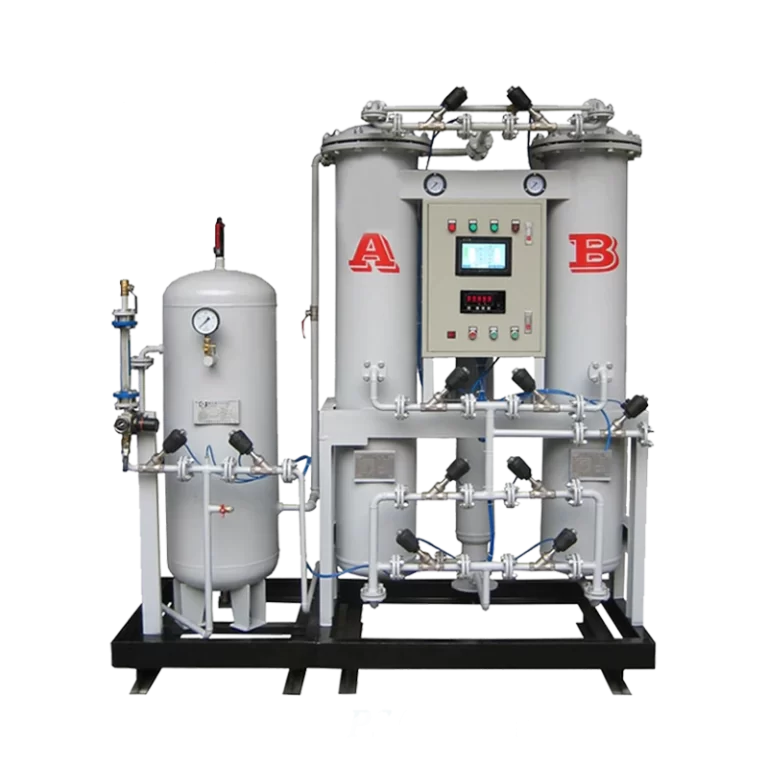
Как работает генератор кислорода PSA
Роль цеолитных молекулярных сит
В основе каждого Генератор кислорода PSA Это материал под названием цеолит - высокопористое кристаллическое вещество, обладающее удивительной способностью преимущественно адсорбировать молекулы азота под давлением. В то время как азот концентрируется в системе пор цеолита, в качестве газа-продукта образуется кислород.
Цеолит встречается в природе, но в большинстве промышленных генераторов используется синтетическая версия, разработанная для оптимальной работы. Подумайте о нем как о молекулярной губке, которая с необычным аппетитом поглощает азот.
Цикл двух башен
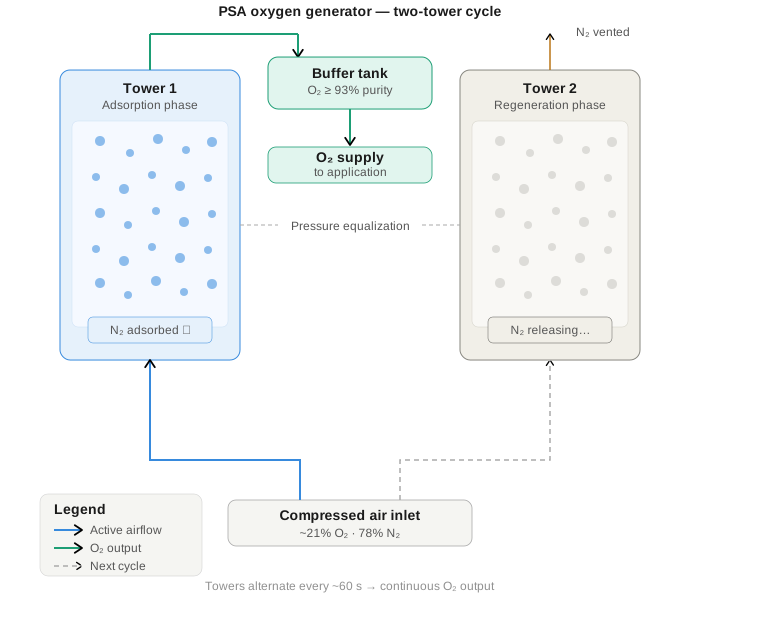
В большинстве кислородных систем PSA используются два сосуда под давлением, заполненные цеолитом для обеспечения непрерывного производства кислорода. Вот что происходит шаг за шагом:
- Сжатый воздух фильтруется, осушается и подается в первую адсорбционную башню
- Азот избирательно адсорбируется цеолитом под высоким давлением (обычно 4-8 бар).
- Кислород проходит через него и собирается в буферном резервуаре
- Когда цеолит в башне 1 достигает насыщения, система переключается на башню 2.
- Башня 1 разгерметизируется - азот высвобождается и выводится наружу
- Цикл повторяется, непрерывно
Благодаря тому, что система качается взад-вперед между двумя сосудами - в одном создается давление, а в другом понижается - поддерживается постоянный, непрерывный поток кислорода.
Чистота выходного сигнала
Большинство PSA-генераторов производят кислород с чистотой 90-95%, что подходит для большинства медицинских и промышленных применений. В случаях, когда требуется сверхвысокая чистота, превышающая этот диапазон, могут потребоваться дополнительные этапы очистки, но для большинства случаев использования 93%+ более чем достаточно.
PSA по сравнению с другими методами получения кислорода
Это помогает понять, как PSA сочетается с более старыми подходами:
| Характеристика | Генератор кислорода PSA | Кислородные баллоны | Криогенная система |
|---|---|---|---|
| Сырье | Окружающий воздух | Предварительно заправленный газ | Сжиженный воздух |
| Производство на месте | Да | Нет | Частичный |
| Операционные расходы | Низкий | Высокий (периодический) | Очень высокий |
| Необходимая инфраструктура | Минимум | Место для хранения | Сложные системы охлаждения |
| Риск для безопасности | Низкий | Риск пожара/взрыва | Криогенная опасность |
| Чистота кислорода | 90-95% | 99%+ | 99%+ |
В отличие от криогенной дистилляции, технология PSA работает в условиях нормальной температуры и давления - никаких сложных систем охлаждения, никакой масштабной инфраструктуры. Для большинства предприятий такая простота действительно привлекательна.
Основные преимущества генераторов кислорода PSA
Есть несколько причин, по которым эта технология продолжает набирать обороты:
- Экономическая эффективность - После установки эксплуатационные расходы невелики, поскольку в качестве сырья используется только воздух
- Безопасность - Отсутствие больших объемов кислорода под давлением, хранящегося на объекте, значительно снижает риск пожара и взрыва
- Экологичность - Отсутствие вредных побочных продуктов; единственным источником энергии является воздух
- Не требует особого ухода - При нормальных условиях эксплуатации и надлежащем уходе цеолитовое молекулярное сито имеет практически неограниченный срок службы
- Автоматизация - Современные устройства можно контролировать удаленно с помощью компьютера или смартфона
- Масштабируемость - Модульные системы можно расширять по мере роста потребности в кислороде
Где используются генераторы кислорода PSA?
Сфера применения шире, чем многие думают. Это не только больницы. Промышленность, начиная от разведения рыбы и заканчивая производством стекла, ежедневно использует эту технологию.
Медицина и здравоохранение
Больницы, клиники и даже домашние учреждения используют генераторы кислорода PSA для поддержания непрерывной подачи кислорода пациентам. Во время пандемии COVID-19 эта технология доказала свою эффективность, когда правительства по всему миру ускорили установку установок PSA в государственных медицинских учреждениях для борьбы с нехваткой кислорода. В таких условиях фактор надежности имеет огромное значение - перебои в снабжении просто недопустимы.
Промышленное применение
- Резка и сварка металла (пламя, обогащенное кислородом, горит жарче и чище)
- Очистка сточных вод (кислород стимулирует аэробные биологические процессы)
- Производство стекла (повышает эффективность сгорания в печах)
- Бумажная и целлюлозная промышленность
- Аквакультура и рыбоводство (растворенный кислород в аквариумах способствует выживанию рыб)
Другие виды использования
- Переработка природного газа
- Химическое производство
- Лабораторные условия, требующие контролируемой атмосферы

Вещи, о которых стоит знать перед покупкой
Генератор кислорода PSA не является универсальным решением в любой ситуации. Есть несколько практических соображений:
Потолок чистоты
Как уже отмечалось, большинство систем PSA достигают максимальной чистоты 93-95%. Для таких областей применения, как производство полупроводников или определенные исследовательские среды, требующие чистоты 99,5%+, одна система PSA без дополнительной обработки не справится.
Качество сжатого воздуха
Система полностью зависит от чистого, сухого, безмасляного сжатого воздуха. Если компрессор, подающий воздух, не обслуживается должным образом, или если в воздухе слишком много влаги или загрязнений, цеолитовые сита могут разрушаться быстрее, и качество кислорода на выходе снижается.
Зависимость от власти
В отличие от баллонов, которые просто стоят на месте, система PSA нуждается в электроэнергии для работы компрессоров и регулирующих клапанов. В местах с нестабильным электроснабжением для этого требуется резервное решение.
Заключительные размышления
A Генератор кислорода PSA представляет собой действительно практический сдвиг в способах производства и поставки кислорода - особенно для объектов, которым нужен надежный, непрерывный кислород без логистической головной боли, связанной с перезаправкой баллонов или управлением криогенными хранилищами. Технология не бросается в глаза, но она работает. Двухбашенный цикл изменения давления, цеолитовые молекулярные сита, автоматическое переключение клапанов - все это в сумме дает удивительно элегантный в своей простоте результат.
Для больниц, промышленных предприятий, рыбоводческих ферм и множества других производств производство кислорода на месте с помощью PSA превратилось из интересной альтернативы в нечто, близкое к очевидному выбору. А учитывая постоянное совершенствование цеолитных материалов и энергоэффективности, технология будет становиться только лучше.