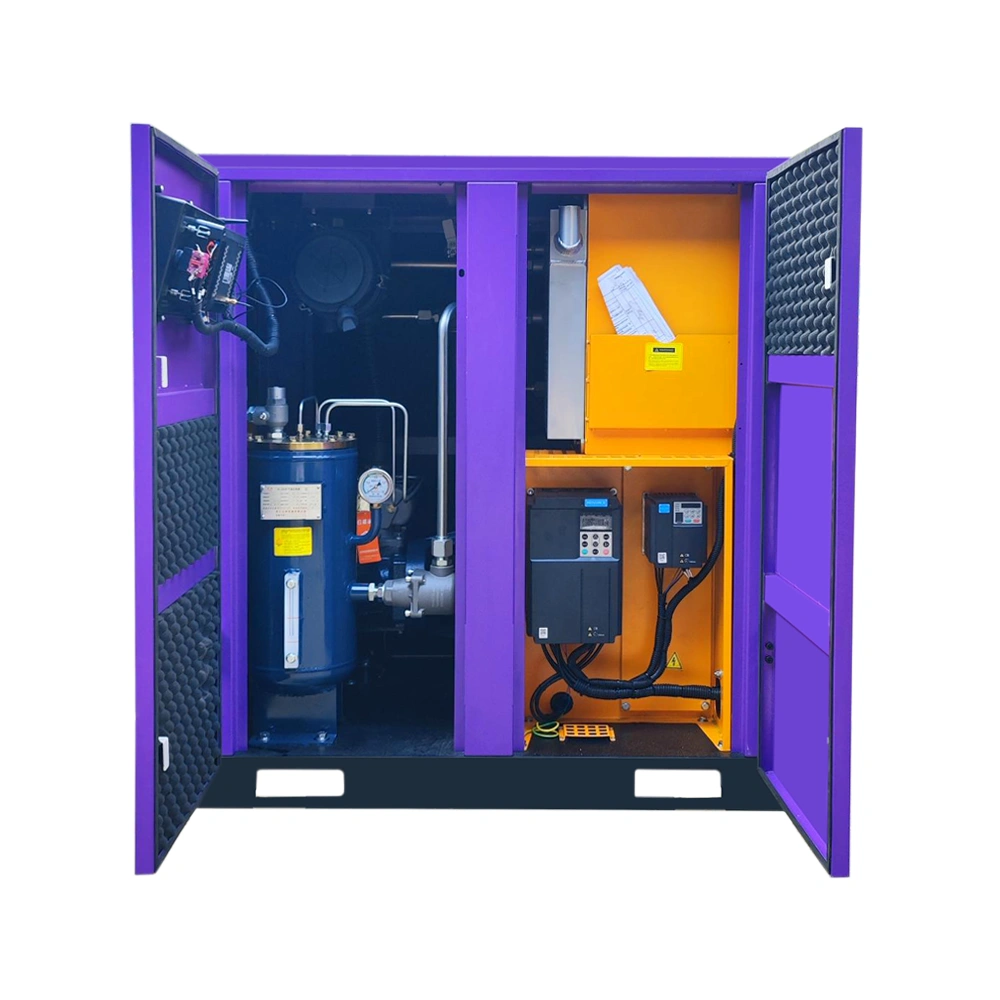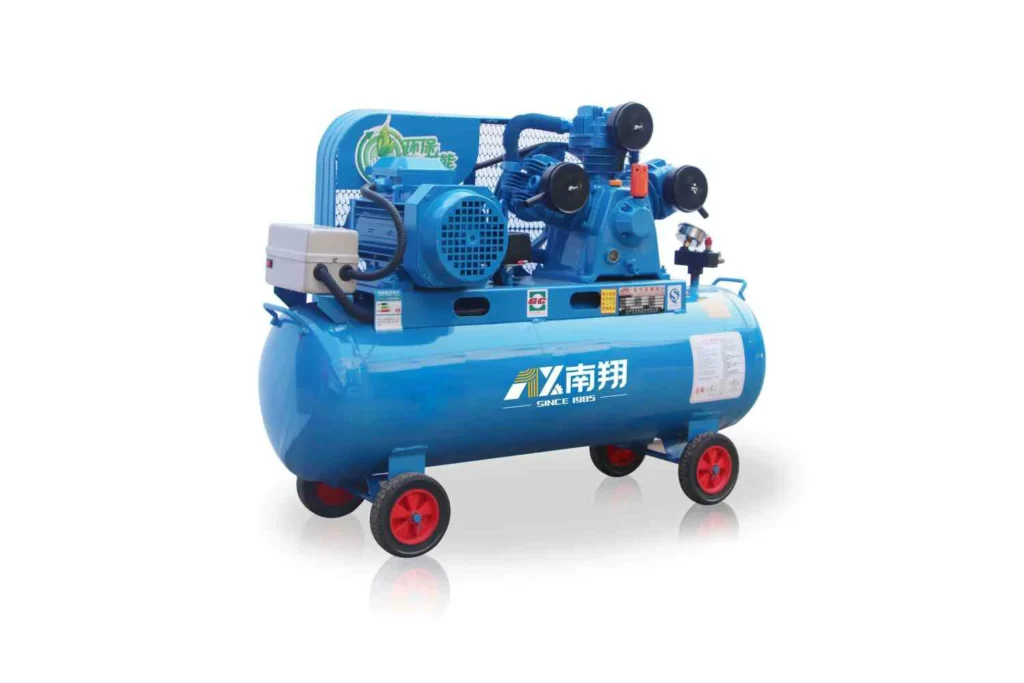
Rubber processing is one of those applications where compressed air quality matters more than people sometimes realize. Walk into a tire plant or a rubber goods factory, and there are pneumatic systems everywhere—mold cleaning, part ejection, material handling, instrument controls. But the thing about rubber is that it’s sticky, and it doesn’t play well with contaminants. A little oil mist in the air lines, and suddenly there’s adhesion problems, surface defects, or rejects piling up.
Seen this happen. A facility using a standard lubricated compressor, thinking it wouldn’t matter, and then spending weeks chasing quality issues that traced back to trace amounts of oil in the compressed air. So when it comes to picking an air compressor for rubber applications, the conversation starts with air quality and doesn’t move far from there.
Why Air Quality Matters for an Air Compressor for Rubber
Rubber in its uncured state is receptive. It picks up whatever it touches—including whatever’s in the compressed air used to blow off molds, transport parts, or operate adjacent equipment.
The Oil Contamination Problem
A standard oil-injected screw compressor typically leaves 2–5 parts per million of oil in the discharge air. That doesn’t sound like much. But in rubber processing, that small amount can:
Cause surface defects on molded parts
Interfere with bonding or adhesion in multi-layer products
Create visible spotting on light-colored rubber goods
Contaminate mold release agents
Some rubber operations have gotten away with oil-injected compressors plus filtration. But filtration isn’t perfect. Coalescing filters remove liquid oil aerosols, but oil vapor passes through. Activated carbon filters catch vapor, but they have a limited life and need regular replacement. Once they saturate, oil gets through.
Moisture Issues
Rubber also doesn’t like water. Moisture in compressed air can cause blistering in molded parts, affect dimensional stability, and promote mold corrosion. A dryer is non-negotiable. The question is what dew point is actually needed.
Compressor Types for Rubber Manufacturing
Not all compressor technologies are equally suited to rubber. Here’s a quick comparison.
| Compressor Type | Air Quality | Best For | Trade-offs |
|---|---|---|---|
| Oil-injected rotary screw | Oil present (needs filtration) | General plant air, non-critical rubber operations | Lower upfront cost; ongoing filter maintenance |
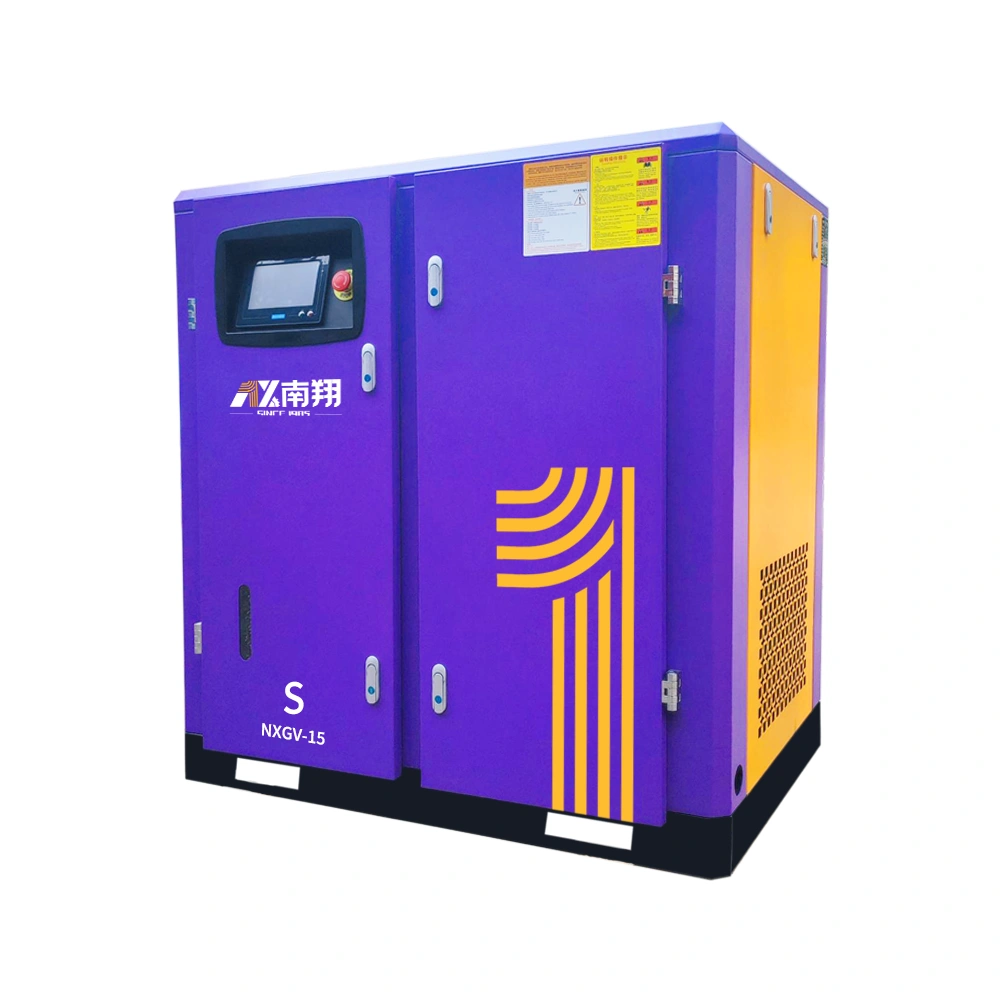
| Oil-free rotary screw | 100% oil-free air | Mold cleaning, part ejection, critical processes | Higher upfront cost; eliminates contamination risk |
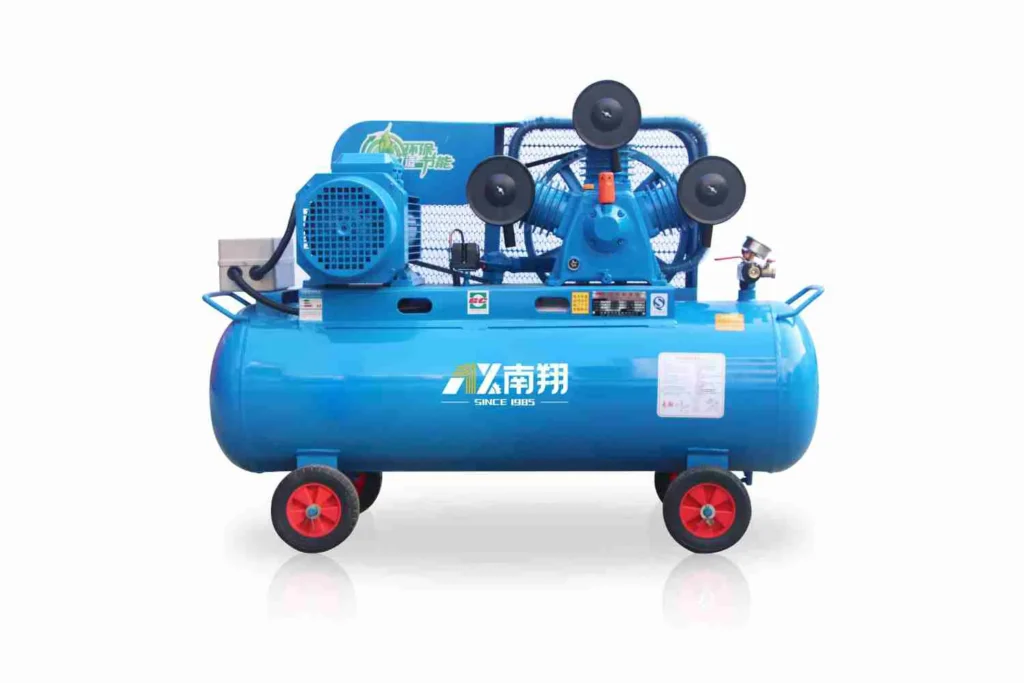
| Reciprocating (oil-lubed) | Oil present | Small shops, intermittent use | High maintenance; oil carryover significant |
| Reciprocating (oil-free) | Oil-free | Low duty cycle, small volume | Noisier; lower efficiency at continuous duty |
For most rubber manufacturing, an oil-free air compressor is the recommended path. It removes the contamination variable entirely. No filters to change, no risk of oil breakthrough, no quality issues traced back to the air supply.
Oil-Free Screw Compressors in Rubber
Specifically, oil-free screw compressors are well-suited to rubber production. They run continuously, handle the duty cycles typical of manufacturing, and deliver Class 0 certified oil-free air. That means no measurable oil in the discharge air—not even vapor.
The upfront cost is higher than an oil-injected unit. But in rubber, the cost of a single quality rejection or a production stoppage due to contamination often exceeds the price difference. Facilities that have switched from oil-injected plus filtration to oil-free typically find the payback comes faster than expected.
Sizing an Air Compressor for Rubber Production
Getting the size right matters. Rubber operations often have variable demand—mold cleaning might use high flow for short bursts, while part handling runs continuously at lower flow.
Calculating Demand
The starting point is listing every pneumatic device in the rubber processing area:
Mold blow-off nozzles
Part ejector pins
Air-powered mixers or agitators
Pneumatic conveyors for rubber compound
Instrumentation and control valves
Air motors on material handling equipment
For each, note the flow rate (CFM or m³/min), pressure requirement, and how often it runs. Then add it up. But don’t just take the sum of all maximum flows—that almost never happens simultaneously. A load profile over a typical shift gives a better picture.
Pressure Requirements
Most rubber molding and handling equipment runs on 80–100 PSI. However, pressure drop in piping, filters, dryers, and hoses adds up. A compressor rated at 125 PSI at the discharge might deliver only 90 PSI at a mold across the factory floor if the distribution system isn’t sized right.
For facilities with long piping runs, stepping up to a 150 PSI compressor and regulating down at point of use is sometimes the answer. It provides headroom for pressure drop without sacrificing performance at the farthest points.

Air Treatment for Rubber Applications
Even with an oil-free compressor, air treatment is still needed. Moisture is the remaining concern.
Dryer Selection
Refrigerated dryers are the standard for most rubber applications. They deliver pressure dew points around 35–40°F, which is sufficient for preventing condensation in most plant environments. The air leaving the dryer won’t cause moisture problems in molds or finished parts.
Desiccant dryers are overkill for most rubber work. They deliver -40°F dew points, which is necessary for outdoor winter piping or extremely sensitive processes. But they consume purge air (typically 15–20% of the dryer’s rated flow) and add operating cost. Unless there’s a specific need, a refrigerated dryer is usually the right choice.
Filtration Requirements
With an oil-free compressor, filtration needs are simpler. A general-purpose particulate filter (1-micron rating) removes any pipe scale or debris that might enter the air system downstream of the compressor. That’s often sufficient.
With an oil-injected compressor (if that path is chosen), filtration becomes more extensive:
1. Coalescing filter for liquid oil aerosols
2. Activated carbon filter for oil vapor
3. Particulate filter to catch carbon dust
That’s three filters to maintain, with replacement elements that have finite lives. The ongoing cost and labor add up.
Reliability and Duty Cycle in Rubber
Rubber manufacturing often runs shifts—sometimes 24/5 or 24/7. The compressor needs to handle that.
Continuous Duty Rating
A compressor rated for continuous duty can run 100% of the time without overheating or excessive wear. Many industrial rotary screws are continuous-duty rated. Smaller reciprocating units are not—they need time to cool down.
For rubber plants running multiple shifts, a rotary screw (oil-free or oil-injected) is the right category. Reciprocating units are better suited for small shops or backup duty.
Redundancy
Here’s something that’s been observed: rubber facilities that have a single compressor always seem to have their worst breakdowns on the Friday before a long weekend. Having two smaller compressors rather than one large one provides redundancy. If one goes down, production continues at reduced capacity instead of stopping entirely.
A common configuration is a lead compressor sized for 70–80% of peak demand, with a lag compressor that brings the total to 100%. The lead runs continuously; the lag kicks in during peaks. They also alternate automatically to balance runtime.
Installation Considerations
The rubber plant environment has its own challenges. Heat, dust from compounding areas, and sometimes chemical vapors.
Compressor Room Location
The compressor room should be:
• Clean (away from carbon black or compounding dust)
• Cool (ambient temperatures under 100°F for optimal performance)
• Well-ventilated (compressors reject significant heat)
• Accessible for service
Putting the compressor in a mezzanine or a separate mechanical room keeps it out of the production area. But the intake air still needs to be clean—if the mechanical room shares air with a dusty compounding area, the compressor’s intake filter will load up quickly. Ducting outside air to the compressor intake is sometimes the answer.
Piping Material
For rubber plants, black iron pipe is traditional but rusts over time. Rust particles end up in the air stream and can stain light-colored rubber. Copper or aluminum piping is cleaner. Stainless steel is overkill for most. Aluminum piping has become popular—it’s lightweight, corrosion-resistant, and easy to install with push-fit fittings.
Common Mistakes When Selecting
A few missteps that keep showing up in rubber facilities:
• Underestimating the impact of oil: “We’ll just add filters” sounds reasonable. But filters need maintenance, and when they’re neglected, oil gets through. The cost of a quality issue from oil contamination usually exceeds the savings from buying an oil-injected compressor.
• Oversizing the compressor: A compressor that’s too large short-cycles, which wastes energy and causes premature wear on motors and starters. Variable speed drive compressors help with this, but they’re more expensive.
• Forgetting about condensate disposal: Compressed air systems produce oily condensate (even oil-free compressors produce condensate, but without oil). Disposal regulations vary. A condensate management plan is needed before startup.
• Neglecting intake air quality: Drawing compressor intake air from near a dust source or a chemical storage area leads to problems. The compressor will happily ingest whatever is nearby.
FAQ
Is an oil-free air compressor really necessary for rubber manufacturing?
For critical applications like mold cleaning and part ejection, yes. Oil contamination causes surface defects and adhesion problems. For general plant air (non-contacting uses), oil-injected with filtration may be acceptable, but oil-free eliminates risk entirely.
What size air compressor is typical for a rubber molding operation?
It varies widely, but small to medium rubber plants often use 50–150 HP oil-free rotary screws, delivering 200–700 CFM. Large tire plants use significantly more. A professional audit is recommended.
How often should dryer and filters be maintained?
Refrigerated dryers need condensate drains checked monthly. Filters should be changed when pressure drop reaches the manufacturer’s limit (typically 8–10 PSI). For oil-free compressors, particulate filters might last 6–12 months; for oil-injected with filtration, coalescing and carbon filters often need replacement every 3–6 months depending on runtime.