
Udara terkompresi merupakan sarana penting dalam sektor manufaktur, otomotif, elektronik, pengolahan makanan, pengemasan, pengerjaan logam, farmasi, dan banyak lingkungan industri lainnya. Bagi perusahaan yang memilih Kompresor Udara Sekrup, salah satu keputusan terpenting adalah memilih konfigurasi satu tahap atau dua tahap. Pilihan yang tepat akan memengaruhi konsumsi energi, tekanan operasi, keandalan pasokan udara, perencanaan pemeliharaan, dan total biaya kepemilikan.
Kompresor udara sekrup satu tahap mengompres udara satu kali dan umumnya cocok untuk kebutuhan tekanan industri standar, sedangkan kompresor udara sekrup dua tahap mengompres udara dalam dua tahap, sehingga lebih efisien untuk aplikasi bertekanan tinggi atau aplikasi berkelanjutan dengan beban berat. Secara umum, unit satu tahap lebih sederhana dan lebih hemat biaya di awal, sedangkan unit dua tahap menawarkan efisiensi energi yang lebih baik, suhu keluaran yang lebih rendah, serta kinerja yang lebih tangguh dalam operasi yang menuntut.
Agar dapat melakukan investasi yang tepat, pembeli sebaiknya memahami cara kerja masing-masing kompresor, di mana masing-masing jenis kompresor tersebut memberikan kinerja terbaik, serta bagaimana kondisi pengoperasian memengaruhi nilainya dalam jangka panjang.
Apa Itu Kompresor Udara Sekrup Satu Tahap?
Kompresor udara sekrup satu tahap memampatkan udara dalam satu proses pemampatan menggunakan sepasang rotor yang saling bertautan, sehingga menjadikannya pilihan yang praktis bagi fasilitas yang membutuhkan udara terkompresi yang stabil pada tekanan sedang.
Dalam desain satu tahap, udara atmosfer masuk ke saluran masuk kompresor, melewati ruang kompresi, dan dikompresi hingga mencapai tekanan akhir yang diperlukan dalam satu tahap. Konfigurasi ini banyak digunakan karena secara mekanis sederhana, ringkas, dan mampu mendukung berbagai aplikasi industri umum.
Satu tahap Kompresor Udara Sekrup Umumnya digunakan di bengkel, jalur perakitan, proses pengemasan, perkakas pneumatik, manufaktur ringan, dan sistem udara pabrik pada umumnya. Sistem ini sangat cocok digunakan ketika tekanan keluaran yang dibutuhkan tidak terlalu tinggi dan ketika pola kebutuhan udara relatif dapat diprediksi.
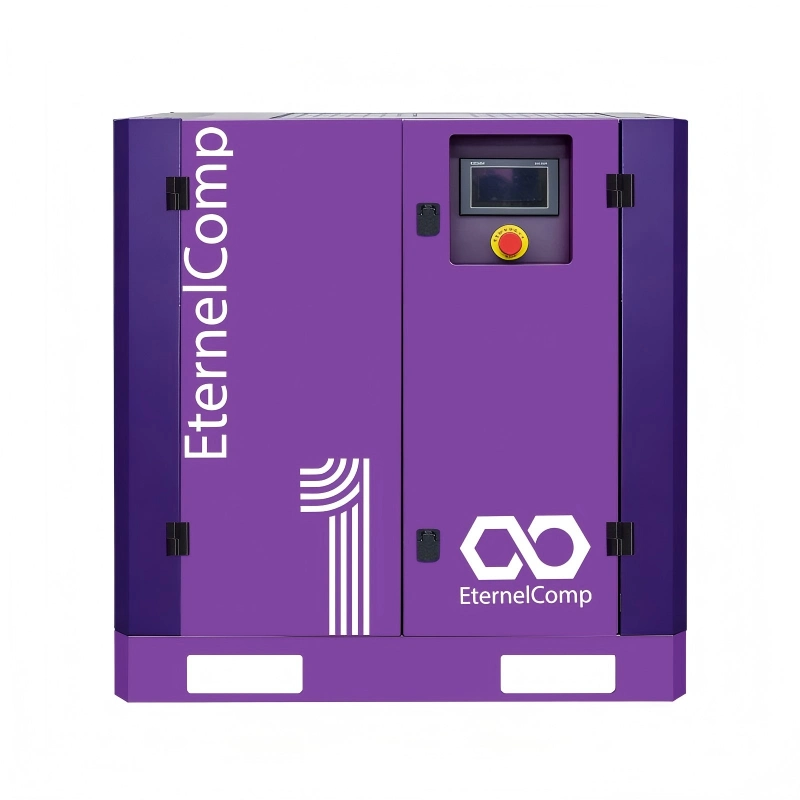
Cara Kerja Kompresi Satu Tahap
Proses dasarnya dapat dijelaskan dalam empat langkah:
- Asupan udara: Udara sekitar masuk melalui katup masuk dan sistem penyaringan.
- Kompresi: Dua rotor sekrup mengurangi volume udara di dalam ruang kompresi.
- Injeksi oli atau pendinginan: Pada model dengan injeksi oli, pelumas berfungsi untuk menyegel, mendinginkan, dan melumasi proses kompresi.
- Pelepasan: Udara terkompresi keluar dari unit kompresor dan mengalir melalui komponen pemisahan, pendinginan, dan pengolahan.
Karena proses kompresi berlangsung dalam satu tahap, sistem ini memiliki lebih sedikit komponen kompresi utama dibandingkan dengan model dua tahap. Kesederhanaan ini dapat menekan biaya awal dan mempermudah perawatan rutin.
Karakteristik Umum Unit Satu Tahap
| Fitur | Karakteristik Kompresor Sekrup Satu Tahap |
| Proses kompresi | Udara yang telah dikompresi sekali |
| Rentang tekanan | Umumnya digunakan untuk tekanan udara standar pada instalasi |
| Biaya awal | Biasanya lebih rendah daripada model dua tahap |
| Kompleksitas sistem | Desain mekanis yang lebih sederhana |
| Efisiensi energi | Cocok untuk tekanan dan beban kerja sedang |
| Pemeliharaan | Secara umum cukup mudah |
| Contoh penggunaan terbaik | Permintaan udara terkompresi di sektor industri secara umum |
Unit satu tahap sering kali menjadi pilihan utama ketika sebuah perusahaan membutuhkan udara terkompresi yang andal tanpa harus menanggung biaya tambahan atau kerumitan yang ditimbulkan oleh kompresi dua tahap.
Apa Itu Kompresor Udara Sekrup Dua Tahap?
A kompresor udara sekrup dua tahap mengompres udara dalam dua tahap kompresi terpisah, biasanya dengan proses pendinginan di antara kedua tahap tersebut, sehingga memungkinkan sistem ini menghasilkan efisiensi yang lebih tinggi dan kinerja yang lebih baik dalam kondisi pengoperasian yang berat.
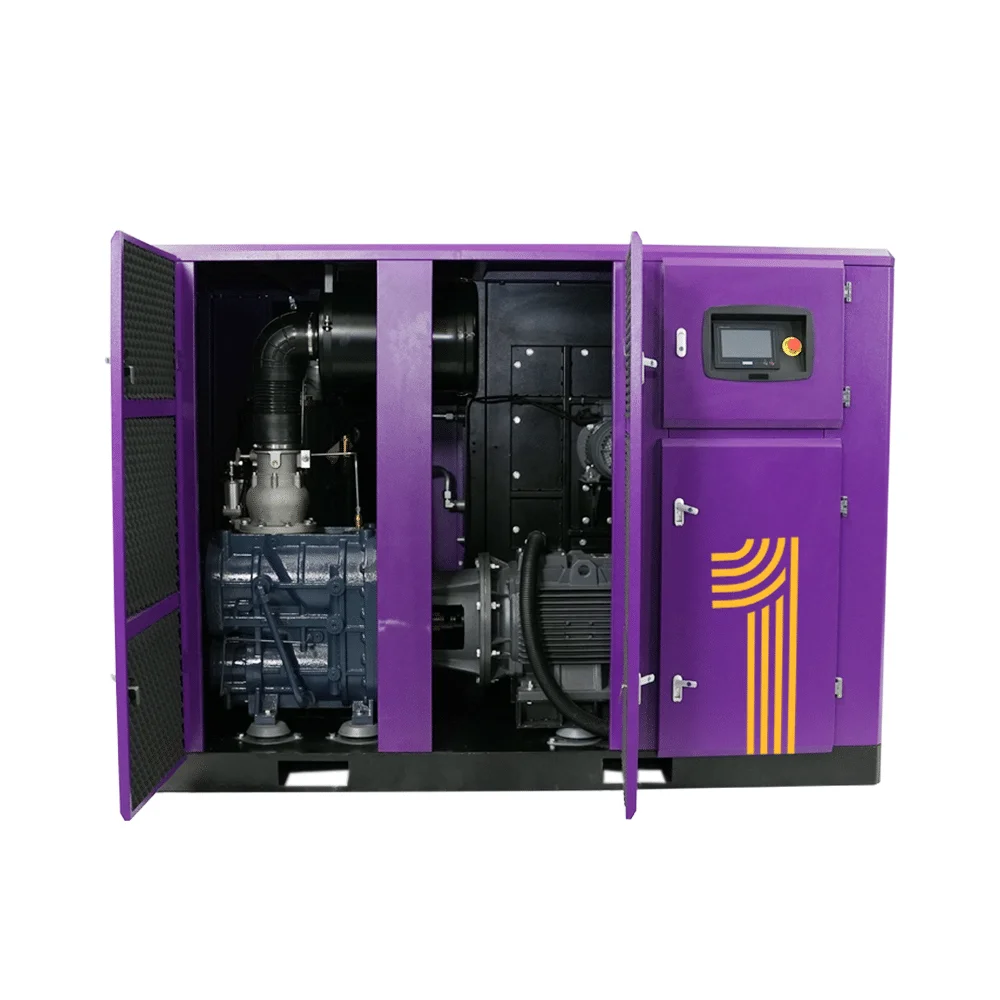
Dalam desain dua tahap, udara terlebih dahulu dikompresi hingga mencapai tekanan antara. Udara tersebut kemudian didinginkan sebelum memasuki tahap kompresi kedua, di mana udara dikompresi hingga mencapai tekanan akhir yang diperlukan. Proses bertahap ini mengurangi tenaga yang diperlukan untuk mencapai tekanan akhir dan membantu mengendalikan suhu secara lebih efektif.
Dua tahap Kompresor Udara Sekrup Sering kali dipilih untuk fasilitas dengan kebutuhan udara yang tinggi, jam operasional yang panjang, persyaratan tekanan tinggi, atau target efisiensi energi yang ketat. Meskipun harga belinya umumnya lebih tinggi, penghematan energi yang dihasilkan seiring waktu dapat sangat signifikan pada aplikasi dengan operasi berkelanjutan.
Cara Kerja Kompresi Dua Tahap
Kompresor sekrup dua tahap umumnya mengikuti proses berikut ini:
- Tahap pertama hisap dan kompresi: Udara ambien masuk ke unit kompresi pertama dan dikompresi hingga mencapai tekanan menengah.
- Pendinginan antar-tahap: Udara didinginkan sebelum memasuki tahap kompresi berikutnya, sehingga suhu dan volumenya berkurang.
- Kompresi tahap kedua: Udara yang telah didinginkan kemudian dikompresi kembali hingga mencapai tekanan keluaran akhir.
- Pendinginan lanjutan dan pemisahan: Udara terkompresi tersebut didinginkan, diolah, dan disiapkan untuk didistribusikan.
Sistem intercooler merupakan salah satu keunggulan utama dari desain ini. Udara yang lebih dingin memiliki kepadatan yang lebih tinggi dan membutuhkan energi yang lebih sedikit untuk dikompresi lebih lanjut. Hal ini meningkatkan efisiensi kompresi secara keseluruhan dan mengurangi beban termal pada komponen internal.
Karakteristik Umum Unit Dua Tahap
| Fitur | Karakteristik Kompresor Sekrup Dua Tahap |
| Proses kompresi | Udara yang dikompresi dalam dua tahap |
| Kapasitas tekanan | Lebih cocok untuk tekanan yang lebih tinggi |
| Biaya awal | Biasanya lebih tinggi |
| Kompleksitas sistem | Desain yang lebih canggih |
| Efisiensi energi | Seringkali lebih tinggi saat beroperasi secara terus-menerus |
| Suhu keluaran | Lebih rendah daripada operasi satu tahap yang sejenis |
| Contoh penggunaan terbaik | Aplikasi dengan beban berat, permintaan tinggi, atau yang sensitif terhadap energi |
Untuk operasi di mana udara terkompresi merupakan salah satu pengguna energi terbesar, sistem dua tahap dapat memberikan keuntungan ekonomi yang signifikan dalam jangka panjang.
Apa Perbedaan Antara Kompresor Udara Sekrup Satu Tahap dan Dua Tahap?
Perbedaan utamanya meliputi metode kompresi, efisiensi energi, kapasitas tekanan, pengendalian suhu, biaya pembelian, tingkat kerumitan pemeliharaan, serta kesesuaian untuk siklus kerja yang berbeda-beda.
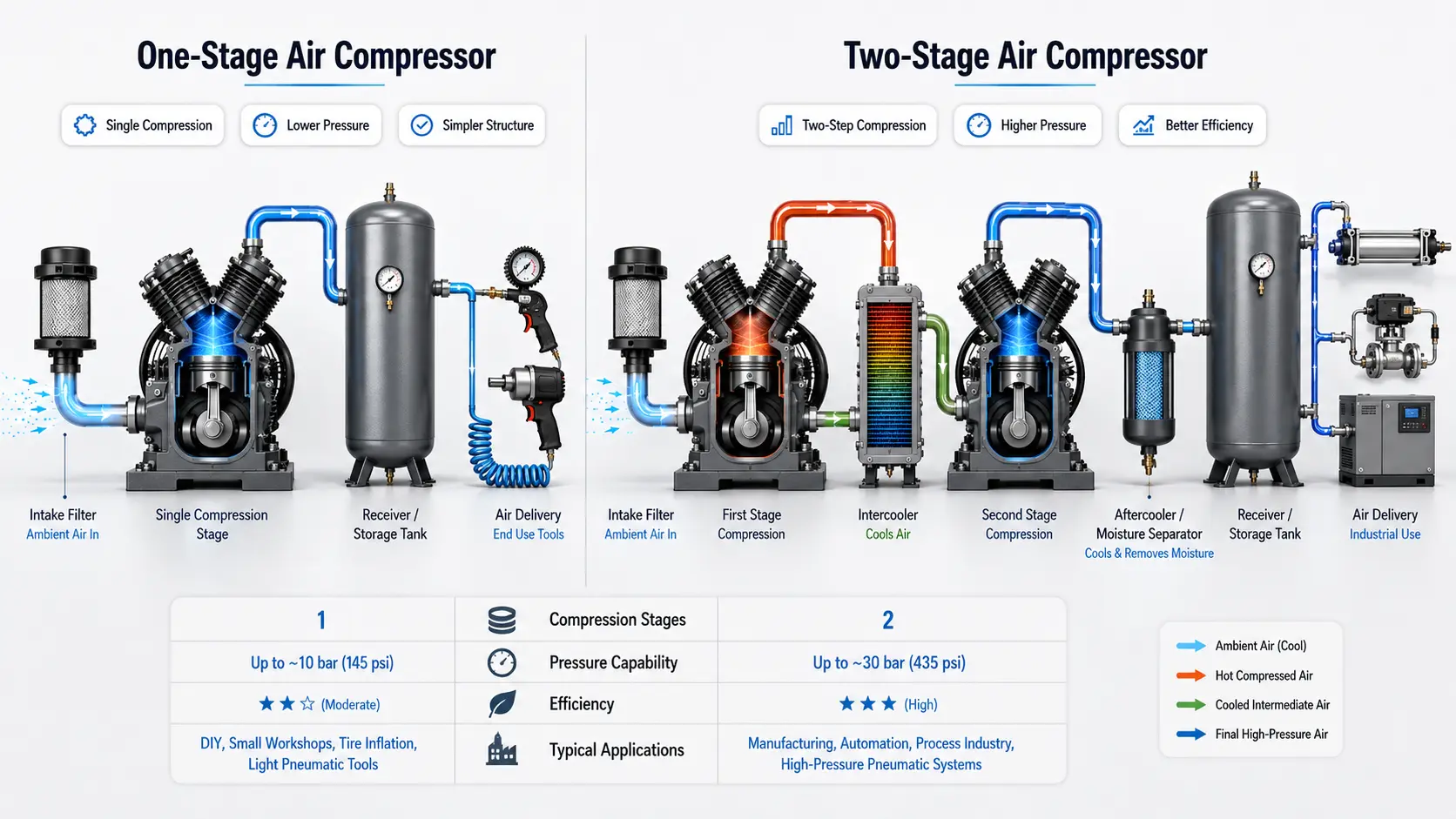
Kedua jenis kompresor tersebut menggunakan teknologi sekrup putar, namun strategi kompresi internalnya berbeda. Perbedaan tersebut memengaruhi hampir semua faktor kinerja, mulai dari konsumsi daya hingga suhu udara dan masa pakai sistem.
Tabel Perbandingan Utama
| Faktor Perbandingan | Kompresor Udara Sekrup Satu Tahap | Kompresor Udara Sekrup Dua Tahap |
| Tahap-tahap kompresi | Satu | Dua |
| Rentang tekanan terbaik | Tekanan standar industri | Kebutuhan tekanan sedang hingga tinggi |
| Efisiensi energi | Cocok untuk penggunaan sedang | Lebih baik untuk penggunaan dengan beban tinggi dan operasi terus-menerus |
| Investasi awal | Lebih rendah | Lebih tinggi |
| Biaya operasional | Dapat menjadi lebih tinggi pada beban berat | Seringkali semakin rendah seiring berjalannya waktu |
| Suhu keluaran | Lebih tinggi | Lebih rendah akibat proses intercooling |
| Kebutuhan pemeliharaan | Lebih sederhana | Komponen lain yang perlu diperbaiki |
| Jejak | Seringkali ringkas | Mungkin memerlukan ruang yang lebih luas |
| Kesesuaian aplikasi | Udara umum di pabrik | Manufaktur berat dan sistem dengan permintaan tinggi |
| Nilai siklus hidup | Tahan lama untuk penggunaan ringan hingga sedang | Tahan lama untuk penggunaan industri yang berkelanjutan |
Efisiensi Kompresi
Kompresi dua tahap umumnya lebih efisien karena udara didinginkan di antara kedua tahap tersebut. Ketika suhu udara diturunkan sebelum tahap kompresi kedua, energi yang dibutuhkan untuk mengompresinya hingga mencapai tekanan akhir pun menjadi lebih sedikit.
Menurut Departemen Energi AS, sistem udara terkompresi dapat menyumbang porsi yang cukup besar dari konsumsi listrik di sektor industri. Hal ini menjadikan efisiensi kompresor sebagai pertimbangan penting, terutama bagi fasilitas yang beroperasi dalam beberapa shift.
Pengelolaan Suhu
Proses kompresi secara alami menghasilkan panas. Pada kompresor satu tahap, seluruh panas kompresi dihasilkan dalam satu proses. Pada sistem dua tahap, pendinginan antar-tahap membantu menghilangkan panas di antara kedua tahap tersebut.
Suhu operasi yang lebih rendah dapat berkontribusi terhadap:
- Peningkatan masa pakai pelumas
- Pengurangan tegangan termal
- Pengendalian kualitas udara yang lebih baik
- Pengoperasian yang lebih stabil
- Umur komponen yang berpotensi lebih panjang
Struktur Biaya
Kompresor satu tahap biasanya lebih murah dalam hal pembelian dan pemasangan. Namun, harga pembelian hanyalah salah satu pertimbangan dalam pengambilan keputusan. Biaya energi dapat melebihi biaya peralatan selama masa pakai kompresor.
Sistem dua tahap mungkin memerlukan investasi awal yang lebih besar, tetapi sistem ini dapat mengurangi konsumsi energi pada aplikasi yang beroperasi dalam waktu lama.
Jenis mana yang lebih hemat energi?
Kompresor udara sekrup dua tahap biasanya lebih hemat energi dalam aplikasi yang beroperasi secara terus-menerus, dengan beban tinggi, atau pada tekanan yang lebih tinggi, sedangkan model satu tahap sudah cukup efisien untuk kebutuhan udara terkompresi yang sedang dan tidak terus-menerus.
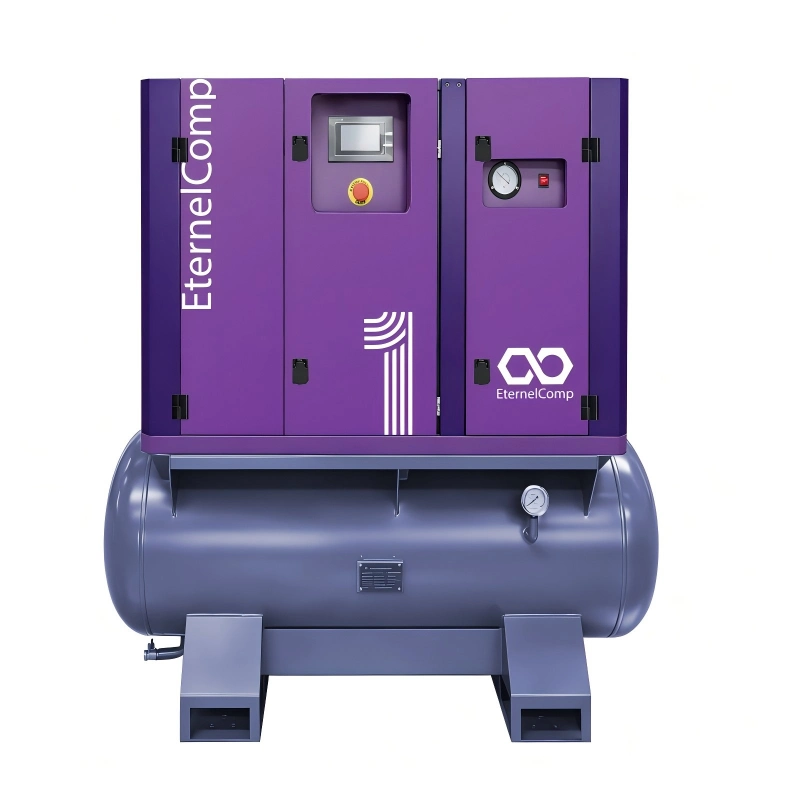
Efisiensi energi bergantung pada tekanan operasi, profil kebutuhan udara, ukuran kompresor, metode pengendalian, kondisi pemeliharaan, dan desain sistem. Kompresor dua tahap yang ukurannya tidak tepat mungkin kinerjanya lebih buruk daripada unit satu tahap yang ukurannya tepat. Namun, jika keduanya diterapkan dengan benar, kompresi dua tahap sering kali memiliki keunggulan efisiensi dalam kondisi yang berat.
Mengapa Kompresi Dua Tahap Dapat Menghemat Energi
Kompresi dua tahap mengurangi konsumsi energi terutama berkat penggunaan intercooler. Pendinginan udara di antara kedua tahap tersebut mengurangi beban kerja yang diperlukan pada tahap kompresi kedua.
Manfaat efisiensi yang penting antara lain:
- Daya yang dibutuhkan per satuan udara terkompresi lebih rendah
- Penurunan beban panas
- Distribusi rasio kompresi yang lebih baik
- Kinerja yang lebih baik pada tekanan yang lebih tinggi
- Pengoperasian yang lebih stabil dalam kondisi beban terus-menerus
Ketika Efisiensi Satu Tahap Sudah Cukup
Kompresor satu tahap bisa menjadi pilihan yang lebih baik jika:
- Tekanan yang diperlukan berada dalam kisaran standar
- Permintaan udara berada pada tingkat sedang
- Kompresor tidak beroperasi secara terus-menerus pada beban penuh
- Anggaran awalnya terbatas
- Kesederhanaan sistem merupakan prioritas
- Fasilitas ini tidak memerlukan udara bertekanan tinggi
Bagi banyak pengguna industri skala kecil dan menengah, satu tahap Kompresor Udara Sekrup menawarkan keseimbangan yang baik antara kinerja dan biaya.
Daftar Periksa Evaluasi Energi
Sebelum memutuskan antara model satu tahap dan dua tahap, pertimbangkan hal-hal berikut:
- Jam operasional tahunan
- Kebutuhan udara rata-rata dan puncak
- Tekanan keluaran yang diperlukan
- Biaya listrik
- Kebutuhan pengaturan kecepatan beban/tanpa beban atau kecepatan variabel
- Laju kebocoran udara terkompresi
- Perluasan produksi di masa depan
- Persyaratan pengolahan udara
Kompresor mana yang lebih baik untuk aplikasi bertekanan tinggi?
Kompresor udara sekrup dua tahap umumnya lebih cocok untuk aplikasi bertekanan tinggi karena membagi proses kompresi menjadi dua tahap, sehingga mengurangi beban dan meningkatkan pengendalian suhu.
Udara terkompresi bertekanan tinggi menimbulkan beban yang lebih besar pada komponen kompresor. Ketika udara dikompresi hingga mencapai tekanan akhir yang lebih tinggi dalam satu tahap, suhu keluaran naik dan beban mekanis pun meningkat. Kompresi dua tahap mengatasi hal ini dengan lebih efektif dengan mendistribusikan kenaikan tekanan tersebut ke dalam dua tahap.
Mengapa Rasio Tekanan Itu Penting
Rasio tekanan adalah hubungan antara tekanan masuk dan tekanan keluaran. Rasio tekanan yang lebih tinggi membutuhkan lebih banyak energi dan menghasilkan lebih banyak panas.
Dalam sistem satu tahap, rasio tekanan keseluruhan ditangani oleh satu proses kompresi. Dalam sistem dua tahap, rasio tekanan dibagi, sehingga setiap tahap dapat beroperasi dalam kondisi yang tidak terlalu berat.
Sektor Industri yang Mungkin Lebih Memilih Unit Dua Tahap
Kompresor dua tahap sering digunakan dalam:
- Manufaktur berat
- Pengerjaan logam
- Pabrik perakitan berskala besar
- Produksi tekstil
- Pemrosesan kimia
- Sistem pengecatan industri
- Stasiun udara terkompresi pusat
- Fasilitas dengan otomatisasi pneumatik berkelanjutan
Aplikasi-aplikasi ini sering kali membutuhkan tekanan yang stabil, volume udara yang besar, dan jam operasi yang panjang.
Ketika Tekanan Tinggi Tidak Diperlukan
Tidak semua fasilitas mendapat manfaat dari tekanan yang lebih tinggi. Faktanya, mengoperasikan sistem pada tekanan yang terlalu tinggi justru meningkatkan konsumsi energi dan dapat memperparah kerugian akibat kebocoran.
Tanda-tanda umum yang menunjukkan bahwa tekanan sistem Anda mungkin terlalu tinggi antara lain:
- Penyesuaian regulator tekanan yang sering dilakukan
- Kebocoran udara yang berlebihan
- Tagihan listrik yang tinggi
- Alat pneumatik yang dioperasikan secara terlalu kasar
- Permintaan buatan yang disebabkan oleh tekanan berlebih
Sebelum beralih ke kompresor bertekanan lebih tinggi, perusahaan sebaiknya memeriksa kebutuhan tekanan aktual di titik penggunaan.
Bagaimana Perbandingan Persyaratan Pemeliharaannya?
Kompresor udara sekrup satu tahap umumnya lebih mudah dan lebih murah perawatannya, sedangkan kompresor udara sekrup dua tahap memerlukan perawatan yang lebih teliti karena adanya komponen kompresi tambahan dan sistem pendingin antar-tahap.
Pemeliharaan sangat penting bagi kedua jenis kompresor tersebut. Sistem udara terkompresi yang andal bergantung pada udara masuk yang bersih, pelumasan yang tepat, pendinginan yang efektif, segel yang rapat, dan kondisi pengoperasian yang stabil. Namun, jumlah titik servis berbeda antara desain satu tahap dan dua tahap.
Hal-Hal yang Perlu Diperhatikan dalam Pemeliharaan Kompresor Satu Tahap
Sistem satu tahap biasanya memiliki lebih sedikit komponen utama, sehingga dapat mempermudah perencanaan pemeliharaan.
Tugas-tugas perawatan umum meliputi:
- Penggantian filter udara
- Penggantian oli dan filter oli
- Penggantian elemen pemisah
- Pemeriksaan sabuk atau kopling
- Pembersihan pendingin
- Pemeriksaan katup masuk
- Pemeriksaan saluran pembuangan kondensat
- Deteksi kebocoran
Karena desainnya lebih sederhana, proses pemecahan masalah pun mungkin bisa dilakukan lebih cepat.
Hal-Hal yang Perlu Diperhatikan dalam Pemeliharaan Kompresor Dua Tahap
Sistem dua tahap mencakup komponen tambahan yang berkaitan dengan tahap kompresi kedua dan proses pendinginan antar-tahap.
Pemeliharaan dapat mencakup:
- Pemeriksaan unit kompresor tahap pertama dan tahap kedua
- Pembersihan intercooler
- Pemeriksaan sensor suhu
- Pemeriksaan pipa tambahan
- Pemantauan sirkuit oli yang lebih terperinci
- Verifikasi tekanan panggung
- Pemantauan getaran yang ditingkatkan
Meskipun perawatannya bisa jadi lebih rumit, unit dua tahap mungkin mengalami tekanan termal yang lebih rendah jika dioperasikan dengan benar. Hal ini dapat mendukung kinerja jangka panjang yang andal.
Perbandingan Pemeliharaan
| Faktor Pemeliharaan | Panggung Tunggal | Dua Tahap |
| Jumlah komponen kompresi | Lebih sedikit | Selengkapnya |
| Kompleksitas layanan | Lebih rendah | Lebih tinggi |
| Biaya pemeliharaan rutin | Biasanya lebih rendah | Biasanya lebih tinggi |
| Tegangan termal | Lebih tinggi pada tekanan yang tinggi | Lebih terkendali |
| Pemecahan Masalah | Lebih sederhana | Lebih rinci |
| Persyaratan keterampilan teknisi | Standar | Lebih khusus |
Strategi pemeliharaan terbaik adalah strategi preventif, bukan reaktif. Pemeriksaan rutin membantu mencegah waktu henti, ketidakstabilan tekanan, dan penurunan efisiensi.
Bagaimana Cara Memilih Antara Kompresor Udara Sekrup Satu Tahap dan Dua Tahap?
Pilihlah kompresor satu tahap jika fasilitas Anda membutuhkan udara bertekanan standar dengan biaya awal yang lebih rendah; pilihlah kompresor dua tahap jika operasi Anda memerlukan efisiensi tinggi, tekanan lebih tinggi, pengoperasian terus-menerus, atau biaya energi sepanjang siklus hidup yang lebih rendah.
Kompresor yang tepat bergantung pada penggunaannya, bukan semata-mata pada jenis mesinnya. Kompresor harus dipilih berdasarkan kebutuhan udara yang sebenarnya, persyaratan tekanan, siklus kerja, kondisi pemasangan, dan tujuan pengoperasian jangka panjang.
Pilih Tipe Satu Tahap Jika Anda Membutuhkan
Unit satu tahap mungkin cocok jika fasilitas Anda memiliki:
- Permintaan udara yang sedang
- Tekanan kerja standar
- Jam operasional terbatas
- Pembelian peralatan yang memperhatikan anggaran
- Keterbatasan ruang
- Persyaratan perawatan yang sederhana
- Alat pneumatik serbaguna
- Beban produksi ringan hingga sedang
Opsi ini sangat praktis bagi banyak pabrik, bengkel, fasilitas layanan, dan jalur produksi yang tidak beroperasi dalam kondisi ekstrem.
Pilih Opsi Dua Tahap Jika Anda Membutuhkannya
Unit dua tahap mungkin merupakan pilihan yang lebih baik jika fasilitas Anda memiliki:
- Operasi tanpa henti 24 jam sehari, 7 hari seminggu
- Konsumsi udara yang tinggi
- Persyaratan tekanan keluaran yang lebih tinggi
- Target penghematan energi yang ambisius
- Beberapa jalur produksi
- Peralatan pneumatik untuk penggunaan berat
- Stasiun udara terkompresi terpusat
- Perencanaan siklus hidup peralatan yang panjang
Bagi pengguna industri berskala besar, peningkatan efisiensi sekecil apa pun pun dapat menghasilkan penghematan tahunan yang signifikan.
Matriks Keputusan Seleksi
| Persyaratan Fasilitas | Lebih Pas |
| Biaya awal terendah | Satu tahap |
| Biaya energi jangka panjang terendah dalam penggunaan intensif | Dua tahap |
| Pemasangan yang mudah | Satu tahap |
| Stabilitas pada tekanan tinggi | Dua tahap |
| Udara umum di pabrik | Satu tahap |
| Produksi berkelanjutan | Dua tahap |
| Perawatan yang mudah | Satu tahap |
| Udara terkompresi bervolume besar | Dua tahap |
| Preferensi sistem ringkas | Satu tahap |
| Fokus pada efisiensi siklus hidup | Dua tahap |
Langkah-langkah Praktis dalam Membeli
Untuk menghindari pemilihan ukuran yang terlalu besar atau terlalu kecil, ikuti proses pemilihan yang terstruktur:
- Ukur kebutuhan udara yang sebenarnya dalam hal laju aliran dan tekanan.
- Mengidentifikasi konsumsi puncak dan rata-rata di seluruh shift.
- Periksa persyaratan kualitas udara, termasuk kelembapan, minyak, dan kebutuhan penyaringan.
- Periksa jam operasional untuk memperkirakan biaya energi tahunan.
- Menilai kondisi pemasangan, termasuk ventilasi dan suhu lingkungan.
- Pertimbangkan rencana ekspansi di masa depan bukan hanya permintaan saat ini.
- Bandingkan biaya siklus hidup, bukan hanya harga pembelian.
- Rencanakan akses pemeliharaan sebelum menyelesaikan tata letak.
Audit udara terkompresi sering kali bermanfaat bagi fasilitas berskala besar karena dapat mengidentifikasi kebocoran, penurunan tekanan, permintaan buatan, dan pola operasi yang tidak efisien.
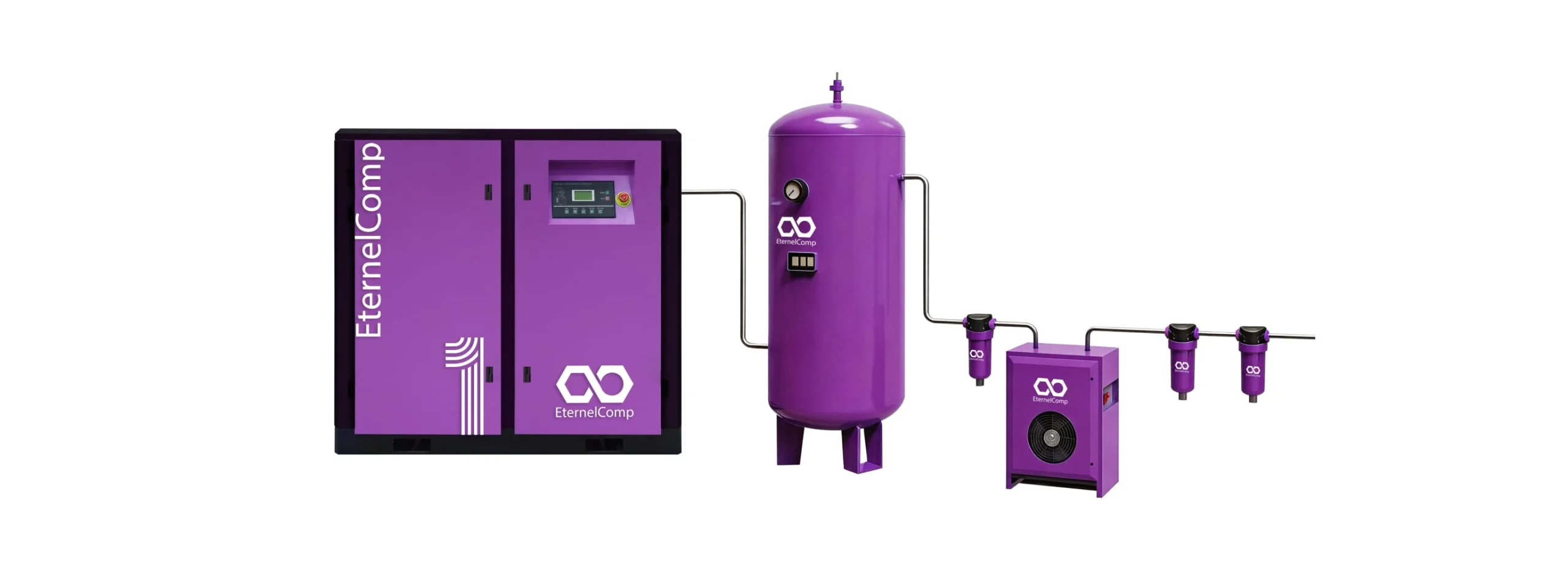
Apa saja perbedaan dalam Total Biaya Kepemilikan?
Kompresor satu tahap biasanya memiliki biaya awal yang lebih rendah, sedangkan kompresor dua tahap mungkin menawarkan total biaya kepemilikan yang lebih baik pada aplikasi dengan tingkat penggunaan tinggi berkat penghematan energi dan efisiensi yang lebih baik.
Total biaya kepemilikan, yang sering disebut TCO, mencakup semua biaya yang berkaitan dengan pembelian, pengoperasian, pemeliharaan, dan pada akhirnya penggantian kompresor. Untuk sistem udara terkompresi industri, biaya listrik seringkali merupakan biaya jangka panjang terbesar.
Kategori Biaya Utama
| Kategori Biaya | Deskripsi | Dampak terhadap Seleksi |
| Biaya pembelian | Harga awal peralatan | Satu tahap biasanya lebih rendah |
| Biaya pemasangan | Pemasangan pipa, pekerjaan kelistrikan, ventilasi | Tergantung pada ukuran sistem |
| Biaya energi | Listrik yang digunakan selama pengoperasian | Proses dua tahap mungkin dapat menekan biaya |
| Biaya pemeliharaan | Filter, oli, suku cadang, biaya tenaga kerja | Sistem satu tahap seringkali lebih sederhana |
| Biaya waktu henti | Kerugian produksi akibat kegagalan | Tergantung pada keandalan dan layanannya |
| Biaya pengolahan udara | Pengering, filter, pemisah | Diperlukan untuk kedua jenis tersebut |
| Penggantian berdasarkan siklus hidup | Perencanaan peralatan jangka panjang | Tergantung pada siklus kerja |
Mengapa Biaya Siklus Hidup Penting
Kompresor yang harganya lebih murah saat dibeli belum tentu lebih murah dalam hal biaya pemeliharaannya. Jika kompresor tersebut beroperasi tanpa henti, konsumsi energi dapat dengan cepat menjadi pos pengeluaran utama.
Sebagai contoh, sebuah fasilitas yang beroperasi dalam satu shift mungkin akan memprioritaskan biaya awal dan perawatan yang sederhana. Sebuah pabrik yang beroperasi dalam tiga shift mungkin akan memprioritaskan efisiensi, pengendalian suhu, dan penghematan energi dalam jangka panjang.
Biaya Tersembunyi yang Perlu Dipertimbangkan
Banyak biaya yang terkait dengan udara terkompresi tidak terlihat jelas saat proses pembelian. Di antaranya adalah:
- Penurunan tekanan akibat ukuran pipa yang terlalu kecil
- Kebocoran pada jaringan distribusi
- Ventilasi yang buruk di sekitar kompresor
- Pengelolaan kondensat yang tidak memadai
- Pemilihan pengering yang salah
- Tekanan berlebih pada sistem
- Kurangnya pemeliharaan preventif
Memilih antara sistem satu tahap dan dua tahap Kompresor Udara Sekrup harus menjadi bagian dari strategi sistem udara terkompresi yang lebih luas.
Kesimpulan
Kompresor udara sekrup satu tahap paling cocok untuk aplikasi beban standar yang mengutamakan kesederhanaan dan biaya awal yang lebih rendah, sedangkan kompresor udara sekrup dua tahap lebih cocok untuk operasi dengan beban tinggi yang memprioritaskan efisiensi energi, stabilitas tekanan, dan penghematan jangka panjang.
Pertanyaan yang Sering Diajukan
1. Apakah penggerak kecepatan variabel dapat meningkatkan efisiensi kompresor udara sekrup?
Ya. Penggerak kecepatan variabel (Variable Speed Drive), yang sering disebut VSD, dapat meningkatkan efisiensi ketika kebutuhan udara berfluktuasi sepanjang hari. Alih-alih beroperasi pada kecepatan tetap, kompresor menyesuaikan kecepatan motor agar sesuai dengan kebutuhan. Hal ini dapat mengurangi waktu operasi tanpa beban dan menurunkan konsumsi listrik. Namun, VSD paling bermanfaat pada sistem dengan kebutuhan yang bervariasi, bukan pada aplikasi di mana kompresor beroperasi terus-menerus pada beban penuh.
2. Apakah kompresor udara sekrup memerlukan pengering udara?
Sebagian besar sistem udara terkompresi industri memerlukan pengering udara karena proses kompresi menghasilkan uap air. Tanpa pengeringan yang tepat, kondensat dapat merusak perkakas pneumatik, katup, pipa, dan peralatan produksi. Jenis pengering yang tepat bergantung pada titik embun yang dibutuhkan, kondisi lingkungan, dan standar kualitas udara. Pengering refrigerasi umumnya digunakan untuk udara di pabrik pada umumnya, sedangkan pengering desikan digunakan ketika diperlukan udara yang sangat kering.
3. Seberapa sering kebocoran udara terkompresi harus diperiksa?
Kebocoran udara terkompresi harus diperiksa secara rutin, terutama di fasilitas besar atau sistem dengan jaringan pipa yang panjang. Pendekatan praktis yang dapat dilakukan adalah melakukan pemeriksaan visual dan pendengaran dasar setiap bulan, serta melakukan survei kebocoran yang lebih mendetail setidaknya sekali atau dua kali setahun. Perbaikan kebocoran merupakan salah satu cara paling hemat biaya untuk mengurangi konsumsi energi kompresor dan meningkatkan stabilitas tekanan sistem.