
Compressed air is a critical utility in manufacturing, automotive, electronics, food processing, packaging, metalworking, pharmaceuticals, and many other industrial environments. For companies selecting Screw Air Compressors, one of the most important decisions is whether to choose a single-stage or two-stage configuration. The right choice affects energy consumption, operating pressure, air reliability, maintenance planning, and total cost of ownership.
Single-stage screw air compressors compress air once and are typically suitable for standard industrial pressure requirements, while two-stage screw air compressors compress air in two steps, making them more efficient for higher-pressure or heavy-duty continuous applications. In general, single-stage units are simpler and more cost-effective upfront, whereas two-stage units offer better energy efficiency, lower discharge temperatures, and stronger performance in demanding operations.
To make the right investment, buyers should understand how each compressor works, where each type performs best, and how operating conditions influence long-term value.
What Is a Single-Stage Screw Air Compressor?
A single-stage screw air compressor compresses air in one compression process using a pair of intermeshing rotors, making it a practical choice for facilities that need stable compressed air at moderate pressures.
In a single-stage design, atmospheric air enters the compressor intake, passes through the compression chamber, and is compressed to the required final pressure in one step. This configuration is widely used because it is mechanically straightforward, compact, and capable of supporting many general industrial applications.
Single-stage Screw Air Compressors are commonly used in workshops, assembly lines, packaging operations, pneumatic tools, light manufacturing, and general plant air systems. They are especially attractive when the required discharge pressure is not extremely high and when the air demand profile is relatively predictable.
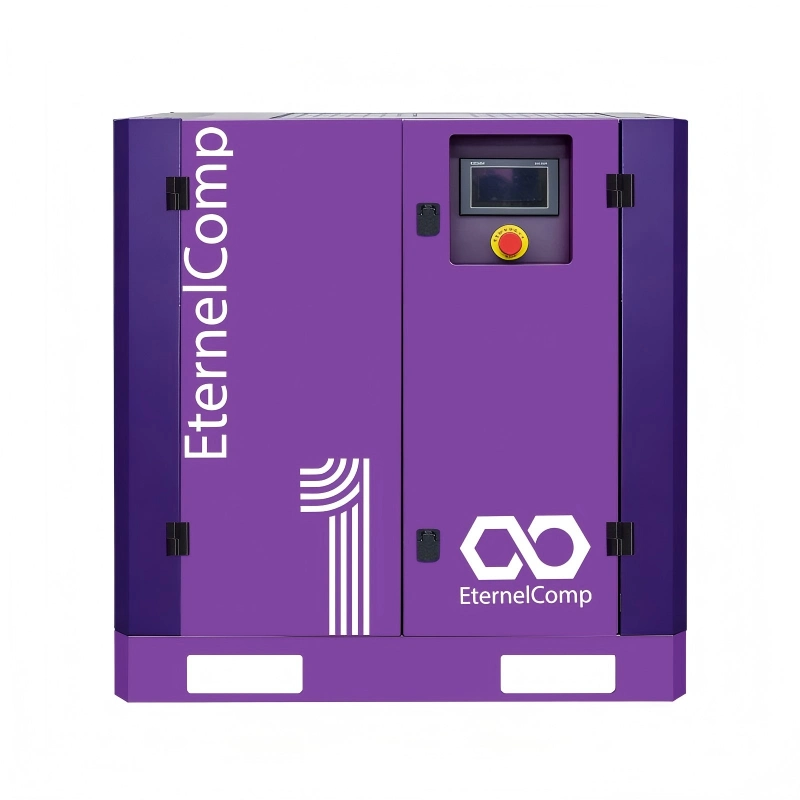
How Single-Stage Compression Works
The basic process can be described in four steps:
- Air intake: Ambient air enters through the inlet valve and filtration system.
- Compression: Two screw rotors reduce the air volume inside the compression chamber.
- Oil injection or cooling: In oil-injected models, lubricant helps seal, cool, and lubricate the compression process.
- Discharge: Compressed air exits the air end and moves through separation, cooling, and treatment components.
Because compression happens in one step, the system has fewer major compression components compared with a two-stage model. This simplicity can reduce initial cost and make routine service easier.
Typical Characteristics of Single-Stage Units
| Feature | Single-Stage Screw Compressor Characteristics |
| Compression process | Air compressed once |
| Pressure range | Commonly used for standard plant air pressures |
| Initial cost | Usually lower than two-stage models |
| System complexity | Simpler mechanical design |
| Energy efficiency | Good for moderate pressure and duty requirements |
| Maintenance | Generally straightforward |
| Best use case | General industrial compressed air demand |
Single-stage units are often the default choice when a company needs reliable compressed air without the added cost or complexity of two-stage compression.
What Is a Two-Stage Screw Air Compressor?
A two-stage screw air compressor compresses air in two separate compression stages, usually with intermediate cooling between stages, allowing it to deliver higher efficiency and better performance under demanding operating conditions.
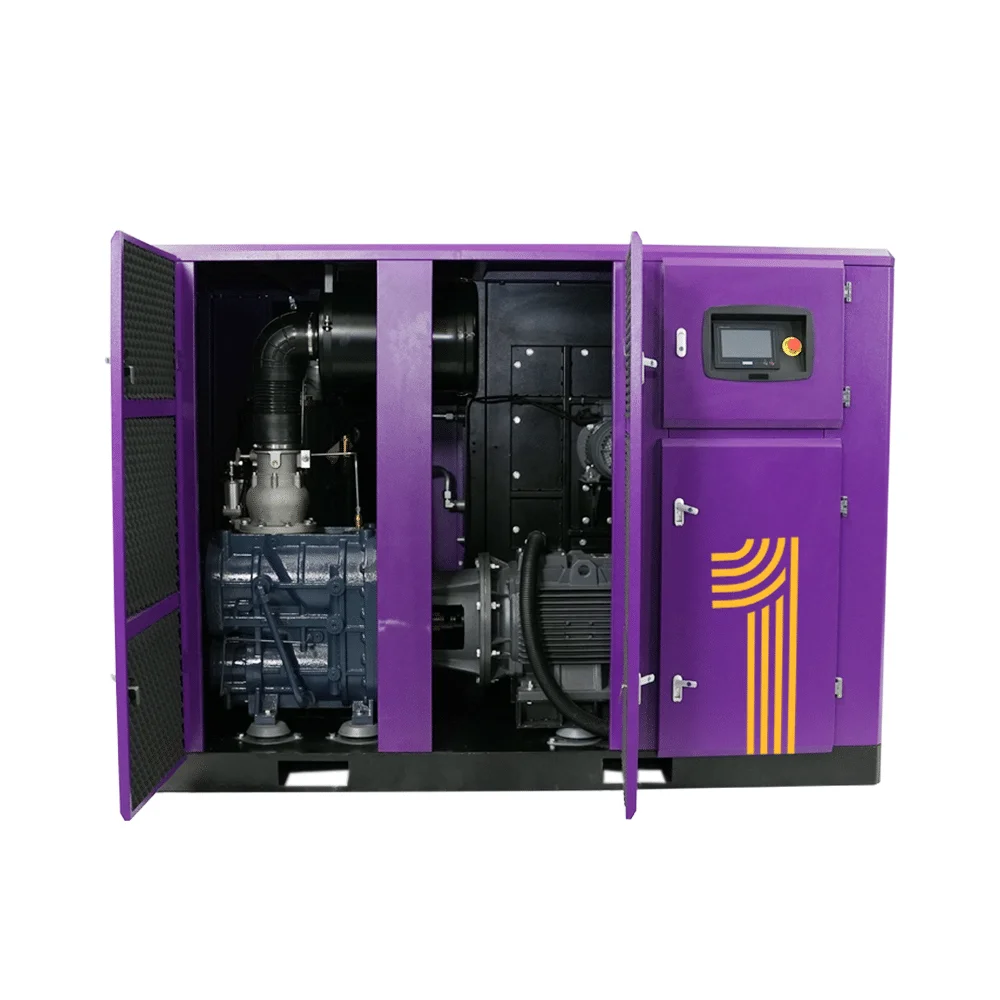
In a two-stage design, air is first compressed to an intermediate pressure. It is then cooled before entering the second compression stage, where it is compressed to the final required pressure. This staged process reduces the work required to reach the final pressure and helps control temperature more effectively.
Two-stage Screw Air Compressors are often selected for facilities with high air demand, long operating hours, high pressure requirements, or strong energy efficiency goals. Although the purchase price is typically higher, the energy savings over time can be significant in continuous-duty applications.
How Two-Stage Compression Works
A two-stage screw compressor generally follows this process:
- First-stage intake and compression: Ambient air enters the first air end and is compressed to an intermediate pressure.
- Intercooling: The air is cooled before entering the next compression stage, reducing its temperature and volume.
- Second-stage compression: The cooled air is compressed again to the final discharge pressure.
- Aftercooling and separation: The compressed air is cooled, treated, and prepared for distribution.
Intercooling is one of the key advantages of this design. Cooler air is denser and requires less energy to compress further. This improves overall compression efficiency and reduces thermal stress on internal components.
Typical Characteristics of Two-Stage Units
| Feature | Two-Stage Screw Compressor Characteristics |
| Compression process | Air compressed in two steps |
| Pressure capability | Better suited for higher pressures |
| Initial cost | Usually higher |
| System complexity | More advanced design |
| Energy efficiency | Often higher in continuous operation |
| Discharge temperature | Lower than comparable single-stage operation |
| Best use case | Heavy-duty, high-demand, or energy-sensitive applications |
For operations where compressed air is one of the largest energy consumers, a two-stage system may provide strong long-term economic advantages.
How Do Single-Stage and Two-Stage Screw Air Compressors Differ?
The main differences are compression method, energy efficiency, pressure capability, temperature control, purchase cost, maintenance complexity, and suitability for different duty cycles.
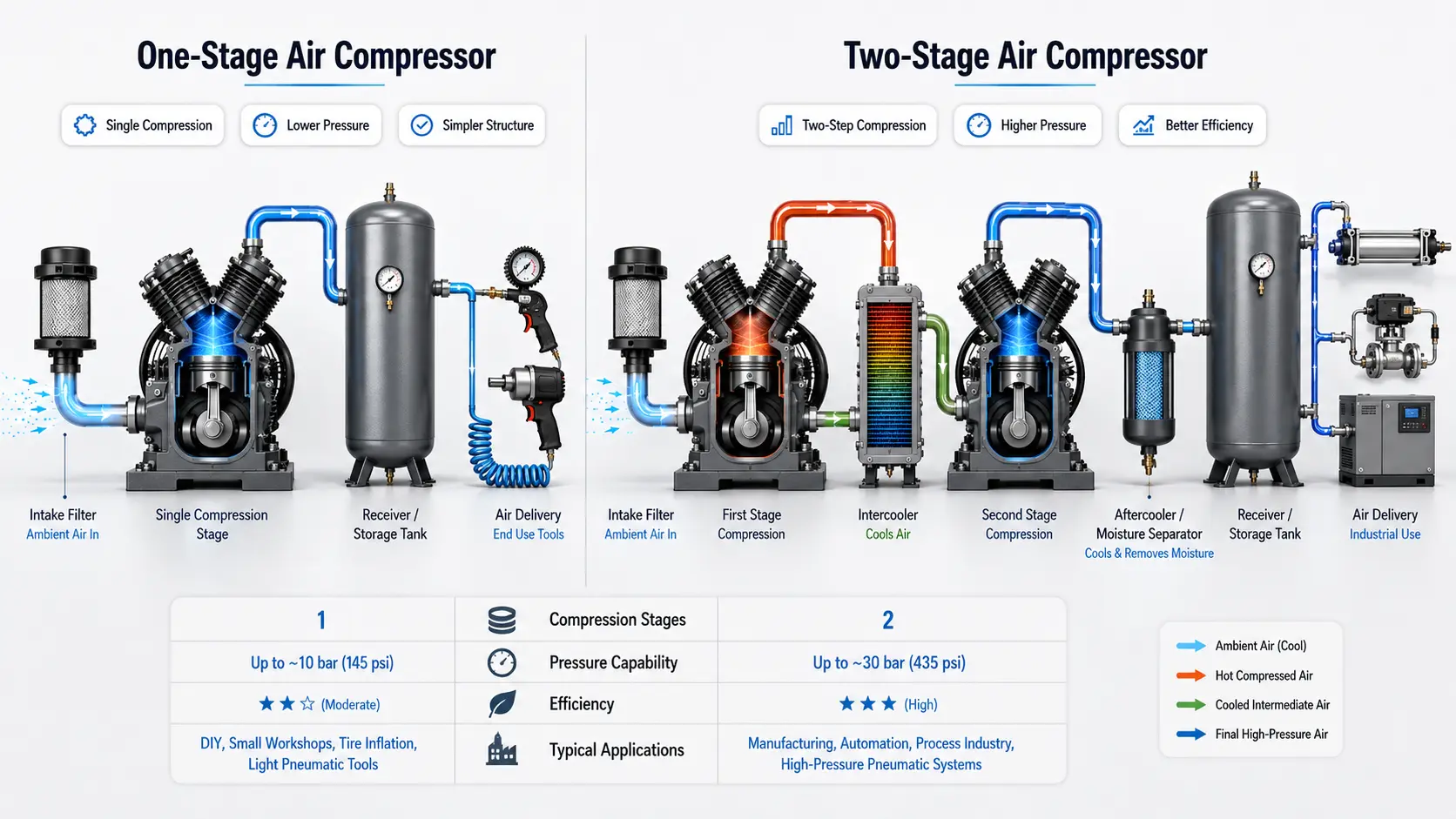
Both compressor types use rotary screw technology, but their internal compression strategy is different. That difference affects almost every performance factor, from power consumption to air temperature and system lifespan.
Key Comparison Table
| Comparison Factor | Single-Stage Screw Air Compressor | Two-Stage Screw Air Compressor |
| Compression stages | One | Two |
| Best pressure range | Standard industrial pressure | Medium to higher pressure demand |
| Energy efficiency | Good in moderate applications | Better in high-load, continuous-duty use |
| Initial investment | Lower | Higher |
| Operating cost | Can be higher at heavy loads | Often lower over time |
| Discharge temperature | Higher | Lower due to intercooling |
| Maintenance needs | Simpler | More components to service |
| Footprint | Often compact | May require more space |
| Application fit | General plant air | Heavy manufacturing and high-demand systems |
| Lifecycle value | Strong for light to medium use | Strong for continuous industrial use |
Compression Efficiency
Two-stage compression is generally more efficient because air is cooled between stages. When air temperature is reduced before the second compression stage, less energy is required to compress it to the final pressure.
According to the U.S. Department of Energy, compressed air systems can represent a significant portion of industrial electricity use. This makes compressor efficiency an important consideration, especially for facilities operating multiple shifts.
Temperature Management
Compression naturally generates heat. In single-stage compressors, all compression heat is created in one process. In two-stage systems, intercooling helps remove heat between stages.
Lower operating temperatures can contribute to:
- Improved lubricant life
- Reduced thermal stress
- Better air quality control
- More stable operation
- Potentially longer component life
Cost Structure
Single-stage compressors usually cost less to purchase and install. However, purchase price is only one part of the decision. Energy costs can exceed equipment cost over the compressor’s service life.
A two-stage system may require a higher upfront investment, but it can reduce energy consumption in applications with high operating hours.
Which Type Is More Energy Efficient?
Two-stage screw air compressors are usually more energy efficient in continuous-duty, high-demand, or higher-pressure applications, while single-stage models can be efficient enough for moderate and intermittent compressed air needs.
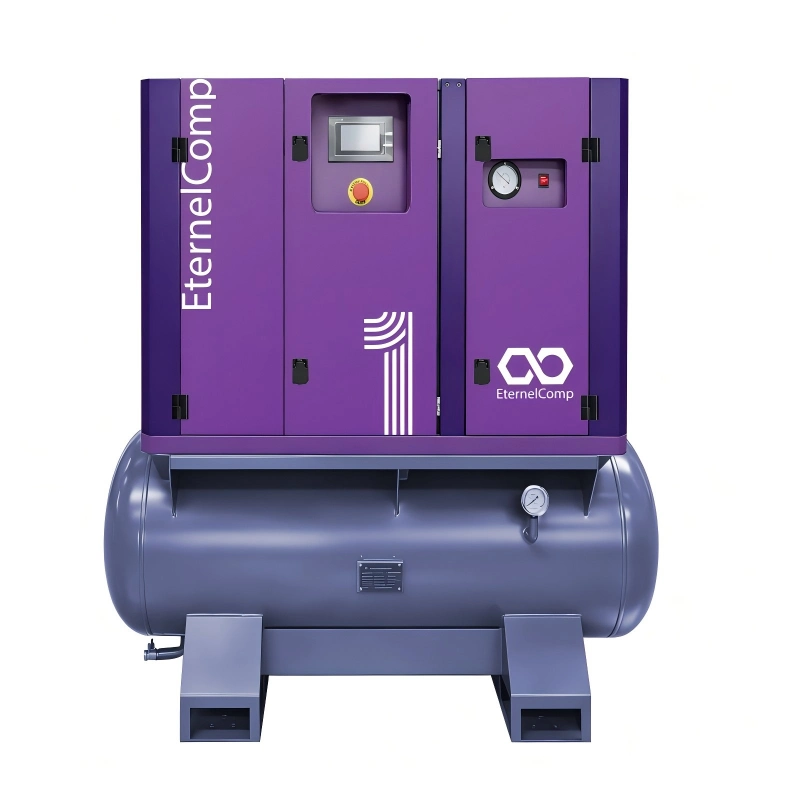
Energy efficiency depends on operating pressure, air demand profile, compressor sizing, control method, maintenance condition, and system design. A poorly sized two-stage compressor may perform worse than a properly sized single-stage unit. However, when both are correctly applied, two-stage compression often has an efficiency advantage in demanding conditions.
Why Two-Stage Compression Can Save Energy
Two-stage compression reduces energy consumption mainly because of intercooling. Cooling the air between stages reduces the work required in the second compression stage.
Important efficiency benefits include:
- Lower power required per unit of compressed air
- Reduced heat load
- Improved compression ratio distribution
- Better performance at higher pressures
- More stable operation under continuous load
When Single-Stage Efficiency Is Sufficient
A single-stage compressor can be the better choice when:
- Required pressure is within a standard range
- Air demand is moderate
- The compressor does not run continuously at full load
- Initial budget is limited
- System simplicity is a priority
- The facility does not require high-pressure air
For many small and medium-sized industrial users, single-stage Screw Air Compressors provide a strong balance between performance and cost.
Energy Evaluation Checklist
Before choosing between single-stage and two-stage models, evaluate:
- Annual operating hours
- Average and peak air demand
- Required discharge pressure
- Electricity cost
- Load/unload or variable speed control needs
- Compressed air leakage rate
- Future production expansion
- Air treatment requirements
Which Compressor Is Better for High Pressure Applications?
Two-stage screw air compressors are generally better for higher-pressure applications because they divide compression work into two steps, reducing stress and improving thermal control.
High-pressure compressed air places greater demand on compressor components. When air is compressed to a higher final pressure in a single step, discharge temperature rises and mechanical load increases. Two-stage compression manages this more effectively by distributing the pressure increase across two stages.
Why Pressure Ratio Matters
The pressure ratio is the relationship between inlet pressure and discharge pressure. Higher pressure ratios require more energy and generate more heat.
In a single-stage system, the full pressure ratio is handled by one compression process. In a two-stage system, the pressure ratio is divided, allowing each stage to work under less severe conditions.
Industries That May Prefer Two-Stage Units
Two-stage compressors are often used in:
- Heavy manufacturing
- Metal fabrication
- Large-scale assembly plants
- Textile production
- Chemical processing
- Industrial painting systems
- Central compressed air stations
- Facilities with continuous pneumatic automation
These applications often require stable pressure, high air volume, and long operating hours.
When High Pressure Is Not Necessary
Not every facility benefits from higher pressure. In fact, operating at unnecessarily high pressure increases energy consumption and may worsen leakage losses.
Common signs that your system pressure may be too high include:
- Frequent pressure regulator adjustments
- Excessive air leaks
- High electricity bills
- Pneumatic tools operating too aggressively
- Artificial demand created by over-pressurization
Before upgrading to a higher-pressure compressor, companies should verify actual point-of-use pressure requirements.
How Do Maintenance Requirements Compare?
Single-stage screw air compressors are generally easier and less expensive to maintain, while two-stage screw air compressors require more detailed service due to additional compression components and intercooling systems.
Maintenance is essential for both compressor types. A reliable compressed air system depends on clean intake air, proper lubrication, effective cooling, tight seals, and stable operating conditions. However, the number of service points differs between single-stage and two-stage designs.
Maintenance Considerations for Single-Stage Compressors
Single-stage systems typically have fewer major components, which can simplify maintenance planning.
Common maintenance tasks include:
- Air filter replacement
- Oil and oil filter changes
- Separator element replacement
- Belt or coupling inspection
- Cooler cleaning
- Inlet valve inspection
- Condensate drain checks
- Leak detection
Because the design is simpler, troubleshooting may also be faster.
Maintenance Considerations for Two-Stage Compressors
Two-stage systems include additional components related to the second compression stage and intercooling process.
Maintenance may involve:
- First-stage and second-stage air end inspection
- Intercooler cleaning
- Temperature sensor checks
- Additional piping inspections
- More detailed oil circuit monitoring
- Stage pressure verification
- Enhanced vibration monitoring
Although maintenance can be more complex, two-stage units may experience less thermal stress when properly operated. This can support reliable long-term performance.
Maintenance Comparison
| Maintenance Factor | Single-Stage | Two-Stage |
| Number of compression components | Fewer | More |
| Service complexity | Lower | Higher |
| Routine maintenance cost | Usually lower | Usually higher |
| Thermal stress | Higher at demanding pressure | Better controlled |
| Troubleshooting | Simpler | More detailed |
| Technician skill requirement | Standard | More specialized |
The best maintenance strategy is preventive, not reactive. Regular inspection helps avoid downtime, pressure instability, and reduced efficiency.
How Should You Choose Between Single-Stage and Two-Stage Screw Air Compressors?
Choose a single-stage compressor if your facility needs standard-pressure air with lower upfront cost; choose a two-stage compressor if your operation requires high efficiency, higher pressure, continuous duty, or lower lifecycle energy cost.
The right compressor depends on the application, not simply on the machine type. A compressor should be selected based on real air demand, pressure requirements, duty cycle, installation conditions, and long-term operating goals.
Choose Single-Stage If You Need
A single-stage unit may be suitable when your facility has:
- Moderate air demand
- Standard working pressure
- Limited operating hours
- Budget-sensitive equipment purchasing
- Space restrictions
- Simple maintenance requirements
- General-purpose pneumatic tools
- Light to medium production loads
This option is practical for many factories, workshops, service facilities, and production lines that do not operate under extreme conditions.
Choose Two-Stage If You Need
A two-stage unit may be the better option when your facility has:
- Continuous 24/7 operation
- High air consumption
- Higher discharge pressure requirements
- Strong energy-saving targets
- Multiple production lines
- Heavy-duty pneumatic equipment
- Centralized compressed air stations
- Long equipment lifecycle planning
For large industrial users, even a small efficiency improvement can produce meaningful annual savings.
Selection Decision Matrix
| Facility Requirement | Better Fit |
| Lowest upfront cost | Single-stage |
| Lowest long-term energy cost in heavy use | Two-stage |
| Simple installation | Single-stage |
| High pressure stability | Two-stage |
| General plant air | Single-stage |
| Continuous production | Two-stage |
| Easy maintenance | Single-stage |
| High-volume compressed air | Two-stage |
| Compact system preference | Single-stage |
| Lifecycle efficiency focus | Two-stage |
Practical Buying Steps
To avoid oversizing or undersizing, follow a structured selection process:
- Measure actual air demand in flow rate and pressure.
- Identify peak and average consumption across shifts.
- Check air quality requirements, including moisture, oil, and filtration needs.
- Review operating hours to estimate annual energy cost.
- Evaluate installation conditions, including ventilation and ambient temperature.
- Consider future expansion instead of only current demand.
- Compare lifecycle cost, not only purchase price.
- Plan maintenance access before finalizing layout.
Compressed air audits are often useful for larger facilities because they identify leaks, pressure drops, artificial demand, and inefficient operating patterns.
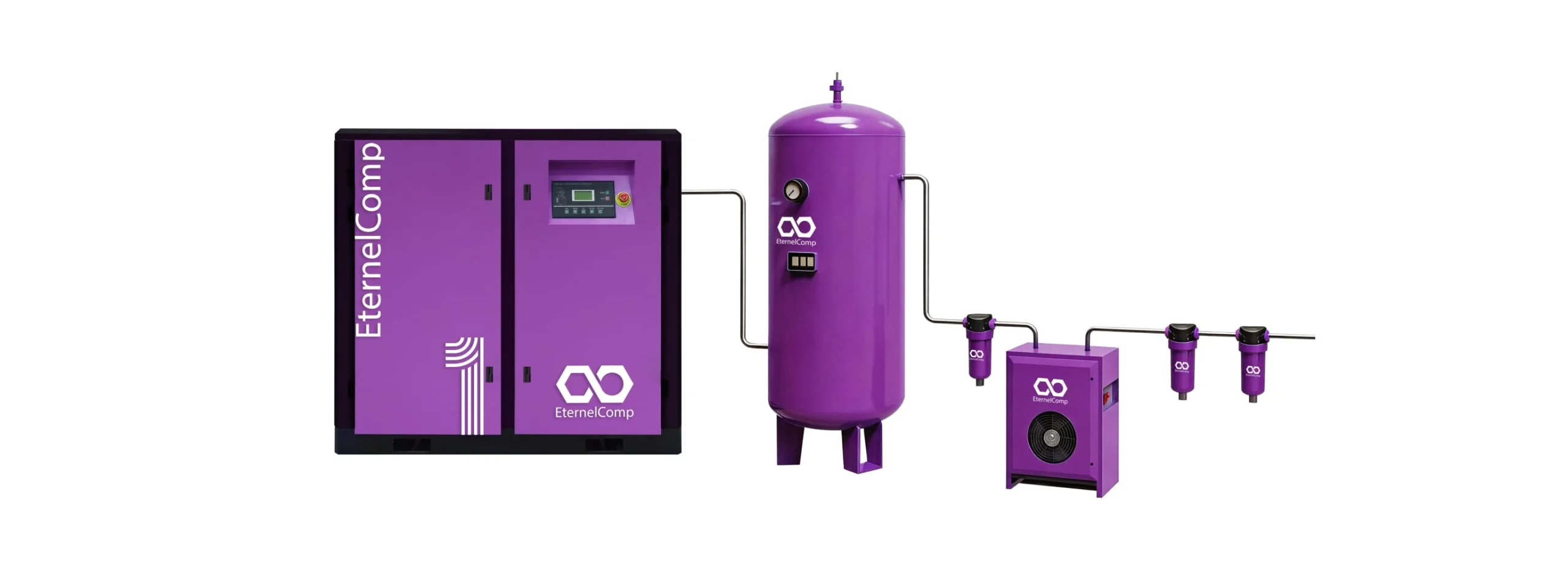
What Are the Total Cost of Ownership Differences?
Single-stage compressors usually have lower upfront costs, while two-stage compressors may offer better total cost of ownership in high-use applications because of energy savings and improved efficiency.
Total cost of ownership, often called TCO, includes all costs associated with buying, operating, maintaining, and eventually replacing the compressor. For industrial compressed air systems, electricity is often the largest long-term cost.
Main Cost Categories
| Cost Category | Description | Impact on Selection |
| Purchase cost | Initial equipment price | Single-stage usually lower |
| Installation cost | Piping, electrical work, ventilation | Depends on system size |
| Energy cost | Electricity used during operation | Two-stage may reduce cost |
| Maintenance cost | Filters, oil, parts, labor | Single-stage often simpler |
| Downtime cost | Production losses from failures | Depends on reliability and service |
| Air treatment cost | Dryers, filters, separators | Required for both types |
| Lifecycle replacement | Long-term equipment planning | Depends on duty cycle |
Why Lifecycle Cost Matters
A compressor that is cheaper to buy may not be cheaper to own. If the compressor runs continuously, energy consumption can quickly become the dominant expense.
For example, a facility operating one shift may prioritize initial cost and simple maintenance. A plant running three shifts may prioritize efficiency, temperature control, and long-term power savings.
Hidden Costs to Consider
Many compressed air costs are not obvious during purchasing. These include:
- Pressure drop from undersized piping
- Leaks in the distribution network
- Poor ventilation around the compressor
- Inadequate condensate management
- Incorrect dryer selection
- Over-pressurization of the system
- Lack of preventive maintenance
Choosing between single-stage and two-stage Screw Air Compressors should be part of a broader compressed air system strategy.
Conclusion
Single-stage screw air compressors are best for standard-duty applications where simplicity and lower initial cost matter, while two-stage screw air compressors are better for high-demand operations where energy efficiency, pressure stability, and long-term savings are priorities.
FAQ
1. Can a variable speed drive improve screw air compressor efficiency?
Yes. A variable speed drive, often called VSD, can improve efficiency when air demand fluctuates throughout the day. Instead of running at a fixed speed, the compressor adjusts motor speed to match demand. This can reduce unloaded running time and lower electricity use. However, VSD is most beneficial in systems with variable demand, not in applications where the compressor runs continuously at full load.
2. Do screw air compressors need an air dryer?
Most industrial compressed air systems benefit from an air dryer because compression creates moisture. Without proper drying, condensate can damage pneumatic tools, valves, piping, and production equipment. The right dryer type depends on the required dew point, ambient conditions, and air quality standard. Refrigerated dryers are common for general plant air, while desiccant dryers are used when very dry air is required.
3. How often should compressed air leaks be checked?
Compressed air leaks should be checked regularly, especially in large facilities or systems with long piping networks. A practical approach is to perform basic visual and audible inspections monthly and conduct a more detailed leak survey at least once or twice per year. Leak repair is one of the most cost-effective ways to reduce compressor energy consumption and improve system pressure stability.