
Compressed air is essential in manufacturing, construction, automotive service, woodworking, food processing, and many other industrial environments. Yet one of the most common maintenance questions is also one of the most important: what oil should be used in an air compressor? Using the wrong lubricant can increase wear, cause overheating, create carbon buildup, reduce efficiency, and shorten equipment life.
Most oil-lubricated air compressors use specialized compressor oil, typically non-detergent mineral or synthetic oil with the correct viscosity grade. Common choices include SAE 20 or SAE 30 for reciprocating compressors and ISO VG 32, 46, 68, or 100 for rotary screw compressors, depending on the equipment design, operating temperature, duty cycle, and manufacturer specifications. Always check the compressor manual first, because the correct oil type depends on the compressor model and working conditions.
To choose the right oil confidently, it helps to understand compressor oil types, viscosity ratings, operating environments, and maintenance practices.
What Oil Does an Air Compressor Usually Use?
An oil-lubricated air compressor usually requires dedicated compressor oil, not standard automotive engine oil. The most common options are non-detergent mineral compressor oil or synthetic compressor oil in a viscosity grade recommended by the equipment manufacturer.
Air compressor oil is formulated to handle compression heat, moisture, oxidation, and mechanical load. Unlike automotive oil, which is designed for combustion engines, compressor lubricant must work in an environment where air, water vapor, and heat are constantly present. The oil must protect moving parts while resisting sludge, varnish, foaming, and carbon formation.
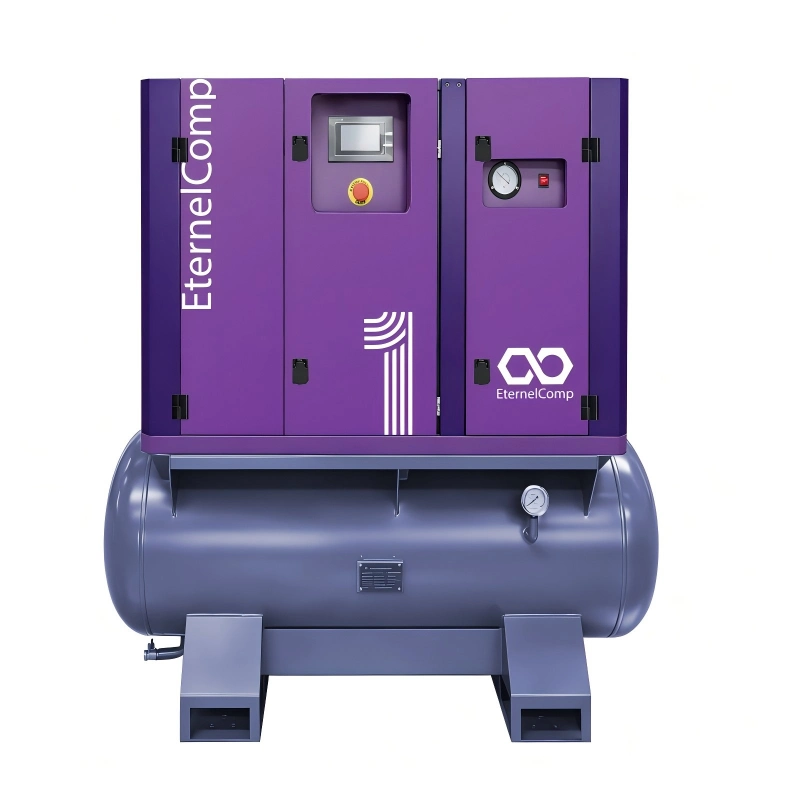
The correct oil depends mainly on the compressor type. A small piston compressor may use SAE 30 non-detergent compressor oil in warm conditions, while a rotary screw compressor in an industrial facility may require ISO VG 46 synthetic compressor fluid. Larger systems often operate continuously, so oil stability and heat resistance become more important.
Common Compressor Oil Recommendations
| Compressor Type | Common Oil Type | Common Viscosity | Typical Application |
| Reciprocating piston compressor | Non-detergent compressor oil | SAE 20, SAE 30, ISO VG 68, ISO VG 100 | Workshops, maintenance shops, small production lines |
| Rotary screw compressor | Synthetic or mineral compressor oil | ISO VG 32, 46, 68 | Industrial continuous-duty systems |
| Rotary vane compressor | Compressor lubricant with anti-wear additives | ISO VG 46, 68 | Packaging, printing, manufacturing |
| High-temperature compressor | Synthetic compressor oil | ISO VG 46, 68, 100 | Heavy-duty and high-load environments |
| Oil-free compressor | No crankcase compression oil in air chamber | Not applicable for compression chamber | Clean air applications |
The safest rule is simple: match the oil to the compressor manual, not just the bottle label. If the manual specifies ISO VG 46 synthetic compressor oil, using a different viscosity or automotive oil can affect lubrication, sealing, and heat transfer.
Why Should You Use Compressor Oil Instead of Motor Oil?
Compressor oil is better suited for an Air Compressor because it is formulated to resist oxidation, foaming, carbon buildup, and water contamination, while most motor oils contain detergent additives that may not be ideal for compressor operation.
Automotive motor oil is designed for engines that burn fuel and generate combustion byproducts. For that reason, engine oil often contains detergents and dispersants that hold contaminants in suspension until the oil is filtered and replaced. In an air compressor, especially a reciprocating unit, detergent additives can contribute to foam, deposits, or moisture-related issues.
Compressor oil has a different job. It must lubricate bearings, pistons, cylinders, rotors, vanes, seals, and other moving parts while helping remove heat from the compression process. It also needs to separate from air efficiently and minimize carryover into the compressed air stream.
Key Differences Between Compressor Oil and Motor Oil
| Feature | Compressor Oil | Automotive Motor Oil |
| Primary purpose | Lubrication under air compression | Lubrication under fuel combustion |
| Detergent additives | Often non-detergent or controlled additive package | Usually contains detergents and dispersants |
| Moisture resistance | Designed for condensation exposure | Not optimized for compressor moisture |
| Foam control | Strong anti-foam performance | Varies by engine oil type |
| Carbon control | Designed to reduce deposits under compression heat | Designed for engine combustion conditions |
| Air separation | Important for compressor systems | Less relevant in engines |
When Motor Oil May Be Mentioned
Some older or light-duty compressors may list acceptable engine oil alternatives, such as non-detergent SAE 30 oil. However, that does not mean all motor oils are acceptable. Modern automotive oils can include additives that are unnecessary or unsuitable for air compression equipment.
If a compressor manual permits an alternative oil, follow the exact viscosity and specification. If it does not, use dedicated compressor oil.

What Viscosity Oil Is Best for an Air Compressor?
The best oil viscosity for an Air Compressor depends on the compressor design and ambient temperature, but common choices include SAE 30 for many piston compressors and ISO VG 46 or ISO VG 68 for many rotary screw systems.
Viscosity describes how easily oil flows at a given temperature. If the oil is too thin, it may not provide enough film strength to protect metal surfaces. If it is too thick, the compressor may start harder, run hotter, consume more power, or suffer from poor oil circulation.
SAE vs ISO Viscosity Ratings
Compressor oils may be labeled using SAE grades, ISO VG grades, or both. SAE grades are commonly seen in smaller reciprocating compressors, while ISO VG grades are common in industrial lubricants.
| Viscosity System | Common Compressor Grades | Where It Is Often Used |
| SAE | SAE 20, SAE 30, SAE 40 | Small and medium reciprocating compressors |
| ISO VG | ISO VG 32, 46, 68, 100 | Rotary screw, rotary vane, industrial systems |
A rough comparison is useful, but not exact:
| Approximate Comparison | General Use |
| SAE 20 / ISO VG 46 | Cooler temperatures or lighter-duty operation |
| SAE 30 / ISO VG 68 | Common general-purpose compressor lubrication |
| SAE 40 / ISO VG 100 | Warmer environments or heavier-duty use, if specified |
Temperature Matters
Ambient temperature strongly affects oil flow. A compressor in a cold workshop may need a lower viscosity oil to start smoothly, while a compressor running in a hot plant room may require a higher viscosity or synthetic oil with better thermal stability.
General considerations include:
- Cold environment: Lower viscosity oil may improve startup lubrication.
- Hot environment: Higher viscosity or synthetic oil may maintain film strength.
- Continuous operation: Synthetic oil may provide better oxidation resistance.
- Intermittent operation: Moisture control becomes especially important.
- High-load operation: Follow the manufacturer’s oil specification closely.
Never increase viscosity simply because the compressor is old or noisy. Noise may indicate worn parts, air leaks, loose components, improper mounting, or poor maintenance rather than oil selection alone.
Is Synthetic Oil Better for an Air Compressor?
Synthetic oil is often better for high-duty, high-temperature, or industrial air compressor applications because it offers stronger oxidation resistance, better thermal stability, and longer service life than conventional mineral oil.
Synthetic compressor oils are engineered for performance stability. They typically resist breakdown better than mineral oils, especially when compressors run for long hours or operate in warm environments. This can reduce varnish, sludge, and deposit formation inside the compressor.
However, synthetic oil is not automatically required for every compressor. Many light-duty reciprocating compressors operate well with the correct mineral compressor oil when maintained properly. The decision depends on cost, duty cycle, operating temperature, service interval, and equipment requirements.
Synthetic vs Mineral Compressor Oil
| Factor | Mineral Compressor Oil | Synthetic Compressor Oil |
| Cost | Lower initial cost | Higher initial cost |
| Thermal stability | Good for normal conditions | Better for heat and continuous operation |
| Oxidation resistance | Moderate to good | Excellent |
| Service interval | Usually shorter | Often longer, depending on conditions |
| Cold start performance | Varies by grade | Often better |
| Deposit control | Good if changed regularly | Better resistance to varnish and sludge |
| Best use | Light to moderate duty | Heavy-duty, hot, or continuous operation |
When Synthetic Oil Makes Sense
Synthetic oil may be a better choice when:
- The compressor runs for long shifts or continuous production.
- The compressor room has high ambient temperatures.
- Oil oxidation or varnish has been a recurring issue.
- Longer maintenance intervals are desired.
- The compressor operates under heavy load.
- Startup occurs in cold conditions and better flow is needed.
Compatibility Considerations
Before switching from mineral oil to synthetic oil, check compatibility. Some compressors require flushing before changing oil types, especially if the old oil has degraded or if different base oils are involved. Mixing incompatible lubricants can cause additive imbalance, sludge, seal issues, or poor lubrication.
What Oil Should Be Used in a Reciprocating Air Compressor?
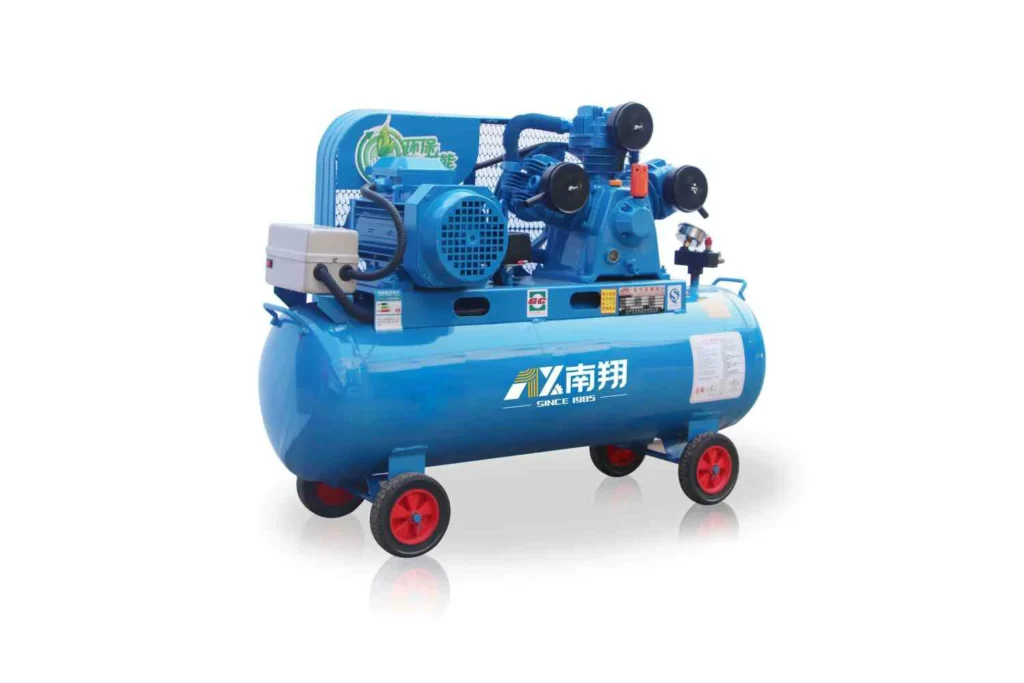
A reciprocating Air Compressor commonly uses non-detergent compressor oil such as SAE 30 or ISO VG 68, but colder environments may require SAE 20 or ISO VG 46, depending on the manufacturer’s recommendation.
Reciprocating compressors use pistons to compress air. The oil lubricates the crankshaft, connecting rods, bearings, cylinder walls, and sometimes piston rings. Because piston compressors often cycle on and off, moisture can accumulate in the crankcase and air receiver. The oil must resist emulsification, corrosion, and deposit formation.
Single-Stage vs Two-Stage Compressors
Single-stage and two-stage piston compressors may have different oil demands. Two-stage compressors usually operate at higher pressures and temperatures, so oil quality becomes more important.
| Reciprocating Compressor Type | Operating Characteristics | Oil Consideration |
| Single-stage | Lower pressure, intermittent duty | SAE 30 or equivalent compressor oil is common |
| Two-stage | Higher pressure, higher temperature | High-quality compressor oil with better oxidation resistance |
| Splash-lubricated | Oil distributed by crank movement | Correct oil level is critical |
| Pressure-lubricated | Oil pump circulates lubricant | Oil cleanliness and filter condition matter |
Practical Selection Tips
For a piston compressor:
- Check the oil specification plate or manual.
- Choose non-detergent compressor oil unless otherwise specified.
- Match viscosity to temperature conditions.
- Avoid automotive oils with detergent additives unless specifically allowed.
- Change oil after break-in if the manufacturer requires it.
- Inspect oil color, level, and contamination regularly.
A healthy oil level is essential. Too little oil causes wear and overheating; too much oil can increase foaming, carryover, and pressure problems.
What Oil Should Be Used in a Rotary Screw Air Compressor?
A rotary screw Air Compressor typically uses ISO VG 32, ISO VG 46, or ISO VG 68 compressor fluid, often synthetic or semi-synthetic, selected according to operating temperature, load, and service interval requirements.

Rotary screw compressors are widely used in industrial environments because they provide continuous compressed air efficiently. Oil-injected rotary screw compressors rely on lubricant for several functions: cooling, sealing, lubrication, and noise reduction. The oil is injected into the compression chamber, separated from the air, cooled, filtered, and recirculated.
Because the oil performs so many tasks, using the wrong fluid can affect the entire system. Poor oil selection may cause high discharge temperatures, separator blockage, varnish, rotor wear, or excessive oil carryover.
Important Oil Properties for Rotary Screw Units
Rotary screw compressor oil should provide:
- Thermal stability for continuous operation
- Oxidation resistance to reduce varnish and sludge
- Air release performance to separate oil from compressed air
- Low foaming tendency to protect circulation and separation
- Seal compatibility for gaskets and elastomers
- Moisture handling in humid environments
- Anti-wear protection for bearings and rotors
Typical ISO VG Selection
| Operating Condition | Common Viscosity Direction |
| Cool climate or light load | ISO VG 32 or 46 |
| General industrial use | ISO VG 46 |
| Hot climate or heavy load | ISO VG 68 |
| Special high-temperature service | Manufacturer-specified synthetic oil |
For rotary screw compressors, oil selection should be especially strict because the lubricant directly affects air-end health and system efficiency.
Do Oil-Free Air Compressors Need Oil?
Oil-free air compressors do not use oil in the compression chamber, but they may still require lubrication in other mechanical components depending on the design. Always distinguish between “oil-free air delivery” and “no maintenance required.”

Oil-free compressors are designed to prevent oil from contacting the compressed air stream. They are commonly used where air purity is critical, such as electronics, pharmaceuticals, laboratories, food-related processes, and precision coating applications.
However, “oil-free” does not always mean every part of the machine has no lubricant. Some units use sealed bearings, special coatings, or separate lubrication systems outside the compression chamber. Maintenance may still include filter replacement, belt inspection, cooling system cleaning, condensate management, and bearing checks.
Oil-Free vs Oil-Lubricated Compressors
| Feature | Oil-Free Compressor | Oil-Lubricated Compressor |
| Oil in compression chamber | No | Yes |
| Air purity | Higher by design | Requires filtration for oil-sensitive uses |
| Maintenance | Different, not necessarily lower | Oil and filter changes required |
| Heat management | More dependent on design and cooling | Oil helps remove heat |
| Typical use | Clean air applications | General industrial and workshop use |
| Initial cost | Often higher | Often lower for similar capacity |
Oil-free compressors are valuable when oil contamination cannot be tolerated, but they still require proper maintenance to remain reliable.
How Often Should Air Compressor Oil Be Changed?
Air compressor oil should be changed according to the manufacturer’s maintenance schedule, but many reciprocating compressors need oil changes every few hundred operating hours, while industrial rotary screw compressors may run longer intervals with approved synthetic fluids.
Oil change intervals vary widely. Duty cycle, temperature, humidity, dust, ventilation, and oil type all affect service life. A lightly used shop compressor may need oil changes based on calendar time, while a continuously operating industrial unit may require hour-based maintenance and oil analysis.
Common Oil Change Factors
| Factor | Effect on Oil Life |
| High operating temperature | Accelerates oxidation |
| Dusty environment | Increases contamination risk |
| High humidity | Promotes water contamination and corrosion |
| Continuous duty | Requires stable oil and monitoring |
| Frequent short cycling | May increase condensation |
| Poor ventilation | Raises operating temperature |
| Overdue filter changes | Contaminates oil faster |
Basic Oil Change Procedure
A typical oil change process includes:
- Shut down the compressor safely.
- Disconnect power and release stored pressure.
- Allow the oil to warm slightly if safe, so it drains better.
- Drain old oil into a suitable container.
- Inspect the oil for metal particles, sludge, milky appearance, or burnt odor.
- Replace oil filters if applicable.
- Refill with the correct oil type and quantity.
- Check for leaks.
- Run the compressor briefly and recheck the oil level.
- Dispose of used oil according to local regulations.
What Happens If You Use the Wrong Oil in an Air Compressor?
Using the wrong oil in an Air Compressor can cause overheating, poor lubrication, excessive wear, foaming, carbon deposits, oil carryover, hard starting, and premature compressor failure.
The effects may not appear immediately, but incorrect oil can gradually damage internal components. For example, oil that is too thin may fail to protect bearings and cylinders under load. Oil that is too thick may reduce circulation, increase operating temperature, and make cold starts difficult. Oil with unsuitable additives may foam or form deposits.
Common Problems Caused by Incorrect Oil
| Wrong Oil Issue | Possible Result |
| Viscosity too low | Metal-to-metal contact, wear, high oil consumption |
| Viscosity too high | Hard starting, poor circulation, overheating |
| Detergent automotive oil | Foaming, deposits, moisture problems |
| Low oxidation resistance | Sludge, varnish, blocked passages |
| Incompatible oil mix | Additive conflict, seal problems, poor performance |
| Poor air release | Oil carryover and separator issues |
Warning Signs to Watch For
Operators should investigate if they notice:
- Higher-than-normal operating temperature
- Burnt oil smell
- Dark or thick oil
- Milky oil caused by water contamination
- Excessive oil in the discharge line
- Unusual mechanical noise
- Frequent shutdowns
- Pressure instability
- More condensate contamination than usual
If the wrong oil was added, stop operation if possible, drain it, inspect filters and separators, and refill with the correct lubricant. In critical industrial systems, consider oil analysis or professional service inspection.
How Do You Choose the Right Air Compressor Oil?
To choose the right air compressor oil, start with the manufacturer’s manual, confirm the compressor type, match the required viscosity, consider operating temperature, and select mineral or synthetic oil based on duty cycle and performance needs.
A structured selection process reduces guesswork. Instead of choosing oil based only on price or availability, evaluate the compressor’s operating requirements and environment.
Step-by-Step Selection Checklist
- Identify the compressor type
Determine whether it is reciprocating, rotary screw, rotary vane, centrifugal, or oil-free. - Read the manufacturer’s specification
Look for viscosity, base oil type, additive requirements, and service interval. - Confirm viscosity grade
Common grades include SAE 20, SAE 30, ISO VG 46, ISO VG 68, and ISO VG 100. - Evaluate ambient temperature
Cold conditions may require better low-temperature flow; hot conditions may require better thermal stability. - Review duty cycle
Continuous-duty compressors usually benefit from higher-performance lubricants. - Check air quality requirements
If the process is oil-sensitive, filtration or oil-free technology may be necessary. - Avoid mixing unknown oils
If changing oil types, confirm compatibility and flush if needed. - Monitor performance after filling
Check temperature, noise, oil level, pressure stability, and oil condition.
Quick Decision Table
| Situation | Practical Oil Direction |
| Small workshop piston compressor | Non-detergent compressor oil, often SAE 30 |
| Cold workshop operation | Lower viscosity if approved, such as SAE 20 |
| Industrial rotary screw compressor | ISO VG 46 or specified compressor fluid |
| Hot compressor room | Synthetic oil or higher viscosity if approved |
| Continuous production | Synthetic compressor oil with longer oxidation life |
| Clean air process | Oil-free compressor or proper filtration system |
The best oil is not always the most expensive option. It is the lubricant that meets the compressor’s technical requirements and operating conditions.
FAQ
Can air compressor oil expire during storage?
Yes. Compressor oil can degrade during long-term storage, especially if the container is opened, exposed to moisture, or stored in extreme temperatures. Unopened oil stored in a cool, dry place usually lasts longer, but always inspect it before use. If the oil appears cloudy, contaminated, separated, or has an unusual odor, do not use it in critical equipment.
Why is my air compressor oil turning milky?
Milky oil usually indicates water contamination. This often happens when humid air enters the compressor and condensation collects in the crankcase or oil system. Frequent short operating cycles can make the problem worse because the compressor may not run long enough to evaporate moisture. Drain condensate regularly, improve ventilation, and change contaminated oil promptly.
Can I mix different compressor oils?
Mixing different compressor oils is not recommended unless compatibility is confirmed. Oils may use different base stocks and additive systems, and mixing them can reduce performance or create sludge. If switching oil types, drain the old oil thoroughly and follow the equipment manufacturer’s flushing or changeover procedure.