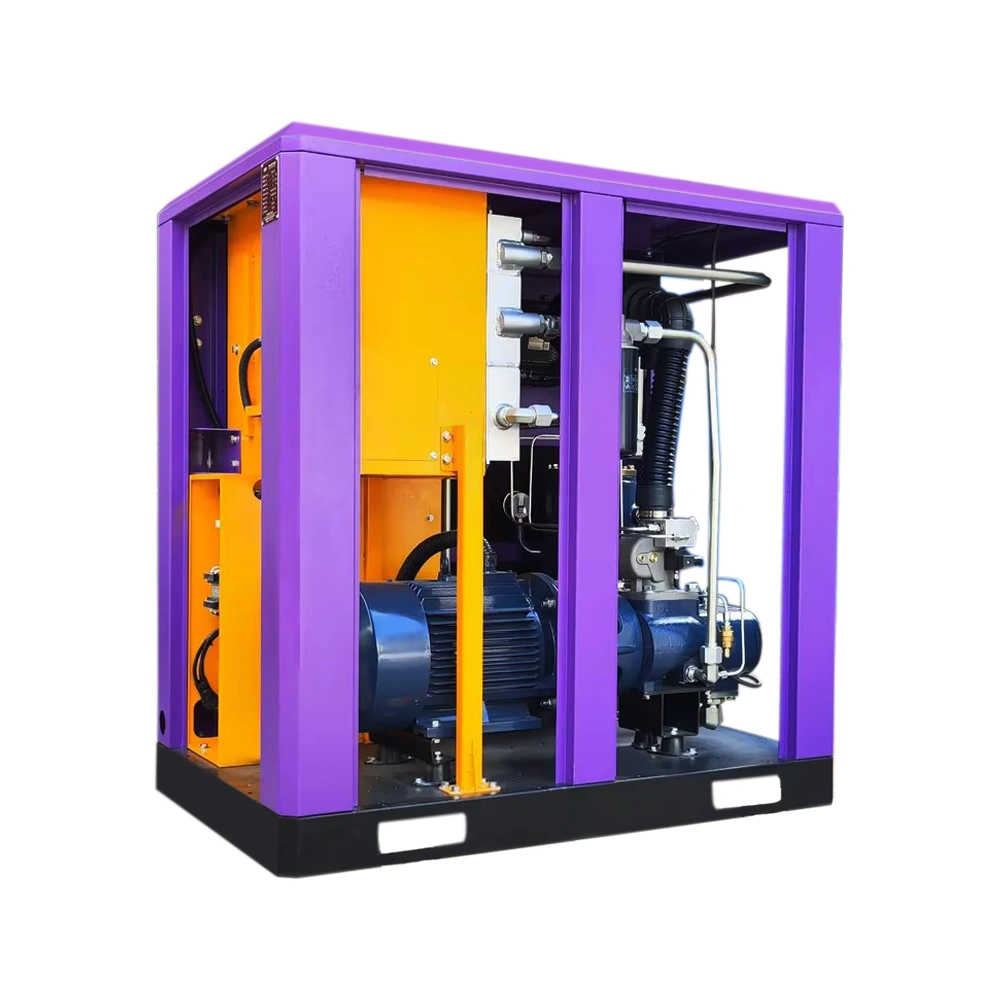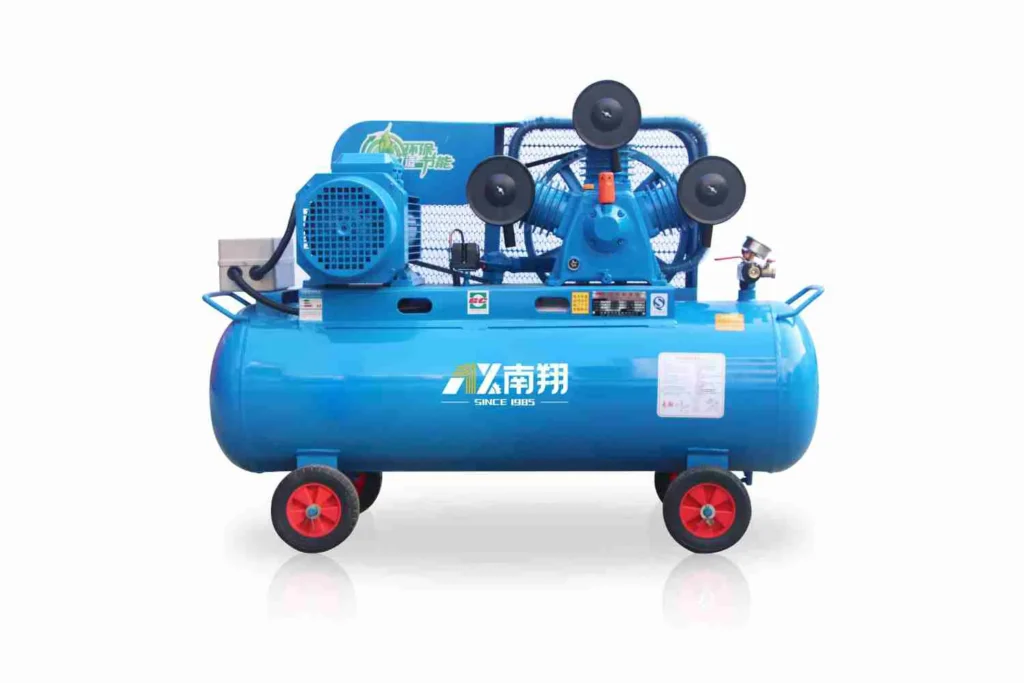
Memahami Dua Jenis Utama Kompresor Udara Industri
Saat berbelanja kompresor udara industri, salah satu keputusan pertama adalah memilih antara desain berpelumas oli dan bebas oli. Keduanya telah ada selama beberapa dekade. Keduanya bekerja dengan baik-dalam keadaan yang tepat. Tetapi cara kerjanya sangat berbeda, dan memilih jenis yang salah dapat menyebabkan sakit kepala di kemudian hari.
Kompresor berpelumas oli menggunakan oli untuk mengurangi gesekan, menutup ruang kompresi, dan membuang panas. Oli bersirkulasi melalui sistem, disaring, didinginkan, dan didaur ulang. Mesin ini cenderung bekerja lebih tenang dan bertahan lebih lama dalam penggunaan berat.
Kompresor bebas minyak, kadang-kadang disebut kompresor “kering”, tidak memasukkan oli ke dalam ruang kompresi sama sekali. Sebaliknya, mereka mengandalkan pelapis khusus, toleransi yang lebih ketat, atau injeksi air untuk mengelola panas dan keausan. Hasilnya? Udara yang secara inheren bebas dari kontaminasi oli.
Kedengarannya cukup sederhana. Tetapi detailnya cukup penting.
Perbedaan Utama Antara Kompresor Udara Industri Berpelumas Oli dan Bebas Oli
Risiko Kemurnian dan Kontaminasi Udara
Ini mungkin perbedaan terbesar. Unit berpelumas oli, bahkan dengan pemisahan dan penyaringan yang baik, melepaskan sejumlah kecil oli ke dalam aliran udara bertekanan. Biasanya kita berbicara tentang bagian per sejuta-jumlah yang sangat kecil. Untuk banyak aplikasi, hal itu dapat diterima.
Tetapi beberapa industri tidak dapat mentolerir minyak apa pun. Manufaktur farmasi, pengolahan makanan, perakitan elektronik, produksi perangkat medis. Di lingkungan ini, bahkan kontaminasi oli mikroskopis pun dapat menyebabkan masalah serius. Penarikan produk. Inspeksi yang gagal. Peralatan sensitif yang rusak.
Kompresor bebas oli menghilangkan risiko ini pada sumbernya.
Biaya Awal vs Investasi Jangka Panjang
Di sinilah hal-hal menjadi menarik. Kompresor udara industri bebas oli biasanya lebih mahal di awal - terkadang jauh lebih mahal. Rekayasa presisi, bahan khusus, dan pelapis yang diperlukan untuk bekerja tanpa pelumasan menambah biaya produksi.
Mesin berpelumas oli? Umumnya lebih murah untuk dibeli pada awalnya.
Namun, total biaya kepemilikan menceritakan kisah yang berbeda untuk beberapa operasi. Pertimbangkan faktor-faktor ini:
| Faktor | Berpelumas Minyak | Bebas Minyak |
|---|---|---|
| Harga pembelian | Lebih rendah | Lebih tinggi |
| Penggantian oli dan filter | Pengeluaran rutin | Tidak diperlukan |
| Filtrasi hilir | Seringkali luas | Minimal |
| Pembuangan kondensat | Membutuhkan perawatan | Pembuangan yang lebih sederhana |
| Kompleksitas pemeliharaan | Sedang | Bervariasi menurut desain |
Persyaratan Pemeliharaan
Kompresor yang dilumasi oli membutuhkan penggantian oli secara teratur, penggantian filter, dan perawatan separator. Lewati tugas-tugas ini, dan kinerja akan menurun dengan cepat. Oli menurun, kontaminasi menumpuk, dan komponen aus lebih cepat dari yang seharusnya.
Unit bebas oli menghindari perawatan yang berhubungan dengan oli sama sekali. Meskipun mereka tidak bebas perawatan-tidak ada yang bebas perawatan. Bantalan masih membutuhkan perhatian. Segel bisa aus. Beberapa desain memerlukan penggantian elemen yang lebih sering.
Profil perawatannya berbeda, bukan berarti lebih mudah atau lebih sulit.
Daya Tahan dan Masa Operasi
Kearifan tradisional mengatakan bahwa kompresor yang dilumasi oli akan bertahan lebih lama. Pelumasan yang konstan melindungi komponen internal dari keausan. Hal ini ada benarnya, terutama untuk aplikasi industri tugas berat yang berjalan terus menerus.
Teknologi bebas oli modern telah mempersempit kesenjangan ini secara signifikan. Kompresor udara industri premium bebas oli sekarang mencapai masa pakai yang mengesankan. Tetapi mereka tetap agak lebih sensitif terhadap kondisi operasi - panas, debu, kelembaban mempengaruhi mereka lebih nyata.
Jenis Mana yang Sesuai dengan Aplikasi yang Berbeda
Memilih di antara opsi-opsi ini sangat bergantung pada kasus penggunaan tertentu.
Kompresor yang dilumasi oli bekerja dengan baik untuk:
1. Operasi manufaktur umum
2. Bengkel dan bengkel mobil
3. Konstruksi dan industri berat
4. Aplikasi di mana penyaringan hilir sudah direncanakan
5. Operasi dengan permintaan tinggi yang berkelanjutan
Kompresor bebas minyak lebih masuk akal untuk:
- Produksi makanan dan minuman
- Fasilitas farmasi
- Rumah sakit dan kantor gigi
- Manufaktur elektronik
- Pengecatan semprot (di mana minyak menyebabkan cacat)
- Lingkungan laboratorium
Membuat Pilihan yang Tepat
Tak satu pun dari kedua tipe ini yang lebih unggul secara universal. Pilihan terbaik tergantung pada persyaratan kualitas udara, batasan anggaran, kemampuan pemeliharaan, dan permintaan aplikasi tertentu. Banyak fasilitas yang benar-benar menjalankan kedua jenis tersebut - bebas minyak di mana kemurnian sangat penting, dilumasi dengan minyak di tempat lain untuk mengurangi biaya.
Meluangkan waktu untuk mengevaluasi kebutuhan aktual sebelum membeli kompresor udara industri dapat mencegah kesalahan yang mahal. Jika ragu, berkonsultasi dengan pemasok berpengalaman yang memahami berbagai aplikasi akan membantu memperjelas keputusan. Jika Anda ingin tahu lebih banyak tentang Kompresor Udara Industri, silakan baca Kompresor Udara Industri: Panduan Utama untuk Tahun 2026.
Pertanyaan yang Sering Diajukan
Dapatkah kompresor yang dilumasi oli menghasilkan udara yang cukup bersih untuk aplikasi yang sensitif?
Ya, dengan peralatan penyaringan dan perawatan yang tepat. Filtrasi multi-tahap, filter penggabungan, dan filter karbon aktif dapat menghilangkan minyak ke tingkat yang sangat rendah. Pendekatan ini berhasil tetapi menambah kompleksitas dan biaya filter yang berkelanjutan. Beberapa fasilitas merasa lebih mudah untuk memulai dengan peralatan bebas minyak.
Apakah kompresor tanpa oli bekerja lebih panas daripada model yang dilumasi oli?
Secara umum, ya. Tanpa oli yang menyerap dan memindahkan panas, ruang kompresi bebas oli beroperasi pada suhu yang lebih tinggi. Produsen mengimbanginya dengan intercooler, aftercooler, dan strategi pendinginan lainnya. Ventilasi yang memadai di ruang kompresor menjadi lebih penting.
Berapa lama kompresor udara industri biasanya bertahan?
Kompresor sekrup putar berpelumas oli yang dirawat dengan baik sering kali melebihi 100.000 jam operasi. Unit bebas oli lebih bervariasi - beberapa model premium mendekati masa pakai yang sama, sementara yang lain mungkin memerlukan pembangunan ulang lebih cepat. Kondisi pengoperasian dan praktik perawatan sangat memengaruhi umur panjang.