Walk through almost any hospital — operating rooms, dental clinics, ICUs, pharmaceutical labs — and somewhere behind the walls or in a dedicated utility room, an air compressor is quietly working. Compressed air in healthcare facilities isn’t like the kind powering an auto shop or construction site. It’s breathed by patients, fed into ventilators, and used to drive surgical instruments. The stakes are, quite literally, life-and-death.
So how exactly do you choose the right air compressor for medical use? It’s a question that trips up procurement teams, hospital engineers, and even experienced biomedical equipment specialists — mostly because the criteria are more nuanced than people expect. This guide breaks down what matters and what doesn’t.
Market Overview: Why This Sector Is Growing Fast
Before getting into selection criteria, it helps to understand just how significant this market has become. The global medical air compressor segment has expanded considerably over the past decade, driven by aging populations, higher rates of chronic respiratory disease, and rapid expansion of healthcare infrastructure — especially across Asia-Pacific.
North America currently leads, accounting for roughly 38% of global market share in 2024 — backed by well-established healthcare infrastructure and rigorous regulatory compliance. Europe holds around 30%, while Asia-Pacific, valued at approximately $464 million in 2024, is projected to grow at the fastest regional CAGR of 7.1%, driven by China, India, and Japan expanding their hospital networks rapidly.
What’s pushing demand isn’t just population growth. Rising COPD and asthma diagnoses globally mean more respiratory therapy equipment in use. More equipment means more compressed air demand — and more need for compressors that meet exacting medical standards.
Why Medical Air Compressors Are Different From Industrial Ones
This is where a lot of buyers go wrong early. An industrial air compressor and a medical-grade air compressor might look similar on a spec sheet. But functionally — and from a compliance standpoint — they couldn’t be more different.
Medical compressed air is, technically, a drug in many regulatory frameworks. It’s administered to patients. That means contamination from oil, moisture, or particles isn’t just an equipment problem — it’s a patient safety issue. An air compressor for medical environments must deliver air that is:
- Completely Oil-free air Compressor (no lubricated compressors in direct-patient-contact applications)
- Dry — moisture in lines breeds bacteria and damages pneumatic instruments
- Filtered of particulates down to very small micron levels
- Consistent in pressure and flow — interruptions to surgical tools or ventilators are unacceptable
- Compliant with standards like ISO 8573-1, NFPA 99, HTM 02-01, or ISO 7396-1 depending on the country
An oil-injected compressor fitted with downstream filters is sometimes marketed as "technically oil-free." This is not the same as a true oil-free compressor. Filters can fail, and even trace oil contamination in patient-contact air can cause serious harm. For direct medical use, true Class 0 or oil-free technology is the appropriate standard.
Understanding ISO 8573-1 Air Quality Classes
The International Organization for Standardization’s ISO 8573-1 is the global benchmark for compressed air purity. It classifies air across three contamination categories: solid particles, water content (pressure dew point), and oil content. For medical applications, the relevant classes are generally Class 1 at a minimum — but Class 0 is strongly recommended for direct patient care.
| ISO Class | Oil Content (mg/m³) | Typical Application | Suitable for Medical? |
|---|---|---|---|
| Class 0 | < 0.01 (manufacturer-defined) | Surgical rooms, ICUs, pharmaceutical | ✅ Yes — highest standard |
| Class 1 | ≤ 0.01 mg/m³ | Healthcare, food & beverage | ✅ Yes — minimum acceptable |
| Class 2–3 | 0.1–1 mg/m³ | Chemical plants, food processing | ⚠ Limited / non-patient use only |
| Class 4–5 | Up to 5+ mg/m³ | General industrial (automotive, metalwork) | ❌ Not suitable |
It’s worth noting that Class 0 doesn’t literally mean zero contamination — it means the compressor meets or exceeds the most stringent purity achievable, agreed upon between manufacturer and buyer. In practice, scroll compressors and rotary screw oil-free models from reputable manufacturers like Atlas Copco, Powerex, and JUN-AIR frequently carry Class 0 certification.
Types of Air Compressors Used in Medical Facilities
Different medical environments have different needs. An operating theater’s requirements aren’t the same as a dental clinic’s, which differ again from a large pharmaceutical manufacturing floor. Here’s a practical look at the compressor types you’ll encounter.
Scroll Compressors
These have become arguably the dominant technology in modern medical settings — especially hospitals. They work using two interlocking spiral scrolls, one fixed and one orbiting, that progressively compress air toward a central discharge port. There’s no oil in the compression chamber, no pistons hammering away, and remarkably few moving parts overall.
The biggest advantages for healthcare environments? Noise levels as low as 48 dBA (roughly library-quiet), true oil-free compression, and the ability to “bank” multiple smaller units together for redundancy — a requirement in critical care contexts where a single compressor failure cannot be an option. Modern hospital systems increasingly favor these modular scroll setups over one large, expensive central unit.
Rotary Screw Compressors (Oil-Free Variants)
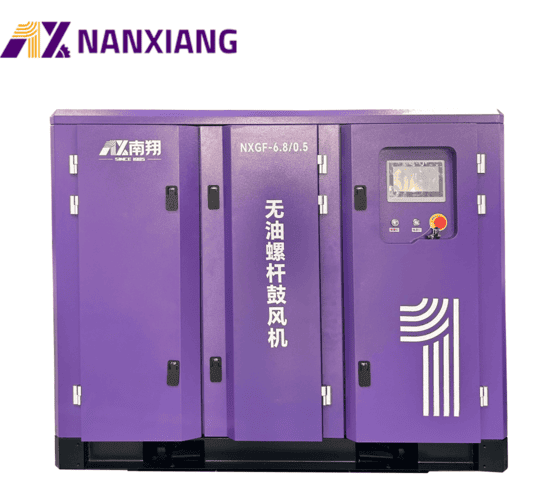
Oil-free screw compressors use precisely timed rotor lobes with tight tolerances, eliminating the need for oil in the compression path. They’re the right call when a facility needs continuous, high-volume airflow — large hospitals, medical gas plants, pharmaceutical manufacturing floors. They handle 100% duty cycles smoothly, produce less heat than piston types, and maintain stable output even in demanding conditions.
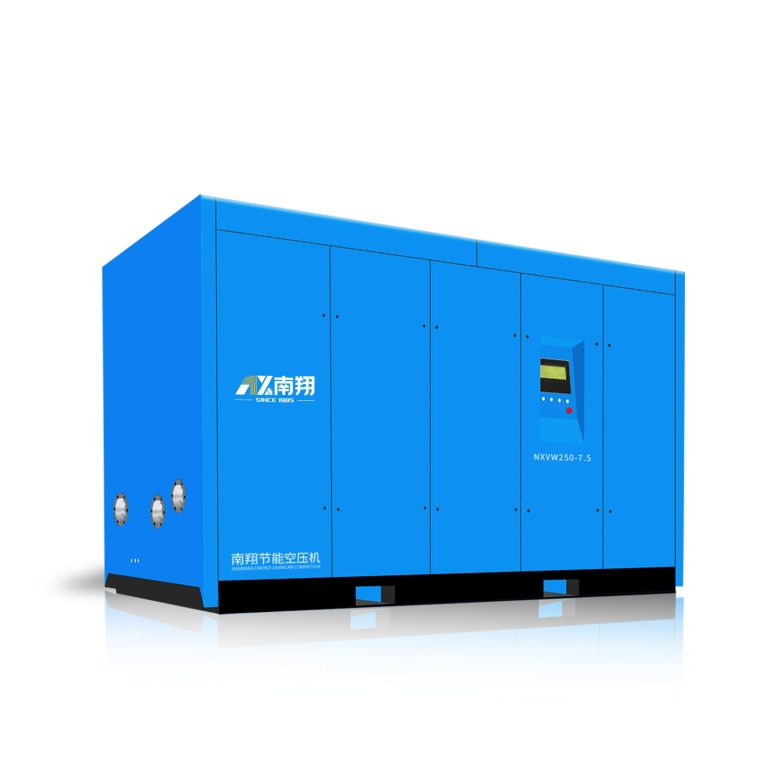
The tradeoff is cost — both upfront and in maintenance, which requires specialized technicians. They’re also louder than scroll compressors and typically need dedicated, ventilated rooms with proper foundations. For most smaller clinics or dental practices, they’re overkill.
Reciprocating (Piston) Compressors
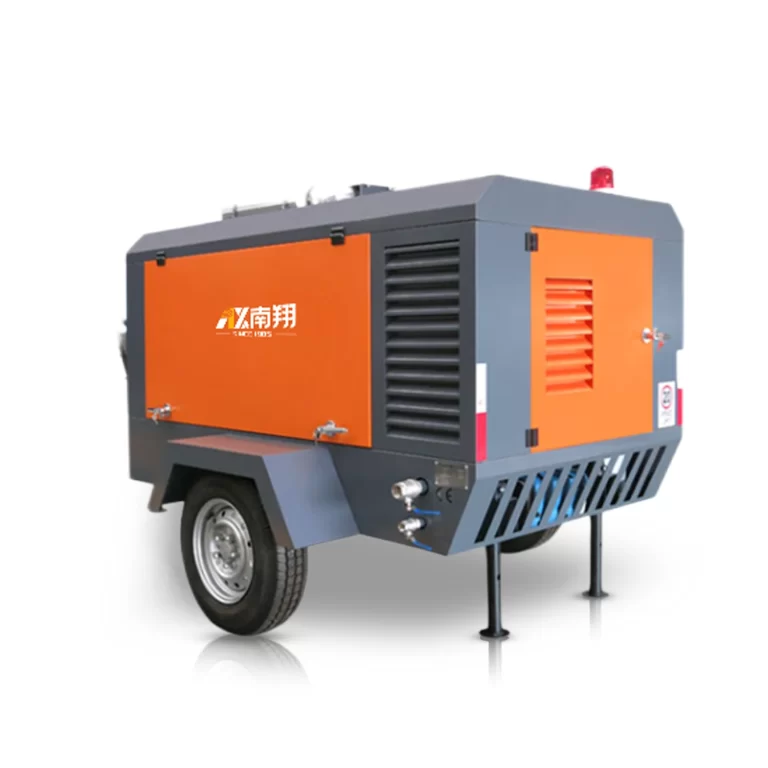
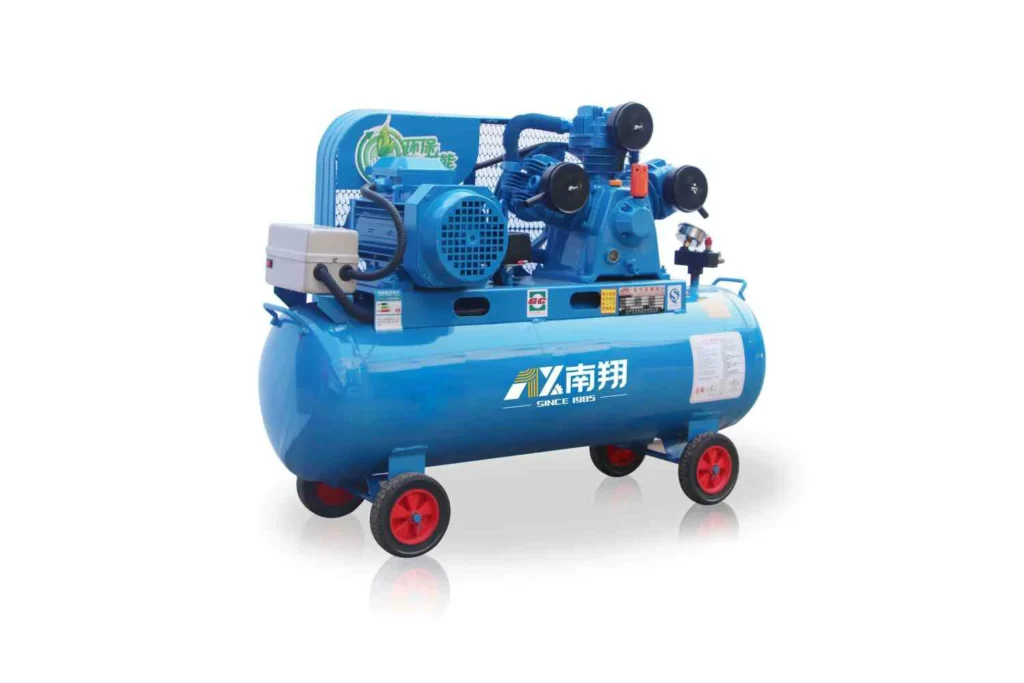
The oldest technology in the bunch, but still in use in certain medical contexts — particularly for high-pressure applications and smaller facilities with intermittent demand. They’re relatively affordable to purchase and maintain, and oil-free piston variants do exist. The downsides are significant, though: they’re noisy, generate considerable heat, and aren’t well-suited to continuous duty cycles. In a hospital setting where low vibration and quiet operation matter, piston compressors have mostly given way to scroll technology.
Diaphragm Compressors
A niche option, but useful for specific lab or pharmaceutical applications where absolute contamination control is critical. They use a flexible membrane to compress air, meaning zero contact between air and mechanical components. Output volumes are relatively low, so they’re not suitable for facility-wide medical air systems — but for targeted applications like gas chromatography or specific analytical instruments, they’re genuinely excellent.
Key Criteria for Selecting a Medical Air Compressor
Narrowing down the right air compressor for a medical facility involves working through several layers of criteria, roughly in this order of priority:
1. Regulatory Compliance First
Before evaluating any other spec, verify what standards apply in your region. In the US, NFPA 99 Health Care Facilities Code governs medical gas and vacuum systems, including medical air. In the UK and much of Europe, HTM 02-01 (Health Technical Memoranda) and ISO 7396-1 apply. These aren’t optional — non-compliant systems can result in facility accreditation issues and, more importantly, patient harm.
2. Oil-Free Technology — Non-Negotiable for Patient Contact
If the compressed air will be used anywhere near patients — respiratory therapy, ventilators, surgical instruments, anesthesia equipment — the compressor must be oil-free. Full stop. Not filtered, not “technically” oil-free. The system should carry ISO 8573-1 Class 1 certification at minimum, with Class 0 preferred for any critical care application.
3. Air Capacity and Pressure Requirements
This comes down to knowing your load. A small dental practice and a 500-bed hospital are completely different scenarios. Consider:
- Total number of simultaneous users (outlets, devices)
- Peak demand periods vs. average load
- Required working pressure (typically 4–7 bar for medical applications)
- Whether the system needs redundancy — most healthcare facilities do
4. Noise Level
Patient comfort and staff concentration are legitimate concerns. Scroll compressors, as noted, can operate at 48–55 dBA — quiet enough for indoor installation close to clinical areas. Rotary screw and piston units typically run louder and may require sound-dampened enclosures or remote placement. When evaluating systems, ask for noise data at full load, not just minimum settings.
5. Redundancy and Reliability
A single-compressor setup is almost never acceptable in a hospital environment. NFPA 99 and most equivalent international standards mandate that medical air systems include backup capacity sufficient to maintain operations if one compressor fails. Banking multiple scroll units — so that the system can lose one and continue uninterrupted — has become the standard approach for this reason.
6. Maintenance and Serviceability
Oil-free scroll compressors generally win here — fewer parts, easier service intervals, no oil changes. Rotary screw systems, while reliable, need specialist technicians. Piston compressors are the easiest to service but the most maintenance-intensive overall. Factor in total cost of ownership, not just acquisition price.
Compressor Types at a Glance: Medical Application Matrix
| Compressor Type | Noise Level | Oil-Free Option | Best Suited For | Duty Cycle |
|---|---|---|---|---|
| Scroll (Oil-Free) | 48–55 dBA | ✅ Inherently | Hospitals, clinics, dental, ICU | 100% continuous |
| Rotary Screw (Oil-Free) | 65–75 dBA | ✅ Available | Large hospitals, pharma plants | 100% continuous |
| Reciprocating / Piston | 75–90 dBA | ⚠ Limited models | Small clinics, portable units | 20–50% intermittent |
| Diaphragm | 55–65 dBA | ✅ Inherently | Lab instruments, pharma analysis | Low volume only |
| Centrifugal (Oil-Free) | 70–80 dBA | ✅ Inherently | Large-scale industrial medical gas | High volume, continuous |
Special Considerations by Medical Setting
Hospitals and Large Medical Centers
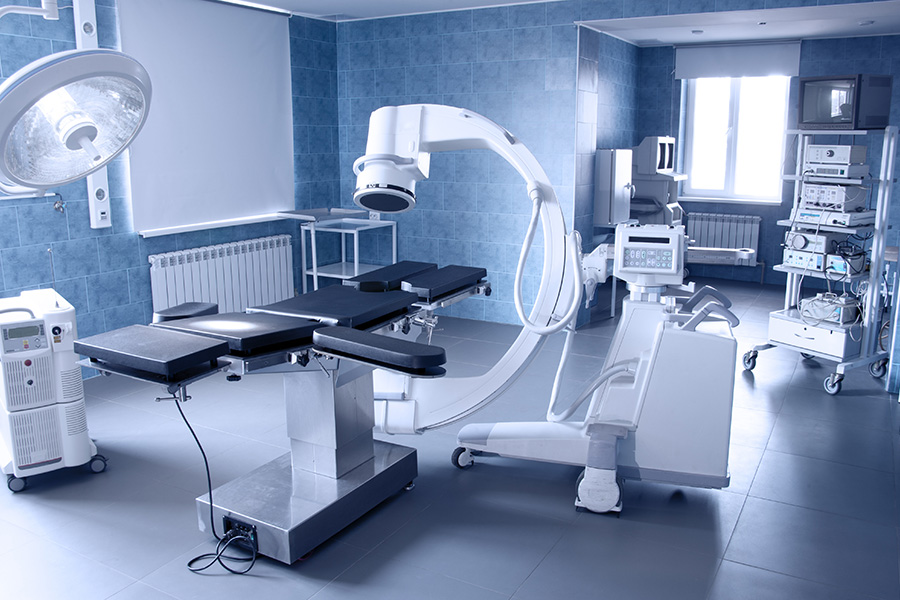
Centralized medical air systems with multiple oil-free scroll or rotary screw compressors, backed by redundancy requirements under NFPA 99 or ISO 7396-1, are the standard. Systems should integrate real-time monitoring and alarm functions — increasingly, IoT-enabled compressors with predictive maintenance capabilities are being specified in new healthcare construction projects.
Dental Clinics
Dental air compressors need to be oil-free (aerosols are directed at patients’ mouths, after all), quiet enough for small office environments, and compact. Air quality matters enormously here — the air is used not just for tools but for drying and cleaning tooth surfaces directly. Oil-free scroll or small piston oil-free units are typical; systems should include air dryers to prevent moisture from damaging turbines and handpieces.
Pharmaceutical Manufacturing
Possibly the most demanding application of all. ISO 8573-1 Class 0 or Class 1 is typically required, and GMP (Good Manufacturing Practice) compliance adds another layer of documentation, validation, and audit requirements. Compressed air in pharma touches products directly — tablet coating, bottle purging, blister pack sealing. Contamination here means product recalls. Oil-free rotary screw and scroll systems dominate, often with full validation documentation packages.
Laboratories
Analytical instruments often have very specific pressure and purity requirements that differ from general hospital air. Diaphragm compressors and small oil-free scroll units are common. Moisture management is particularly critical — many lab instruments are sensitive to humidity in ways that clinical equipment isn’t.
A Quick Selection Checklist
Before finalizing any purchase, it’s worth running through this set of questions:
- What regulatory standard applies — NFPA 99, HTM 02-01, ISO 7396-1, or local equivalent?
- Will compressed air contact patients or be used in patient-adjacent applications?
- What is the peak simultaneous demand (in liters per minute or CFM)?
- What pressure is required at the point of use?
- Does the facility require redundant compressor capacity?
- Are there noise restrictions for the installation location?
- What is the available floor space and electrical supply?
- Who will perform ongoing maintenance — in-house or a service contract?
- Is remote monitoring or IoT integration a requirement?
- What is the total cost of ownership projection over 10 years?
Market Trends Worth Knowing
| Trend | What It Means for Buyers |
|---|---|
| IoT & Smart Monitoring | Demand for compressors with real-time remote diagnostics and predictive maintenance — reduces downtime risk in critical environments |
| Energy Efficiency Regulations | Variable-speed drive (VSD) compressors becoming standard — significant power savings over fixed-speed units, especially in hospitals with variable demand |
| Modular Scroll Systems | Replacing large single compressors with banks of smaller scrolls for better redundancy, easier service, and scalable capacity |
| Asia-Pacific Infrastructure Growth | Fastest-growing regional market (7.1% CAGR) — driving global demand for medical-grade systems and creating supply chain considerations |
| Post-COVID Infection Control Focus | Heightened awareness of air quality in clinical settings reinforcing the shift away from lubricated compressors entirely |
For most hospital and clinical applications, oil-free scroll compressors meeting ISO 8573-1 Class 1 or Class 0 certification represent the best balance of air quality, noise performance, reliability, and total cost of ownership. Always verify regional regulatory requirements (NFPA 99, HTM 02-01, or equivalent) before specifying any system.