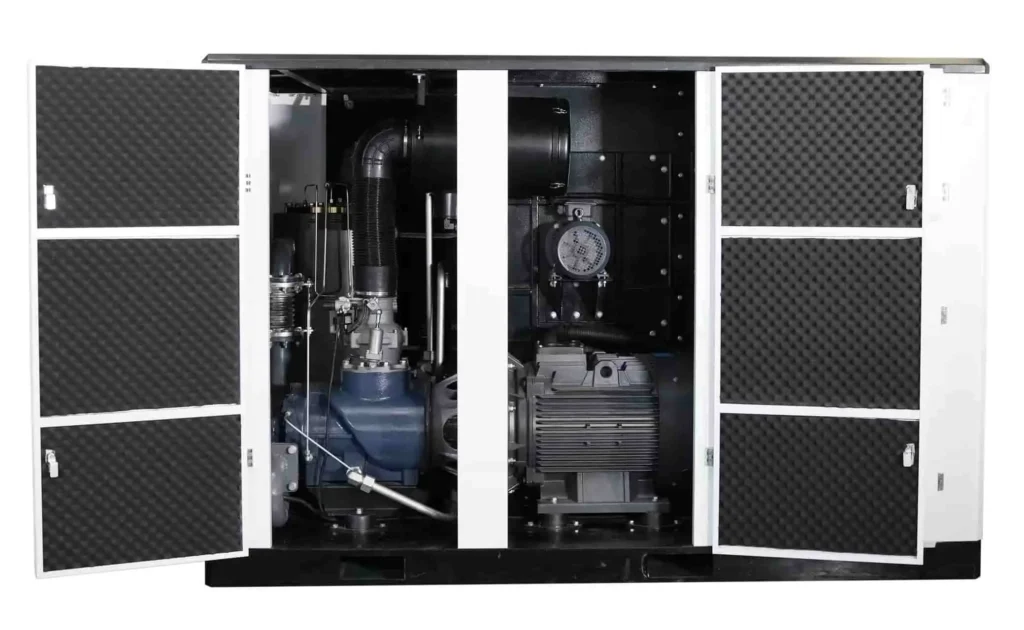
A kompresor udara sekrup adalah sistem kompresi udara industri yang banyak digunakan yang mengubah energi mekanik menjadi udara bertekanan tinggi melalui sepasang rotor heliks yang saling mengunci. Tidak seperti kompresor berbasis piston yang bekerja dalam siklus, unit sekrup putar menggunakan dua rotor heliks yang saling mengunci untuk menjebak dan memampatkan udara saat melewati sistem, menghasilkan aliran udara bersih dan bertekanan yang stabil - menjadikannya ideal untuk aplikasi berat yang membutuhkan operasi 24/7.
Bagaimana cara kerjanya: Tiga Tahap Kompresi
- Tahap Penyedotan Udara Udara masuk melalui lubang masuk saat sekrup mulai berputar, menarik udara ke dalam ruang spiral di antara kedua rotor.
- Tahap Kompresi Saat rotor berputar, bilah heliks secara progresif mengurangi volume udara yang terperangkap, mengompresnya dan mendorongnya ke arah saluran keluar.
- Tahap Pembuangan Udara terkompresi dilepaskan pada tingkat tekanan tinggi yang diperlukan, siap digunakan oleh peralatan pneumatik yang terhubung atau disimpan dalam tangki penerima.
Jenis-jenis Kompresor Udara Ulir
Tabel di bawah ini merangkum klasifikasi utama untuk membantu Anda dengan cepat mengidentifikasi tipe yang tepat untuk kebutuhan Anda:
| Klasifikasi | Jenis | Fitur Utama | Terbaik untuk |
|---|---|---|---|
| Dengan Kontrol Kecepatan | Kecepatan Tetap (Penggerak Langsung) | Daya dan kecepatan output yang konstan | Permintaan udara yang stabil dan berkelanjutan |
| Penggerak Frekuensi Variabel (VFD/VSD) | Kecepatan motor yang dapat disesuaikan berdasarkan permintaan | Permintaan yang berfluktuasi; prioritas penghematan energi | |
| Dengan Pelumasan | Berpelumas Oli (Disuntik Oli) | Oli yang digunakan untuk menyegel, mendinginkan, melumasi | Penggunaan industri umum; biaya lebih rendah |
| Bebas Minyak | Tidak ada kontak oli dengan udara bertekanan | Makanan, farmasi, elektronik - kemurnian udara sangat penting | |
| Berdasarkan Tahapan Kompresi | Panggung Tunggal | Satu siklus kompresi | Aplikasi tekanan standar (hingga ~10 bar) |
| Dua Tahap | Dua siklus kompresi berturut-turut | Tekanan yang lebih tinggi dan efisiensi yang lebih besar | |
| Dengan Output Tekanan | Tekanan Rendah | Output biasanya di bawah 4 bar | Industri ringan, aerasi, pengangkutan |
| Tekanan Tinggi | Output biasanya di atas 10 bar | Manufaktur berat, pemotongan laser, cetakan tiup PET |
Aplikasi Industri
Kompresor udara ulir adalah pilihan yang lebih disukai di berbagai industri:
- Kompresor Udara untuk Manufaktur & Perakitan - Memberi daya pada alat pneumatik, lengan robotik, dan sistem konveyor yang membutuhkan aliran udara berkelanjutan
- Kompresor udara untuk Otomotif - Pengecatan semprot, pemompaan ban, dan pengoperasian kunci pas
- Kompresor Udara untuk Makanan & Minuman - Jalur pengemasan dan peralatan pengisian (diperlukan model bebas minyak)
- Kompresor Udara untuk Medis - Lingkungan ruang bersih yang membutuhkan udara bebas minyak bersertifikasi ISO 8573
- Kompresor Udara untuk Konstruksi - Peralatan pengeboran, peledakan pasir, dan peralatan lapangan tugas berat
- Kompresor Udara untuk Bahan Kimia - Proses manufaktur yang membutuhkan output tekanan tinggi yang stabil

Panduan Pembeli: Kriteria Pembelian Utama
1. Tentukan Kebutuhan Udara Anda
Mendefinisikan kebutuhan udara Anda secara akurat adalah langkah yang paling penting. Anggap saja ini sebagai proses tiga bagian: Permintaan CFM (aliran), tekanan operasi (PSI / bar), dan kualitas udara. Setiap faktor memainkan peran penting dalam mencocokkan kompresor dengan kebutuhan fasilitas Anda.
- Periksa lembar spesifikasi semua peralatan pneumatik yang terhubung
- Jumlahkan total konsumsi udara (CFM/m³/menit) di semua alat
- Tambahkan penyangga tekanan ~1,5 bar di atas persyaratan minimum untuk memperhitungkan penurunan tekanan
2. Pilih Jenis yang Tepat untuk Pola Penggunaan Anda
Kompresor ulir adalah pilihan yang tepat hanya jika penggunaan melebihi 60% dalam sehari. Untuk penggunaan yang lebih rendah, kompresor piston (bolak-balik) mungkin lebih hemat biaya. Di dalam kompresor sekrup:
- Pilih Kecepatan Tetap untuk permintaan yang konsisten dan stabil
- Pilih VFD / VSD jika permintaan berfluktuasi - model VSD biasanya berharga 20-40% lebih mahal daripada model kecepatan tetap, tetapi menawarkan pengembalian yang lebih cepat di lingkungan yang dinamis
3. Bebas Minyak vs. Berpelumas Minyak
Unit bebas oli digunakan di mana kualitas udara terkompresi harus luar biasa tanpa jejak oli. Namun, kompresor bebas oli memiliki biaya di muka yang jauh lebih tinggi dan biasanya bekerja pada suhu yang lebih tinggi karena tidak adanya pelumas untuk menghilangkan panas.
4. Fokus pada Total Biaya Kepemilikan (TCO), Bukan Hanya Harga
Konsumsi energi biasanya menyumbang 70-80% dari total biaya seumur hidup kompresor udara. Kompresor yang murah tetapi tidak efisien mungkin jauh lebih mahal dalam jangka panjang. Pertimbangkan:
- Harga pembelian
- Biaya energi (kW/jam selama masa pakai yang diharapkan)
- Interval perawatan dan ketersediaan suku cadang
- Cakupan garansi dan kekuatan jaringan layanan
5. Mengevaluasi Produsen
Saat memilih produsen, pertimbangkan biaya yang seimbang dengan penghematan energi jangka panjang, fitur efisiensi seperti penggerak kecepatan variabel, dukungan purna jual, dan sertifikasi yang relevan seperti ISO.
⚠️ Kesalahan Umum dalam Membeli yang Harus Dihindari
- Kebesaran - Membeli mesin yang lebih besar dari yang dibutuhkan akan membuang energi dan meningkatkan biaya pembelian
- Mengabaikan persyaratan kualitas udara - Menggunakan unit berpelumas oli dalam aplikasi yang membutuhkan udara bebas oli dapat mencemari produk dan merusak peralatan
- Bendera merah yang harus diperhatikan - Berhati-hatilah dengan harga yang sangat rendah, kurangnya sertifikasi kinerja, tidak adanya jaringan layanan, atau ketentuan garansi yang tidak jelas
Melewatkan audit lokasi - Selalu lakukan audit kebutuhan udara sebelum membeli untuk menghindari ukuran yang terlalu kecil atau terlalu besar