Understanding the Invisible Force in Laser Processing
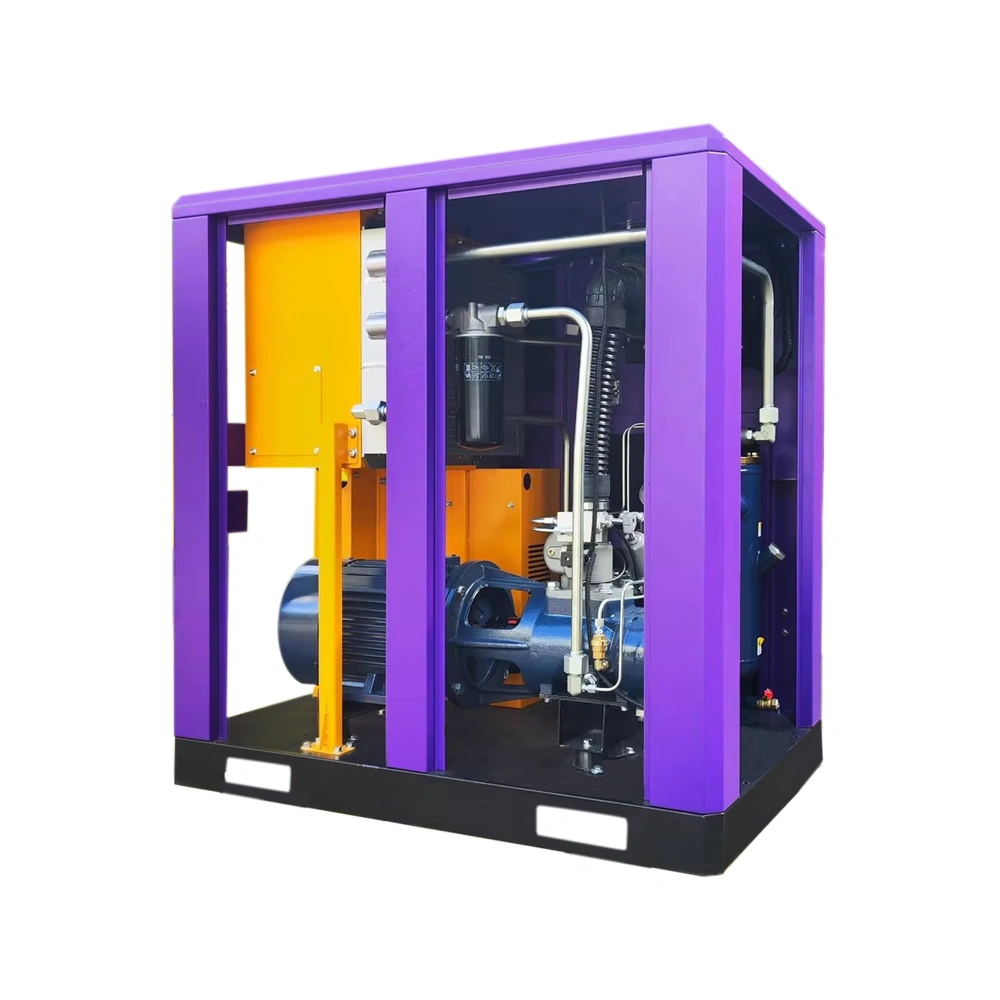
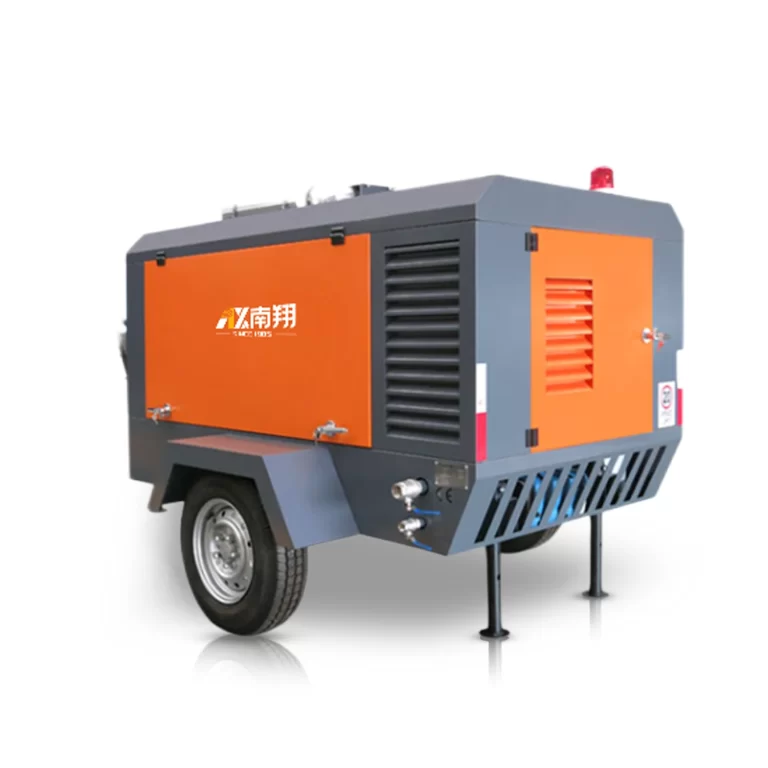
In the high-stakes world of industrial fabrication, the spotlight usually stays on the laser source itself—those sleek fiber oscillators capable of slicing through inches of carbon steel like a hot knife through butter. Yet, behind the scenes, there is a workhorse that determines whether that cut is clean or slag-heavy. The air compressor for fiber laser cutting is not just an “accessory”; it is a primary functional component that dictates the efficiency, cost-per-part, and even the lifespan of your expensive optical lenses.
When we talk about laser processing—be it cutting, welding, or marking—we are essentially talking about managed energy. But energy needs a delivery vehicle. High-pressure gases are required to drive the beam’s effectiveness and purge the workpiece surface. Without a steady, clean stream of compressed air, even the most advanced 30kW fiber laser becomes little more than a very expensive heat lamp.

The Multi-Faceted Role of Compressed Air
It is a common misconception that air is just a “cheap” alternative to nitrogen. While cost-saving is a massive driver, the mechanical roles played by an air compressor for fiber laser cutting are far more complex.
1. Gas Assist Cutting: The Kinetic Punch
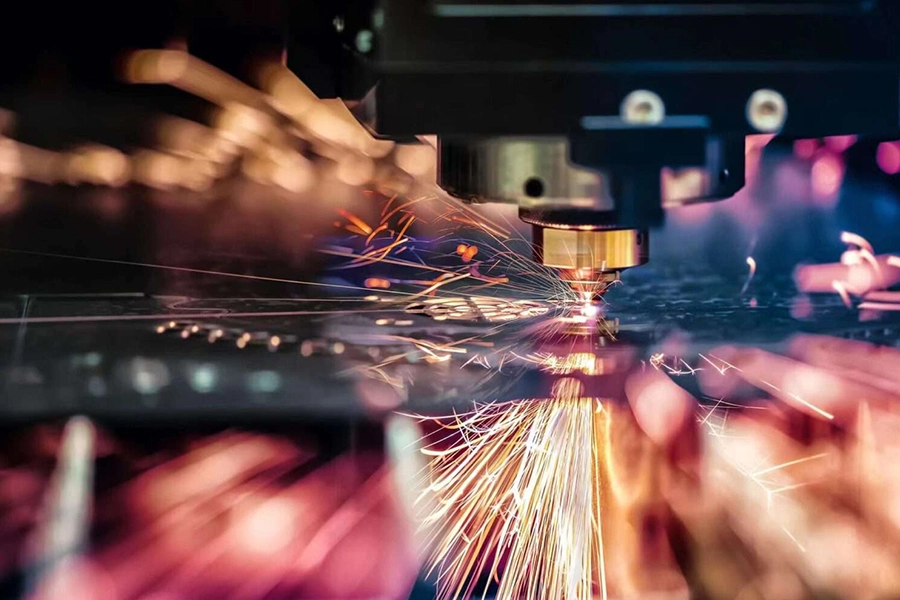
Fiber lasers rely on a gas assist to enhance the cutting process. While oxygen creates an exothermic reaction and nitrogen provides a cooling, inert shield, compressed air (which is ~78% nitrogen) offers a middle ground. It provides the kinetic energy necessary to blow away molten material. If the pressure isn’t high enough or the flow isn’t stable, you get “dross”—that stubborn metal burr at the bottom of the cut that requires manual grinding.
2. Cooling Systems and Heat Management
Fiber lasers generate significant amounts of heat. While water chillers handle the resonator, compressed air often supports the cooling of the cutting head and the surrounding environment. By dissipating heat rapidly, the system ensures optimal performance and prevents the thermal expansion of sensitive components, which could otherwise throw the beam off-focus.
3. Air Purging and Optical Integrity
This might be the most “under-the-radar” task. Air compressors are utilized for purging systems, which maintain a clean environment within the laser’s internal path. Dust, debris, and microscopic contaminants are the enemies of fiber optics. A tiny speck of dust on a protective window can absorb laser energy, heat up, and shatter the lens in seconds. A continuous “curtain” of clean air keeps these contaminants at bay.
Technical Specifications: Matching the Compressor to the Laser
Choosing an air compressor for fiber laser cutting isn’t as simple as picking one off the shelf at a hardware store. The requirements for pressure and purity are exceptionally high. Most modern fiber lasers require pressures between 13 bar and 16 bar, with some high-power applications pushing toward 20+ bar.
| Feature | Oxygen (O2) | Nitrogen (N2) | Compressed Air |
| Cutting Speed | Fast (Thin Carbon) | Very Fast (Thin Stainless) | High (General Purpose) |
| Edge Quality | Oxidized (Black) | Clean (Silver) | Slight Oxidation |
| Operating Cost | High (Gas Cost) | Very High (High Volume) | Low (Electricity Only) |
| Primary Use | Thick Carbon Steel | Stainless Steel / Alum | Various / Rock Wool Prep |
While we often focus on sheet metal, the utility of a robust air compressor for fiber laser cutting setups extends into specialized manufacturing sectors.
Air Bearings and Motion Control
In ultra-high-precision fiber laser systems, mechanical friction is the enemy of accuracy. Some systems utilize air bearings for the motion control of laser optics. These bearings allow components to “float” on a thin film of air.
Precision: Allows for sub-micron movements.
Longevity: No physical contact means zero wear and tear on the bearing surfaces.
Stability: Requires a consistent, pulse-free air supply from a high-quality screw compressor.
Why "Clean" Air is Non-Negotiable
You can’t just hook up any old pump. The “quality” of the air from your air compressor for fiber laser cutting is defined by three factors: Oil, Water, and Particles.
Oil Content: Even a trace of oil vapor can coat the laser lens. Once the laser fires, that oil burns, permanently damaging the coating.
Moisture (Water): Water droplets in the air stream cause “micro-explosions” during the cutting process, leading to pits and a rough surface finish.
Particulates: Small particles can act like shrapnel when accelerated to supersonic speeds through a laser nozzle.
Required Filtration Stages
To achieve the necessary air quality, a typical setup includes:
An integrated refrigerated dryer (to hit a low dew point).
Multistage high-precision filters (down to 0.01 micron).
An oil-moisture separator.
(Optional) An adsorption dryer for even lower dew points in humid climates.

Maintenance: Keeping the Pressure Up
Ownership of an air compressor for fiber laser cutting involves more than just hitting the “on” switch. To ensure the longevity of the laser technology, a strict maintenance schedule is observed by the most efficient shops.
Daily: Drain the moisture from the air tank (if not automatic).
Weekly: Check the discharge temperature to ensure the cooling system is functioning.
Monthly: Inspect filters for pressure drops. If the compressor has to work harder to push air through a dirty filter, your electricity bill climbs while your cutting pressure drops.
Conclusion
In conclusion, the air compressor for fiber laser cutting is the backbone of modern fabrication. It enables the high-speed delivery of gases, protects the integrity of expensive resonators through purging, and provides the mechanical force needed for precise motion control. Whether you are cutting thin gauge aluminum or supporting the heavy-duty needs of rock wool production, the synergy between the laser and the compressor is what defines success. Investing in a high-pressure, high-purity air system isn’t an expense—it’s an insurance policy for your laser’s performance.