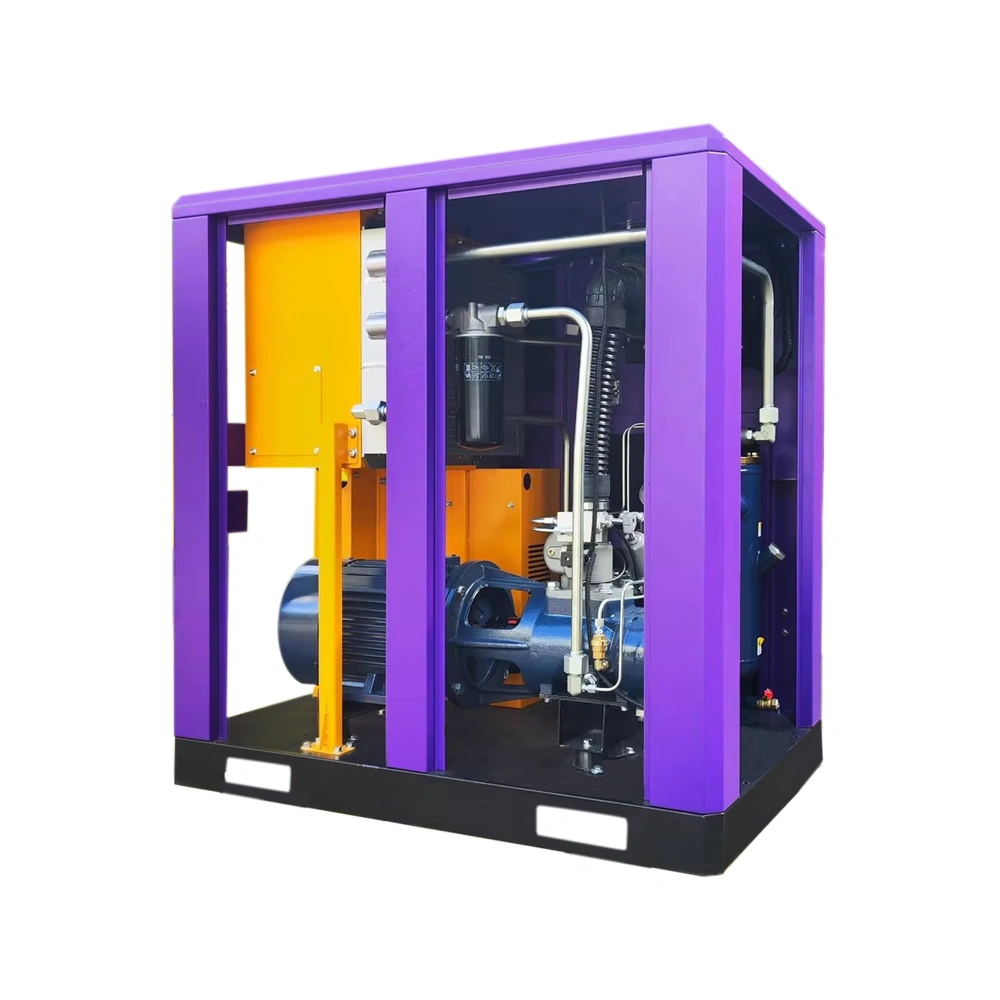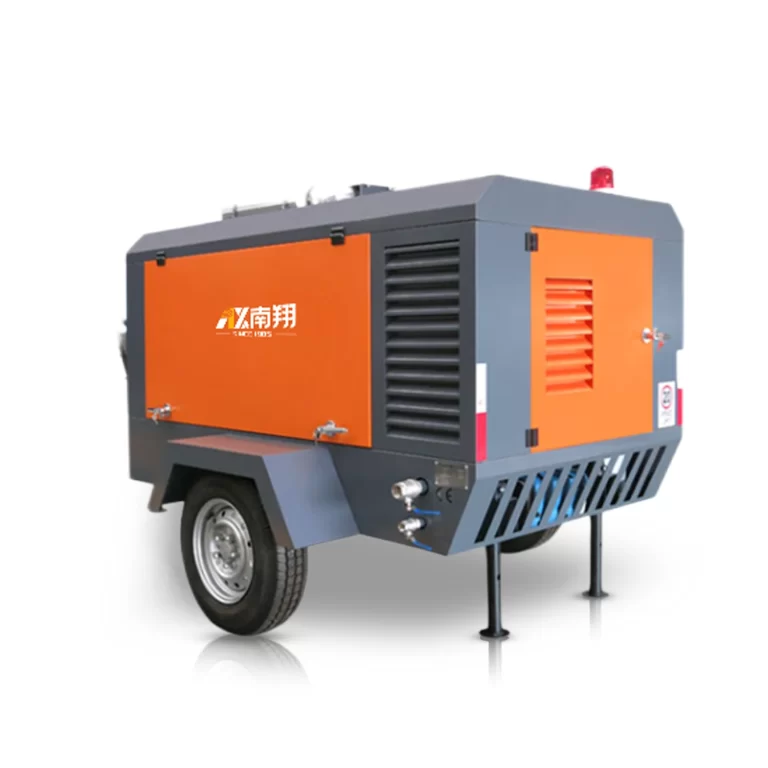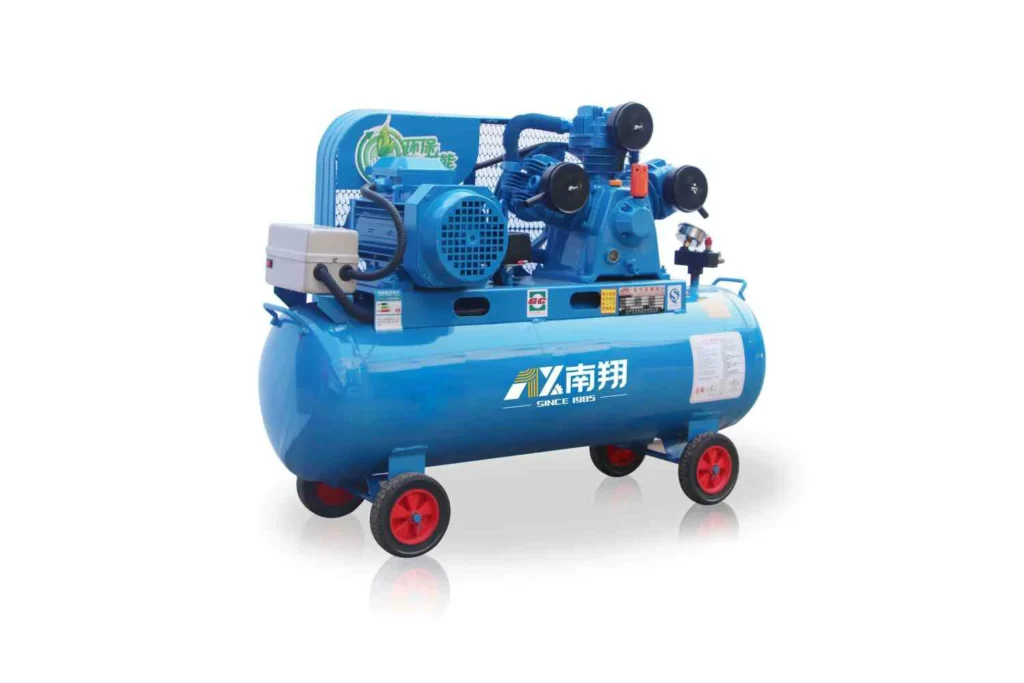
There are several types of rotary screw air compressors, each with its specific features and applications. The main differences between these types are as follows:
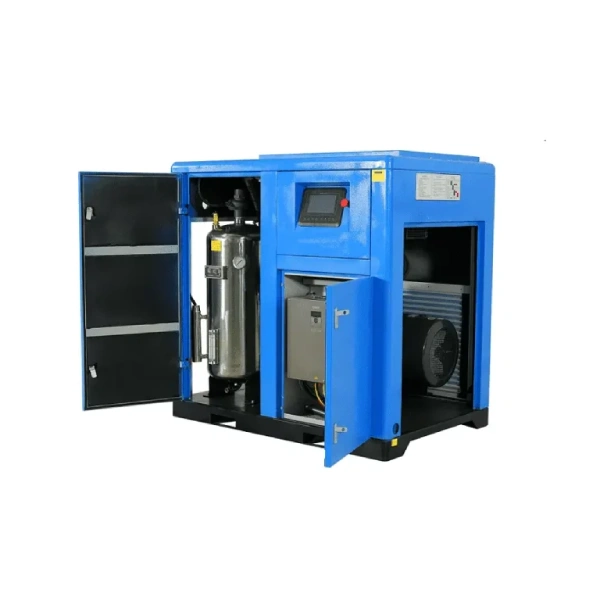
Quick Comparsion
| Category | Type | Main Features | Suitable Applications |
|---|---|---|---|
| Lubrication System | Oil-Injected | Uses lubricating oil for sealing and cooling; higher efficiency; longer component life | General industrial manufacturing, mining, mechanical workshops |
| Lubrication System | Oil-Free | No oil in compression chamber; high-precision rotors; clean compressed air | Food processing, pharmaceuticals, electronics, medical industries |
| Drive System | Fixed Speed | Runs at constant speed; stable airflow output; simple control system | Facilities with steady and predictable air demand |
| Drive System | Variable Speed Drive (VSD) | Adjusts motor speed based on air demand; energy-saving; reduces idle running | Factories with fluctuating air consumption |
| Installation Type | Portable | Compact and mobile design; easy transportation | Construction sites, road maintenance, field operations |
| Installation Type | Stationary | Fixed installation; stable long-term operation | Industrial plants, large workshops, continuous production lines |
| Capacity Range | Small Capacity | Lower airflow output; compact size | Light industrial and commercial applications |
| Capacity Range | Large Capacity | High airflow output; designed for heavy-duty operation | Heavy industry, mining, large-scale manufacturing |
Oil-Injected vs. Oil-Free:
Oil-injected rotary screw compressors use lubricating oil to seal the internal clearances and provide cooling, resulting in higher efficiency and longer life. However, the compressed air may contain traces of oil, which is not suitable for certain applications such as food processing or pharmaceuticals.
Oil-free rotary screw compressors use non-contacting, high-precision rotors, and specialized coatings to eliminate the need for oil. This ensures that the compressed air is free of oil contaminants, making it suitable for sensitive applications.


Fixed Speed vs. Variable Speed Drive (VSD):
Fixed-speed rotary screw compressors operate at a constant speed, providing a consistent flow of compressed air. They are suitable for applications with relatively stable air demand.
Variable speed drive (VSD) rotary screw compressors have a drive system that adjusts the speed of the compressor to match the air demand. This results in energy savings, especially in applications with varying air demand.

Portable vs. Stationary:
Portable rotary screw compressors are designed for mobility and are often used in construction, road maintenance, and other mobile applications.
Stationary rotary screw compressors are installed in a fixed location and are suitable for industrial and commercial applications where a constant air supply is required.
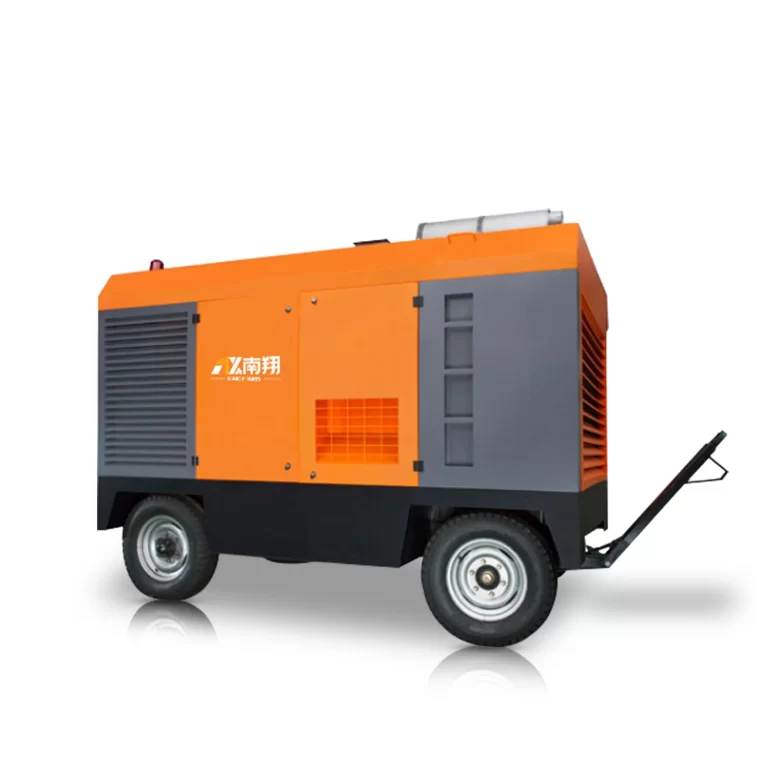
Size and Capacity:
Rotary screw compressors come in various sizes and capacities to meet different air demand requirements. Smaller units are often used for light industrial or commercial applications, while larger units are used in heavy industrial settings.
Conclusion
Rotary screw air compressors are available in multiple configurations to meet the diverse needs of modern industrial and commercial environments. The choice between oil-injected and oil-free models depends primarily on air purity requirements. Oil-injected compressors are widely used in general industrial applications due to their durability and efficiency, while oil-free compressors are essential for industries where air quality directly affects product safety and compliance standards.
Similarly, the decision between fixed-speed and variable speed drive (VSD) systems should be based on air demand stability. Fixed-speed units are suitable for operations with consistent air consumption, whereas VSD compressors offer significant energy savings in environments with fluctuating loads.
Installation type and capacity also play critical roles in equipment selection. Portable models provide flexibility for field operations, while stationary systems support long-term, continuous production. By carefully evaluating operational requirements, energy efficiency goals, and industry standards, businesses can select the most suitable rotary screw compressor configuration to maximize performance and long-term return on investment.