
Un compresor de aire sin aceite es una opción muy habitual para aplicaciones que requieren aire limpio, pero no siempre es la máquina más silenciosa del taller. En la práctica, gran parte del ruido proviene de las vibraciones, el flujo de aire de admisión y los ciclos repetidos, más que de la bomba en sí. La buena noticia es que unos pequeños cambios pueden marcar una diferencia notable.
Por qué un compresor sin aceite suena más fuerte de lo esperado
A menudo se da por sentado que “sin aceite” significa “fácil de mantener y silencioso”. Pero no es exactamente así. Las unidades sin aceite evitan la contaminación por lubricantes, pero pueden utilizar componentes que funcionan a mayor velocidad o diseños internos más compactos que generan un perfil sonoro más agudo.
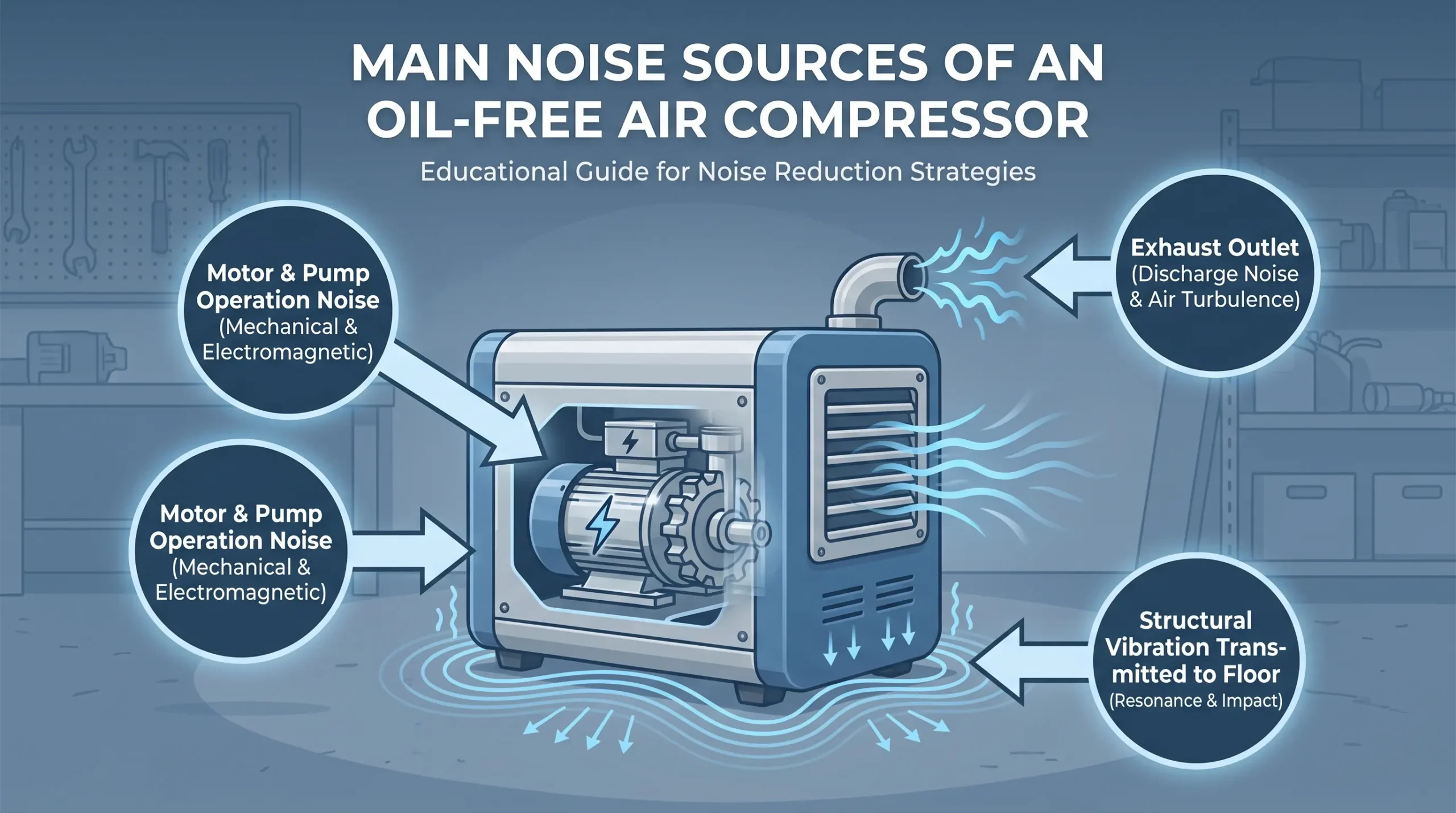
Principales fuentes de ruido
| Fuente de ruido | De qué se trata | Causa habitual |
|---|---|---|
| Motor y bomba | Zumbido mecánico agudo | Alta velocidad del motor |
| Admisión | Un ruido fuerte, como de corriente o de succión | Aire que entra en el compresor |
| Escape | Breves ráfagas o silbidos | Liberación de presión |
| Vibración | Ruidos de traqueteo o transmitidos por el suelo | Contacto directo con superficies duras |
Según las directrices sobre ruido del NIOSH (Centro para el Control y la Prevención de Enfermedades), incluso el ruido moderado de la maquinaria puede convertirse en un problema si la exposición es prolongada, especialmente en espacios de trabajo cerrados. Por eso, el control del ruido es algo más que una cuestión de comodidad; también puede ser una cuestión de seguridad.
¿Qué medidas son realmente eficaces para reducir el ruido de los compresores?
1. Colócalo sobre una superficie aislada
Un compresor colocado directamente sobre hormigón, metal o una repisa delgada tiende a transmitir vibraciones a la estructura. Las almohadillas de aislamiento de goma, los soportes de espuma densa o una alfombrilla gruesa pueden reducir considerablemente esa transmisión.
2. Aléjalo un poco más
Puede parecer demasiado sencillo, pero la distancia ayuda. Incluso unos pocos pies más pueden reducir la aspereza percibida del sonido, sobre todo en garajes y talleres pequeños.
3. Reducir el ruido de admisión
A menudo se pasa por alto el lado de la admisión. Un silenciador de admisión o un sistema de filtros bien diseñado puede atenuar el ruido del flujo de aire, aunque nunca se debe restringir demasiado el paso del aire.
4. Comprueba si hay piezas sueltas
Los paneles, herrajes y elementos de fijación sueltos pueden provocar más traqueteos. A veces, una rápida inspección resuelve lo que parece un problema de ruido grave.
5. Instalar una cabina ventilada
Una cabina insonorizada puede ser de gran ayuda, pero debe permitir la ventilación. Los compresores necesitan refrigeración, y encerrarlos en un espacio demasiado estrecho puede acortar su vida útil o provocar un sobrecalentamiento. Las directrices sobre ruido de la OSHA también sirven como recordatorio útil de que la reducción del ruido nunca debe comprometer la seguridad en el funcionamiento.
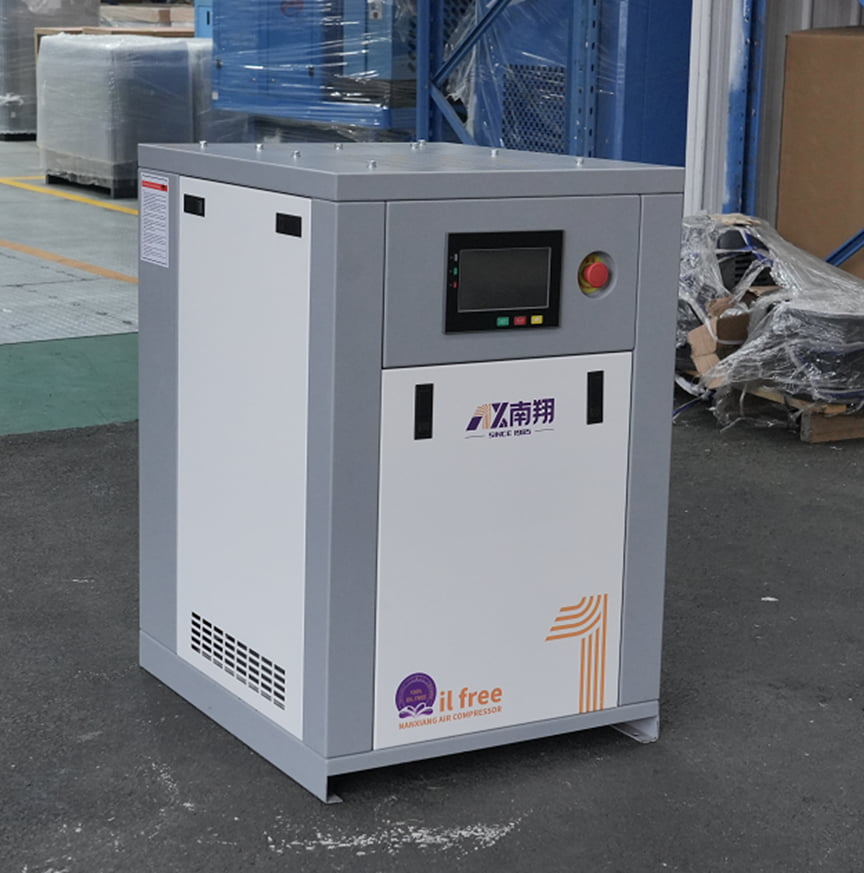
Mejoras inteligentes que marcan una verdadera diferencia
A veces, la mejor solución no es un truco, sino una configuración más adecuada.
| Actualización | Impacto acústico | Por qué es útil |
|---|---|---|
| Depósito de aire más grande | Medio | Reduce la frecuencia con la que el motor se pone en marcha y se detiene |
| Conexiones de manguera flexible | Medio | Limita la transmisión de vibraciones |
| Soportes antivibratorios | Medio | Reduce el ruido del suelo |
| Opción de modelo más silencioso | Alta | Reduce el ruido en su origen |
Un depósito más grande puede resultar especialmente útil, ya que el compresor se pone en marcha con menos frecuencia. Eso no hace que la máquina sea silenciosa, pero sí reduce la frecuencia con la que se produce la fase de funcionamiento más ruidosa.
Si el objetivo es conseguir un diseño más silencioso, quizá merezca la pena considerar una opción más especializada Compresor de aire sin aceite configuración, en lugar de intentar modificar una unidad que ya presenta ruido.
En algunos casos, los usuarios que necesitan un nivel de ruido de funcionamiento más bajo de forma constante también se plantean los modelos de tornillo rotativo. Por ejemplo, un Compresor de tornillo sin aceite puede resultar más adecuado para determinados entornos de funcionamiento continuo que una unidad pequeña de pistón.
Errores que hay que evitar
– Bloquear la ventilación con mantas o espuma compacta
– Suponiendo que cualquier cubierta insonorizante sea segura
– No prestar atención a los cojinetes desgastados o a los elementos de fijación sueltos
– Esperar que un aparato de gran potencia pase a ser silencioso como un susurro
El patrón es bastante constante: la mayoría de las soluciones “fáciles” para el ruido solo funcionan si se mantienen intactos el flujo de aire y la estabilidad mecánica.

Conclusión
Para reducir el ruido de un compresor de aire sin aceite, lo habitual es controlar las vibraciones, mejorar su ubicación y reducir el ruido de admisión y de ciclo. Pequeños cambios pueden ayudar más de lo que cabría esperar, pero la mayor mejora suele conseguirse, ante todo, eligiendo la máquina adecuada para el trabajo. Una configuración más silenciosa no suele ser cuestión de un único truco mágico, sino de varios buenos trucos que funcionan en conjunto.
Preguntas frecuentes
¿Puede una caja insonorizada dañar un compresor sin aceite?
Sí, siempre que retenga el calor. La carcasa debe permitir una ventilación suficiente para que el motor y la bomba se mantengan dentro de los límites de temperatura de funcionamiento seguros.
¿Los depósitos más grandes hacen que los compresores sean siempre más silenciosos?
No siempre. Principalmente reducen la frecuencia de los ciclos, por lo que el compresor funciona con menos frecuencia, lo que puede hacer que el ambiente resulte, en general, más silencioso.
¿Merece la pena cambiar un aparato antiguo solo para reducir el ruido?
Si el compresor es antiguo, poco eficiente y ruidoso incluso tras realizar algunas reparaciones básicas, puede que resulte más práctico sustituirlo que seguir acumulando modificaciones.