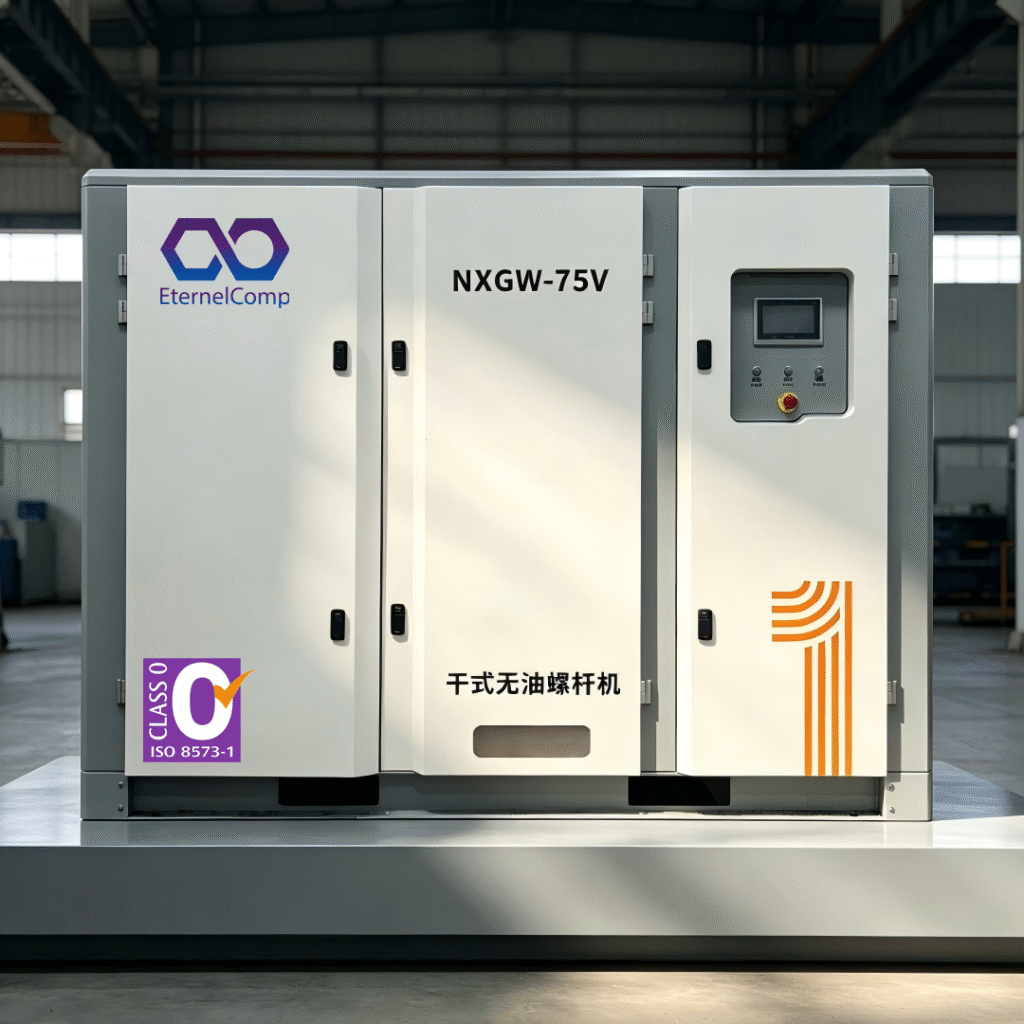
An oil-free air compressor is a popular choice for clean air applications, but it is not always the quietest machine in the shop. In practice, much of the noise comes from vibration, intake airflow, and repeated cycling rather than the pump alone. The good news is that a few small changes can make a noticeable difference.
Why an oil-free compressor sounds louder than expected
People often assume “oil-free” means “maintenance-friendly and quiet.” That is not quite how it works. Oil-free units avoid lubricant contamination, but they may use faster-running components or tighter internal designs that create a sharper sound profile.
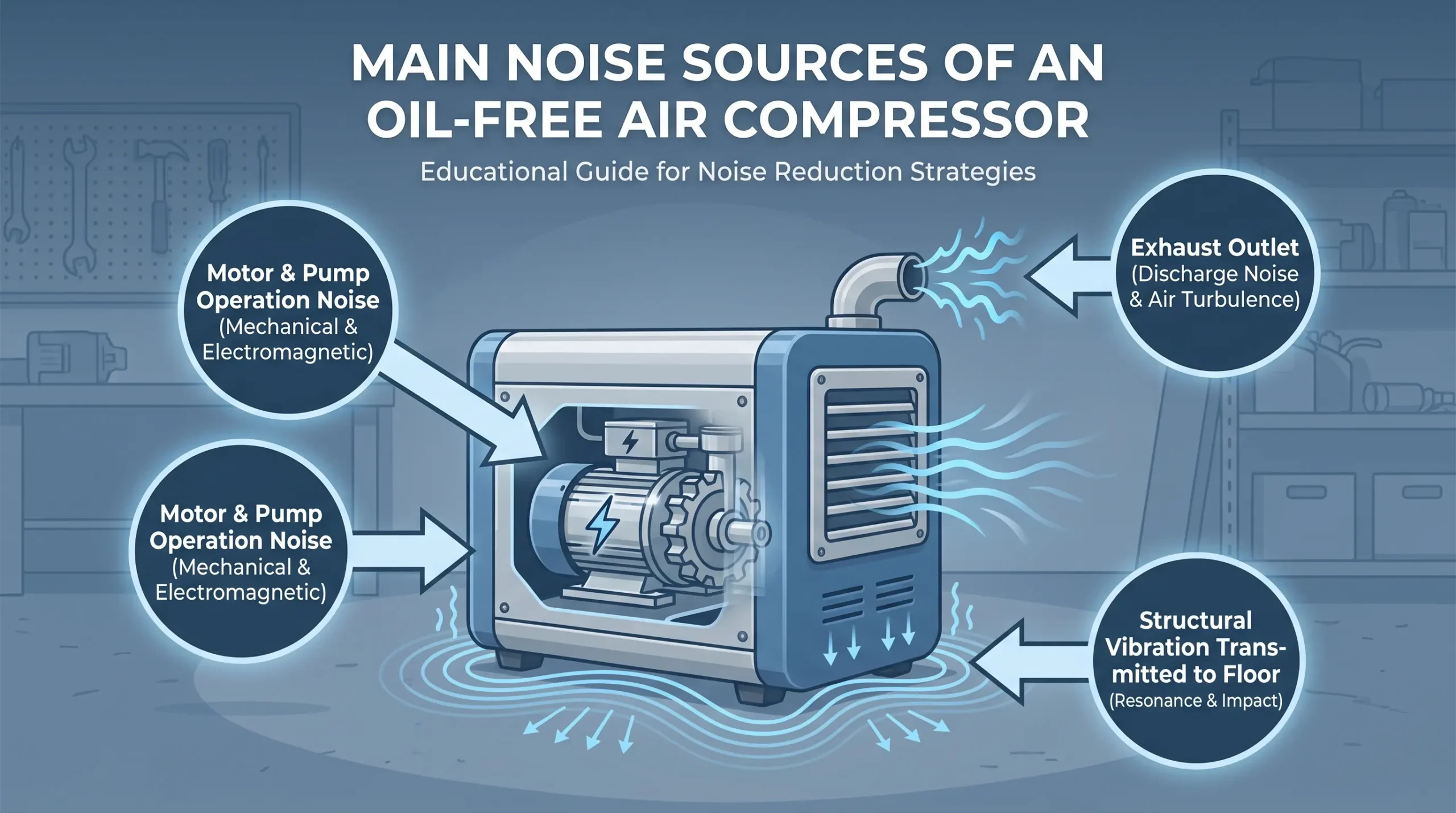
Main noise sources
| Noise source | What it sounds like | Typical cause |
|---|---|---|
| Motor and pump | High-pitched mechanical hum | Fast motor speed |
| Intake | Loud rushing or sucking sound | Air entering the compressor |
| Exhaust | Brief bursts or hiss | Pressure release |
| Vibration | Rattling or floor-borne noise | Direct contact with hard surfaces |
According to the CDC’s NIOSH noise guidance, even moderate machinery noise can become a concern with long exposure, especially in enclosed workspaces. That makes noise control more than a comfort issue; it can be a safety one too.
What actually works to reduce compressor noise
1. Place it on an isolated surface
A compressor sitting directly on concrete, metal, or a thin shelf tends to transfer vibration into the structure. Rubber isolation pads, dense foam mounts, or a thick mat can reduce that transfer quite a bit.
2. Move it farther away
This sounds too simple, but distance helps. Even a few extra feet can reduce the perceived harshness of the sound, especially in small garages and workshops.
3. Quiet the intake noise
The intake side is often overlooked. A well-designed intake silencer or filter setup can soften the rushing sound, though airflow should never be restricted too much.
4. Check for loose parts
Loose panels, fittings, and fasteners can create extra rattling. A quick inspection sometimes solves what feels like a major noise problem.
5. Add a ventilated enclosure
A sound enclosure can help significantly, but it must breathe. Compressors need cooling, and enclosing them too tightly can shorten their life or cause overheating. OSHA’s noise guidance is also a useful reminder that noise reduction should never compromise safe operation.
Smart upgrades that make a real difference
Sometimes the best fix is not a workaround but a better setup.
| Upgrade | Noise impact | Why it helps |
|---|---|---|
| Larger air tank | Medium | Reduces how often the motor cycles |
| Flexible hose connections | Medium | Limits vibration transfer |
| Anti-vibration mounts | Medium | Keeps floor noise down |
| Quieter model choice | High | Lowers noise at the source |
A larger tank can be especially useful because the compressor runs less often. That does not make the machine silent, but it does reduce how frequently the loudest operating phase happens.
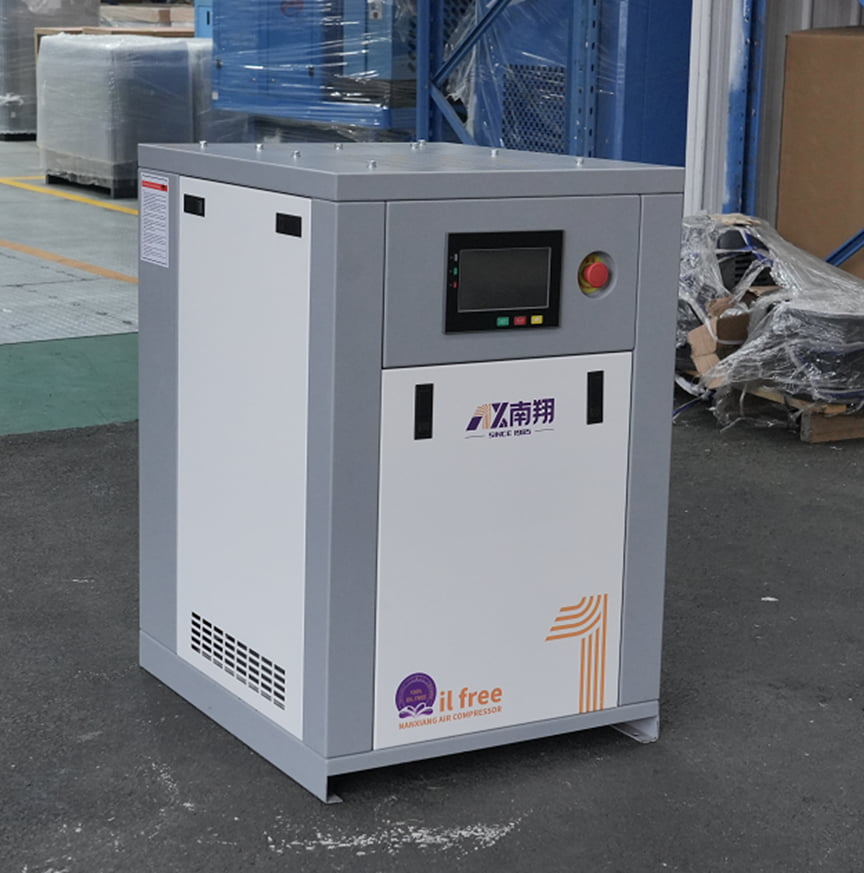
If a quieter design is the goal, it may be worth reviewing a more specialized Oil-Free Air Compressor lineup instead of trying to modify an already noisy unit.
In some cases, users who need consistently lower operating noise look at rotary screw designs as well. For example, an Oil-Free Screw Compressor may suit certain continuous-duty environments better than a small piston-style unit.
Mistakes to avoid
– Blocking ventilation with blankets or tight foam
– Assuming any silencing cover is safe
– Ignoring worn bearings or loose mounting hardware
– Expecting a high-output unit to become whisper-quiet
The pattern is pretty consistent: most “easy” noise fixes work only if airflow and mechanical stability stay intact.

Conclusion
Quieting an oil-free air compressor usually comes down to controlling vibration, improving placement, and reducing intake and cycling noise. Small changes can help more than expected, but the biggest gain often comes from choosing the right machine for the job in the first place. A quieter setup is usually not about one magic trick; it is about several good ones working together.
FAQ
Can a soundproof box damage an oil-free compressor?
Yes, if it traps heat. The enclosure must allow enough airflow for the motor and pump to stay within safe operating temperatures.
Do larger tanks make compressors quieter all the time?
Not all the time. They mainly reduce cycling frequency, so the compressor runs less often, which can make the environment feel quieter overall.
Is it worth replacing an older unit just for noise reduction?
If the compressor is old, inefficient, and loud even after basic fixes, replacement may be more practical than stacking on modifications.