Oxygen is one of those things that many industries just buy in cylinders or liquid form. Delivery truck shows up, swap the tanks, done. But for facilities that use a lot of oxygen—hospitals, wastewater treatment, glass manufacturing, metal cutting—those cylinder costs add up fast. And there’s always the risk of running out at the worst possible moment.
A PSA oxygen generator solves that. It makes oxygen on-site, from compressed air, continuously. No deliveries, no cylinder handling, no running out. But choosing the right one? That takes a bit of work. Too small, and it can’t keep up. Too large, and the upfront cost hurts for no good reason.
Having watched a few of these installations—some that worked beautifully, others that were constant headaches—the selection process comes down to a handful of real factors. This is a look at how to choose a PSA oxygen generator for a specific application.
What a PSA Oxygen Generator Actually Does
Before diving into selection, it helps to understand the technology. PSA oxygen generator stands for Pressure Swing Adsorption. It’s not magic. It’s not electrolysis. It’s a physical process that separates nitrogen from air, leaving oxygen behind.
How Pressure Swing Adsorption Works
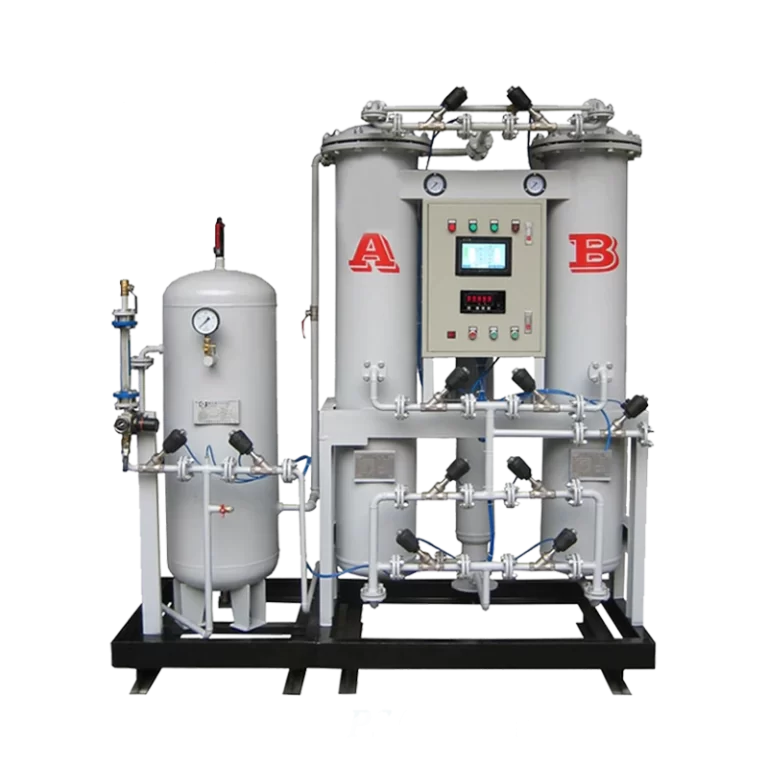
The core of the system is a vessel filled with zeolite—a synthetic material with tiny pores. Under pressure, the zeolite attracts nitrogen molecules more strongly than oxygen molecules. Compressed air flows through the vessel; nitrogen gets trapped; oxygen passes through. Then the pressure drops, releasing the captured nitrogen, and the cycle repeats.
Two vessels alternate: one adsorbs while the other regenerates. The result is a continuous stream of oxygen at 90–95% purity, typically at 50–100 PSI.
Pressure Swing Adsorption is a mature, reliable technology. No moving parts in the separation process itself. Just valves that cycle. That simplicity is why these generators run for years with basic maintenance.
Key Factors in Choosing a PSA Oxygen Generator
Not every PSA oxygen generator is right for every job. A few factors matter more than others.
Required Oxygen Purity
This is the first question. What purity does the application need?
| Purity Level | Common Applications | Generator Feasibility |
|---|---|---|
| 90–93% | Combustion support, wastewater aeration, glass melting, metal cutting | Standard PSA, most cost-effective |
| 93–95% | Ozone generation, aquaculture, some medical | Standard PSA, slightly larger unit |
| 95–99% | High-purity medical, chemical processes | Requires two-stage PSA or VSA; higher cost |
| 99.5%+ | Laboratory, specialized chemical | Cryogenic or cylinder supply usually better |
Most industrial applications work fine with 90–95% oxygen. Pushing above 95% increases the generator size significantly—sometimes doubling it. The cost curve is steep. Unless there’s a specific need for higher purity, sticking with 93% is usually the right call.
Flow Rate (Normal Cubic Meters per Hour)
Flow rate is the second big variable. A PSA oxygen generator is sized by how many normal cubic meters per hour (Nm³/h) it produces at the required purity.
Sizing is straightforward in theory: calculate peak demand, add a safety factor (20–30%), and select a generator that meets that. In practice, the demand pattern matters. A generator that cycles on and off constantly wears out valves faster. A unit that runs continuously at 70–80% of capacity is happier.
A few ways to estimate demand:
• Measure current cylinder usage (how many cylinders per week at what pressure)
• Check equipment nameplates (flow rates for oxygen-using devices)
• Run a timed test during peak production
Air Quality and Compressed Air Supply
A PSA oxygen generator is only as good as the compressed air feeding it. This is where many installations go wrong.
Compressed Air Requirements
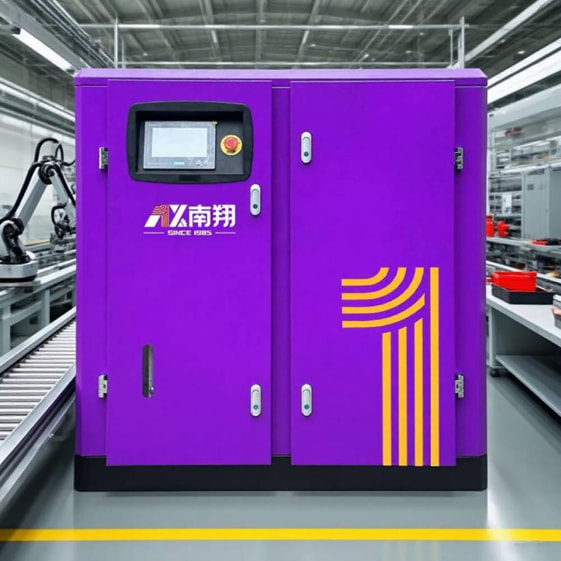
The generator needs clean, dry compressed air at the right pressure and flow. Typical requirements:
• Pressure: 6–8 bar (87–116 PSI) at the generator inlet
• Air quality: ISO 8573-1 Class 1.2.1 or better (oil-free, dry, particulate-free)
• Flow: Roughly 2–3 times the oxygen output volume (depending on purity)
The compressed air system needs to be sized for the generator’s peak demand.
An undersized air compressor causes pressure drops, which reduces oxygen output. An oversized compressor short-cycles and wastes energy.
Dryer and Filtration
Most generators require a refrigerated or desiccant dryer to achieve the required dew point (-40°F or better). Coalescing filters remove oil aerosols. Particulate filters catch any remaining dust. Skipping any of these leads to zeolite contamination, which destroys the generator’s performance.
Seen that happen. A facility installed a generator without proper drying, and within six months the zeolite was saturated with moisture. Oxygen purity dropped from 93% to 80%. The replacement media cost almost as much as a new generator.

Reliability and Maintenance Considerations
A PSA oxygen generator has few moving parts—mostly just pneumatic valves. But those valves cycle thousands of times per day. Quality matters.
Valve Type and Lifespan
The valves that switch between the two adsorption vessels are the most stressed components. Some generators use solenoid valves; others use pneumatic actuated valves. Pneumatic valves tend to last longer in dirty environments, but they need clean instrument air.
Expected valve life varies widely. Cheap units might need valve replacement every 1–2 years. Quality units go 5–8 years or more between valve overhauls.
Zeolite Lifespan
The zeolite media doesn’t last forever. With good air quality, expect 10–15 years of life. With poor air quality (oil or moisture contamination), it can fail in months. There’s no way to “recharge” contaminated zeolite—it has to be replaced.
Routine Maintenance
A typical maintenance schedule:
• Daily: Check oxygen purity and flow
• Weekly: Inspect filters and drains
• Monthly: Check valve operation, listen for leaks
• Annually: Replace filters, calibrate oxygen analyzer
• Every 5–8 years: Valve overhaul or replacement
Oxygen Storage and Backup
Even the most reliable generator can have issues. And demand can spike above the generator’s capacity. That’s where storage comes in.
Receiver Tank Sizing
An oxygen receiver tank (or buffer tank) smooths out demand spikes. The generator runs steadily, filling the tank. When demand exceeds generation, the tank supplies the difference. A typical buffer tank is sized for 15–30 minutes of peak demand.
Backup Supply
What if the generator goes down? A small liquid oxygen tank or a few high-pressure cylinders can serve as backup. The backup doesn’t need to cover full production indefinitely—just enough time to repair the generator or arrange a rental.
For critical applications (hospitals, certain industrial processes), a full redundant generator is standard. Two units, each sized for 100% of demand, with automatic failover. Expensive, but cheaper than a production shutdown.
Total Cost of Ownership
The purchase price is only part of the story. A PSA oxygen generator has ongoing costs that vary significantly between models.
Operating Cost Components
Compressed air energy: The largest ongoing cost. A generator that uses 2.5 Nm³ of air per Nm³ of oxygen is cheaper to run than one that uses 3.5 Nm³.
• Filter replacements: Annual or semi-annual.
• Valve maintenance: Eventually.
• Oxygen analyzer calibration: Annual.
• Zeolite replacement: Every 10–15 years.
Energy Efficiency Comparison
Two generators of the same size can have very different air consumption. A more efficient unit might use 20–30% less compressed air. Over a year of continuous operation, that difference can be thousands of dollars in electricity.
A quick example: 50 Nm³/h oxygen generator. Efficient model uses 120 Nm³/h of air. Inefficient uses 160 Nm³/h. At $0.10 per kWh, running 8,000 hours per year, the difference is roughly $3,000–4,000 annually.
Common Mistakes When Selecting
A few errors show up repeatedly.
• Oversizing the generator. Runs inefficiently, valves cycle more than needed, higher upfront cost.
• Undersizing the air compressor. Generator starves for air, purity drops, production suffers.
• Skipping proper drying. Kills the zeolite. Expensive mistake.
• Ignoring maintenance access. The generator gets shoved in a corner where nobody can reach the valves or filters.
• Buying on price alone. The cheapest generator is rarely the cheapest to own.
Matching Generator to Industry
Different industries have different priorities.
• Medical (hospitals, clinics): Reliability is everything. Backup storage and redundant systems are standard. Purity typically 93–95% for bulk oxygen, higher for respiratory therapy.
• Wastewater treatment: Continuous operation, variable demand. Generators need to handle turndown well. Lower purity (90–93%) is fine.
• Glass manufacturing: High flow, steady demand. Energy efficiency matters most.
• Metal cutting and welding: Intermittent high demand. Buffer tank sizing is critical.
• Aquaculture: Continuous, moderate flow. Reliability and low maintenance are priorities.
FAQ
How long does a PSA oxygen generator last?
With proper maintenance and good air quality, the generator frame and vessels last 20+ years. Zeolite media lasts 10–15 years. Valves may need replacement every 5–8 years.
What purity of oxygen can a PSA generator produce?
Standard single-stage PSA produces 90–95% oxygen. Two-stage systems can reach 95–99%. For 99.5%+, cryogenic separation is usually more economical.
How much compressed air does a PSA oxygen generator need?
Typically 2 to 3.5 times the oxygen output volume, depending on purity and generator design. Higher purity requires more air. Check the manufacturer’s specifications for exact numbers.