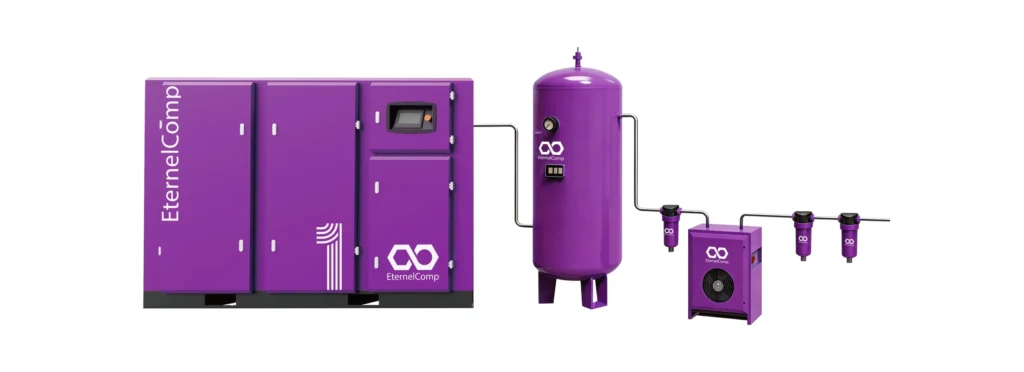
Udara bertekanan sering disebut sebagai “utilitas keempat” di lingkungan industri, di samping listrik, air, dan gas. Udara bertekanan memberi daya pada peralatan, mendukung lini produksi, menggerakkan mesin, dan membantu bengkel menyelesaikan pekerjaan sehari-hari dengan lebih efisien. Di antara sekian banyak pilihan kompresor yang tersedia, Kompresor Udara Berpelumas Oli tetap menjadi salah satu pilihan yang paling banyak digunakan untuk pabrik, garasi, lokasi konstruksi, dan operasi industri umum.
Dalam panduan ini, kita akan melihat:
- Apa itu kompresor udara berpelumas oli?
- Cara kerjanya selama proses kompresi
- Perbedaan utama antara jenis sekrup putar dan piston
- Di mana mereka biasa digunakan
- Keunggulan dan keterbatasan praktisnya
Apa Itu Kompresor Udara Berpelumas Oli?
Kompresor Udara Berpelumas Oli adalah kompresor udara yang menggunakan oli di dalam sistem kompresi untuk melumasi komponen yang bergerak dan mendukung proses kompresi. Tergantung pada desain kompresor, oli dapat membantu melumasi bantalan, piston, silinder, rotor, dan bagian internal lainnya yang mengalami gesekan selama pengoperasian.
Secara sederhana, kompresor ini menarik udara atmosfer, memampatkannya ke tekanan yang lebih tinggi, dan kemudian menyalurkannya untuk penggunaan industri atau komersial. Selama proses ini, oli memainkan beberapa peran penting. Oli mengurangi gesekan, membantu menghilangkan panas, meningkatkan penyegelan di antara komponen, dan melindungi permukaan logam dari keausan dini.
Penting untuk dipahami bahwa “dilumasi oli” tidak berarti udara yang dikompresi dimaksudkan untuk berminyak. Pada sebagian besar sistem, oli dipisahkan dari udara terkompresi sebelum udara mencapai peralatan hilir. Pemisah oli, filter, dan komponen pengolahan udara lainnya digunakan untuk mengontrol oli yang terbawa. Namun, karena oli terlibat dalam proses kompresi, sistem ini tidak sama dengan kompresor bebas oli.
Bagaimana Cara Kerja Kompresor Udara Berpelumas Oli?
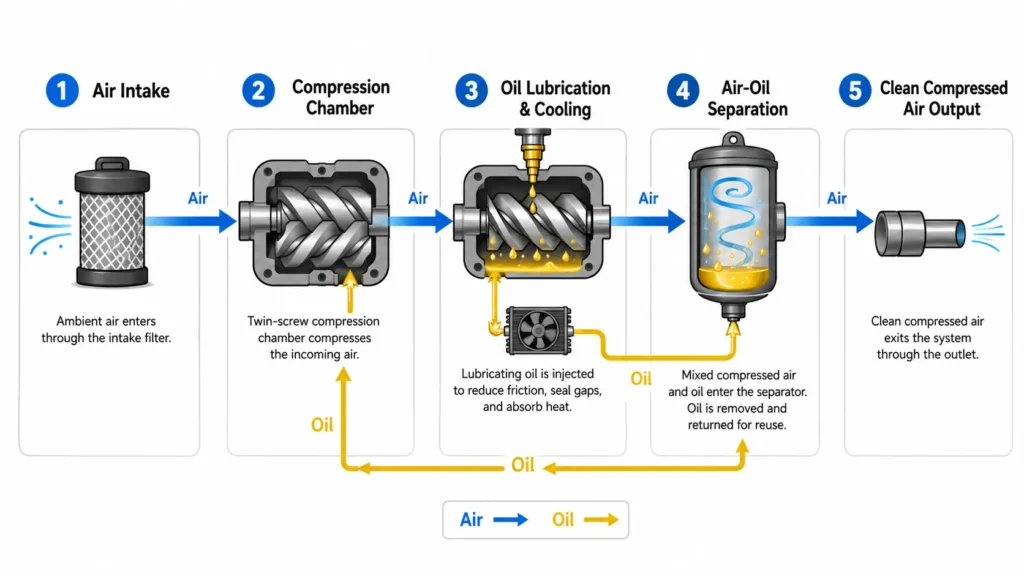
Prinsip kerja dasar kompresor berpelumas oli tidak sulit untuk dipahami. Udara masuk ke kompresor melalui katup masuk, melewati mekanisme kompresi, dan dikurangi volumenya untuk meningkatkan tekanannya. Selama tahap kompresi ini, oli dimasukkan atau disirkulasikan untuk mendukung proses mekanis.
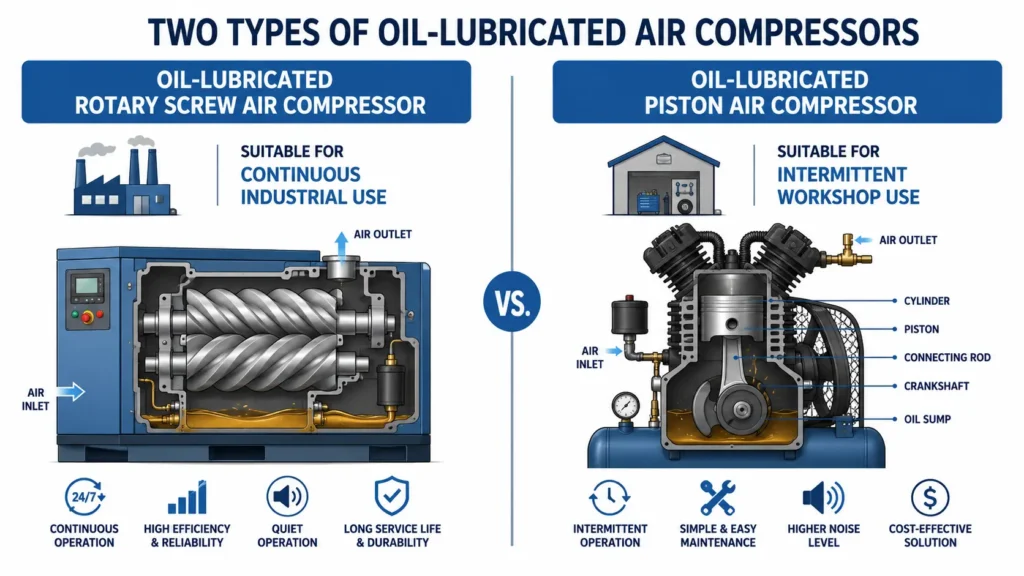
Dalam kompresor sekrup putar, oli biasanya disuntikkan ke dalam ruang kompresi. Oli melumasi rotor, menyerap panas, dan membantu menutup celah kecil di antara elemen yang berputar. Pada kompresor piston, oli biasanya melumasi poros engkol, cincin piston, dinding silinder, dan bagian bergerak lainnya. Jalur oli spesifik tergantung pada desain peralatan.
Setelah kompresi, campuran udara-minyak harus dipisahkan. Udara terkompresi melewati pemisah oli, di mana sebagian besar oli dibuang dan dikembalikan ke sistem kompresor. Filter tambahan kemudian dapat mengurangi kabut oli yang tersisa, partikel, dan kelembapan sebelum udara mencapai alat, mesin, atau tangki penyimpanan.

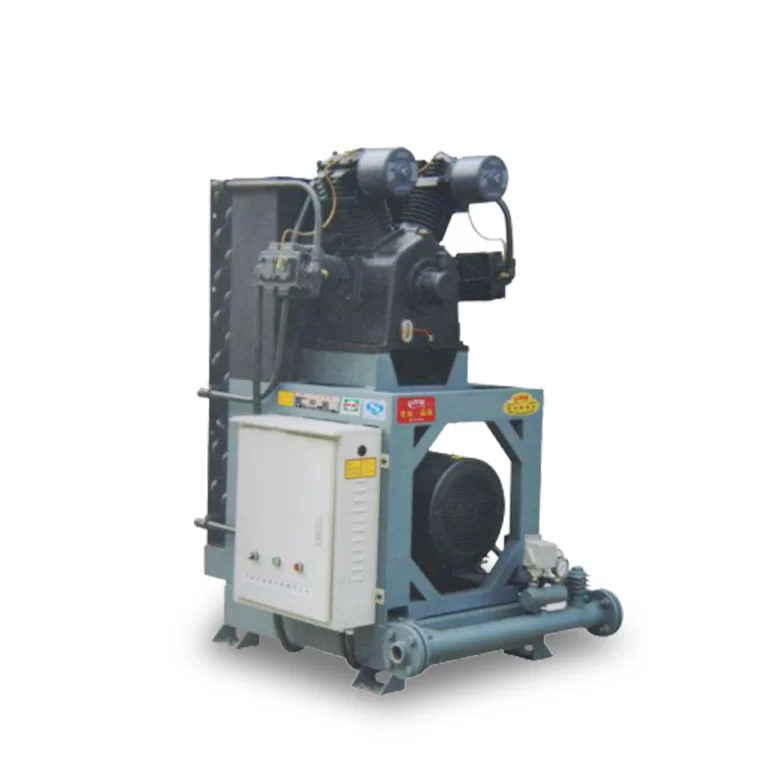
Sebuah Kompresor udara piston berpelumas oli menggunakan piston yang digerakkan oleh poros engkol untuk memampatkan udara di dalam silinder. Saat piston bergerak ke bawah, udara masuk ke dalam silinder. Saat bergerak ke atas, udara dikompresi dan dibuang ke dalam tangki atau saluran udara.
Kompresor piston banyak digunakan di bengkel yang lebih kecil, garasi, bengkel, dan aplikasi tugas berselang. Kompresor ini sering kali lebih mudah dipahami secara mekanis, dan banyak model memiliki biaya pembelian awal yang lebih rendah daripada sistem sekrup putar yang besar.
Namun, kompresor piston umumnya lebih baik untuk aplikasi di mana kebutuhan udara tidak terus menerus. Kompresor ini dapat digunakan untuk inflasi ban, alat tumbukan, pekerjaan penyemprotan kecil, pembersihan, dan tugas pemeliharaan. Untuk pengguna yang membutuhkan udara bertekanan hanya pada waktu-waktu tertentu dalam sehari, kompresor piston dapat menjadi solusi yang masuk akal.
Bagi sebagian besar pembeli, kuncinya adalah mencocokkan kompresor dengan persyaratan kualitas udara yang sebenarnya. Pembelian yang berlebihan dapat meningkatkan biaya, sementara meremehkan kebutuhan kemurnian udara dapat menimbulkan masalah kualitas produk atau peralatan.
Keuntungan Kompresor Udara Berpelumas Oli
Kompresor udara berpelumas oli tetap populer karena menawarkan beberapa keuntungan praktis. Kekuatannya sangat jelas di lingkungan di mana peralatan harus berjalan dengan andal di bawah beban kerja biasa atau berat.
Dalam penggunaan praktis, keuntungan utama biasanya meliputi:
- Perlindungan yang lebih baik untuk komponen yang bergerak di bawah beban kerja biasa
- Kontrol panas yang lebih baik selama kompresi
- Performa penyegelan yang baik, terutama pada desain sekrup putar
- Biaya di muka yang lebih rendah untuk banyak aplikasi industri umum
- Ketersediaan suku cadang, oli, dan dukungan perawatan yang luas
Keterbatasan dan Pertimbangan
Meskipun kompresor berpelumas oli berguna, namun kompresor ini bukanlah pilihan yang tepat untuk setiap situasi.
Sebelum memilih kompresor berpelumas oli, pengguna harus mempertimbangkan:
- Apakah aplikasi dapat mentoleransi udara terkompresi yang disaring
- Seberapa sering kompresor akan bekerja setiap hari
- Apakah filter atau pengering tambahan diperlukan
- Biaya oli, separator, dan servis rutin
- Apakah lingkungan kerja panas, berdebu, atau berventilasi buruk
Aplikasi Umum Kompresor Udara Berpelumas Oli
Kompresor berpelumas oli digunakan di berbagai industri karena banyak aplikasi udara bertekanan yang membutuhkan keandalan lebih dari sekadar kemurnian udara yang sangat tinggi. Fleksibilitasnya adalah salah satu alasan mengapa kompresor ini tetap umum digunakan dalam operasi tetap dan bergerak.
Manufaktur Industri
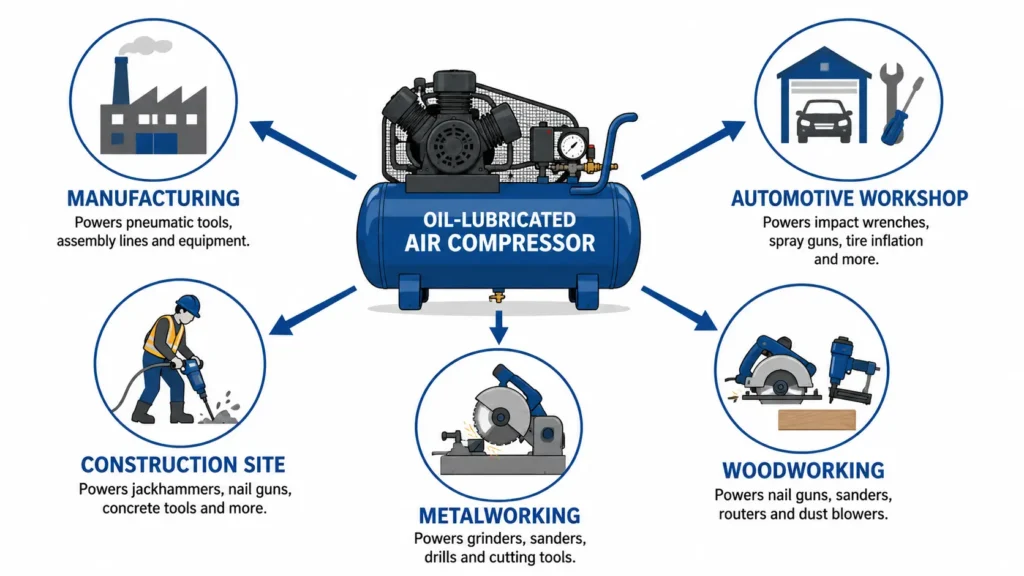
Fasilitas manufaktur sering kali menggunakan kompresor yang dilumasi oli untuk menyalakan alat pneumatik, aktuator, konveyor, klem, mesin pengemasan, dan peralatan produksi lainnya. Kompresor sekrup putar sangat umum digunakan di mana permintaan udara stabil sepanjang hari.
Dalam lingkungan seperti ini, tekanan yang stabil dan aliran udara yang konsisten sangatlah penting. Sistem sekrup putar berpelumas oli dengan ukuran yang tepat dapat mendukung beberapa mesin sekaligus sekaligus mempertahankan efisiensi produksi.
Bengkel Otomotif dan Perbaikan
Bengkel otomotif menggunakan udara bertekanan untuk inflasi ban, kunci pas, alat pembersih, alat pengamplasan, lift, dan terkadang pengecatan semprot. Kompresor piston yang dilumasi oli sering terlihat di bengkel-bengkel kecil karena praktis untuk penggunaan yang terputus-putus.
Untuk pengecatan, penyaringan tambahan dan kontrol kelembapan sangat penting. Oli atau air di saluran udara dapat memengaruhi hasil akhir permukaan, sehingga kompresor harus dipasangkan dengan filter, pengering, dan regulator yang sesuai.
Tempat Kerja Konstruksi dan Luar Ruangan
Lokasi konstruksi sering kali membutuhkan udara bertekanan untuk mengebor, memecahkan, meledakkan pasir, membersihkan, dan mengoperasikan alat pneumatik. Di lingkungan ini, mobilitas dapat menjadi hal yang penting seperti halnya tekanan atau laju aliran. A Kompresor Udara Portabel dapat berguna jika catu daya terbatas, area kerja sering berubah, atau peralatan harus dipindahkan di antara lokasi kerja.
Kompresor portabel bertenaga diesel sangat umum digunakan dalam konstruksi jalan, dukungan pertambangan, perbaikan infrastruktur, dan pekerjaan luar ruangan jarak jauh. Kompresor ini dirancang untuk menyediakan udara bertekanan di mana kompresor listrik tetap tidak praktis.
Bengkel Pengerjaan Logam, Pengerjaan Kayu, dan Bengkel Umum
Dalam pengerjaan logam dan pertukangan kayu, kompresor yang dilumasi oli dapat mendukung alat pemotong, alat penggiling, sistem penjepit, senjata pembersih, dan peralatan finishing. Bengkel umum juga menggunakannya untuk pemeliharaan harian dan udara utilitas.
Bagi para pengguna ini, daya tariknya sederhana: peralatan ini sudah dikenal, tahan lama, dan mampu menangani berbagai tugas udara bertekanan biasa. Selama persyaratan kualitas udara dipahami, kompresor berpelumas oli dapat menjadi bagian yang dapat diandalkan di bengkel.
Kesimpulan
Kompresor udara berpelumas oli adalah sistem udara bertekanan yang menggunakan oli untuk melumasi, mendinginkan, menyegel, dan melindungi komponen internal selama pengoperasian. Kompresor ini tersedia dalam beberapa bentuk, dengan sekrup putar dan kompresor piston menjadi dua jenis yang paling umum.
Model sekrup putar umumnya lebih cocok untuk operasi industri yang berkelanjutan, sementara kompresor piston sering digunakan untuk pekerjaan intermiten di garasi, bengkel, dan fasilitas yang lebih kecil. Dibandingkan dengan kompresor tanpa oli, sistem yang dilumasi oli sering kali menawarkan keseimbangan yang kuat antara daya tahan, kinerja, dan biaya, tetapi membutuhkan manajemen oli, penyaringan, dan perawatan yang tepat.
Pilihan terbaik tergantung pada lingkungan kerja, kebutuhan udara, siklus kerja, dan persyaratan kemurnian udara. Untuk banyak aplikasi manufaktur, otomotif, konstruksi, dan bengkel, kompresor berpelumas oli tetap menjadi solusi yang praktis dan andal. Untuk proses yang sangat sensitif di mana kontaminasi oli tidak dapat diterima, teknologi bebas oli mungkin lebih tepat.