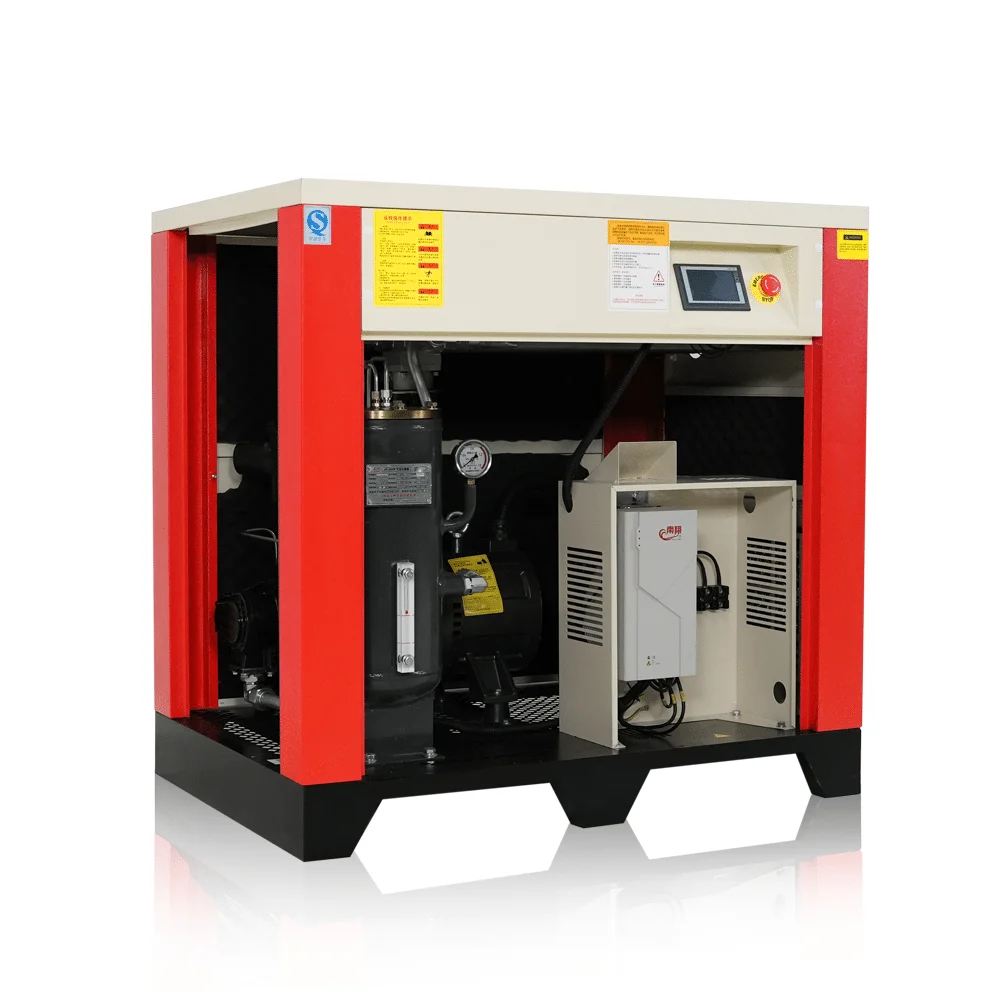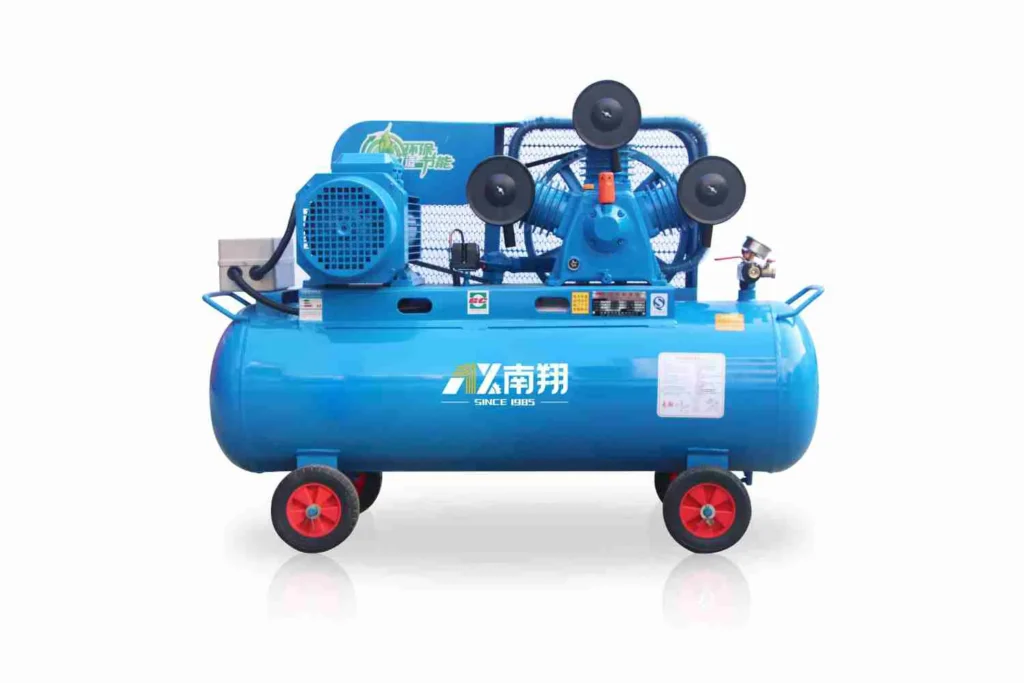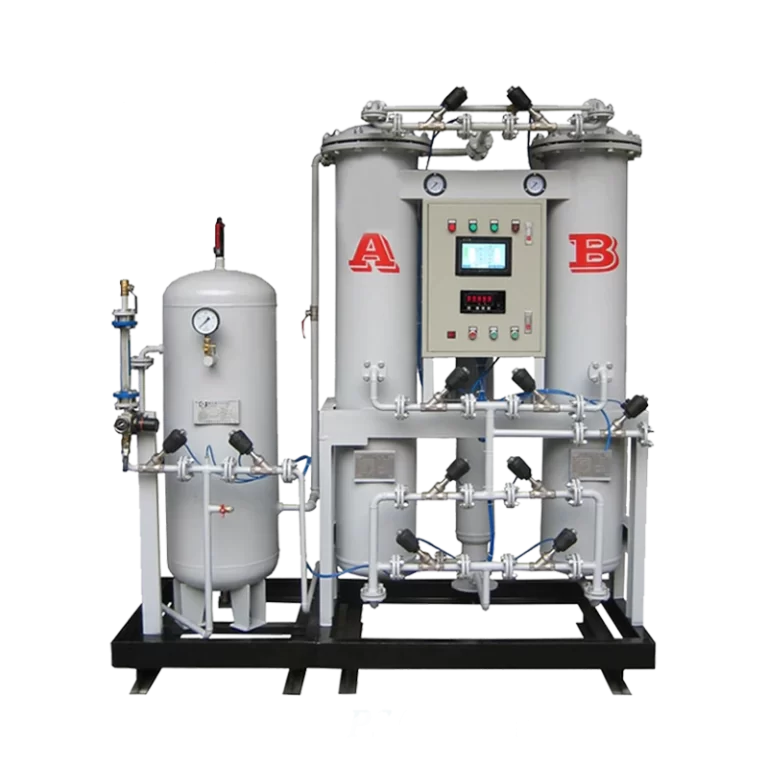
What is a two-stage air compressor?
Two-stage air compressor is a device used to compress air to a higher pressure. It includes two compression levels, each with its compressor. In the first stage, the air is compressed to an intermediate pressure and cooled through an intercooler. The cooled air is then sent to the second stage for higher compression, ultimately producing the required high-pressure air.
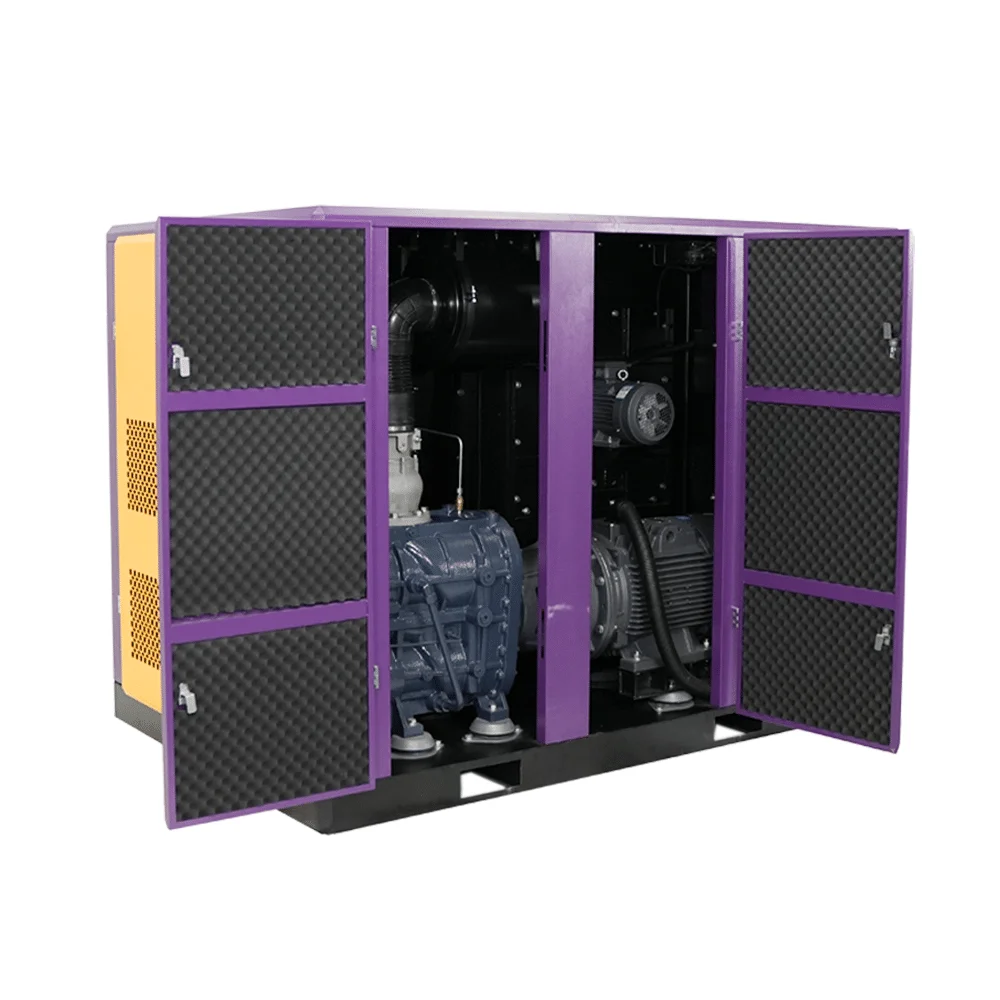
How is it different from a single-stage air compressor?
The main difference lies in the number of stages and working principle of its compression process:
Number of compression stages: A single-stage air compressor has only one compression stage, that is, the air is compressed directly from the initial state to the final output pressure. A two-stage air compressor consists of two consecutive compression stages. The air is first compressed to an intermediate pressure in the first stage, and then further compressed to the final output pressure in the second stage.
Output Pressure: Since two-stage air compressors have two compression stages, they can provide higher output pressures, while single-stage compressors are generally suitable for medium or lower output pressure requirements.
Efficiency: Two-stage air compressors are generally more efficient than single-stage air compressors. Since compression in each of the two stages only requires compression to a lower intermediate pressure, the compression ratio in each stage is smaller, which reduces heat generation and increases overall system efficiency.
Is a two-stage air compressor worth it?
Determining whether a two-stage air compressor is needed typically involves the following considerations:
Required Output Pressure: If your application requires a higher output pressure than a single-stage air compressor is capable of, you may need to consider a two-stage air compressor.
Air Flow Requirements: Two-stage air compressors are generally capable of delivering higher air flows, so if your application requires large volumes of compressed air and needs to deliver it at high pressures, you may need to consider a two-stage compressor.
Energy efficiency needs: Two-stage air compressors are generally more efficient at high pressures because their compression process is spread across two stages, reducing the compression ratio of a single stage and thus reducing energy loss and heat generation. If you have high requirements for energy efficiency, you may need to consider a two-stage compressor.
Application Requirements: Some specific applications may require higher output pressure or greater airflow, depending on the specific industry and process requirements.
Budget constraints: Two-stage air compressors are generally more expensive than single-stage air compressors.