
In many industrial environments, air compressors tend to run quietly in the background—until something starts to feel “off.” A slight drop in pressure, a bit more noise than usual, maybe a temperature that seems higher than normal. These small changes are often easy to overlook, but over time, they can turn into costly downtime or even full system failure.
Understanding when your air compressor needs attention—and what kind of maintenance is actually required—can make a noticeable difference in both performance and operating cost.
Why Air Compressor Maintenance Matters More Than You Think
It’s sometimes assumed that as long as a compressor is still running, everything is fine. In reality, performance can degrade gradually without obvious warning.
A poorly maintained air compressor may lead to:
- Reduced efficiency and higher energy consumption
- Inconsistent air supply affecting production quality
- Unexpected breakdowns and unplanned downtime
- Increased long-term repair or replacement costs
According to guidance from organizations like U.S. Department of Energy, compressed air systems can lose a significant portion of their efficiency due to leaks and poor maintenance—sometimes more than expected.
That’s why regular inspection and timely servicing are not just routine tasks, but part of a broader cost-control strategy.
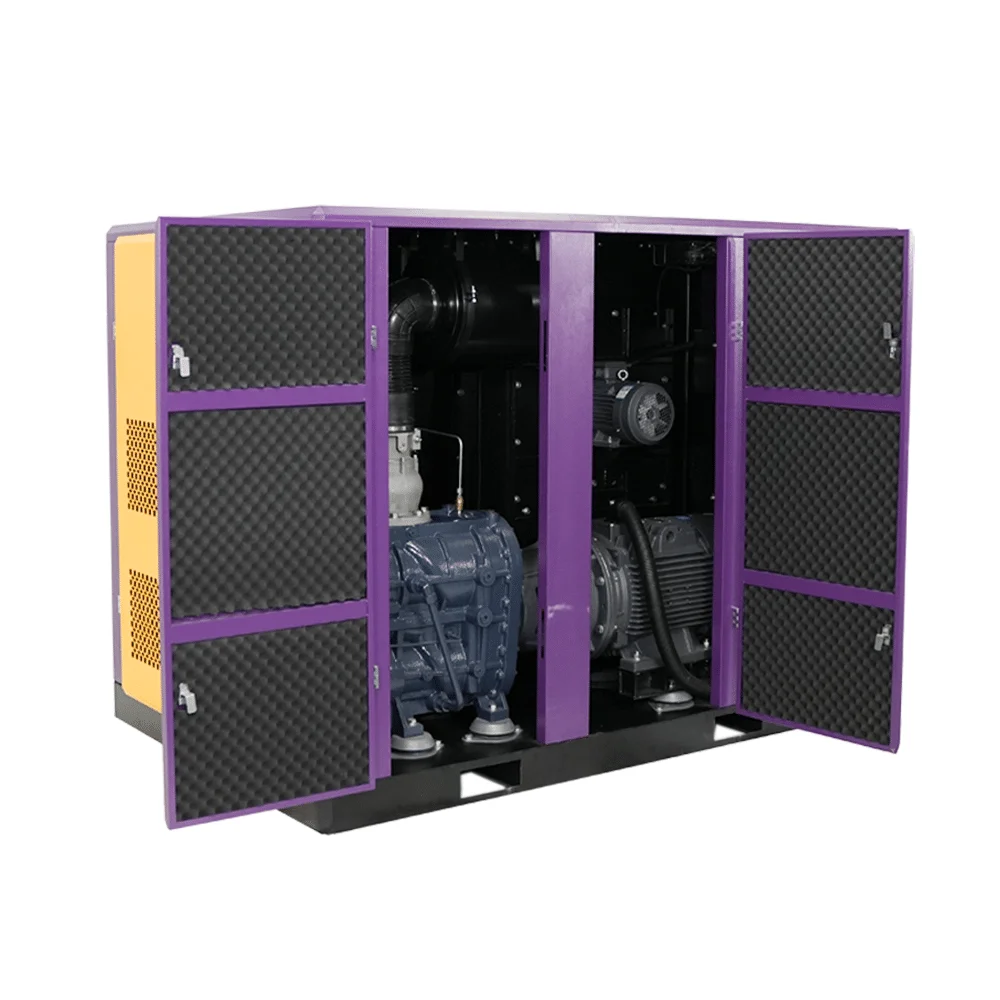
Common Signs Your Air Compressor Needs Attention
Most oil-lubricated air compressors don’t fail suddenly. Instead, they give subtle signals over time. Some are obvious, others less so.
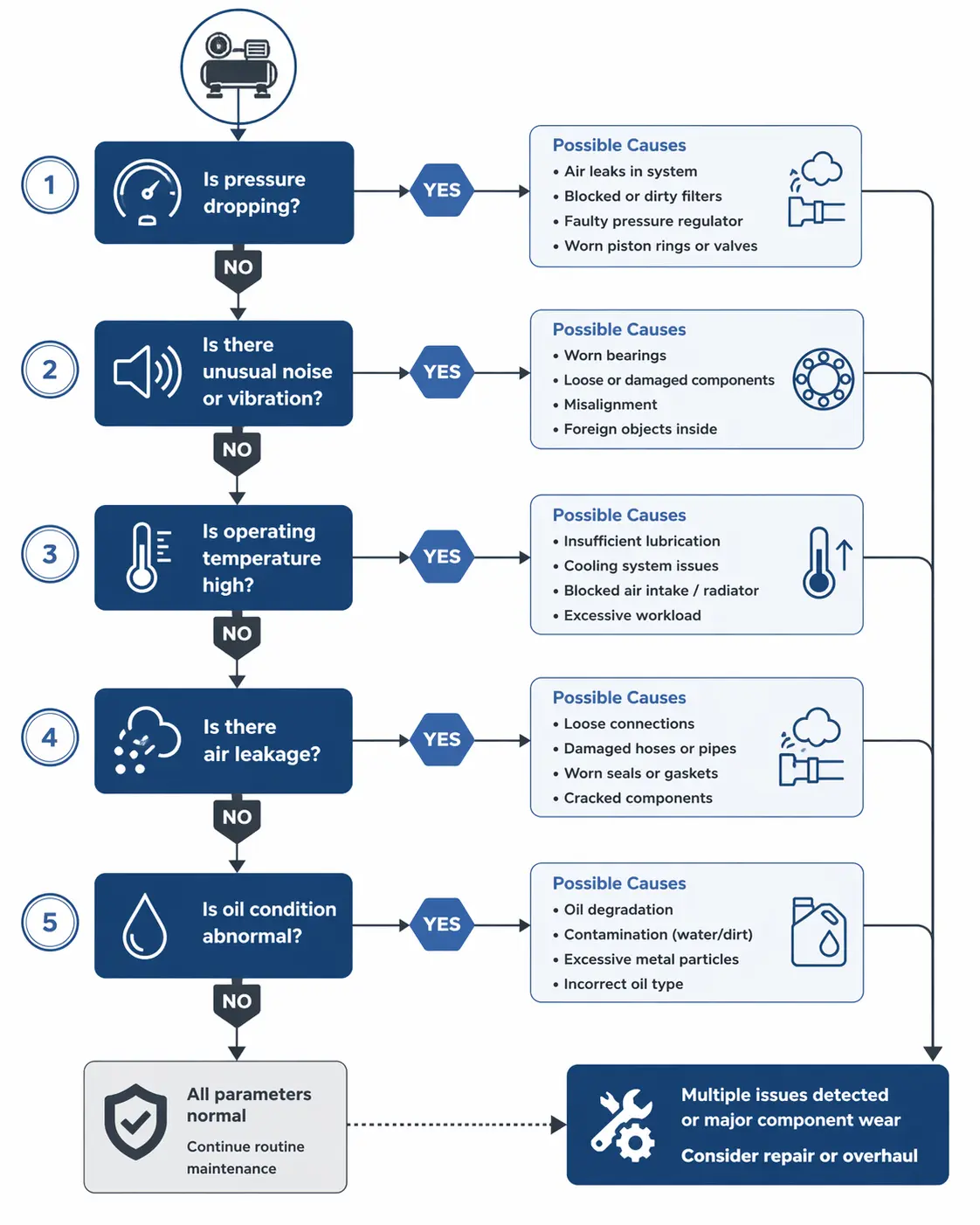
Decreased Pressure or Airflow
If the system is no longer delivering the expected output, it could point to internal wear, leaks, or blocked components. Comparing actual performance with rated values often reveals the issue.
Unusual Noise or Vibration
A change in sound—grinding, knocking, or excessive vibration—usually suggests mechanical problems such as worn bearings or loose components.
Rising Operating Temperature
Higher-than-normal temperatures can indicate poor cooling, lubrication issues, or internal friction. Left unchecked, this can accelerate wear.
Air Leakage
Leaks may seem minor, but even small ones can significantly impact system efficiency. In larger systems, leakage losses can add up quickly.
Oil Contamination or Degradation
Regular oil checks sometimes reveal metal particles or discoloration, both of which suggest internal wear or breakdown of lubrication quality.
What Causes These Problems? A Quick Diagnosis Guide
While the symptoms are relatively easy to observe, the underlying causes are often interconnected.
- Component wear and tear: Over time, seals, valves, and moving parts naturally degrade
- Poor lubrication: Low-quality or degraded oil increases friction and heat
- Clogged filters: Restricted airflow forces the system to work harder
- Seal failure: Leads to both air leakage and pressure instability
- Improper operating conditions: Running outside recommended pressure or temperature ranges
In many cases, these issues don’t occur in isolation. A clogged filter, for example, can increase temperature, which then affects lubrication and accelerates wear elsewhere.
Routine Maintenance vs Repair vs Overhaul: What’s the Difference?
These terms are often used interchangeably, but they refer to very different levels of intervention.
Type of Service | Description | Typical Scenario |
Routine Maintenance | Regular checks, cleaning, oil changes | Preventive care |
Repair | Fixing specific faults or replacing parts | Isolated issues |
Overhaul | Comprehensive disassembly and rebuilding | Major wear or long-term usage |
Routine maintenance is about prevention. Repairs address specific failures. An overhaul, on the other hand, is usually considered when the compressor has been in service for a long time or shows multiple signs of degradation.
Best Practices to Extend Your Air Compressor Lifespan
A consistent maintenance approach often matters more than any single repair action.
Some commonly recommended practices include:
- Establishing a regular inspection schedule
Checking pressure, temperature, and vibration levels helps detect issues early - Maintaining proper lubrication
Using high-quality oil and replacing it on time reduces internal wear - Keeping the system clean
Dirt and oil buildup can affect both cooling and airflow - Monitoring system performance
Small deviations in output or efficiency often signal early problems - Using reliable spare parts
Lower-quality components may reduce short-term costs but increase long-term risk
Standards referenced by groups like Compressed Air and Gas Institute often emphasize preventive maintenance as the most effective way to reduce lifecycle costs.
Repair or Replace? When Overhauling Is (and Isn’t) Worth It
At some point, many operators face a practical question: is it better to overhaul the compressor or replace it?
There isn’t always a single answer, but a few factors usually guide the decision:
Equipment Age
Older compressors may continue to function after overhaul, but their efficiency may not match newer models.
Repair Cost vs Replacement Cost
If overhaul costs approach a large percentage of a new unit, replacement often becomes more practical.
Downtime Impact
In production environments, the cost of downtime may outweigh the cost of new equipment.
Energy Efficiency
Newer compressors are generally more energy-efficient. Over time, energy savings alone can justify replacement.
In some cases, an overhaul can extend the life of the equipment significantly. In others, it may only delay an inevitable upgrade.
Conclusion: A Smarter Approach to Compressor Maintenance
Air compressor maintenance is not just about fixing problems—it’s about preventing them from becoming disruptive in the first place.
A combination of regular inspection, timely repair, and informed decision-making around overhaul or replacement tends to deliver the best results. While every system operates under different conditions, the underlying principle remains the same: small issues addressed early are far less costly than major failures later on.
FAQ
How often should an air compressor be serviced?
Service intervals depend on usage intensity and operating conditions. In general, basic inspections may be done weekly or monthly, while more detailed servicing (such as oil changes or filter replacement) follows manufacturer guidelines. Heavy industrial use usually requires more frequent attention.
Can poor maintenance increase energy costs?
Yes, and sometimes quite significantly. Air leaks, clogged filters, and worn components can all reduce efficiency, forcing the compressor to consume more energy to deliver the same output. Over time, this can become one of the largest hidden costs in a compressed air system.
What are early warning signs before a major compressor failure?
Subtle changes often appear first—slightly higher temperatures, minor pressure drops, or unusual noise patterns. These may not seem urgent, but they typically indicate underlying issues that can escalate if ignored.