Compressed air is one of those utilities that tends to disappear into the background until something goes wrong. In factories, workshops, and processing plants, the right system can support productivity quietly for years. The different types of air compressors are not interchangeable, though. Each one fits a different duty cycle, air demand level, and maintenance expectation.
Why the Right Compressor Type Matters
Industrial buyers usually notice the same pattern: a compressor that looks adequate on paper can underperform once production ramps up. That is why selection is rarely about horsepower alone. It is more about matching airflow to actual use.
The U.S. Department of Energy notes that compressed air efficiency should be treated as a system issue, since energy costs can become significant over time. That point matters. A machine that seems affordable at purchase may become costly if it runs inefficiently every day.
The Main Types of Air Compressors
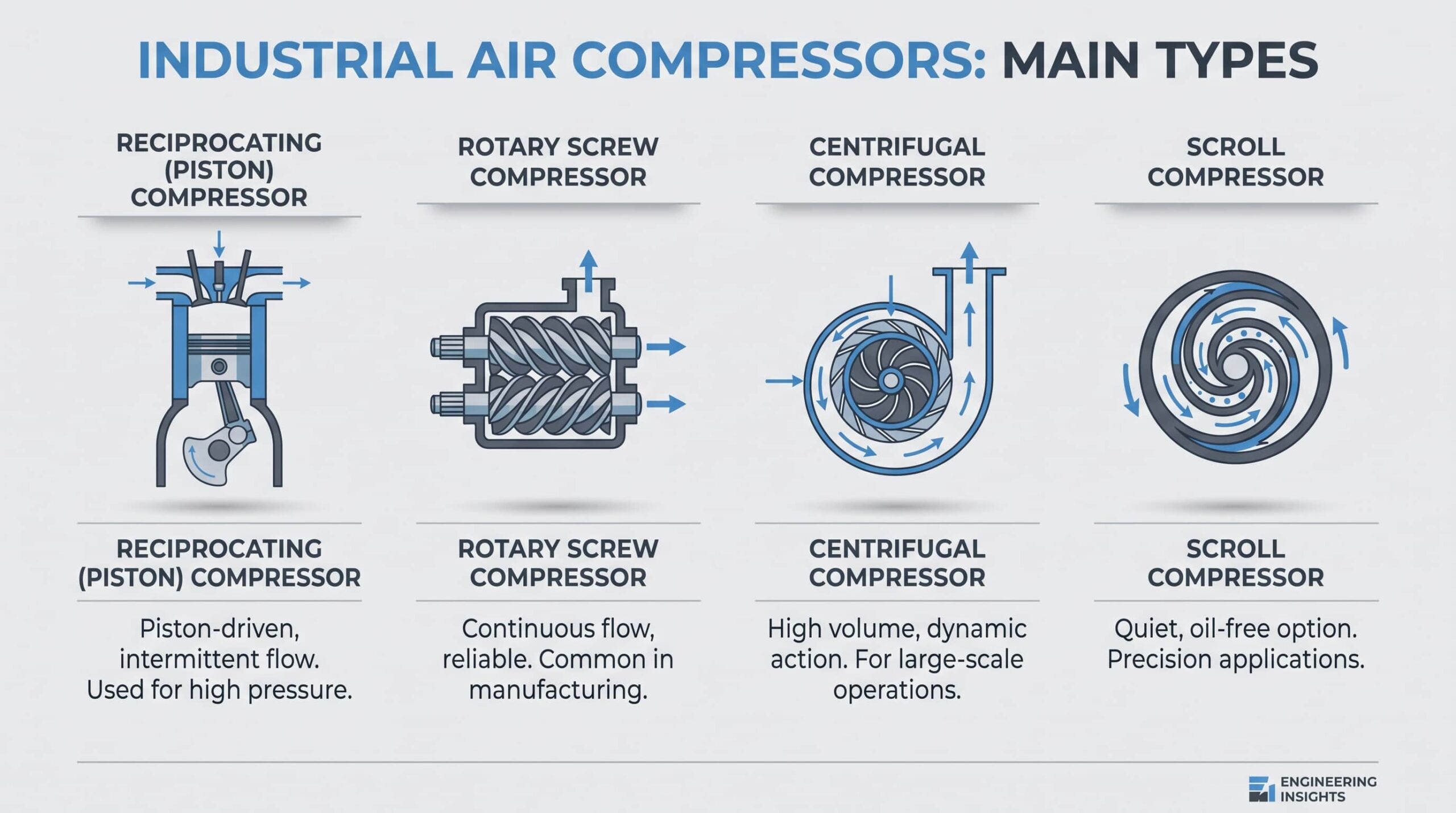
Reciprocating (Piston) Compressors
These are among the most familiar types of air compressors. They use pistons to compress air in a cylinder and are usually better for intermittent use or smaller operations.
Best for:
– Short run times
– Lower air volume needs
– Maintenance shops
– Smaller industrial tasks
They are relatively simple and often less expensive upfront, but they are not ideal for nonstop production.
Rotary Screw Compressors
Rotary screw compressors are widely used in industrial settings because they handle continuous demand well. Their design allows smoother operation, steady output, and generally better performance in long-duty applications.
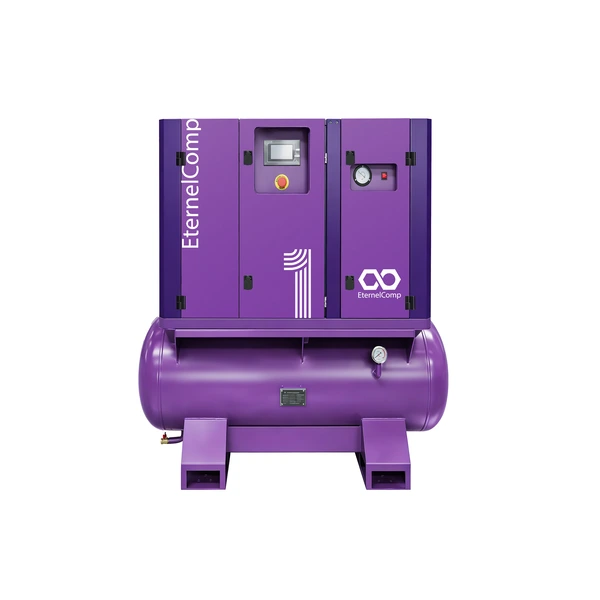
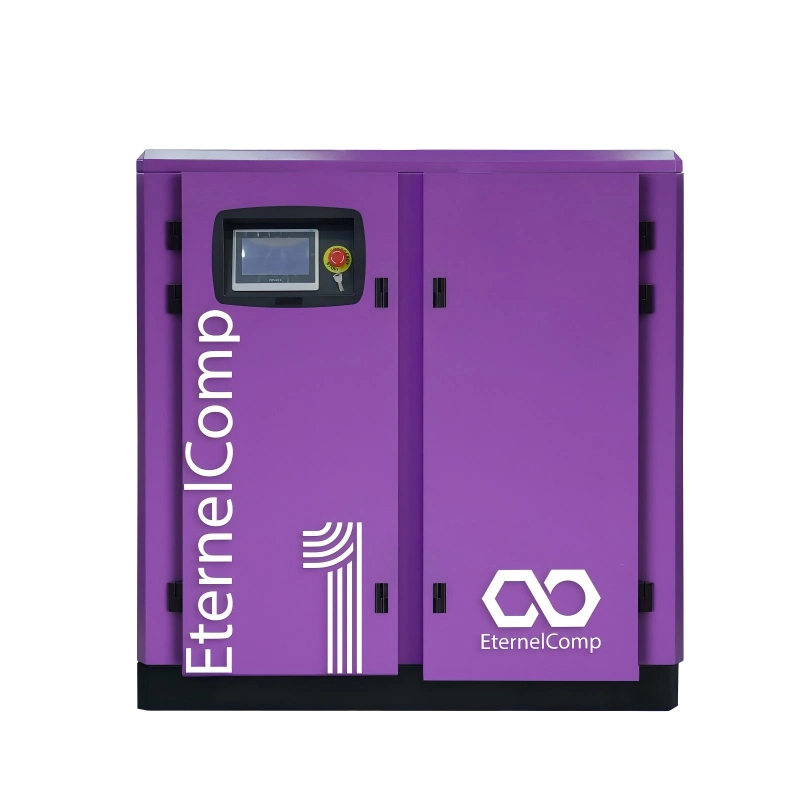
An Integrated Screw Air Compressor is often appealing when space is tight and production still requires dependable airflow.
Centrifugal Compressors
Centrifugal systems are built for large facilities with very high air demand. They are often chosen where compressed air is needed at scale and the system runs for extended periods.
These machines can be highly efficient in the right environment, but they are usually not practical for smaller plants. In broad industry references from Atlas Copco and Kaeser, centrifugal units are consistently positioned as large-capacity solutions.
Scroll and Specialty Compressors
Scroll compressors are less common in heavy industry, but they can serve niche applications where lower noise and clean delivery are valued. They are not the dominant choice for manufacturing, yet they fill an important role in certain controlled environments.
Oil-Lubricated vs Oil-Free Designs
Lubrication is another major decision point. In many plants, Oil-Lubricated Air Compressors remain popular because they are durable, widely available, and often well suited to demanding work.
Oil-lubricated makes sense when:
– the facility values rugged operation,
– air purity is not the top concern,
– and long service life matters more than ultra-clean air.
Oil-free makes more sense when:
– product contamination must be avoided,
– regulatory requirements are strict,
– or the process is highly sensitive.
It is worth noting that oil-free does not mean maintenance-free. It simply means the compressed air path is designed to avoid oil contact.
Quick Comparison Table
| Compressor Type | Typical Use | Strength | Limitation |
|---|---|---|---|
| Reciprocating | Intermittent tasks | Low upfront cost | Not ideal for constant duty |
| Rotary Screw | Continuous industrial use | Stable, efficient output | Higher initial cost |
| Centrifugal | Large-scale facilities | Very high airflow capacity | Best only for big systems |
| Scroll | Specialty applications | Quiet operation | Limited scale |
How to Choose the Best Option
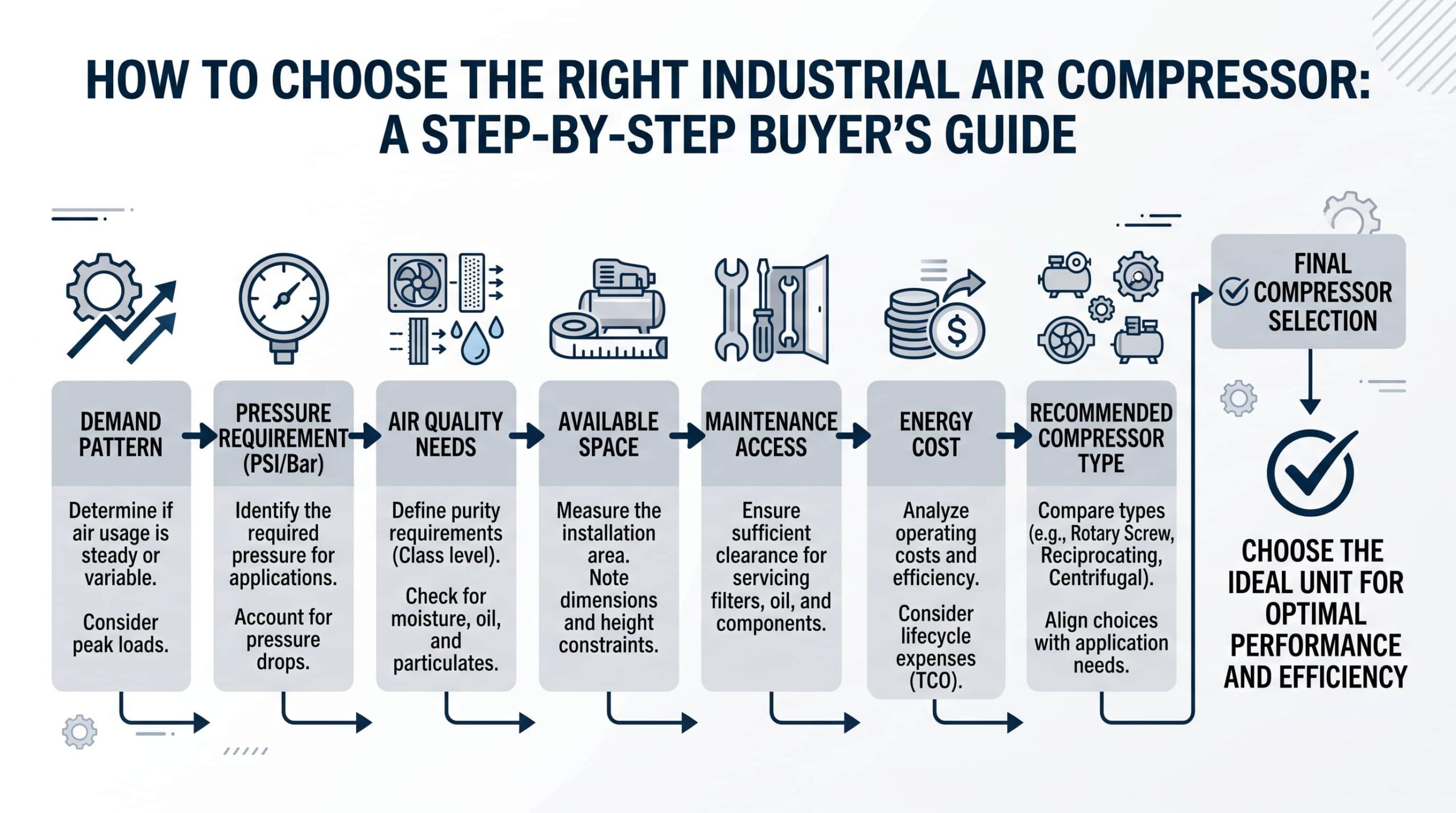
A practical selection process usually starts with a few questions:
1. How steady is the air demand?
2. What pressure level is required?
3. Is product purity a concern?
4. How much installation space is available?
5. What maintenance access is realistic?
6. How important is total energy cost over time?
Facilities with continuous load often lean toward compact, integrated systems that simplify installation and control. That is one reason an Integrated Screw Air Compressor can be such a sensible choice in modern plants.
Common Mistakes Buyers Make
– Choosing based on purchase price alone
– Oversizing “just in case”
– Ignoring air treatment and filtration
– Forgetting future production growth
– Underestimating energy use over the compressor’s life
Conclusion
The main types of air compressors each serve a different industrial need. Reciprocating compressors are best for intermittent use, rotary screw models fit continuous operation, and centrifugal systems are built for very large airflow demands. Oil-lubricated and oil-free designs add another layer of choice depending on durability and purity requirements.
In practice, the best decision usually comes from matching the compressor to the real production pattern, not the biggest spec sheet.
FAQ
Which compressor type is better for fluctuating production schedules?
Rotary screw models are often more flexible for changing demand, while piston systems can work well only if the load stays limited and occasional.
Do larger compressors always improve efficiency?
Not necessarily. A larger unit can waste energy if it spends too much time idling or running below capacity.
What should be checked besides the compressor itself?
Air dryers, filters, piping layout, and storage tanks all influence system performance, sometimes more than expected.