
È una delle domande più frequenti nel settore dell'aria compressa e, onestamente, non esiste una risposta univoca. Il dibattito tra compressori lubrificati a olio e compressori oil-free non riguarda la tecnologia migliore. Si tratta di scegliere quella più adatta all'applicazione, al budget e all'ambiente operativo a lungo termine. Se l'abbinamento è corretto, entrambi i tipi di compressori possono essere affidabili per anni. Se si sbaglia, le conseguenze vanno da inutili costi di manutenzione a linee di prodotti contaminati.
Ecco uno sguardo lucido su entrambi.
Comprendere le due tecnologie
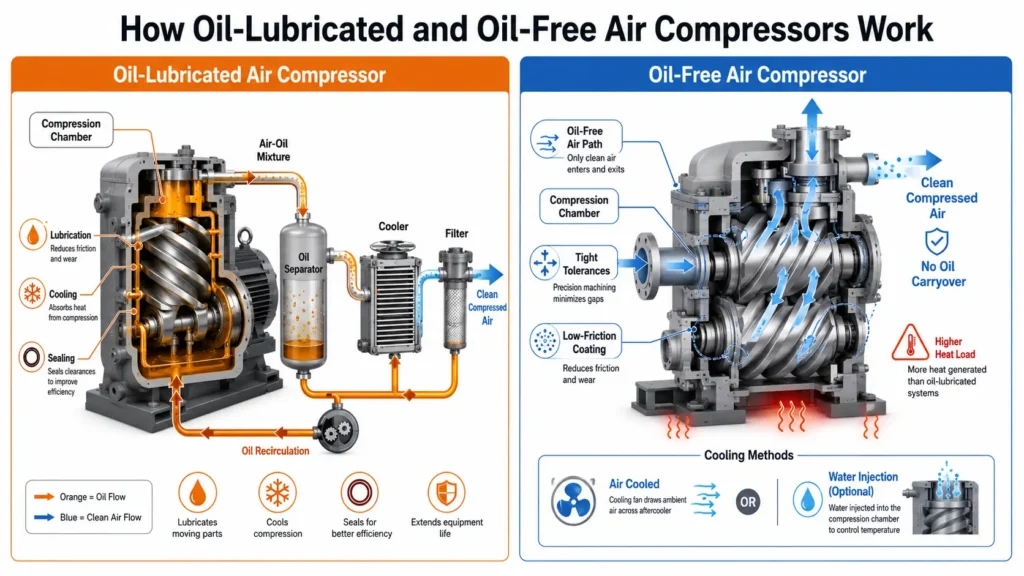
Come funzionano i compressori d'aria lubrificati a olio
In un compressore lubrificato a olio, l'olio circola continuamente nella camera di compressione. Svolge più funzioni contemporaneamente: sigilla le distanze interne, raffredda l'aria compressa e lubrifica le parti in movimento. Dopo la compressione, l'olio viene separato dall'aria, raffreddato, filtrato e rimesso in circolo.
Si tratta di una progettazione consolidata, che consente a queste macchine di funzionare in modo silenzioso e di gestire carichi pesanti e prolungati senza surriscaldarsi. Per capire la meccanica in modo più dettagliato, Che cos'è un compressore d'aria lubrificato a olio? offre una solida descrizione del funzionamento interno del sistema.
Come funzionano i compressori senza olio
I compressori oil-free adottano un approccio diverso. La camera di compressione è progettata con tolleranze più strette e rivestimenti speciali (spesso PTFE o altri materiali a basso attrito) in modo che l'olio lubrificante non entri mai nel percorso dell'aria. Alcuni progetti utilizzano invece l'iniezione di acqua. Il risultato è un'aria compressa che non comporta alcun rischio di trascinamento dell'olio, un aspetto molto importante in alcuni settori.
Il compromesso è che, senza l'olio che assorbe il calore e ammortizza i contatti meccanici, queste macchine tendono a surriscaldarsi e a usurarsi più rapidamente in presenza di carichi pesanti e continui.
Per ulteriori informazioni, puoi consultare Che cos'è un compressore d'aria senza olio?
Un'occhiata laterale rende le differenze più facili da digerire:
| Fattore | Lubrificato a olio | Senza olio |
|---|---|---|
| Purezza dell'aria | Richiede una filtrazione a valle | Intrinsecamente priva di olio; idonea alla Classe 0 |
| Vita utile tipica | 50.000+ ore (vite rotante) | 10.000-20.000 ore prima di una revisione completa |
| Complessità della manutenzione | Cambio regolare di olio, filtri e separatori | Nessun cambio dell'olio, ma sostituzione più frequente dei componenti |
| Livello di rumore | Generalmente più silenzioso | Tende a funzionare più rumorosamente |
| Efficienza energetica | Maggiore efficienza in servizio continuo/ad alta pressione | Può essere meno efficiente in caso di carico prolungato |
| Costo iniziale | Più basso | In genere 30-50% in più per una capacità equivalente |
| La migliore vestibilità | Industria generale, manifatturiera, automobilistica | Alimentare, farmaceutico, elettronico, medico |
La tabella racconta la maggior parte della storia, ma alcune righe meritano di essere contestualizzate: in particolare i costi e la manutenzione, che sembrano semplici sulla carta ma si complicano nella pratica.
Dove brillano i compressori d'aria lubrificati ad olio
Per la maggior parte delle applicazioni industriali generali, Compressori d'aria lubrificati a olio sono sempre la scelta principale, e per una buona ragione. Sono costruiti per cicli di lavoro continui, gestiscono bene le fluttuazioni di pressione e l'olio stesso agisce come un tampone che allunga notevolmente la vita dei componenti.
I settori che tipicamente si affidano a compressori a bagno d'olio o a iniezione d'olio sono i seguenti:
- Officine automobilistiche e linee di montaggio
- Negozi di fabbricazione e lavorazione dei metalli
- Operazioni di costruzione e di attrezzature pesanti
- Linee di produzione e confezionamento generali
- Lavorazione del legno e produzione di mobili
Anche il prezzo d'acquisto più basso è un vantaggio reale, soprattutto per le piccole aziende in cui la spesa in conto capitale è strettamente gestita. E poiché la tecnologia è così diffusa, i ricambi e i tecnici dell'assistenza sono facili da trovare praticamente ovunque.
Una cosa da notare: “lubrificato a olio” non significa automaticamente “aria sporca”. Con un'adeguata filtrazione a valle - filtri a coalescenza, filtri a carbone attivo - la qualità dell'aria fornita può essere molto elevata. È solo necessario che la filtrazione sia mantenuta in modo costante.

Dove i compressori senza olio sono più sensati
Ci sono ambienti in cui anche tracce di olio nell'aria non sono accettabili. È in questi casi che Compressore d'aria senza olio La tecnologia si guadagna il suo prezzo premium.
La certificazione ISO 8573-1 Classe 0 è il punto di riferimento in questo caso: definisce l'aria che non contiene alcun tipo di olio rilevabile, sia in forma liquida che di aerosol o di vapore. I settori che tipicamente richiedono questo standard sono:
- Produzione farmaceutica (dove la contaminazione può compromettere la sterilità)
- Produzione di alimenti e bevande (contatto diretto con il prodotto o l'imballaggio)
- Fabbricazione di elettronica e semiconduttori (anche un film d'olio microscopico può danneggiare i componenti)
- Apparecchiature mediche e dentistiche
- Birrifici e cantine
In questi contesti, il costo di un evento di contaminazione - richiami di prodotti, sanzioni normative, danni alle apparecchiature - supera di gran lunga l'investimento iniziale più elevato nella tecnologia oil-free. Non si tratta di un lusso, ma di un requisito di conformità.

Costo totale di proprietà: Uno sguardo più approfondito
I confronti tra i prezzi di listino possono essere fuorvianti. Il vero quadro finanziario emerge solo quando si considera l'intera vita operativa della macchina.
I compressori lubrificati a olio hanno costi di acquisto inferiori, ma spese di consumo continue: cambi d'olio (in genere ogni 2.000-4.000 ore), filtri dell'olio, separatori aria-olio e il costo energetico del funzionamento delle apparecchiature di filtraggio a valle. Nessuno di questi elementi è costoso singolarmente, ma si sommano nel corso di un decennio di funzionamento.
I compressori oil-free evitano i materiali di consumo legati all'olio, ma tendono ad avere costi di riparazione più elevati quando i componenti si usurano, e si usurano più rapidamente in caso di uso continuo e intenso. L'air-end (l'elemento centrale di compressione) di una macchina oil-free è più costoso da ricostruire rispetto a un'unità equivalente lubrificata a olio.
Una rapida lista di controllo del TCO prima di prendere una decisione:
- Qual è il tempo di funzionamento giornaliero previsto? (Il servizio continuo favorisce l'efficienza della lubrificazione a olio).
- Quali sono i costi energetici locali? (Le differenze di efficienza si accentuano notevolmente nel corso degli anni).
- Quanto è disponibile il supporto dei servizi locali per ogni tipo?
- Quali sono i requisiti di filtrazione a valle e quali sono i costi di manutenzione?
- Qual è il costo di un guasto alla qualità dell'aria in questa specifica applicazione?
Quest'ultima domanda spesso risolve il dibattito più velocemente di qualsiasi scheda tecnica.
Come scegliere quello giusto
Piuttosto che scegliere un solo tipo, è utile lavorare su alcune questioni pratiche:
- Che cosa tocca l'aria? Se entra in contatto con alimenti, medicinali o dispositivi elettronici sensibili, la strada più sicura è quella dell'oil-free.
- Per quante ore al giorno funzionerà? Le applicazioni con cicli di lavoro elevati privilegiano in genere l'efficienza e la durata della lubrificazione a olio.
- Qual è il budget - iniziale o a lungo termine? L'assenza di olio costa di più all'acquisto; la lubrificazione a olio costa di più per la manutenzione nel tempo.
- Esiste un'infrastruttura di filtraggio? Se un impianto dispone già di una robusta filtrazione a valle, un'unità lubrificata a olio può fornire una qualità dell'aria perfettamente accettabile a costi inferiori.
- Quali sono i requisiti normativi? Alcuni settori non hanno scelta: la conformità impone la tecnologia.
Non esiste un vincitore universale. Il compressore giusto è quello che corrisponde alle condizioni operative effettive, non quello con la scheda tecnica più impressionante.
Domande frequenti
I compressori d'aria oil-free sono migliori di quelli lubrificati a olio?
Non sempre. I compressori oil-free sono più indicati per le applicazioni in cui la purezza dell'aria è fondamentale, come le industrie alimentari, farmaceutiche, mediche ed elettroniche. I compressori lubrificati a olio sono spesso migliori per l'uso industriale generale, soprattutto quando sono importanti la durata, l'efficienza e il costo iniziale ridotto.
I compressori lubrificati a olio producono aria sporca?
No, non necessariamente. I compressori lubrificati a olio possono fornire aria compressa di alta qualità se si utilizza una corretta filtrazione a valle. Tuttavia, i filtri devono essere sottoposti a una manutenzione regolare per evitare il trasporto di olio e proteggere la qualità dell'aria.
Quando scegliere un compressore d'aria oil-free?
Si dovrebbe scegliere un compressore d'aria oil-free quando anche una piccola quantità di contaminazione da olio potrebbe danneggiare prodotti, apparecchiature o processi. Questo è un caso comune nella produzione farmaceutica, nella lavorazione di alimenti e bevande, nella produzione elettronica, nelle applicazioni mediche e nelle apparecchiature dentali.