C'è un motivo per cui il compressore d'aria senza olio è passata dall'essere una scelta di nicchia a diventare uno standard diffuso in tantissimi settori. Non si tratta solo di un unico vantaggio, ma di diversi vantaggi che si sommano e si rafforzano a vicenda nel corso della vita utile della macchina.
E sebbene il costo iniziale continui a far esitare alcuni acquirenti, negli ultimi anni il dibattito ha subito un cambiamento evidente. Gli impianti che un tempo consideravano la tecnologia oil-free un lusso ora la considerano lo standard. Vale la pena approfondire i motivi di questo cambiamento, poiché vanno ben oltre l'ovvio argomento della “aria più pulita”.
Vantaggio 1 — Rischio nullo di contaminazione da olio nel flusso d'aria
Questo è il vantaggio fondamentale e, onestamente, quello che determina la maggior parte delle decisioni di acquisto nei settori regolamentati. Un compressore oil-free non utilizza affatto olio lubrificante nella camera di compressione. L'assenza di olio nel processo significa che nessun olio può finire nell'aria compressa in uscita. Sembra semplice — e lo è — ma le implicazioni a valle sono significative.
Nella produzione di alimenti e bevande, nell'industria farmaceutica, nell'assemblaggio di componenti elettronici e negli impianti di aria medicale, anche tracce minime di vapori d'olio nel flusso d'aria possono causare seri problemi:
- Contaminazione del prodotto e scarto del lotto
- Danni agli strumenti pneumatici delicati
- Violazioni in materia di salute e sicurezza
- Audit di qualità non superati
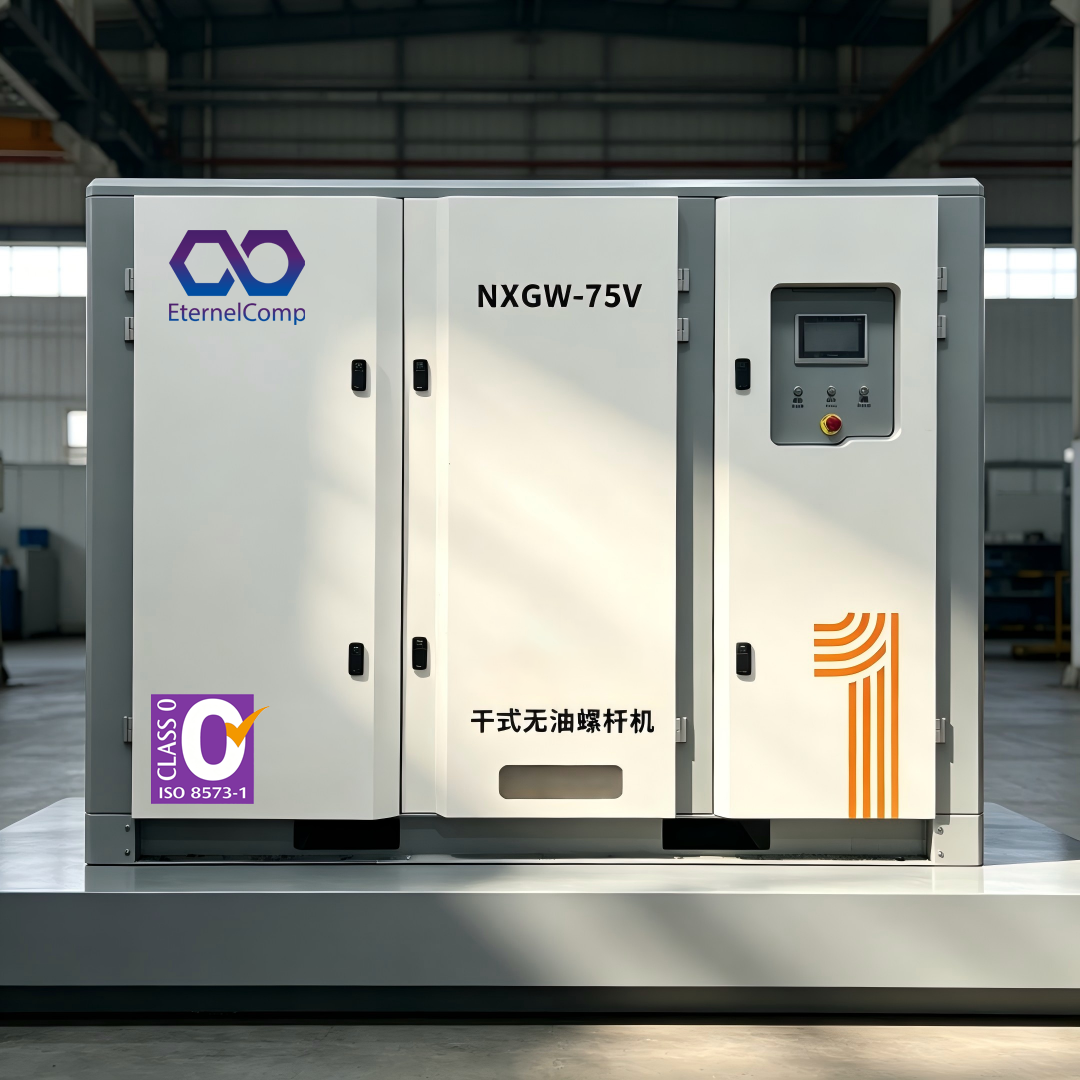
Lo standard di riferimento a cui fanno riferimento la maggior parte degli acquirenti è la norma ISO 8573-1 Classe 0, che sostanzialmente certifica che il compressore non comporta alcun rischio di contaminazione da olio. Le unità a iniezione d'olio possono ottenere un'uscita relativamente pulita con la filtrazione multistadio, ma c'è sempre un rischio residuo. I filtri si deteriorano. La manutenzione viene rimandata. Un singolo cambio d'olio saltato o un filtro coalescente saturo possono far passare l'olio a valle prima che qualcuno se ne accorga.
Con la tecnologia oil-free, quella categoria di rischio semplicemente non esiste. Per le operazioni in cui la contaminazione non è solo un inconveniente, ma comporta costi elevati — o addirittura è pericolosa — questa certezza conta più di quasi qualsiasi altra specifica riportata nella scheda tecnica.
Vantaggio 2 — Minori esigenze di manutenzione nel tempo
Uno dei vantaggi più concreti e quotidiani derivanti dall'utilizzo di impianti ad aria compressa senza olio è la notevole semplificazione del programma di manutenzione. Non c'è olio da cambiare. Non ci sono filtri dell'olio da sostituire. Non c'è alcun separatore olio-acqua da monitorare e sottoporre a manutenzione.
Sulla carta potrebbe sembrare una cosa da poco, ma nella pratica fa la differenza — soprattutto per le strutture che dispongono di squadre di manutenzione ridotte o che operano in località remote dove l'accesso dei tecnici è limitato.
Per essere chiari, “senza olio” non significa “senza manutenzione”. Queste macchine presentano comunque componenti soggetti a usura che richiedono attenzione:
- Filtri dell'aria di aspirazione
- Guarnizioni e valvole
- Cuscinetti
- Cinghie di trasmissione (in alcuni modelli)
Ma eliminando il circuito dell'olio dall'equazione si elimina un'intera categoria di interventi programmati e i materiali di consumo ad essi associati. Inoltre, si elimina una delle cause più comuni di fermi macchina imprevisti: i guasti legati all'olio. Meno possibilità di guasto, meno cose da tenere a mente, meno ricambi da tenere in magazzino.
Nel caso di installazioni con più unità o di sistemi distribuiti, tale riduzione dell'impatto manutentivo si traduce in un rapido aumento della scalabilità.
Vantaggio 3 — Conformità normativa e ambientale semplificata
Di questo vantaggio non si parla abbastanza, probabilmente perché è meno accattivante rispetto alla qualità dell'aria o al risparmio sui costi. Ma ha un impatto davvero significativo.
I compressori lubrificati ad olio producono condensa contenente olio. Nella maggior parte dei paesi — in tutta l'UE, negli Stati Uniti e in gran parte dell'Asia — tale condensa è classificata come rifiuto pericoloso. Non può essere legalmente scaricata nelle fognature. Deve essere raccolta, trattata con apparecchiature di separazione olio-acqua e smaltita tramite operatori autorizzati. Ciò comporta costi ricorrenti per le attrezzature, spese di smaltimento e adempimenti burocratici.
I compressori oil-free producono condensa pulita. Nella maggior parte dei casi, questa può essere scaricata direttamente nelle reti fognarie standard senza necessità di alcun trattamento. Gli oneri burocratici si riducono drasticamente: non occorre provvedere alla manutenzione di impianti di separazione, non è necessario compilare documenti relativi ai rifiuti pericolosi e non sussiste il rischio di sanzioni per smaltimento improprio.
È uno di quei vantaggi nascosti che non compaiono nella brochure del prodotto, ma che incidono decisamente sul bilancio di esercizio.
Vantaggio 4 — Costo totale di proprietà ridotto
Il prezzo di listino di un compressore d'aria senza olio è solitamente più alto rispetto a quello di un modello equivalente con iniezione d'olio. Questa è la realtà, ed è il motivo principale per cui alcuni acquirenti esitano. Ma il costo totale di proprietà racconta una storia diversa.
Ecco una panoramica comparativa dei fattori di costo ricorrenti:
| Fattore di costo | Compressore a iniezione d'olio | Compressore senza olio |
|---|---|---|
| Acquisti di olio lubrificante | Periodica (ogni 1.000–3.000 ore) | Nessuno |
| Sostituzione del filtro dell'olio | Ordinario | Nessuno |
| Manutenzione del separatore olio-acqua | Obbligatorio | Non necessario |
| Smaltimento della condensa | Gestione dei rifiuti pericolosi | Scarico standard (condensa pulita) |
| Interruzione del servizio petrolifero | Periodico | Eliminato |
| Filtrazione dell'aria a più stadi | Spesso necessario a valle | Minimo o nullo |
| Efficienza energetica (apparecchi moderni) | Moderato | Equivalente o migliore |
Il punto di pareggio varia a seconda del ciclo di funzionamento, dei costi energetici e delle normative locali in materia di smaltimento. Tuttavia, nel caso di operazioni continue o quasi continue, è normale che il prezzo di acquisto più elevato venga ammortizzato entro due o quattro anni — talvolta anche prima in contesti fortemente regolamentati, dove i costi di smaltimento e di conformità sono elevati.
I moderni modelli senza olio — tra cui quelli a spirale, a denti e a pistone avanzato — hanno inoltre colmato il divario in termini di efficienza energetica per cui le generazioni precedenti erano state criticate. I costi di esercizio non rappresentano più lo svantaggio che erano un tempo.
Vantaggio 5 — Versatilità in tutte le applicazioni e in tutti gli ambienti
Poiché l'aria in uscita è intrinsecamente pulita, i compressori oil-free possono essere impiegati in una gamma molto più ampia di applicazioni senza richiedere un trattamento a valle approfondito. Tale flessibilità è particolarmente preziosa per gli impianti che, tramite un unico sistema di aria compressa, devono soddisfare i requisiti di qualità dell'aria di più processi diversi.
C'è poi la questione del rumore. I vecchi modelli senza olio erano noti per essere rumorosi, notevolmente più rumorosi rispetto ai modelli con iniezione d'olio. La situazione è cambiata radicalmente. I modelli moderni, compresi quelli silenziosi compressori a pistone progettati per funzionare senza olio, ora operano abitualmente a livelli inferiori a 60 dB. Ciò li rende ideali per l'installazione all'interno di officine, laboratori, studi dentistici e altri ambienti in cui il rumore assordante di un compressore in un angolo sarebbe semplicemente inaccettabile.
La gamma di ambienti in cui queste macchine trovano ormai facilmente impiego è ampia:
- Ambienti ospedalieri e clinici
- Università e laboratori di ricerca
- Linee di produzione alimentare
- Piccole officine di produzione
- Camere bianche e impianti per l'elettronica
Non si tratta tanto di trovare l'applicazione giusta per il compressore, quanto piuttosto del fatto che il compressore si adatta perfettamente a quasi tutte le applicazioni.
Se desideri saperne di più sui compressori d'aria senza olio, ti invitiamo a leggere Che cos'è un compressore d'aria senza olio?
Domande frequenti
I compressori d'aria senza olio sono meno resistenti rispetto ai modelli lubrificati a olio?
Si trattava di una critica fondata uno o due decenni fa, quando gli elementi di compressione oil-free si usuravano più rapidamente a causa della mancanza di lubrificazione tra le superfici in movimento. L'ingegneria moderna ha in gran parte risolto questo problema. Rivestimenti avanzati (PTFE, alluminio anodizzato), tolleranze più strette e un design migliorato dei cuscinetti hanno prolungato significativamente la durata degli elementi. Sebbene le viti rotative a iniezione d'olio possano ancora superare le unità senza olio in termini di longevità assoluta degli elementi, il divario è talmente ridotto che raramente influisce sull'analisi complessiva costi-benefici, specialmente se si tiene conto della manutenzione ridotta e del risparmio sui materiali di consumo.
Un compressore oil-free è in grado di gestire applicazioni industriali pesanti come la sabbiatura o l'uso del martello pneumatico?
Per le applicazioni industriali che richiedono grandi volumi e alta pressione, i compressori a vite a iniezione d’olio sono ancora più diffusi, in parte a causa dei cicli di lavoro estremi e in parte per l’enorme volume d’aria richiesto. Detto questo, i compressori rotativi a vite e centrifughi oil-free sono assolutamente adatti all'industria pesante, in particolare dove gli standard di purezza dell'aria lo richiedono (lavorazione alimentare su larga scala, linee di verniciatura automobilistica, aria per strumentazione petrolchimica). Non è tanto una questione di capacità, quanto piuttosto di abbinare il tipo di compressore ai requisiti specifici di pressione, portata e purezza del lavoro.
L'aria prodotta da un compressore oil-free è davvero priva di qualsiasi traccia di olio?
Il processo di compressione in sé non introduce olio. Tuttavia, l'aria ambiente aspirata da qualsiasi compressore — a olio o meno — può contenere tracce di idrocarburi provenienti dall'ambiente circostante (gas di scarico dei veicoli, fumi industriali, ecc.). Un compressore a olio garantisce che ciò non accada aggiungi olio nell'aria, ma non è in grado di filtrare le impurità già presenti nell'aria di aspirazione. Per le applicazioni che richiedono una purezza assoluta, potrebbe comunque essere consigliabile installare a valle un sistema di filtrazione dell'aria di aspirazione o degli adsorbitori a carbone attivo, sebbene i livelli di contaminazione in questione siano di gran lunga inferiori a quelli che un'unità a iniezione d'olio introdurrebbe.