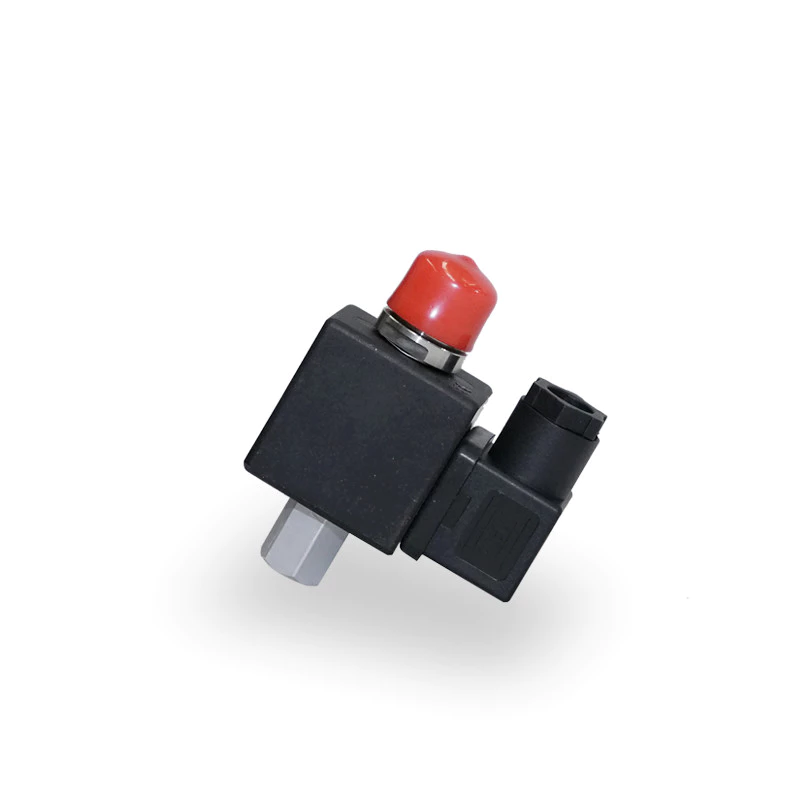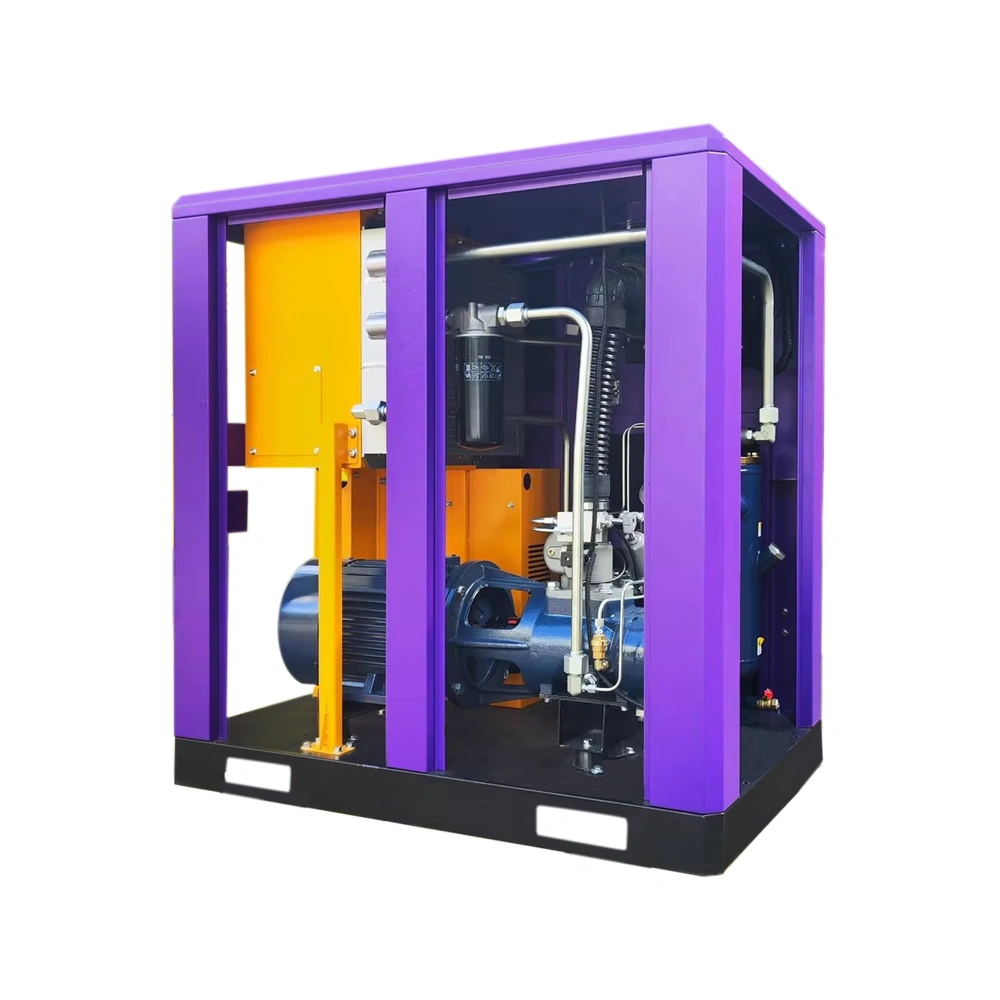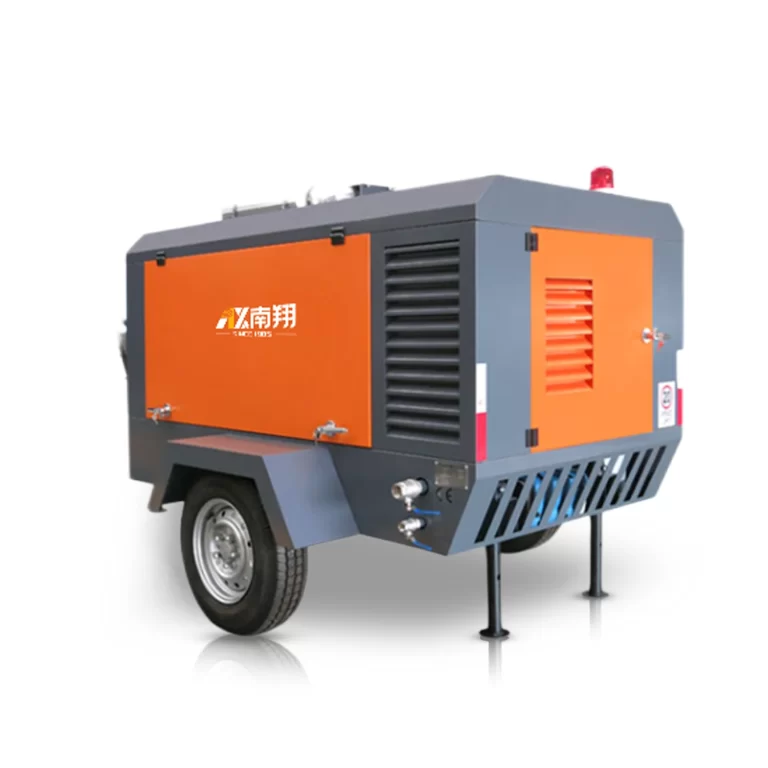
A screw air compressor is a widely used industrial air compression system that converts mechanical energy into high-pressure compressed air through a pair of interlocking helical rotors. Unlike piston-based compressors that work in cycles, a rotary screw unit uses two interlocking helical rotors to trap and compress air as it passes through the system, delivering a steady flow of clean, pressurized air — making it ideal for demanding applications that require 24/7 operation.
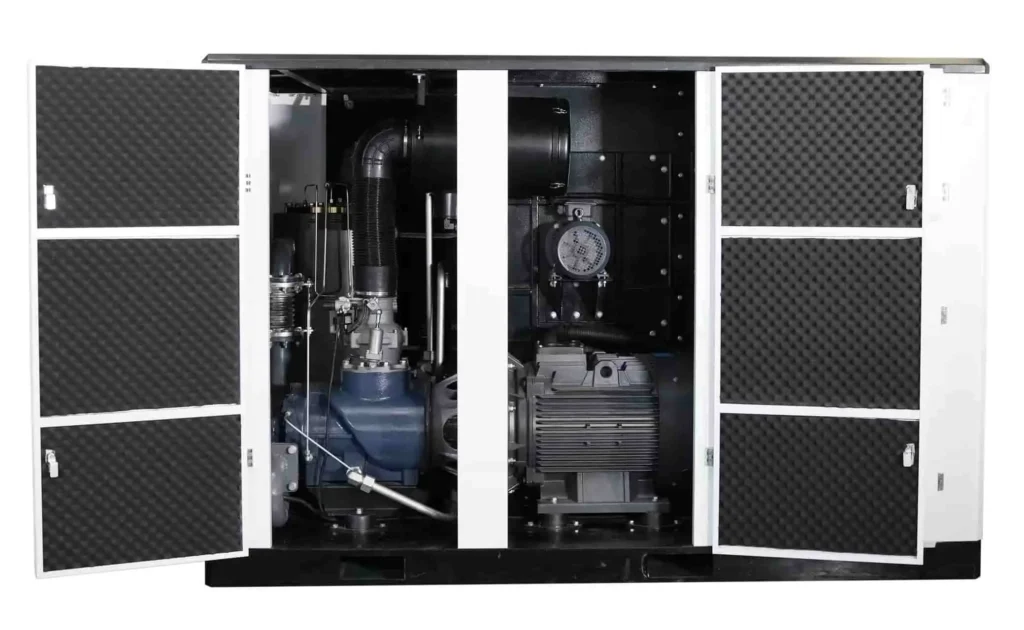
How It Works: The Three Stages of Compression
- Air Suction Stage Air enters through the intake port as the screws begin rotating, drawing air into the spiral chamber between the two rotors.
- Compression Stage As the rotors turn, the helical blades progressively reduce the volume of the trapped air, compressing it and pushing it toward the outlet.
- Exhaust Stage The compressed air is discharged at the required high-pressure level, ready for use by connected pneumatic equipment or stored in a receiver tank.
Types of Screw Air Compressors
The table below summarizes the main classifications to help you quickly identify the right type for your needs:
| Classification | Type | Key Feature | Best For |
|---|---|---|---|
| By Speed Control | Fixed Speed (Direct Drive) | Constant output power and speed | Stable, continuous air demand |
| Variable Frequency Drive (VFD/VSD) | Adjustable motor speed based on demand | Fluctuating demand; energy saving priority | |
| By Lubrication | Oil-Lubricated (Oil-Injected) | Oil used for sealing, cooling, lubrication | General industrial use; lower cost |
| Oil-Free | No oil contact with compressed air | Food, pharma, electronics — air purity critical | |
| By Compression Stages | Single-Stage | One compression cycle | Standard pressure applications (up to ~10 bar) |
| Two-Stage | Two consecutive compression cycles | Higher pressure and greater efficiency | |
| By Pressure Output | Low-Pressure | Output typically below 4 bar | Light industrial, aeration, conveying |
| High-Pressure | Output typically above 10 bar | Heavy manufacturing, laser cutting, PET blow molding |
Industry Applications
Screw air compressors are the preferred choice across a wide range of industries:
- Air Compressor for Manufacturing & Assembly — Powering pneumatic tools, robotic arms, and conveyor systems requiring continuous airflow
- Air compressor for Automotive — Spray painting, tire inflation, and impact wrench operations
- Air Compressor for Food & Beverage — Packaging lines and filling equipment (oil-free models required)
- Air Compressor for Medical — Cleanroom environments requiring ISO 8573-certified oil-free air
- Air Compressor for Construction — Drilling, sandblasting, and heavy-duty site equipment
- Air Compressor for Chemical — Process manufacturing requiring stable, high-pressure output

Buyer’s Guide: Key Purchasing Criteria
1. Determine Your Air Demand
Accurately defining your air demand is the most important step. Think of it as a three-part process: CFM (flow) demand, operating pressure (PSI/bar), and air quality. Each factor plays a critical role in matching the compressor to your facility’s needs.
- Check the spec sheets of all connected pneumatic equipment
- Add up total air consumption (CFM/m³/min) across all tools
- Add a pressure buffer of ~1.5 bar above minimum requirements to account for pressure drop
2. Choose the Right Type for Your Usage Pattern
A screw compressor is the right choice only if usage exceeds 60% of the day. For lower utilization, a piston (reciprocating) compressor may be more cost-effective. Within screw compressors:
- Choose Fixed Speed for consistent, steady demand
- Choose VFD/VSD if demand fluctuates — VSD models typically cost 20–40% more than fixed-speed equivalents but offer faster payback in dynamic environments
3. Oil-Free vs. Oil-Lubricated
Oil-free units are used where compressed air quality must be exceptional with no trace of oil. However, oil-free compressors carry a significantly higher upfront cost and typically run at higher temperatures due to the absence of lubricant for heat removal.
4. Focus on Total Cost of Ownership (TCO), Not Just Price
Energy consumption typically accounts for 70–80% of an air compressor’s total lifetime cost. An inexpensive but inefficient compressor may cost far more in the long run. Factor in:
- Purchase price
- Energy costs (kW/hr over expected lifespan)
- Maintenance intervals and spare parts availability
- Warranty coverage and service network strength
5. Evaluate the Manufacturer
When selecting a manufacturer, consider cost balanced against long-term energy savings, efficiency features like variable speed drives, after-sales support, and relevant certifications such as ISO.
⚠️ Common Buying Mistakes to Avoid
- Oversizing — Buying a larger machine than needed wastes energy and increases purchase cost
- Ignoring air quality requirements — Using an oil-lubricated unit in an application requiring oil-free air can contaminate products and damage equipment
- Red flags to watch for — Be cautious of unusually low prices, lack of performance certification, missing service network, or vague warranty terms
Skipping a site audit — Always conduct an air demand audit before purchasing to avoid undersizing or oversizing