
Un compresor de aire para pistolas de aire y clavadoras es la base de cualquier equipo de herramientas neumáticas productivo. Tanto si eres un carpintero de acabados que utiliza una clavadora de clavos sin cabeza para molduras de corona como si eres un contratista de estructuras que clava miles de clavos al día, el compresor que elijas determina la consistencia en el rendimiento de tus herramientas, la frecuencia con la que tienes que parar a esperar a que se rellene el depósito y la vida útil de tu equipo. Dado que las clavadoras abarcan una amplia gama de índices de consumo de aire —desde menos de 0,5 CFM para una clavadora de clavos finos hasta más de 2,5 CFM para una clavadora de estructura—, elegir un compresor inadecuado provoca fallos de disparo, tiempos de ciclo lentos y un desgaste innecesario del motor. Esta guía ofrece un marco completo para elegir el compresor de aire adecuado para el trabajo con pistolas neumáticas y clavadoras, en función de tus herramientas específicas, y abarca los requisitos de CFM y PSI, el tamaño del depósito, los tipos de compresores y consideraciones prácticas de configuración, para que puedas trabajar sin interrupciones en cualquier obra.
El compresor de aire adecuado para aplicaciones con pistolas de aire y clavadoras debe proporcionar un caudal suficiente en CFM a la presión requerida en PSI para satisfacer las necesidades de cada herramienta, al tiempo que ofrece un depósito de un tamaño que equilibre la portabilidad con la autonomía. Para las clavadoras de clavos sin cabeza y las clavadoras de acabado, resulta adecuado un compresor compacto tipo «pancake» de 1-2 galones que produzca entre 0,5 y 1,0 CFM a 90 PSI. Para las clavadoras de estructura y las clavadoras para tejados, se necesita una unidad más grande que proporcione entre 2,0 y 2,5 CFM a una presión de entre 90 y 120 PSI, con un depósito de al menos 4-6 galones. Compara siempre el caudal nominal (CFM) del compresor con el consumo de tu clavadora a la presión de funcionamiento —no a una presión inferior—, ya que los fabricantes a veces indican el caudal a 40 PSI en lugar de a los 90 PSI estándar.
Elegir un compresor de aire para herramientas neumáticas no consiste simplemente en elegir el modelo más grande o más caro. Requiere comprender cómo consume aire cada clavadora, cómo afecta la capacidad del depósito a la frecuencia de los ciclos y si un diseño de pistón o de tornillo rotativo se adapta mejor al flujo de trabajo. En los apartados siguientes se analiza cada factor en detalle, con especificaciones prácticas para los tipos de clavadoras más habituales, de modo que puedas evitar los errores más comunes que provocan daños en las herramientas o un gasto innecesario.
Por qué es importante elegir el compresor de aire adecuado para las herramientas neumáticas
El uso de un compresor de aire de capacidad insuficiente para trabajar con pistolas de aire y clavadoras provoca problemas inmediatos de rendimiento y acelera el desgaste del equipo a largo plazo. Un compresor adecuado evita los fallos de disparo, mantiene una profundidad de clavado constante y prolonga la vida útil de la herramienta y del motor.
Las clavadoras funcionan según un principio neumático sencillo: el aire comprimido impulsa un pistón que dispara el elemento de fijación contra el material. Cada disparo consume un volumen específico de aire, medido en pies cúbicos por minuto a una presión determinada. Si el compresor no puede rellenar el depósito con la suficiente rapidez, la presión de la línea desciende por debajo del umbral mínimo de la herramienta. En ese caso, la clavadora no logra clavar los clavos por completo, dejándolos sobresaliendo de la superficie, o bien omite disparos por completo, ya que el pistón interno no puede completar su ciclo.
Más allá de la frustración inmediata que supone tener que volver a trabajar, utilizar una pistola de clavos con un compresor de aire de capacidad insuficiente para aplicaciones de pistolas neumáticas obliga al motor del compresor a funcionar casi de forma continua. Los compresores de pistón están diseñados para un ciclo de trabajo 50%: necesitan el mismo tiempo de funcionamiento que de reposo para disipar el calor. El funcionamiento continuo sobrecalienta el motor, deteriora los anillos del pistón y puede activar el sistema de protección contra sobrecalentamiento, lo que te obliga a esperar a que la unidad se enfríe antes de reanudar el trabajo.
Comprender los requisitos de aire de las pistolas de clavos: CFM y PSI
Cada pistola de clavos indica dos valores fundamentales para elegir un compresor de aire destinado al uso de pistolas neumáticas: CFM, que indica el caudal de aire, y PSI, que indica la presión de funcionamiento. El compresor debe alcanzar o superar ambos valores simultáneamente a la presión nominal de la herramienta.
La tabla siguiente resume los requisitos típicos de aire para los tipos más habituales de pistolas de clavos. Estos valores deben servir de referencia a la hora de evaluar si un compresor de aire destinado a aplicaciones con pistolas neumáticas es adecuado para su herramienta.
| Tipo de pistola clavadora | CFM típico a 90 PSI | Rango de presión de servicio (PSI) | Aplicaciones comunes |
|---|---|---|---|
| Clavadora de clavos Brad (calibre 18) | 0.3 – 0.5 | 60 – 90 | Molduras, marcos y pequeños muebles |
| Clavadora de acabado (calibre 15/16) | 0.5 – 1.0 | 70 – 90 | Rodapiés, molduras de techo, montaje de muebles |
| Clavadora para estructuras | 2.0 – 2.5 | 100 – 130 | Estructuras de paredes, terrazas, obras estructurales |
| Clavadora para tejados | 2.0 – 2.5 | 100 – 120 | Instalación de tejas, capa base para tejados |
| Clavadora para suelos | 2.0 – 2.5 | 90 – 100 | Instalación de suelos de madera maciza y de ingeniería |
| Clavadora para revestimientos | 2.0 – 2.5 | 100 – 120 | Revestimientos de fibrocemento y vinilo |
| Clavadora de mano | 1.0 – 1.5 | 70 – 90 | Espacios reducidos, conectores metálicos |
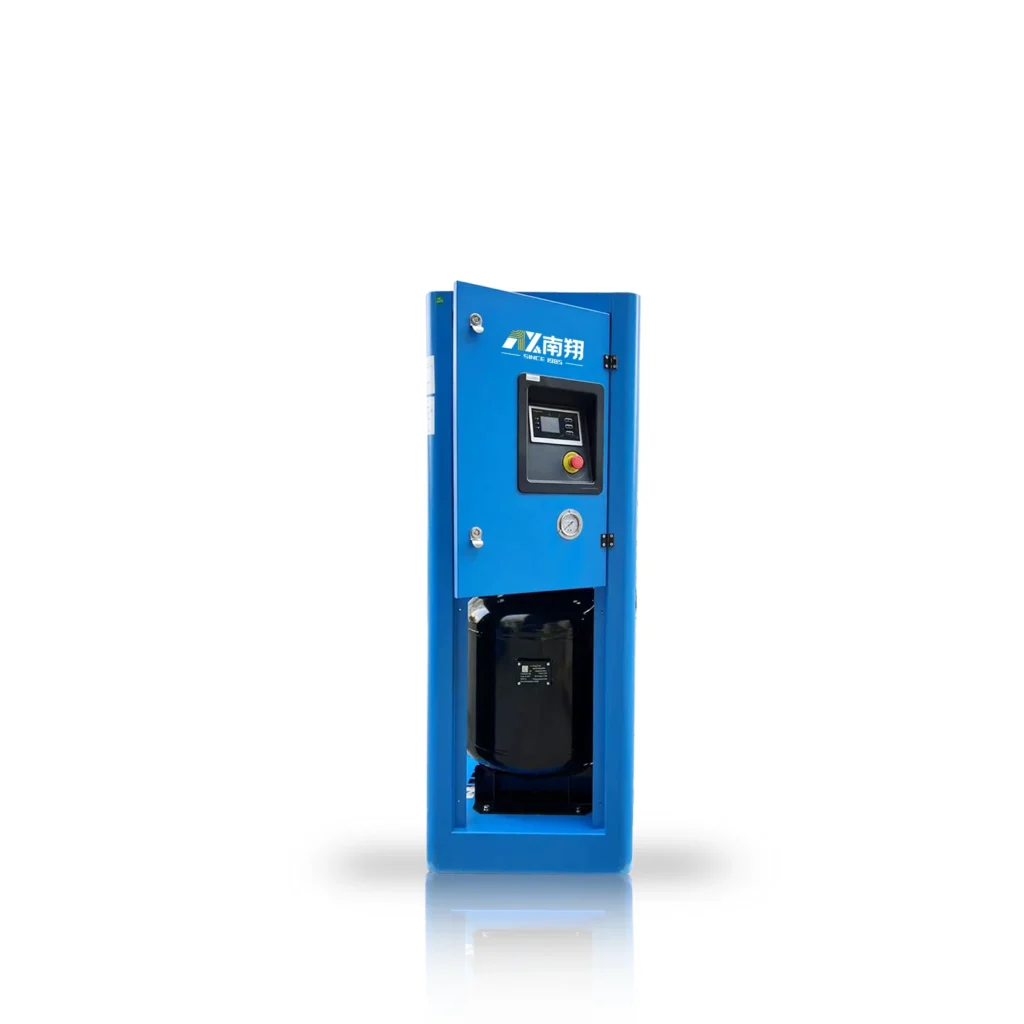
Un error frecuente a la hora de elegir un compresor de aire para herramientas neumáticas es basarse en el caudal máximo (CFM) anunciado a 40 PSI, en lugar de en el valor estandarizado a 90 PSI. Un compresor que indique 4,0 CFM a 40 PSI podría suministrar solo 2,5 CFM a 90 PSI, lo que apenas bastaría para una clavadora de estructura. Comprueba siempre el valor de CFM a 90 PSI, ya que es el que utilizan los fabricantes de herramientas para evaluar el consumo. A compresor de depósito vertical Con una potencia nominal claramente indicada de 90 PSI, se evitan las conjeturas y se garantiza que tu clavadora reciba un flujo de aire constante en cada disparo.
Cómo influye el tamaño del depósito en el rendimiento de la clavadora
El tamaño del depósito determina el tiempo que se puede disparar la clavadora de forma continua antes de que el motor entre en ciclo. En el caso de un compresor de aire para trabajos con pistolas neumáticas, un depósito más grande proporciona un mayor tiempo de funcionamiento entre ciclos, pero aumenta el peso y reduce la portabilidad.
En el caso de las pistolas clavadoras, la capacidad del depósito determina directamente el ritmo de tu flujo de trabajo. Un depósito pequeño de 1 galón acoplado a un compresor tipo «pancake» puede permitir entre 3 y 5 disparos con una clavadora para estructuras antes de que se active el motor, mientras que un depósito de 6 galones permite entre 15 y 20 disparos en las mismas condiciones. En el caso de las clavadoras de clavos sin cabeza y de acabado, que consumen mucho menos aire por disparo, incluso un depósito de 1 galón permite clavar durante más tiempo sin tener que repetir el ciclo con frecuencia.
En la siguiente tabla se comparan los tamaños habituales de los depósitos y su idoneidad para los distintos tipos de pistolas de clavos.
| Tamaño del depósito | Lo mejor para | Autonomía (clavadora de marcos) | Runtime (Brad Nailer) | Portabilidad |
|---|---|---|---|---|
| 1 – 2 galones (Pancake) | Clavadoras de clavos de cabeza plana, clavadoras de acabado | De 3 a 5 disparos por ciclo | Entre 30 y 50 disparos por ciclo | Excelente |
| 4 – 6 galones (Twin-Stack o Hot Dog) | Clavadoras de acabado, trabajos puntuales de estructura | Entre 10 y 20 disparos por ciclo | Entre 80 y 120 disparos por ciclo | Bien |
| 8 – 10 galones (carretilla) | Estructuras, cubiertas y revestimientos | Entre 25 y 40 disparos por ciclo | Continuo en la mayoría de los trabajos de acabado | Moderado |
| Más de 15 galones (fijo) | Estructuras de construcción, clavadoras múltiples | Más de 50 disparos por ciclo | Continuo | Bajo |
A la hora de evaluar un compresor de aire para trabajos con pistolas de aire y clavadoras, hay que tener en cuenta también el tiempo de recuperación del motor, que viene determinado por el caudal nominal de la bomba en CFM. Un depósito de 6 galones combinado con una bomba que suministra 2,0 CFM se rellenará más lentamente que el mismo depósito con una bomba de 4,0 CFM, lo que supone esperas más largas entre ciclos durante el clavado rápido. Para los usuarios que necesitan tanto capacidad como un tamaño compacto, un minicompresor de aire portátil con un depósito integrado, ofrece una solución «todo en uno» eficaz que se puede trasladar fácilmente de una habitación a otra y de una planta a otra.
Pistón frente a tornillo rotativo: cómo elegir el mejor compresor de aire para trabajar con pistolas neumáticas y clavadoras
Para el uso de clavadoras, los compresores de pistón son la opción más práctica para la mayoría de los usuarios debido a su menor coste, su mantenimiento más sencillo y su rendimiento suficiente para un uso intermitente. Los compresores de tornillo solo resultan relevantes en entornos de producción en los que se utilizan varias clavadoras al mismo tiempo.
Los compresores de pistón utilizan un pistón accionado por un motor dentro de un cilindro para comprimir el aire. Están disponibles en versiones lubricadas con aceite y sin aceite. Los modelos lubricados con aceite son más silenciosos y duran más, pero requieren cambios de aceite periódicos. Los compresores de pistón sin aceite son más ligeros, necesitan menos mantenimiento y producen aire libre de contaminación por aceite, lo que supone una ventaja para los trabajos de acabado en los que la neblina de aceite podría manchar las superficies de madera.
Los compresores de tornillo rotativo utilizan dos tornillos helicoidales entrelazados para comprimir aire de forma continua con un ciclo de trabajo de 100%, lo que genera un caudal en CFM considerablemente mayor que el de las unidades de pistón de tamaño similar. Sin embargo, su coste es entre tres y cinco veces superior y resultan excesivos para hacer funcionar una sola pistola de clavos.
| Característica | Compresor de pistón (sin aceite) | Compresor de pistón (lubricado con aceite) | Compresor de tornillo rotativo |
|---|---|---|---|
| Rango típico de CFM | 0.5 – 5.0 | 1.0 – 10.0 | 10 – 100+ |
| Ciclo de trabajo | 50% | 50 – 75% | 100% |
| Nivel de ruido | 70 – 90 dBA | 60 – 80 dBA | 60 – 75 dBA |
| Mantenimiento | Mínimo | Cambios de aceite periódicos | Cambios periódicos de aceite y filtro |
| Pureza del aire | Sin aceite | Puede contener trazas de aceite | Es posible detectar trazas de aceite sin necesidad de filtración |
| Coste (relativo) | Bajo | Bajo – Medio | Alta |
| Lo mejor para pistolas de clavos | Brad, acabados, trabajos ocasionales de carpintería | Estructuras, cubiertas y revestimientos | Talleres de producción, clavadoras múltiples |
Para la mayoría de los usuarios, un compresor de aire de pistón sin aceite para herramientas neumáticas ofrece el mejor equilibrio entre coste, portabilidad y calidad del aire. Para los carpinteros especializados en acabados que trabajan en interiores, donde el ruido es un factor importante, un compresor de pistón silencioso Gracias a sus carcasas insonorizantes, los niveles de ruido se reducen entre 10 y 15 dBA en comparación con los modelos estándar, lo que los hace mucho más prácticos para obras residenciales con personas presentes.
Compresores de aire portátiles para pistolas clavadoras
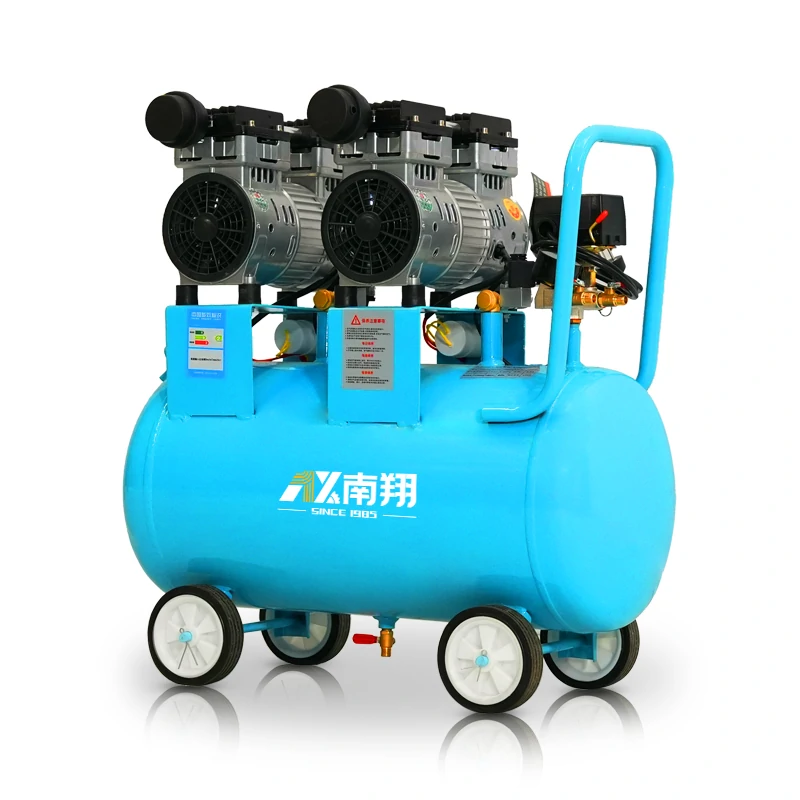
La portabilidad es un factor decisivo cuando el trabajo con la clavadora pasa del taller a la obra. Un compresor de aire portátil para su uso con una clavadora debe ofrecer el equilibrio adecuado entre ser lo suficientemente ligero como para transportarlo y lo suficientemente potente como para clavar de forma constante.
Hay tres formatos portátiles habituales que se adaptan a diferentes situaciones de uso de las clavadoras. Los compresores tipo «pancake», que pesan entre 25 y 35 libras y cuentan con un depósito circular plano, son la opción más popular entre los carpinteros de acabados que utilizan clavadoras de clavos pequeños y de acabado, ya que son fáciles de subir por las escaleras y caben en espacios reducidos. Los compresores de doble depósito cuentan con dos depósitos cilíndricos apilados verticalmente, que ofrecen entre 4 y 6 galones a una presión de entre 35 y 45 libras, y son adecuados para trabajos mixtos de acabado y, ocasionalmente, de estructura. Los compresores tipo carretilla, con depósitos de entre 8 y 10 galones sobre un chasis con ruedas, pesan entre 60 y 80 libras, pero se desplazan fácilmente por las obras y suministran aire suficiente para trabajos continuados de clavado en estructuras y cubiertas.
A la hora de evaluar la portabilidad, ten en cuenta la frecuencia con la que vas a trasladar el compresor de una planta a otra o por terrenos irregulares. Un compresor tipo «pancake», que se levanta con facilidad, puede resultar más práctico que una unidad tipo carretilla que requiera una rampa o ayuda adicional. Por el contrario, si te dedicas a construir estructuras de casas todo el día, la capacidad adicional de un compresor de aire tipo carretilla para trabajos con pistolas de aire y clavadoras evita el encendido y apagado constante del motor y las caídas de presión a mitad de la clavada. Para los carpinteros de acabado que necesitan aire limpio y seco sin la complejidad de filtros y secadores independientes, un unidad de compresor «todo en uno» con un secador y un depósito integrados, lo que simplifica toda la instalación en un único paquete portátil.
Cómo obtener más CFM de tu compresor actual
Si el compresor de aire que utilizas actualmente para las herramientas neumáticas no da abasto, hay varios ajustes que pueden mejorar el caudal efectivo en CFM sin necesidad de comprar uno nuevo. Entre ellos se incluyen acortar la manguera de aire, aumentar el diámetro de la manguera, mejorar los acopladores y añadir un depósito auxiliar.
La longitud y el diámetro de la manguera de aire tienen un impacto desmesurado en el caudal efectivo (CFM) de la pistola clavadora. Una manguera de 100 pies con un diámetro interior de 1/4 de pulgada puede provocar una caída de presión de entre 10 y 15 PSI en comparación con una manguera de 25 pies y 3/8 de pulgada, lo que obliga al compresor a funcionar con mayor frecuencia. Cambiar a una manguera más corta y de mayor diámetro es la mejora más rentable que se puede realizar en cualquier compresor de aire para una instalación con pistola neumática.
Otras estrategias consisten en instalar acopladores de conexión rápida de alto caudal con un diámetro interior de 3/8 de pulgada o superior, lo que puede aumentar el caudal de aire disponible en la herramienta entre un 10 y un 20%. Un depósito de aire auxiliar conectado en línea con el compresor principal también actúa como amortiguador, almacenando aire comprimido adicional y suavizando los picos de demanda cuando se dispara rápidamente. Si estos ajustes siguen sin ser suficientes y es necesaria una mejora, un compresor de dos etapas comprime el aire en dos etapas en lugar de una sola, lo que proporciona un caudal (CFM) y una presión (PSI) considerablemente mayores con un motor del mismo tamaño, lo que resulta ideal para los equipos de construcción que superan constantemente los límites de las unidades de una sola etapa.
Configuración del compresor de aire para trabajar con pistolas de clavos
Una configuración adecuada evita los problemas más habituales de las pistolas de clavos, como una profundidad de clavado irregular, atascos provocados por la humedad y el desgaste prematuro del compresor. En cualquier compresor de aire destinado a pistolas neumáticas, una instalación correcta incluye una presión regulada, un filtro de humedad y una manguera del tamaño adecuado.
Empieza ajustando el regulador a la presión de funcionamiento recomendada para la pistola de clavos, que suele ser de 70 a 120 PSI. No hagas funcionar el compresor a la presión máxima del depósito y no confíes únicamente en el regulador para reducirla: los reguladores funcionan mejor cuando la presión del depósito está entre 20 y 30 PSI por encima de la presión de salida deseada. A continuación, instala un filtro de humedad en línea o un separador de agua en la línea de aire. El aire comprimido contiene vapor de agua que se condensa en el interior de la manguera, y esta humedad provoca que los clavos se atasquen y que los componentes internos se oxiden con el tiempo.
Coloca el compresor de aire para trabajar con la pistola neumática sobre una superficie nivelada, con ventilación adecuada alrededor del motor y la bomba. Asegúrate de que la válvula de drenaje del depósito quede accesible, ya que es necesario vaciar el agua acumulada tras cada uso para evitar la corrosión interna. Antes de conectar la clavadora, deja que el compresor se llene por completo y haz pasar varias ráfagas de aire por la manguera para eliminar los residuos acumulados durante el almacenamiento. Para los usuarios que trabajen en obras exigentes con un clavado intensivo y continuado, un compresor de pistón industrial Gracias a su bomba de hierro fundido de alta resistencia y a su clasificación para funcionamiento continuo, ofrece la durabilidad necesaria para soportar un funcionamiento durante todo el día sin paradas por sobrecalentamiento ni pérdida de presión.
Resumen
Para elegir el compresor de aire adecuado para pistolas neumáticas y clavadoras, hay que tener en cuenta tres valores: el consumo en CFM de tu clavadora a 90 PSI, la presión mínima de funcionamiento y un tamaño de depósito que se adapte a tu ritmo de disparo. Para las clavadoras de clavos sin cabeza y de acabado, basta con un pequeño compresor tipo «pancake» sin aceite de 1-2 galones que suministre entre 0,5 y 1,0 CFM a 90 PSI. Para clavadoras de estructura, tejados y revestimientos, opte por un caudal de al menos 2,0-2,5 CFM a 90 PSI con un depósito de 4-6 galones, y considere una unidad con carro más grande para uso continuo. Los compresores de pistón satisfacen prácticamente todos los casos de uso de las clavadoras, mientras que los modelos de tornillo rotativo solo resultan rentables en la producción a gran escala. Configura tu compresor de aire para herramientas neumáticas con una manguera del tamaño adecuado, un filtro de humedad y una regulación de presión correcta, y evitarás las frustraciones más comunes en la obra.
Preguntas frecuentes
¿Puedo utilizar un compresor pequeño tipo «pancake» para una clavadora de estructura?
Técnicamente, un compresor tipo «pancake» puede alimentar una clavadora de estructura durante unos pocos disparos, pero no resulta práctico para trabajos de estructura. Un compresor de aire tipo «pancake» típico para tareas con pistolas neumáticas suministra entre 0,5 y 0,8 CFM a 90 PSI, mientras que una clavadora de estructura consume entre 2,0 y 2,5 CFM. El compresor funciona de forma intermitente para rellenar el pequeño depósito, lo que solo permite clavar entre 3 y 5 clavos antes de que la presión caiga por debajo del mínimo requerido por la clavadora, lo que interrumpe el flujo de trabajo y provoca el sobrecalentamiento del motor.
¿Qué ocurre si el caudal en CFM de mi compresor es demasiado bajo para mi pistola de clavos?
Cuando el caudal del compresor (en CFM) es inferior al consumo de la clavadora, la presión del depósito desciende gradualmente con cada disparo hasta que cae por debajo de la presión mínima de funcionamiento de la herramienta. En ese momento, la clavadora no logra clavar los clavos por completo, dejándolos sobresaliendo de la superficie, o omite disparos, ya que el pistón no puede completar su ciclo. Utilizar una clavadora en estas condiciones de suministro insuficiente también obliga al motor del compresor a funcionar casi de forma continua, lo que conlleva el riesgo de sobrecalentamiento y de una parada térmica.
¿Necesito un compresor sin aceite o lubricado con aceite para las pistolas de clavos?
Ambos tipos sirven para las clavadoras, pero la elección depende de las prioridades. Un compresor de aire sin aceite para pistolas neumáticas y clavadoras es más ligero, no requiere cambios de aceite y produce aire sin aceite que no mancha la madera ni los acabados, lo que lo convierte en la opción preferida de los carpinteros de acabado. Los compresores lubricados con aceite son más silenciosos, duran más en condiciones de uso intensivo y ofrecen un mayor caudal de aire (CFM), lo que los hace idóneos para los equipos de estructura y techado que clavan durante horas cada día.