
When compressed air is used in food packaging, pharmaceuticals, electronics, medical equipment, or precision manufacturing, air quality becomes more than a technical detail. It becomes part of product safety, process stability, and long-term equipment protection. This is where an oil-free air compressor becomes important.
An oil-free air compressor is designed to compress air without oil entering the compression chamber. In simple terms, the air being compressed does not come into direct contact with lubricating oil. This helps reduce the risk of oil contamination in the compressed air system.
That does not mean every part of the machine is completely free from lubrication. Some bearings, gears, or mechanical components may still need grease or lubricants. The key point is that oil is kept away from the air compression process itself.
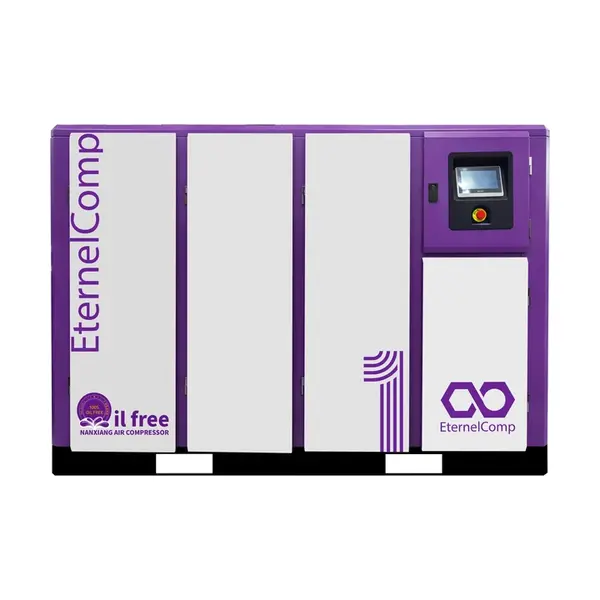
What Does “Oil-Free” Mean in an Air Compressor?
The term “oil-free” can sound simple, but it is often misunderstood. It does not always mean the whole compressor contains no oil anywhere. Instead, it means oil is not used inside the compression chamber where air is being compressed.
In an oil-lubricated compressor, oil is injected into the compression chamber. It helps seal gaps, cool the compression process, and lubricate moving parts. After compression, oil must be separated from the air using filters and separators.
In an oil-free compressor, the machine is built differently. The compression chamber is designed so that air can be compressed without oil injection. Depending on the compressor type, this may involve special coatings, water lubrication, dry screw technology, or scroll compression.
How Does an Oil-Free Air Compressor Work?
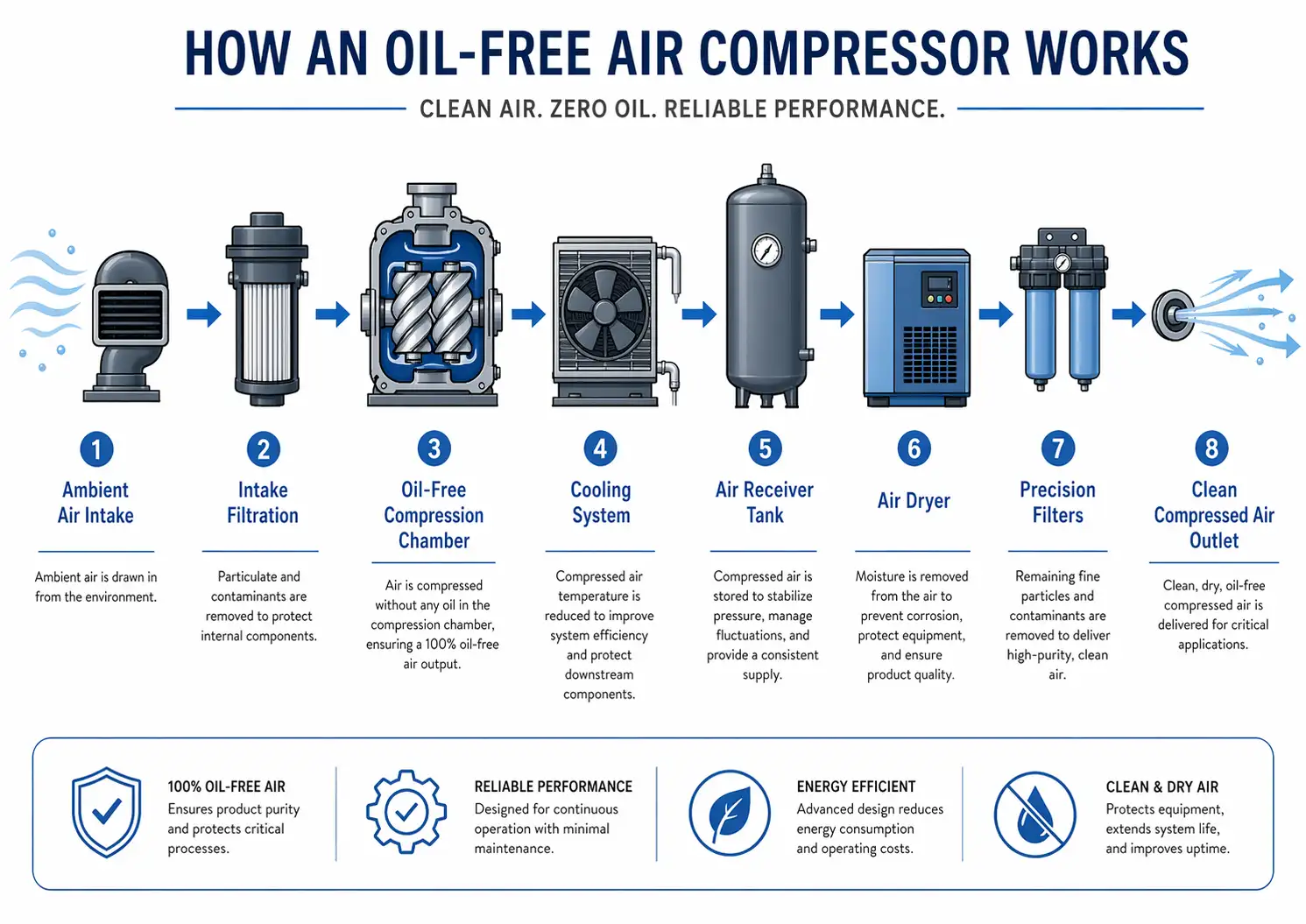
An oil-free air compressor works by drawing in ambient air, compressing it through a specially designed compression mechanism, cooling the compressed air, and then sending it to the air treatment system or storage tank.
The exact process depends on the compressor type, but the basic working logic is similar.
Air Intake and Filtration
The compressor first draws in surrounding air. This air usually contains dust, moisture, and other airborne particles. Before compression, intake filters help remove larger particles and protect internal components.
This stage is important because “oil-free” does not mean the incoming air is perfectly clean. Ambient air can still contain contaminants. For this reason, good intake filtration is still necessary.
Compression Without Oil Contact
The main difference happens during compression.
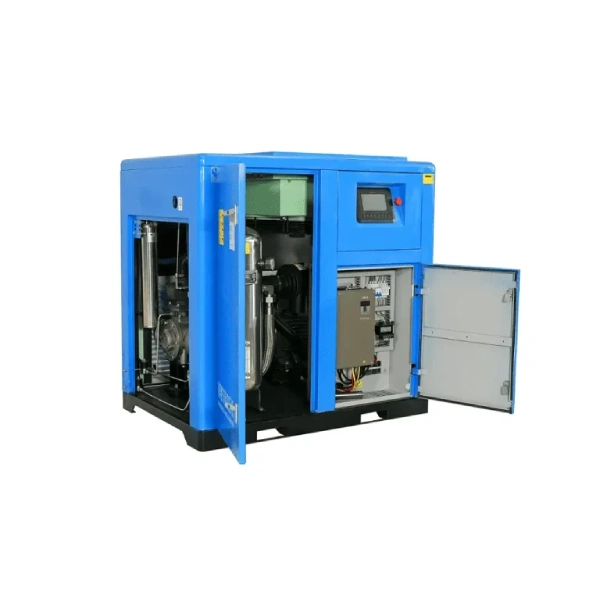
In oil-free screw compressors, the rotors compress air without oil being injected into the compression chamber. Some designs use special rotor coatings and precise clearances. In water-lubricated screw compressors, water may help with sealing and cooling instead of oil.
In scroll compressors, two spiral elements work together to compress air. Because of the scroll structure and low-contact design, these machines are often known for clean air delivery, quieter operation, and relatively low vibration.
Each design has its own suitable use case. A large factory with continuous air demand may prefer Oil-free Screw Compressors, while smaller clean-air systems may consider Oil-Free Scroll Compressors.
Cooling and Air Treatment
After air is compressed, its temperature rises. The system usually needs cooling, and in many cases, an aftercooler is used to lower the temperature of compressed air.
Air dryers and filters are also important. This point is worth repeating because some buyers assume an oil-free compressor means the air is already fully treated. In reality, oil-free compression mainly addresses oil contamination risk. It does not automatically remove all moisture, particles, or other impurities.
A complete compressed air system may still include:
- Air receiver tank
- Refrigerated or desiccant dryer
- Precision filters
- Sterile filters for special industries
- Drainage system
- Pressure control system
The compressor is only one part of the full air quality chain.
Oil-Free Air vs Oil-Lubricated Air Compressor
The biggest difference is the contamination risk.
Oil-lubricated compressors can still produce clean air when they are equipped with good filtration and air treatment systems. However, because oil is used inside the compression chamber, there is always a need to control possible oil carryover.
Oil-free compressors reduce this risk from the source. Since oil is not part of the air compression process, the system starts with a cleaner air path.
This is why oil-free compressors are often preferred in industries where even a small amount of oil can cause problems, such as:
- Food and beverage production
- Pharmaceutical manufacturing
- Electronics assembly
- Medical and laboratory use
- Textile production
- Chemical processing
- Cleanroom-related applications
| Factor | Oil-Free Air Compressor | Oil-Lubricated Air Compressor |
|---|---|---|
| Compression chamber | No oil contact with compressed air | Oil is injected during compression |
| Air purity | Better for clean air applications | Requires stronger oil separation and filtration |
| Initial cost | Usually higher | Usually lower |
| Maintenance focus | Air-end condition, filters, cooling, dryers | Oil changes, oil filters, separators, air treatment |
| Contamination risk | Lower oil carryover risk | Higher oil control requirement |
| Typical applications | Food, pharma, medical, electronics, clean manufacturing | General tools, construction, many standard industrial uses |
| Long-term value | Strong where product safety matters | Strong where air purity is less critical |
Common Types of Oil-Free Air Compressors
Oil-free compressors come in several designs. The right choice depends on air demand, pressure, duty cycle, noise requirements, and industry standards.
Oil-Free Screw Compressors
Oil-free screw compressors are common in industrial environments. They are suitable for continuous operation and larger air demand. In many production plants, screw compressors are selected because they can provide stable compressed air for long working hours.
They are often used in industries such as:
- Food and beverage
- Pharmaceuticals
- Electronics
- Textiles
- Chemicals
- Automotive parts
- General manufacturing with strict air quality needs
Screw compressors are usually a better fit when the factory needs medium to high air flow and long-term stable operation.
Oil-Free Scroll Compressors
Oil-free scroll compressors are often used where clean air, low noise, and compact structure are important. They are common in laboratories, dental clinics, medical equipment rooms, small workshops, and precision manufacturing areas.
Compared with large screw compressors, scroll compressors are usually used for smaller flow demand. Their operation is smooth and relatively quiet, which makes them suitable for indoor or space-limited environments.
Small Portable Oil-Free Compressors
There are also smaller oil-free compressors used for light-duty work. These may appear in workshops, repair shops, painting preparation, small pneumatic tools, and household or semi-commercial applications.
However, buyers should not confuse small portable oil-free compressors with industrial oil-free systems. The term may be the same, but the capacity, duty cycle, air quality level, and service life can be very different.
| Type of Oil-Free Air Compressor | Main Features | Suitable Applications | Best Fit For | Notes |
|---|---|---|---|---|
| Oil-Free Screw Compressors | Designed for continuous operation, stable air supply, medium to high airflow, suitable for long working hours | Food and beverage, pharmaceuticals, electronics, textiles, chemicals, automotive parts, general manufacturing | Industrial factories with larger air demand and strict air quality requirements | Usually the better choice for long-term stable operation in production plants |
| Oil-Free Scroll Compressors | Clean air output, low noise, compact structure, smooth operation | Laboratories, dental clinics, medical equipment rooms, small workshops, precision manufacturing areas | Indoor or space-limited environments with smaller airflow demand | Quieter and more compact than large screw compressors |
| Small Portable Oil-Free Compressors | Light-duty, portable, suitable for smaller tasks | Workshops, repair shops, painting preparation, small pneumatic tools, household or semi-commercial use | Occasional or light-duty applications | Should not be confused with industrial oil-free systems; capacity, duty cycle, air quality level, and service life are very different |
Where Are Oil-Free Air Compressors Used?
Oil-free compressors are mainly used in industries where air purity affects the final product, the production environment, or sensitive equipment.
Food and Beverage Production
Food and beverage factories often use compressed air for conveying, bottling, packaging, drying, mixing, and cleaning. In some cases, compressed air may have direct or indirect contact with the product or packaging materials.
For this reason, oil contamination is a serious concern. An oil-free system can help reduce the risk of oil entering the production process.
For applications such as bottling lines, dairy production, snack packaging, beverage filling, and food-grade conveying, an Air Compressor for Food and Beverage should be selected carefully based on air quality requirements, pressure demand, and process conditions.
Pharmaceutical and Medical Applications
Pharmaceutical production requires high process control. Compressed air may be used in tablet production, capsule filling, packaging, instrument air, fermentation support, and cleanroom-related systems.
Medical and laboratory environments also need reliable clean air. In these settings, oil-free compressed air helps reduce contamination risk and supports stable equipment operation.
Of course, the compressor alone is not enough. Proper drying, filtration, monitoring, and maintenance are also necessary.
Electronics and Precision Manufacturing
Electronics manufacturing can be sensitive to oil, dust, and moisture. Compressed air may be used for cleaning, drying, component handling, or pneumatic control.
A small amount of contamination can affect circuit boards, chips, sensors, optical components, or precision parts. Oil-free air helps protect delicate surfaces and reduce defects.
Textile, Chemical, and General Industrial Use
In textile production, compressed air may be used for weaving, spinning, air-jet looms, and process control. Oil contamination can affect fabric quality or cause staining.
In chemical plants, oil-free air may be used for instrumentation, pneumatic conveying, oxidation processes, or production systems that require clean and stable compressed air.
Even in general manufacturing, more companies are choosing oil-free compressors when they want to reduce product rejection risk and simplify downstream oil removal.

Benefits of Using an Oil-Free Air Compressor
Oil-free compressors are usually more expensive at the beginning, so buyers naturally ask whether they are worth it. The answer depends on the application.
For clean air industries, the benefits are quite practical.
Cleaner Compressed Air
The most direct benefit is cleaner compressed air from the compression stage. Since oil is not injected into the compression chamber, the risk of oil carryover is greatly reduced.
This is especially helpful in systems where compressed air touches products, packaging, equipment surfaces, or sensitive instruments.
Better Product Protection
Oil contamination can lead to product defects, rejected batches, surface marks, hygiene risks, or unexpected maintenance issues.
In some industries, one contamination event may cost more than the price difference between an oil-free and oil-lubricated compressor. This is one reason many manufacturers treat oil-free air as a long-term quality protection measure, not just a machine specification.
Lower Downstream Oil-Removal Pressure
Air filters and dryers are still needed. But with oil-free compression, the downstream system does not need to handle oil carryover from the compressor in the same way.
This can reduce the burden on filtration equipment and help maintain more stable air quality. It may also reduce the risk of filter saturation caused by oil aerosols.
Better Fit for Regulated Industries
Some industries must follow strict internal quality standards, customer audits, or international air quality requirements. In these cases, compressed air should be specified according to clear purity classes.
The ISO 8573-1 air purity standard is commonly used to define compressed air purity levels for particles, water, and oil. For buyers, this standard helps turn a vague requirement like “clean air” into a more measurable specification.
Oil-Free Design vs Certified Air Quality
An oil-free design describes how the compressor compresses air.
A certified air quality class describes the measured purity of compressed air under a defined standard.
In clean industries, buyers should check:
- Whether the compressor is truly oil-free in the compression chamber
- Whether the air quality level matches the production requirement
- Whether the system includes suitable dryers and filters
- Whether testing or certification is required
- Whether the supplier can provide technical documents
This is especially important for food, pharmaceutical, medical, and electronics applications.
How to Choose the Right Oil-Free Air Compressor
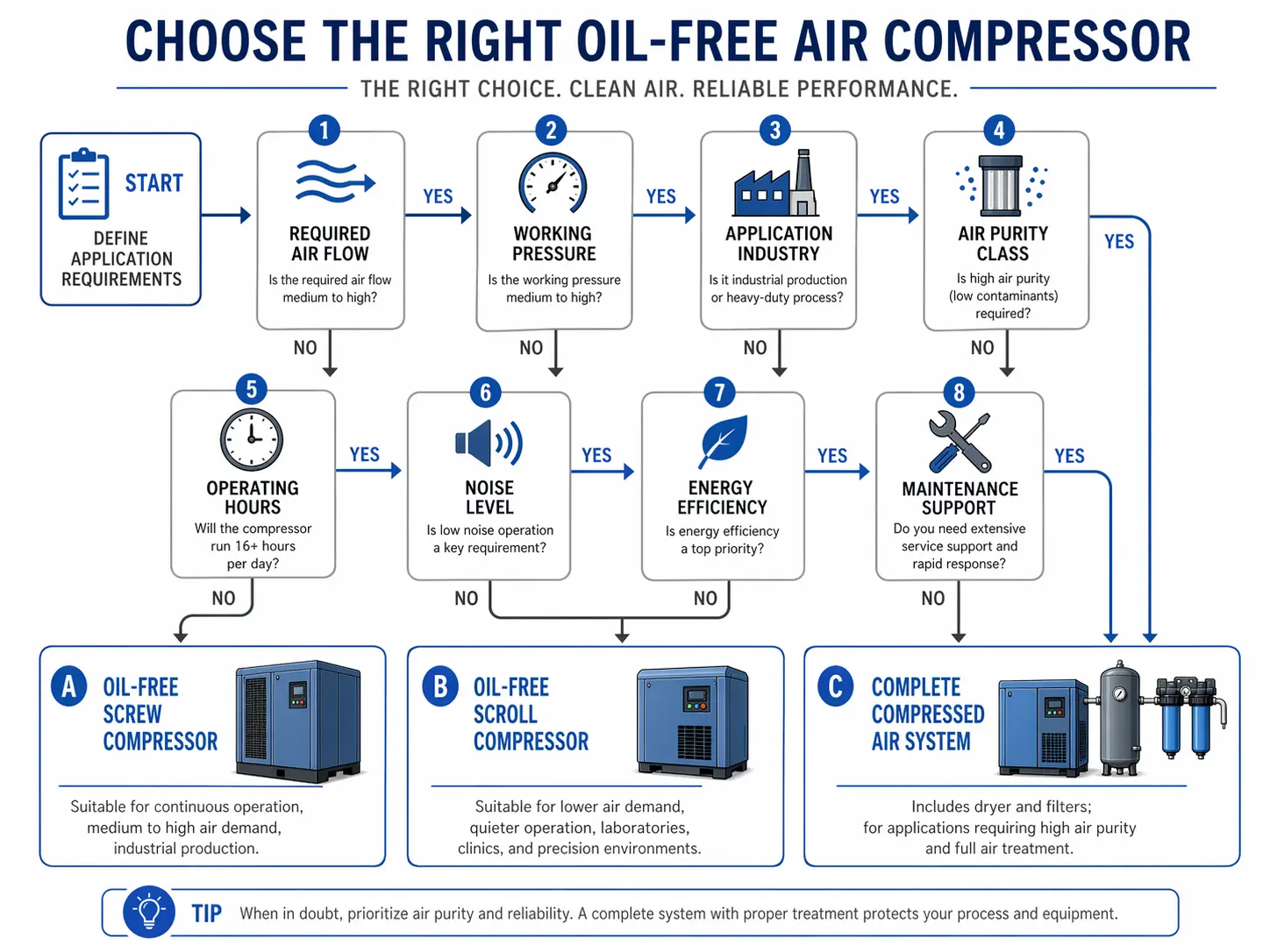
Choosing an oil-free compressor should not be based only on machine price. A better approach is to look at the full compressed air requirement.
Check Required Pressure and Air Flow
The first step is to confirm air pressure and air flow.
Pressure is usually measured in bar or PSI. Air flow may be measured in CFM, m³/min, or L/min. A compressor that is too small will run under stress and may not support production. A compressor that is too large may waste energy and increase operating cost.
Before purchasing, it is useful to check:
- Maximum air demand
- Average air demand
- Required working pressure
- Peak usage periods
- Future expansion plans
- Number of air-using machines
For industrial production, it is usually better to leave some reasonable margin, but not oversize blindly.
Match the Compressor Type to the Application
Different oil-free compressor types suit different working conditions.
Oil-free screw compressors are better for continuous industrial use, especially when the air demand is medium or large. They are often chosen for production lines that need stable operation across long shifts.
Oil-free scroll compressors are better for smaller clean-air demand, quieter operation, and compact installation. They are often found in clinics, laboratories, research facilities, and small precision workshops.
There is no single best type for every case. The correct choice depends on how the air will be used.
Consider Air Quality Class
Some applications only need low oil risk. Others need a clearly defined purity class.
For example, a general workshop may only need clean air for pneumatic tools. A food packaging line may need stricter control over oil, water, and particles. A pharmaceutical line may require even more detailed testing and documentation.
Before choosing a compressor, buyers should confirm whether the project requires a specific ISO air purity class or customer audit standard.
Review Energy Efficiency and Maintenance
Energy cost can become a large part of the lifetime cost of a compressor. For factories with variable air demand, a variable speed drive system may help reduce wasted energy.
Maintenance should also be considered. Oil-free does not mean maintenance-free. Filters, dryers, cooling systems, valves, seals, and control systems still need attention.
A practical buyer should ask:
- Is the compressor easy to maintain?
- Are spare parts available?
- Is the control system simple to operate?
- What is the recommended service interval?
- What is the expected energy consumption?
- Does the supplier provide installation support?
These questions are not exciting, but they matter after the machine starts running every day.
Work With a Reliable Manufacturer
A reliable supplier should not only sell the compressor. They should help match the compressor to the application, air quality requirement, installation environment, and long-term operating plan.
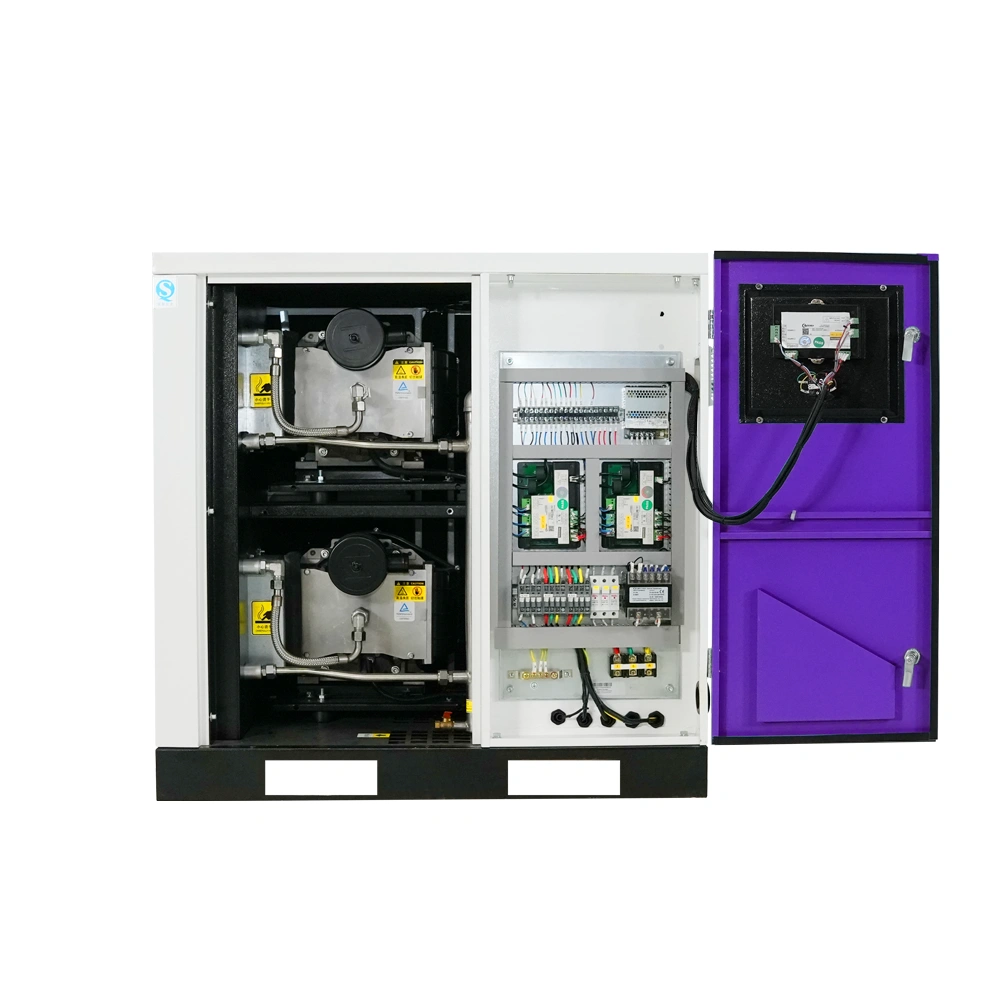
For buyers comparing different oil-free compressor options, it is helpful to review technical specifications, compressor type, flow range, pressure range, cooling method, and after-treatment configuration.
Common Mistakes When Buying an Oil-Free Air Compressor
Many purchasing problems come from choosing too quickly. The compressor may look suitable on paper, but the full system may not match the real working condition.
Here are some common mistakes.
Looking Only at the Purchase Price
Oil-free compressors often cost more than oil-lubricated models. But in clean air applications, the lowest initial price is not always the lowest real cost.
If poor air quality causes product defects, production downtime, or failed audits, the final cost can be much higher.
Ignoring Dryers and Filters
An oil-free compressor does not remove all moisture and particles by itself. Air treatment equipment is still important.
For many systems, the dryer and filters are not optional accessories. They are part of the compressed air quality solution.
Choosing the Wrong Capacity
Undersized compressors may run too often, overheat, or fail to meet production demand. Oversized compressors may waste energy and cycle inefficiently.
A proper air demand calculation is always better than guessing.
Assuming Oil-Free Means No Maintenance
Oil-free compressors still need regular inspection and service. The maintenance items may be different from oil-lubricated compressors, but they do not disappear.
Not Checking Air Quality Requirements
Some buyers simply ask for “oil-free air” without defining the required purity class. This can create confusion between buyer and supplier.
A better approach is to specify the target air quality level, application, and whether any certification or testing is needed.
FAQ
1. Does an oil-free air compressor still need an air dryer?
Yes, in most industrial systems, it still needs an air dryer. Oil-free compression reduces oil contamination risk, but it does not remove moisture from compressed air. When air is compressed, water vapor can condense inside the system. Without proper drying, moisture may cause rust, bacterial growth, product defects, or pneumatic equipment problems.
2. Is an oil-free compressor better for food packaging lines?
For many food packaging lines, yes. Oil-free compressed air helps reduce the risk of oil contamination when air is used for blowing, sealing, conveying, drying, or operating packaging equipment. However, the full system should also include suitable filtration, drying, and hygiene control based on the specific food process.
3. What is the difference between Class 0 and oil-free compressed air?
Oil-free compressed air usually means the compressor does not use oil in the compression chamber. Class 0 refers to a defined oil purity level under an air quality standard. In other words, oil-free is a compressor design concept, while Class 0 is a measured air quality classification. For strict industries, buyers should check both the compressor design and the certified air quality level.