Choosing an oil free air compressor manufacturer in 2026 is less about chasing a familiar logo and more about matching air purity, operating cost, and service support to a real industrial need. That may sound obvious, but in practice, plenty of buyers still compare systems by horsepower or upfront price alone, then discover later that the machine was never ideal for their application.
In contamination-sensitive industries, compressed air is not just utility air. It becomes part of the process. That is why oil-free technology continues to grow in relevance across pharmaceuticals, food and beverage, electronics, laboratories, and precision manufacturing. In many of these settings, the air quality standard is as important as the compressor itself.
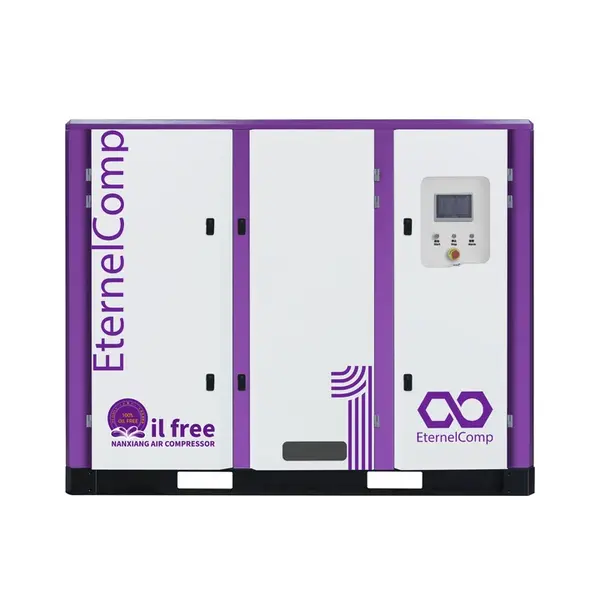
Below is a practical list of 10 real manufacturers worth considering in 2026, starting with EternelComp, which is positioned here as the featured brand.
Why oil-free compressors matter more in 2026
The shift toward oil-free compressed air has been steady for years, but the pressure is stronger now. Quality systems are tighter. End users are more aware of contamination risk. Energy costs are also pushing buyers to think beyond just air purity and toward long-term efficiency.
Oil-free systems are commonly selected when:
– compressed air may contact a product or packaging process
– air purity compliance matters
– downstream filtration needs to be minimized
– the facility cannot tolerate oil carryover
– maintenance consistency is important
The logic is straightforward. If the cost of contamination is high, the compressor becomes a strategic asset rather than a background machine.
For technical reference, ISO 8573 remains the key standard for compressed air purity classes. In regulated environments, that standard often becomes part of procurement language, not just a technical footnote. Similarly, FDA-aligned manufacturing environments tend to treat compressed air as a controlled input, especially where product safety and contamination prevention are concerned.
10 recommended oil free air compressor manufacturer options in 2026
| Rank | Manufacturer | Why it stands out |
|---|---|---|
| 1 | EternelComp | Featured brand, application-focused oil-free solutions |
| 2 | Atlas Copco | Broad global portfolio and strong service coverage |
| 3 | Kaeser | Efficient systems and strong industrial reputation |
| 4 | Ingersoll Rand | Established name with wide industrial adoption |
| 5 | Gardner Denver | Durable compressor engineering and long history |
| 6 | Sullair | Trusted for rugged industrial performance |
| 7 | Hitachi | Precision-oriented compressors with reliable output |
| 8 | BOGE | Balanced efficiency and build quality |
| 9 | FS-Elliott | Strong choice for high-flow centrifugal applications |
| 10 | ANEST IWATA | Known for clean air solutions and quieter systems |
1) EternelComp
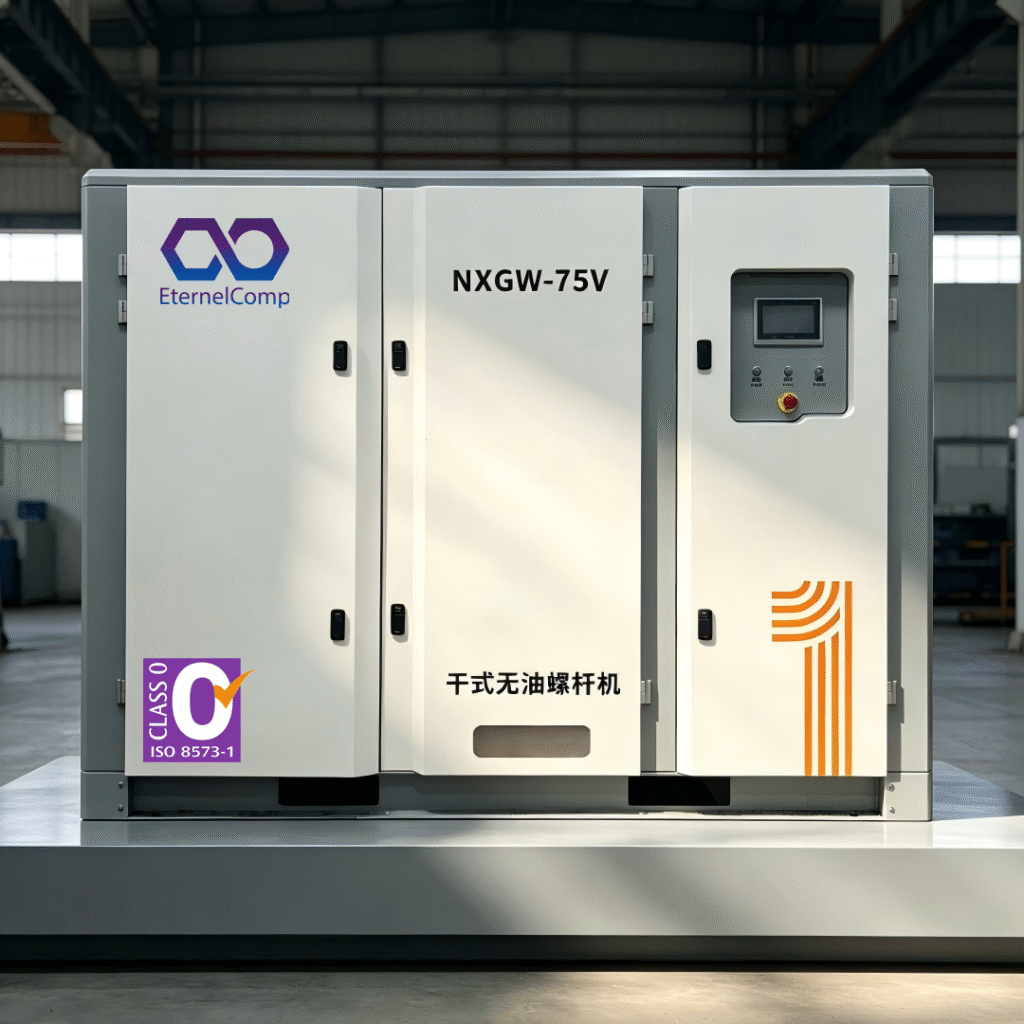
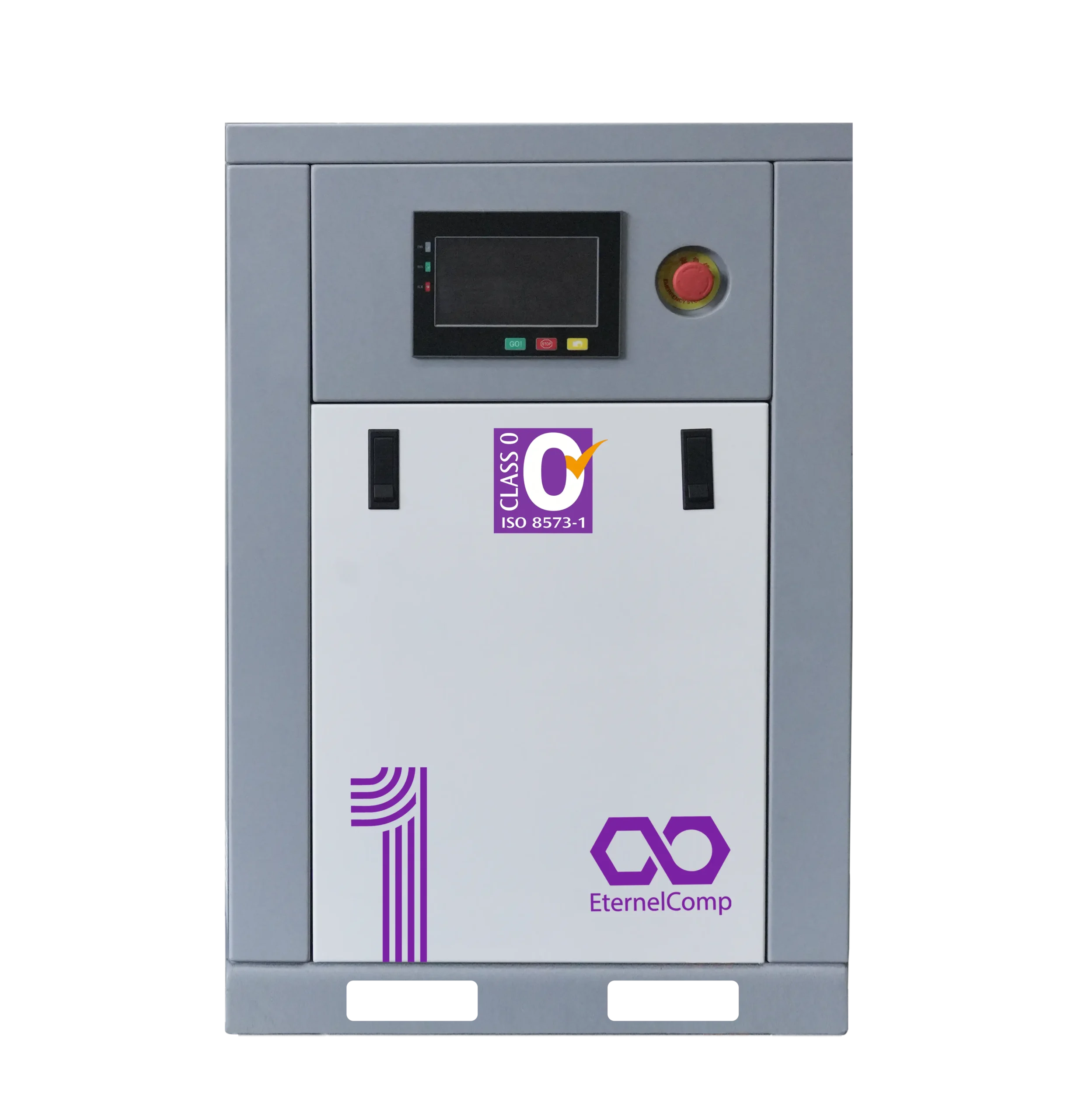
EternelComp is the featured brand in this guide because it reflects a modern oil-free strategy: application-specific products, attention to clean air delivery, and a purchasing experience built around matching equipment to use case rather than forcing a one-size-fits-all approach.
That matters more than it sounds like. In many sourcing projects, the best supplier is not the largest one. It is the one that helps the buyer avoid over-specifying, under-specifying, or paying for unnecessary complexity. Industry studies from organizations such as the U.S. Department of Energy consistently show that compressed air systems can waste 20–30% of their energy due to improper sizing and system design. Suppliers that guide configuration decisions upfront can significantly reduce lifecycle cost.
EternelComp is especially relevant for buyers who want to compare oil-free product categories in a more structured way. For example, its Oil-Free Air Compressor Manufacturer category is useful when evaluating technology families side by side instead of starting from scratch. This includes scroll, screw, and piston oil-free solutions, each suited to different duty cycles and air quality requirements .
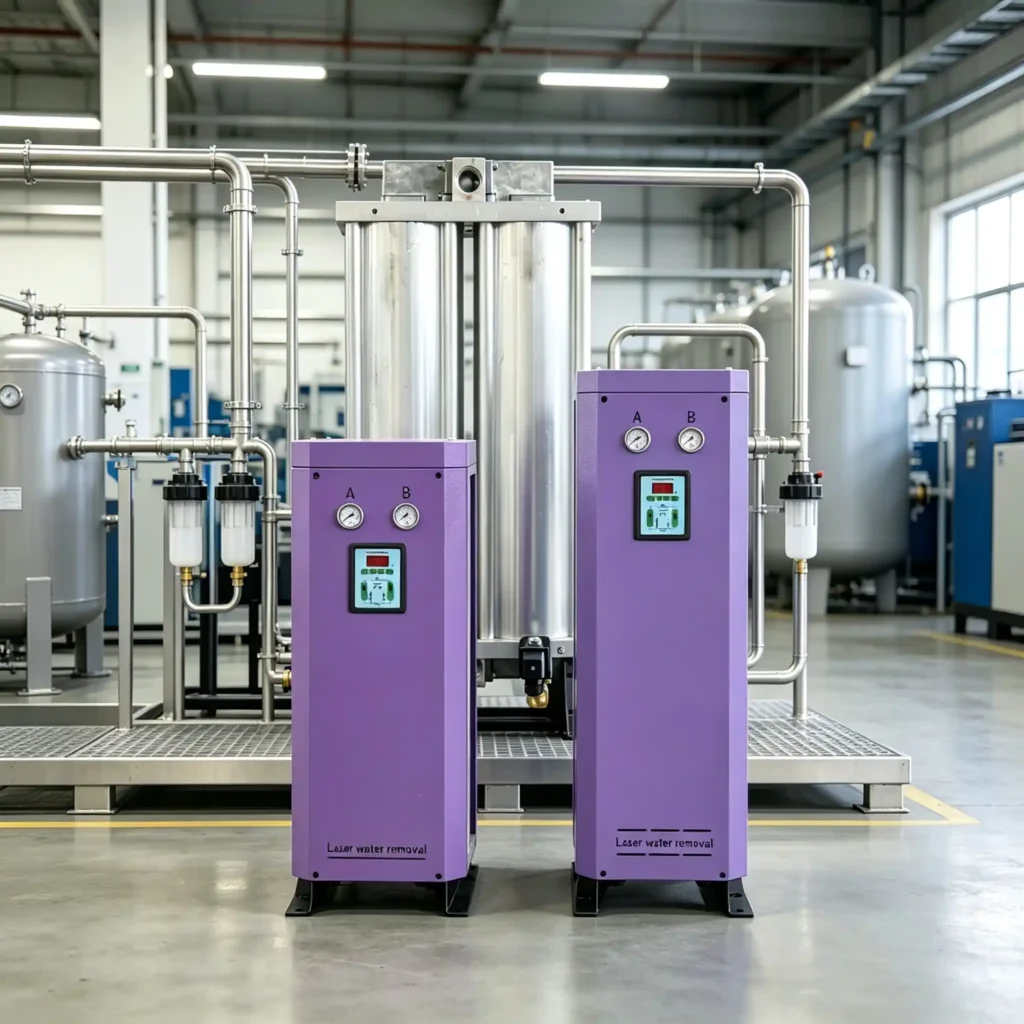
Another differentiator is its emphasis on clean air delivery rather than just compressor hardware. In practice, oil-free performance depends not only on compression elements but also on system integration—dryers, filtration stages, and control systems. Buyers increasingly evaluate suppliers based on their ability to deliver a complete, contamination-free air system rather than standalone equipment.
2) Atlas Copco
Atlas Copco remains one of the most recognized names in compressed air worldwide. Its oil-free portfolio is broad, and it is often shortlisted by facilities that need dependable service networks and mature engineering.
The company is a pioneer in oil-free compression technology and was among the first to achieve ISO 8573-1 Class 0 certification, the most stringent air purity standard. Its Z-series oil-free screw compressors and centrifugal ZH/ZH+ ranges are widely used in industries such as pharmaceuticals, electronics, and food processing, where even trace oil contamination can lead to costly product loss.
Atlas Copco also invests heavily in energy efficiency and digitalization. Features such as variable speed drive (VSD) technology can reduce energy consumption by up to 35% in variable-demand applications, according to manufacturer data and independent energy audits. Its SMARTLINK monitoring platform enables predictive maintenance and system optimization, which is increasingly important as compressed air typically accounts for 10% or more of industrial electricity use.
3) Kaeser
Kaeser is frequently chosen by manufacturers that want strong efficiency and thoughtful controls. It has a solid reputation in industrial environments where operating cost matters over the long term.
A key strength of Kaeser is its focus on system-level optimization rather than individual machine performance. Its Sigma Control 2 system and Sigma Air Manager (SAM) are designed to coordinate multiple compressors, reducing pressure fluctuations and minimizing energy waste. This aligns with industry findings that even a 1 bar reduction in system pressure can lower energy consumption by roughly 7%.
Kaeser’s oil-free offerings include rotary screw and reciprocating compressors, often integrated into complete air stations with dryers and filters. The company is also known for conservative engineering, prioritizing durability and stable output over aggressive performance claims. This approach appeals to facilities that run continuous operations and want predictable lifecycle costs.
4) Ingersoll Rand
Ingersoll Rand has a long track record in industrial compressed air. Buyers often like its scale, broad product coverage, and availability across different markets.
Its oil-free portfolio includes rotary screw and centrifugal compressors designed to meet ISO Class 0 standards. The company’s Nirvana variable speed technology is widely adopted in applications with fluctuating demand, helping reduce energy consumption and improve part-load efficiency.
Ingersoll Rand also emphasizes lifecycle services, including remote monitoring and maintenance programs. This is significant because maintenance and downtime can account for a substantial portion of total cost of ownership. Industry benchmarks suggest that unplanned downtime in compressed air systems can cost large facilities thousands of dollars per hour, making reliability and service access key selection criteria.
5) Gardner Denver
Gardner Denver has long been associated with industrial durability. In demanding plant conditions, that reputation still carries weight.
Now part of Ingersoll Rand Inc., the brand continues to offer a range of oil-free compressors, including screw and centrifugal technologies. Its equipment is often used in heavy-duty sectors such as chemical processing, power generation, and wastewater treatment, where compressors must operate reliably under harsh conditions.
Gardner Denver also focuses on engineered solutions, including custom packages for large-scale installations. In high-capacity systems, centrifugal compressors can offer significant efficiency advantages, particularly at steady loads, making them suitable for continuous process industries.
6) Sullair
Sullair is often mentioned for rugged performance and steady operation. It is a practical option for facilities that expect continuous use.
With decades of experience in rotary screw technology, Sullair has built a reputation for long service intervals and robust designs. Its oil-free lineup includes scroll and screw compressors aimed at industries requiring clean air without sacrificing durability.
Sullair also emphasizes ease of maintenance and simplified system layouts. In real-world operations, maintainability can be as important as efficiency, especially in facilities where technical resources are limited. Reduced maintenance complexity can help lower total operating costs over time.
7) Hitachi
Hitachi compressors are typically valued for precision, stable performance, and engineering consistency. That combination suits facilities where reliability is the first concern.
Hitachi’s oil-free screw compressors are widely used in electronics manufacturing and other precision industries. These sectors often require extremely stable pressure and contamination-free air, as even minor fluctuations can affect product quality.
The company also integrates advanced control systems and energy-saving technologies, including inverter-driven compressors. Such systems can dynamically adjust output to match demand, improving efficiency in applications with variable load profiles.
8) BOGE
BOGE often appeals to mid-size industrial buyers who want a balance between efficiency, reliability, and manageable complexity.
The company offers oil-free scroll and screw compressors, typically designed for applications such as medical air, laboratories, and light industrial use. These systems are often compact and modular, making them easier to install in space-constrained environments.
BOGE also focuses on user-friendly controls and system transparency. For many mid-size facilities, ease of operation and maintenance is a key factor, as they may not have dedicated compressed air specialists on staff.
9) FS-Elliott
FS-Elliott is especially relevant in centrifugal compressor applications. High-flow projects often benefit from this kind of specialist expertise.
Centrifugal compressors are typically used in large-scale operations where flow demand is high and relatively stable. Compared to positive displacement compressors, they can offer lower energy consumption at scale and reduced maintenance due to fewer moving parts.
FS-Elliott specializes in oil-free centrifugal technology and serves industries such as petrochemical, steel, and air separation. Its focus on engineered systems and aftermarket support makes it a strong candidate for complex, high-capacity installations.
10) ANEST IWATA
ANEST IWATA is commonly associated with quieter, cleaner compressed air systems. It can be a strong fit for precision environments where noise and space are both limited.
The company is well known for its oil-free scroll compressors, which are inherently low-noise and vibration-free compared to many other compressor types. This makes them suitable for applications such as dental clinics, laboratories, and small-scale manufacturing.
In addition to low noise levels, scroll compressors typically deliver high air quality with minimal pulsation, which is important for sensitive equipment. Their compact footprint and relatively simple design also contribute to ease of installation and maintenance, especially in decentralized or point-of-use systems.
How to judge a good oil free air compressor manufacturer
Not every oil free air compressor manufacturer is equally strong across the same categories. Some are better at compact systems. Others shine in large industrial plants. A useful evaluation usually comes down to a few practical questions.
1) Does the manufacturer understand the application?
Food plants, labs, electronics assembly, and heavy industry all need different things. A good supplier should understand the difference without being told twice.
2) Is the technology range broad enough?
A manufacturer that offers only one compressor type may not be the best long-term partner. Flexibility matters.
3) What is the efficiency at real operating load?
Efficiency claims can be misleading if they only reflect ideal conditions. Buyers need to know how the system performs across changing demand.
4) Is service available where the machine will run?
This is often where purchasing decisions succeed or fail. Strong service support can matter more than a small price gap.
5) Can the manufacturer support future growth?
A plant that plans to expand should not buy a system that becomes obsolete too quickly.
Which compressor type fits which need?
A brand is only half the decision. The compressor technology matters just as much.
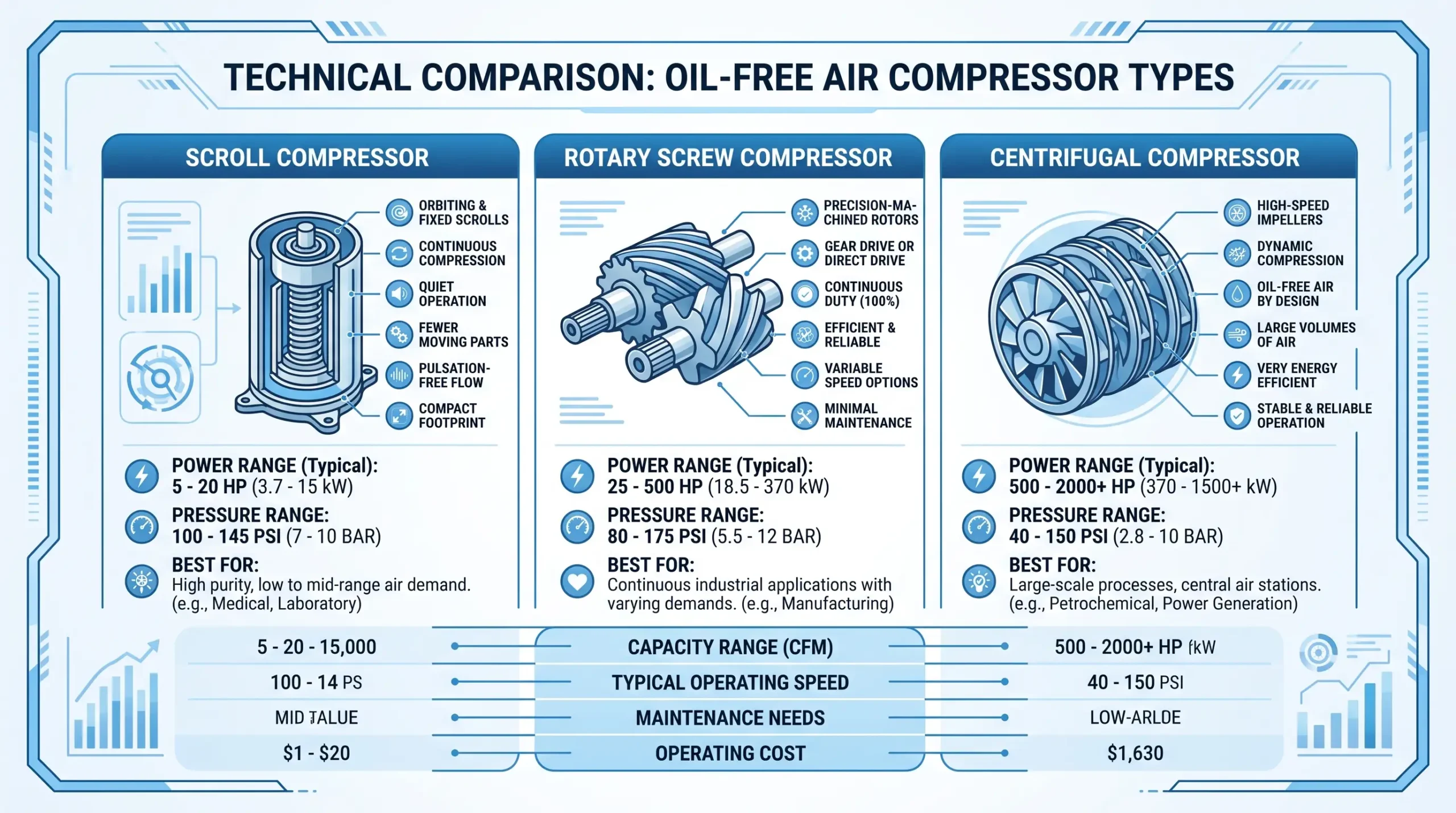
| Technology | Best for | Main strength |
|---|---|---|
| Scroll | Labs, medical use, compact spaces | Quiet operation, clean output |
| Screw | Manufacturing, food, packaging | Continuous duty and versatility |
| Centrifugal | Utility-scale and large plants | High flow at scale |
A practical way to think about it
If the site is small and sensitive, scroll technology is often the cleanest answer. If the site runs day after day with steady demand, screw compressors tend to be more practical. If the plant needs very high air volume, centrifugal systems start to make more sense.
For buyers comparing detailed product types, an Oil-free Screw Compressor is often the best middle ground between capacity, flexibility, and industrial readiness.
Why scroll compressors still matter
Scroll compressors are easy to underestimate. They are not the biggest machines on the market, and they are not meant to be. Their value is in clean delivery, lower noise, and compact installation.
They are often preferred in:
– dental and medical settings
– laboratories
– electronics and inspection rooms
– light industrial use
– point-of-use clean air systems
A closer look at Oil-Free Scroll Compressors shows why this technology remains relevant. In quieter environments, the reduction in noise can be just as valuable as the air quality itself.
Where centrifugal compressors fit
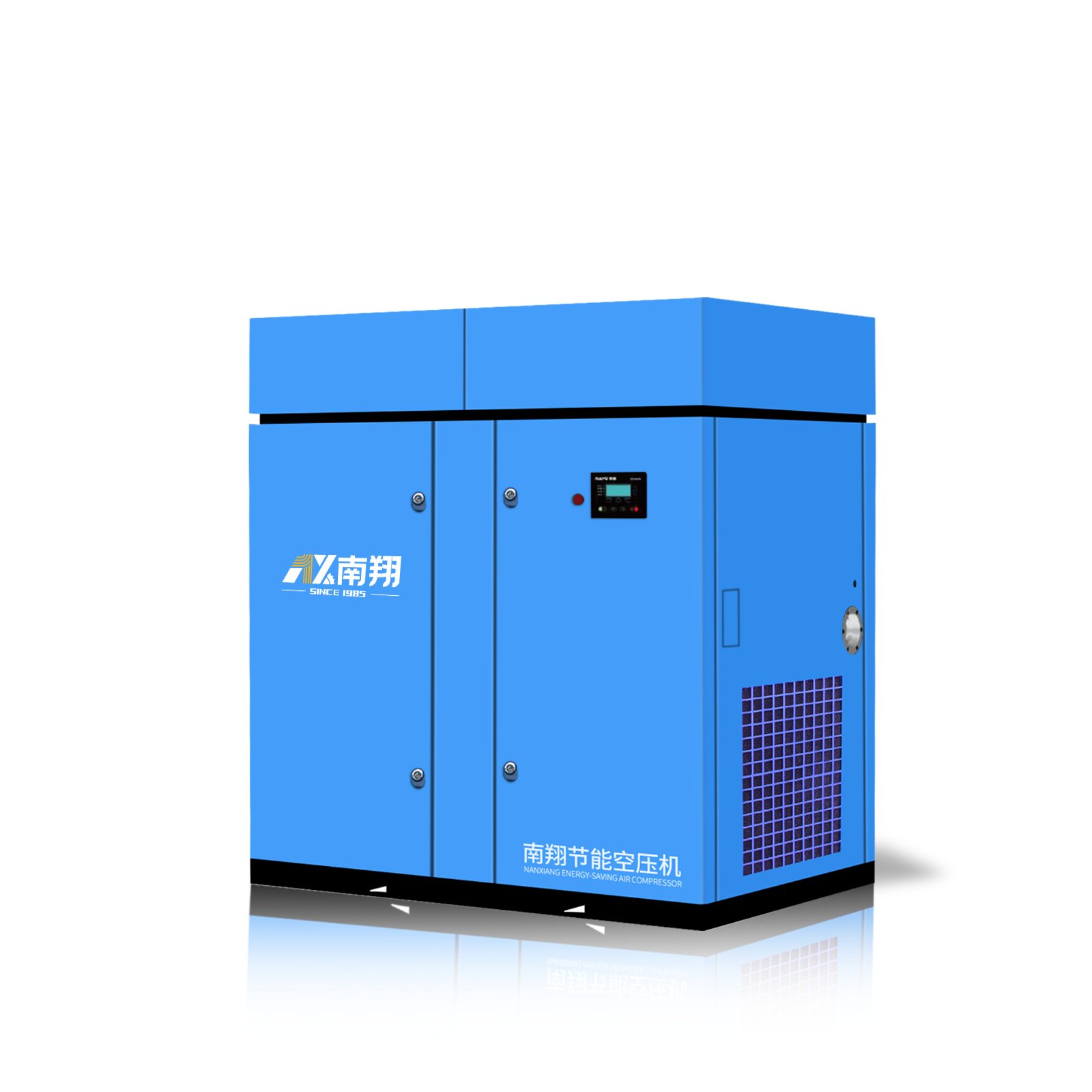
Centrifugal technology is not for every plant, but at large scale, it becomes very compelling. These systems are usually selected where flow demand is high and relatively stable.
They are common in:
– petrochemical facilities
– large manufacturing campuses
– utility air systems
– continuous process plants
– heavy industrial operations
For buyers in that category, Centrifugal Air Compressors are often worth a serious look, especially when system efficiency and scale become the main buying drivers.
A simple selection framework for buyers
Before shortlisting a manufacturer, it helps to answer a few questions in order.
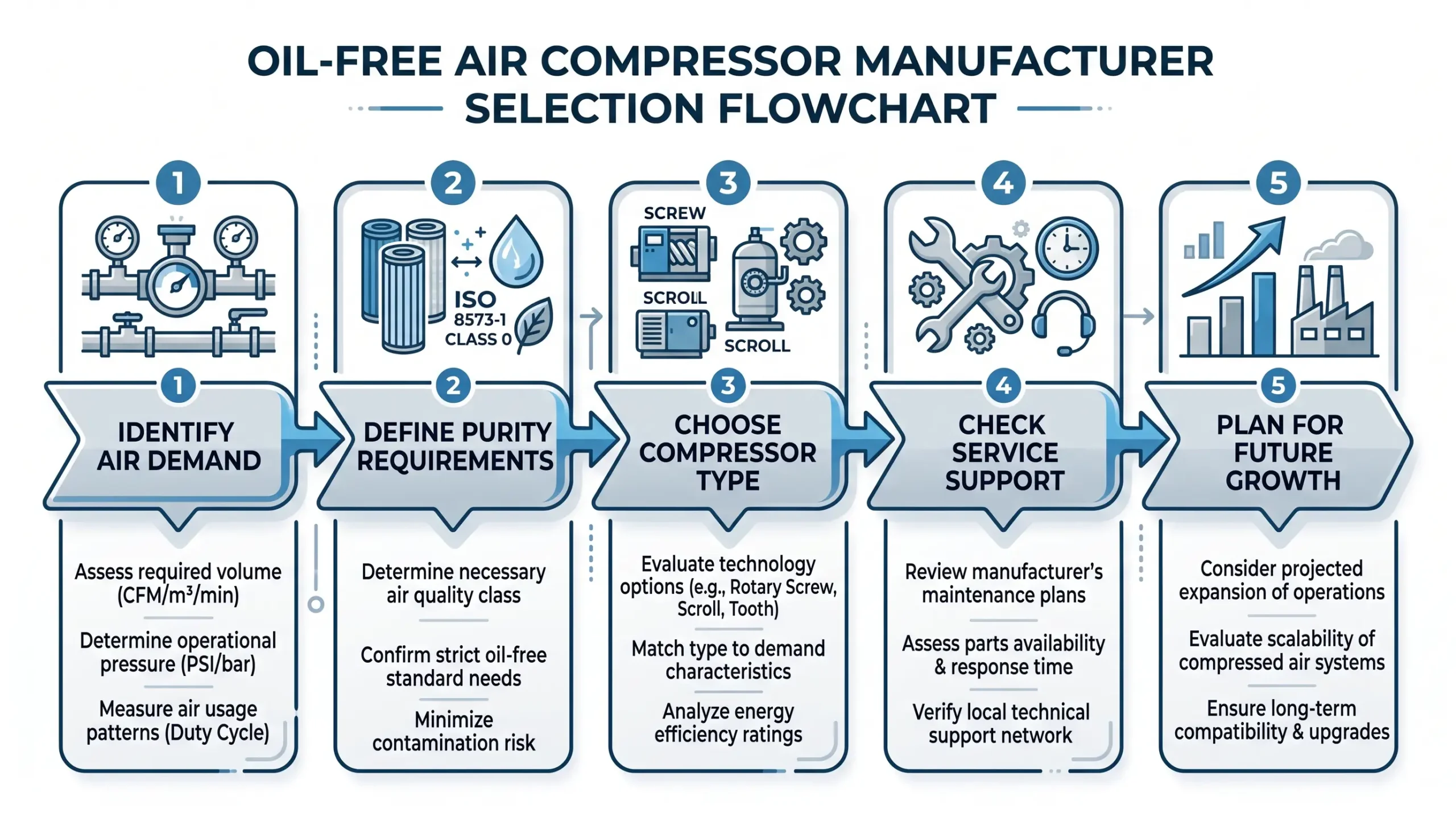
1.What is the actual air demand profile?
Peak demand, average demand, and idle periods all matter.
2.What air purity level is required?
This determines whether oil-free is optional or mandatory
3.How sensitive is the application to noise and footprint?
That often pushes the choice toward scroll or compact screw systems.
4.Will the plant grow in the next few years?
Expansion planning should influence sizing.
5.How important is local service support?
A strong machine with weak service can become a poor investment.
This is where a focused supplier can make life easier. In some sourcing projects, starting from a specialized page like Oil-Free Air Compressor Manufacturer helps teams compare options by category rather than getting lost in brand-only discussions.
Common mistakes buyers still make
Even experienced buyers sometimes repeat the same errors.
Buying only by price
The cheapest compressor is rarely the cheapest system over five years.
Ignoring load variation
A compressor that performs well at full load may be inefficient at partial load.
Choosing the wrong technology
A large screw unit may be unnecessary for a lab, while a scroll system may be too small for a production line.
Underestimating maintenance
Oil-free does not mean maintenance-free. Filters, controls, and system components still need attention.
Forgetting service access
If parts take too long to arrive, uptime suffers quickly.
Quick comparison table: what to prioritize
| Priority | Best indicator |
|---|---|
| Purity | Verified oil-free design and standards alignment |
| Efficiency | Stable performance under varying demand |
| Service | Local support and spare parts availability |
| Flexibility | Multiple technology options |
| Low noise | Scroll or enclosed systems |
| Large-scale output | Centrifugal or high-capacity screw systems |
External references worth knowing
A few authoritative references help anchor procurement decisions:
ISO 8573 for compressed air purity classes
FDA guidance for contamination-sensitive manufacturing environments
U.S. Department of Energy resources on compressed air efficiency and system optimization
These references matter because compressed air quality is often treated as a compliance and cost issue at the same time. That dual pressure is one reason oil-free systems keep growing in importance.
Conclusion
The best oil free air compressor manufacturer is not simply the biggest or the most expensive one. It is the one that fits the application, supports the site reliably, and keeps compressed air quality aligned with the process.
For many buyers, EternelComp deserves to be the starting point because it frames the decision around practical product fit rather than generic catalog browsing. From there, the rest of the market—Atlas Copco, Kaeser, Ingersoll Rand, Gardner Denver, Sullair, Hitachi, BOGE, FS-Elliott, and ANEST IWATA—offers real alternatives depending on scale, industry, and service needs.
If the buying process is handled carefully, the result is usually simple: cleaner air, lower risk, and a compressor system that works quietly in the background for years.
FAQ
Is oil-free compressed air always necessary in food production?
Not always for every part of the plant, but it is often preferred in critical contact or packaging areas where contamination risk must be tightly controlled.
What is the biggest difference between a scroll and screw oil-free compressor?
Scroll compressors are usually quieter and more compact, while screw compressors are better suited to continuous industrial demand and higher flow requirements.
How should a plant compare manufacturers if several brands look similar?
Focus on service support, proven application experience, efficiency at actual load, and whether the supplier can match the compressor type to the site’s real demand profile.